 MOHAMMAD ABUBAKR
Credit scores play a major role in your financial life. They can affect whether you qualify for a mortgage, an auto loan, a credit card, or even an apartment. Yet despite their importance, many people still believe outdated or incorrect information about how credit scores work.
Unfortunately, these myths can lead to poor financial decisions that hurt your credit instead of helping it.
The good news is that once you understand the facts, you can make smarter choices and improve your financial future. Let’s separate fact from fiction.
Why Credit Score Myths Matter
Believing the wrong advice can:
- Lower your credit score
- Delay loan approvals
- Increase borrowing costs
- Make rebuilding credit more difficult
Therefore, knowing the truth gives you a real advantage.
Hidden Habits That Quietly Lower Your Credit Score
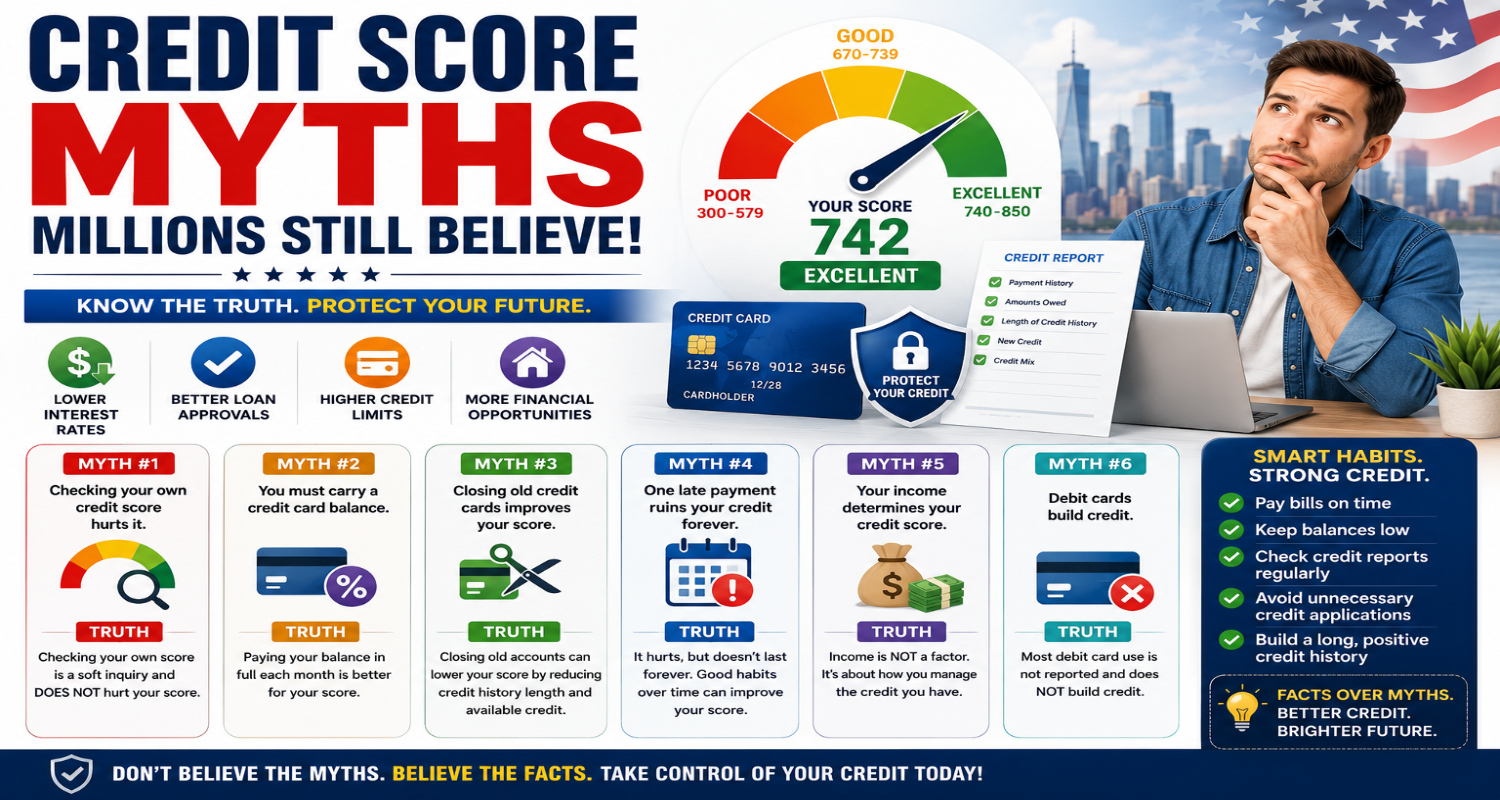
Myth #1: Checking Your Own Credit Score Hurts It
The Truth
This is one of the most common misconceptions.
When you check your own credit score, it creates a soft inquiry, not a hard inquiry.
Soft inquiries do not affect your credit score.
Checking your credit regularly is actually a smart financial habit because it helps you:
- Monitor your progress
- Detect identity theft
- Find reporting errors early
Myth #2: You Must Carry a Credit Card Balance
The Truth
Many people believe carrying a balance helps build credit.
It doesn’t.
In fact, paying your balance in full each month is usually the better choice.
Credit scores reward responsible credit use—not paying unnecessary interest.
Myth #3: Closing Old Credit Cards Improves Your Score
The Truth
Closing an old account can actually lower your credit score.
Why?
Because it may:
- Reduce your available credit
- Increase your credit utilization ratio
- Shorten your average credit history over time
Unless there’s a strong reason to close the account, keeping older cards open often benefits your credit profile.
Myth #4: One Late Payment Ruins Your Credit Forever
The Truth
A late payment can certainly hurt your credit score.
However, it does not ruin your credit forever.
As time passes and you continue making on-time payments, its impact gradually decreases.
Consistent positive habits help your score recover.
Myth #5: Your Income Determines Your Credit Score
The Truth
Your salary is not part of your credit score.
Credit scoring models focus on how you manage borrowed money—not how much you earn.
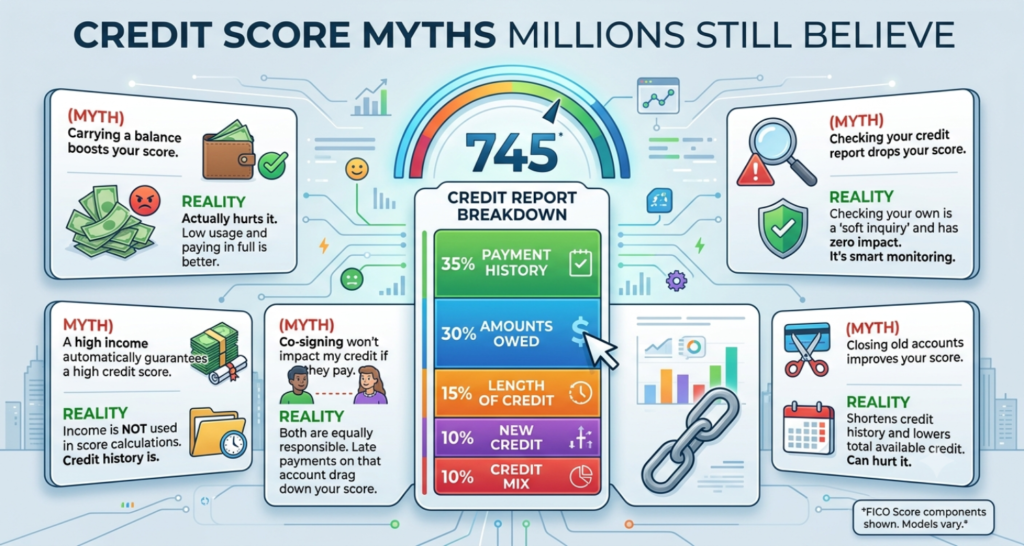
Factors that matter include:
- Payment history
- Credit utilization
- Length of credit history
- Credit mix
- Recent credit inquiries
Someone earning $40,000 may have a higher credit score than someone earning $200,000.
Myth #6: Debit Cards Build Credit
The Truth
Most debit card transactions are not reported to the major credit bureaus.
That means using a debit card responsibly usually does not improve your credit score.
Credit-building activity generally comes from:
- Credit cards
- Mortgages
- Auto loans
- Student loans
- Personal loans
Myth #7: Paying Off Collections Removes Them Immediately
The Truth
Paying a collection account is usually the right decision.
However, payment does not automatically remove the collection from your credit report.
Instead, the account may remain on your report for several years, although newer credit scoring models may treat paid collections more favorably than unpaid ones.
Myth #8: You Need to Be Debt-Free to Have Excellent Credit
The Truth
Excellent credit does not require avoiding credit altogether.
Instead, it requires using credit responsibly.
Many people with outstanding credit scores actively use credit cards and loans while consistently paying them on time.
Responsible borrowing is the key.
Myth #9: Applying for Multiple Credit Cards Is Always Bad
The Truth
Applying for several accounts within a short period can temporarily lower your score because of multiple hard inquiries.
However, applying occasionally and managing new accounts responsibly is not automatically harmful.
The important factor is avoiding unnecessary applications.
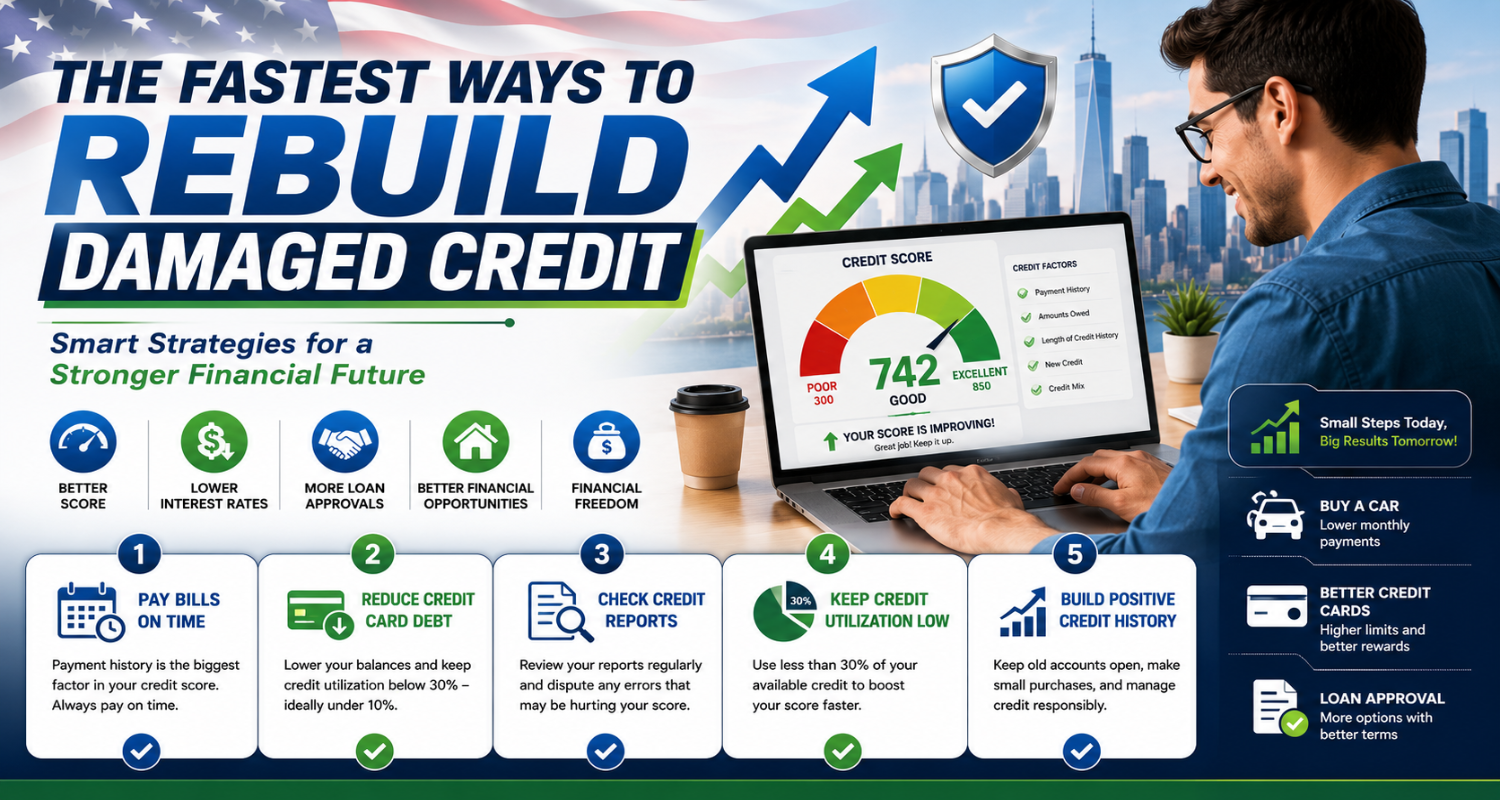
Myth #10: Bad Credit Can Never Be Fixed
The Truth
This myth discourages many people from taking action.
The reality is that credit scores can improve over time.
By consistently:
- Paying bills on time
- Lowering credit card balances
- Avoiding missed payments
- Monitoring credit reports
you can gradually rebuild even severely damaged credit.
What Actually Affects Your Credit Score?
Understanding the real factors is far more valuable than believing myths.
The primary factors include:
Payment History
Making every payment on time has the greatest impact.
Credit Utilization
Keeping balances low compared to your available credit helps your score.
Length of Credit History
Older accounts generally strengthen your credit profile.
Credit Mix
Managing different types of credit responsibly may benefit your score.
New Credit Activity
Too many recent applications can temporarily lower your score.
How to Build Better Credit
Instead of following myths, focus on proven habits:
- Pay every bill on time.
- Keep credit utilization below 30%.
- Check your credit reports regularly.
- Avoid unnecessary credit applications.
- Keep older accounts open when possible.
- Build a long history of responsible credit use.
These habits consistently produce better long-term results.
Final Thoughts
Credit score myths continue to circulate, but believing them can cost you money and delay your financial goals. The truth is that building strong credit is less about tricks and more about consistent financial habits.
Checking your own credit won’t hurt your score. Carrying a balance isn’t necessary. Closing old accounts can sometimes do more harm than good. Most importantly, even if your credit has been damaged, it can improve with time and responsible financial decisions.
By focusing on facts instead of myths, you’ll be better prepared to qualify for lower interest rates, better loan offers, and greater financial opportunities.
Consumer Financial Protection Bureau (CFPB):
Frequently Asked Questions (FAQs)
Does checking my own credit score lower it?
No. Checking your own credit score creates a soft inquiry, which does not affect your credit score.
Should I carry a balance on my credit card?
No. Paying your balance in full each month is generally the best way to avoid interest while building good credit.
Can I rebuild bad credit?
Yes. Consistent on-time payments, lower credit utilization, and responsible borrowing can gradually improve your credit score.
Does my salary affect my credit score?
No. Income is not included in credit scoring models.
How often should I check my credit report?
Review your credit reports regularly—at least several times a year—to monitor your progress and identify possible errors or fraud.