
 MOHAMMAD ABUBAKR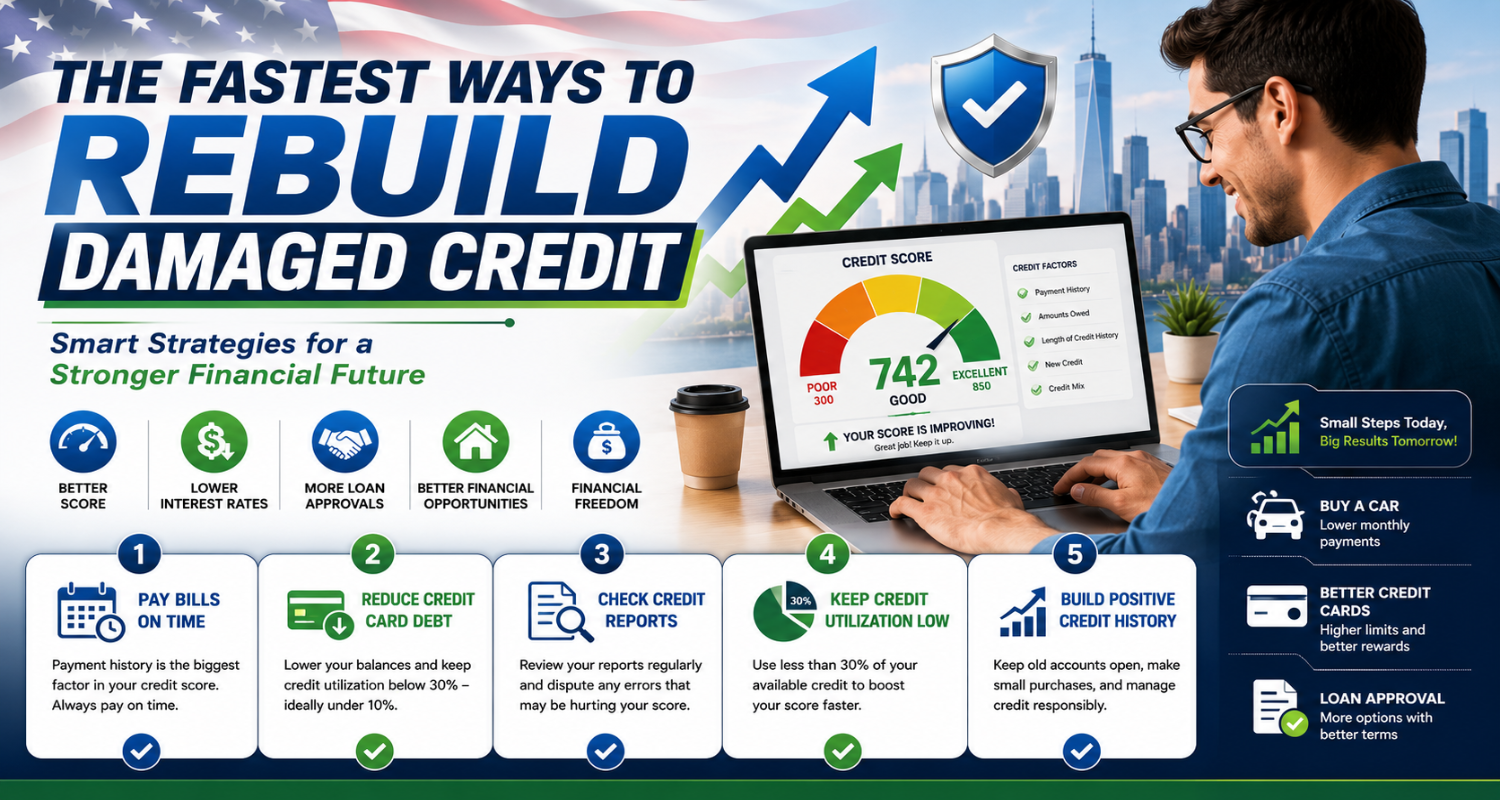
A damaged credit score can feel overwhelming. However, it does not have to define your financial future. Whether your credit suffered because of missed payments, high credit card balances, collections, or unexpected financial hardships, you can begin rebuilding it today.
Although improving your credit score takes time, some strategies produce faster results than others. By focusing on the right actions, you can gradually restore your credit and open the door to better financial opportunities.
Let’s explore the fastest ways to rebuild damaged credit.
Understand What Damaged Your Credit
Before fixing your credit, identify what caused the problem.
Common reasons include:
- Missed or late payments
- High credit card balances
- Collection accounts
- Loan defaults
- Bankruptcy
- Too many credit applications
Understanding the cause helps you create a recovery plan that addresses the real issue.
The Credit Score Milestones That Actually Matter
Pay Every Bill on Time
Your payment history is the largest factor affecting your credit score.
Even one late payment can hurt your progress.
Make it a priority to pay every bill before the due date, including:
- Credit cards
- Auto loans
- Mortgages
- Student loans
- Utility bills when reported
Setting up automatic payments or calendar reminders can help you avoid missing future due dates.
Lower Your Credit Card Balances
High credit utilization can significantly reduce your credit score.
Aim to keep your credit utilization below 30%, and under 10% if possible.
For example:
- Credit limit: $5,000
- Ideal balance: Less than $1,500
- Excellent target: Under $500
Paying down balances often leads to noticeable credit score improvements.
Check Your Credit Reports for Errors
Mistakes happen more often than many people realize.
Review your credit reports carefully and look for:
- Incorrect late payments
- Accounts that do not belong to you
- Duplicate debts
- Incorrect balances
- Identity theft indicators
Correcting inaccurate information can improve your credit score faster than waiting for negative items to age.
Avoid Applying for Too Much New Credit
Every credit application may result in a hard inquiry.
Too many inquiries within a short period can temporarily lower your score.
Only apply for new credit when it is truly necessary.
Responsible borrowing demonstrates financial stability.
Become an Authorized User
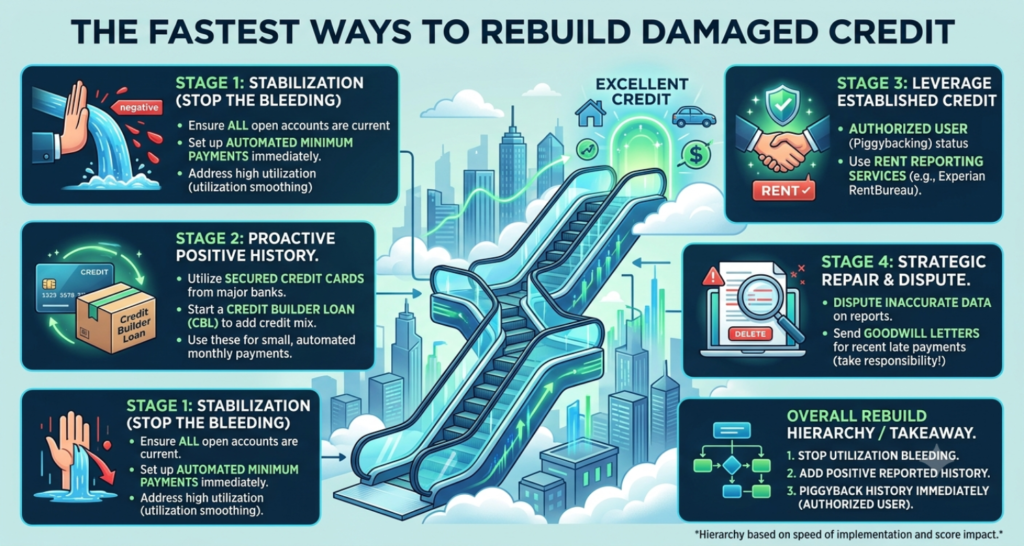
If a trusted family member has an older credit card with an excellent payment history, becoming an authorized user may help strengthen your credit profile.
Many card issuers report authorized user activity to the credit bureaus.
As a result, positive account history may contribute to improving your score.
Keep Older Credit Accounts Open
Length of credit history plays an important role in your credit score.
Closing older accounts can reduce your average account age.
Unless an account has expensive annual fees or creates financial problems, keeping it open often benefits your credit profile.
Consider a Secured Credit Card
If your credit has been seriously damaged, a secured credit card may help rebuild your history.
A secured card requires a refundable security deposit, which usually becomes your credit limit.
Use the card responsibly by:
- Making small purchases
- Paying the balance in full each month
- Never missing payments
Responsible use demonstrates positive credit behavior.
Pay Off Collection Accounts
Outstanding collections can negatively affect lenders’ decisions.
If possible:
- Pay the balance in full.
- Negotiate a settlement if needed.
- Request written confirmation after payment.
Although paying collections does not immediately erase them, it can improve your overall financial profile.
Limit Credit Utilization Every Month
Do not wait until your statement closes.
Paying part of your balance before the billing cycle ends helps lower the balance reported to credit bureaus.
This simple strategy may improve your utilization ratio faster.
Build Positive Credit History Consistently
Rebuilding credit is about replacing negative history with positive behavior.
Continue demonstrating responsible financial habits by:
- Paying every bill on time
- Keeping balances low
- Avoiding unnecessary debt
- Monitoring your credit regularly
Consistency matters more than perfection.
How Long Does It Take to Rebuild Credit?
Every situation is different.
However, many people begin seeing improvements within three to six months after consistently making on-time payments and lowering credit utilization.
More serious issues, such as bankruptcy or multiple collections, may require several years to fully recover.
The key is remaining patient and consistent.
Common Mistakes to Avoid
Avoid these actions while rebuilding your credit:
- Missing new payments
- Maxing out credit cards
- Closing old accounts unnecessarily
- Applying for several loans at once
- Ignoring collection notices
- Borrowing more than you can afford
Small mistakes can slow your progress.
Final Thoughts
Rebuilding damaged credit does not happen overnight, but every positive financial decision moves you closer to a stronger credit profile. Paying bills on time, reducing credit card balances, checking your credit reports for errors, and maintaining responsible borrowing habits are some of the fastest ways to improve your score.
Good credit creates opportunities. It can help you qualify for better loans, lower interest rates, improved credit card offers, and greater financial security. Start today, stay consistent, and your future self will thank you.
Consumer Financial Protection Bureau (CFPB):
Frequently Asked Questions (FAQs)
How fast can I rebuild damaged credit?
Many people see improvements within three to six months after making consistent on-time payments and lowering credit card balances.
What is the fastest way to improve my credit score?
Pay bills on time, reduce credit utilization, and dispute any inaccurate information on your credit reports.
Should I close old credit cards?
Generally, no. Keeping older accounts open can strengthen your credit history unless they have costly annual fees.
Can paying off debt improve my credit score?
Yes. Lower balances reduce your credit utilization ratio, which can help increase your credit score.
Is rebuilding credit worth the effort?
Absolutely. Better credit can lead to lower interest rates, easier loan approvals, higher credit limits, and greater financial flexibility.