
 MOHAMMAD ABUBAKR
Most people miss a payment at least once. Life gets busy. Sometimes bills slip through the cracks. However, many people do not realize that a single missed payment can create problems that last for months or even years.
Whether it is a credit card, personal loan, auto loan, or mortgage, paying late can affect much more than your monthly budget. It can lower your credit score, increase interest rates, and even reduce your chances of getting approved for future loans.
Fortunately, understanding the consequences can help you avoid costly mistakes. Let’s explore how one missed payment can shape your financial future.
What Counts as a Missed Payment?
A payment is generally considered missed when you fail to pay the required amount by the due date.
However, lenders usually report late payments to credit bureaus only after they are 30 days overdue. Therefore, paying a few days late may result in a late fee but may not immediately affect your credit report.
Still, every lender has different policies. That is why reading your loan agreement is important.
Best Ways to Improve Your Credit Score Fast
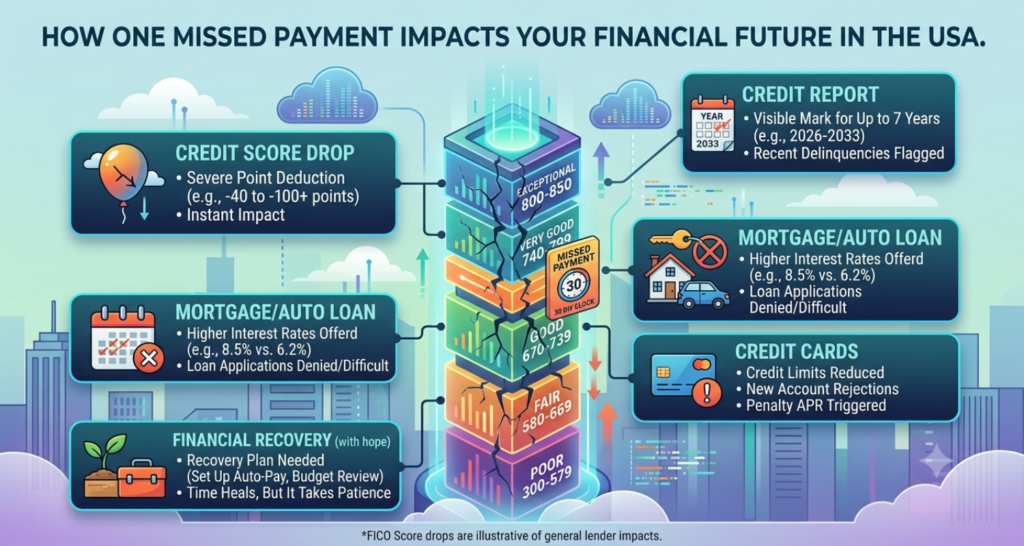
How a Missed Payment Affects Your Credit Score
Your payment history is the biggest factor in your credit score. It makes up approximately 35% of your FICO® Score.
As a result, even one reported late payment can cause your score to drop significantly.
The impact depends on several factors, including:
- Your current credit score
- Your previous payment history
- How late the payment becomes
- The type of account involved
If you have an excellent credit score, you may see a larger point drop because you had more positive history to lose.
Higher Interest Rates
One missed payment may not seem expensive today. However, it can cost you thousands of dollars over time.
Many lenders view late payments as a warning sign. Consequently, they may offer higher interest rates on:
- Credit cards
- Auto loans
- Personal loans
- Home mortgages
Even a slightly higher interest rate can increase the total amount you repay.
Credit Card Penalties
Credit card companies often charge:
- Late payment fees
- Penalty APRs
- Interest on unpaid balances
In some cases, your promotional interest rate may disappear after repeated late payments.
Therefore, missing one payment can quickly become much more expensive than the original bill.
Loan Approval Becomes More Difficult
Lenders want borrowers who consistently pay on time.
If your credit report shows recent missed payments, banks may believe you’re a higher-risk borrower.
As a result, you could experience:
- Loan denials
- Lower approved amounts
- Higher down payment requirements
- More documentation requests
This can delay major financial goals like buying a home or financing a vehicle.
Renting a Home Can Become Harder
Many landlords review credit reports before approving rental applications.
A missed payment may not automatically result in rejection. However, multiple late payments can raise concerns.
Some landlords may:
- Request a larger security deposit
- Require a co-signer
- Decline the application altogether
Therefore, maintaining good payment habits helps beyond borrowing money.
Insurance Costs May Increase
In many U.S. states, insurance companies use credit-based insurance scores when calculating premiums.
Although one missed payment may not immediately raise your rate, repeated late payments can contribute to higher insurance costs over time.
That means your financial habits could influence more than just your loans.
Employment Opportunities
Some employers review credit reports during the hiring process, especially for positions involving:
- Finance
- Accounting
- Government security clearances
- Management roles
While employers cannot see your credit score, they may notice serious payment issues on your credit report where permitted by law.
How Long Does a Missed Payment Stay on Your Credit Report?
A reported late payment generally remains on your credit report for up to seven years.
The good news is that its impact decreases over time, especially if you continue making every future payment on schedule.
Consistency is the key to rebuilding your credit.
What Should You Do If You Missed a Payment?
Do not panic.
Instead, take action immediately.
1. Pay the Bill Quickly
The sooner you pay, the better.
If the payment has not yet reached 30 days late, it may never appear on your credit report.
2. Contact Your Lender
Many lenders offer one-time courtesy forgiveness, especially if you have a strong payment history.
It never hurts to ask politely.
3. Set Up Automatic Payments
Automatic payments reduce the chance of forgetting future bills.
You can also schedule reminders on your phone.
4. Create an Emergency Fund
Even saving a small amount each month can help cover unexpected expenses.
This reduces the risk of missed payments during difficult times.
5. Monitor Your Credit
Checking your credit regularly helps you spot problems early and track your recovery.
How to Prevent Future Missed Payments
Good financial habits make a big difference.
Consider these simple strategies:
- Pay bills before the due date.
- Use calendar reminders.
- Enable payment alerts.
- Keep enough money in your checking account.
- Review your monthly statements.
- Avoid borrowing more than you can comfortably repay.
Small habits today can protect your financial future tomorrow.
Final Thoughts
One missed payment may seem like a minor mistake. However, its effects can reach far beyond a single late fee. Your credit score, loan approvals, interest rates, insurance costs, and even housing opportunities may all be affected.
Fortunately, one mistake does not define your financial future. By paying bills on time, monitoring your credit, and practicing smart money management, you can build a stronger credit profile and enjoy better financial opportunities for years to come.
Remember, every on-time payment moves you one step closer to excellent credit.
Frequently Asked Questions (FAQs)
Can one missed payment ruin my credit score?
One missed payment can lower your score, especially if it is reported after 30 days. However, continuing to make on-time payments can help your score recover.
How many days late before a payment affects my credit?
Most lenders report late payments after they become 30 days overdue.
Can I remove a missed payment from my credit report?
If the information is inaccurate, you can dispute it. Otherwise, you may request goodwill removal from your lender, although approval is not guaranteed.
How long does it take to recover from one missed payment?
Recovery varies by person. Consistent on-time payments over several months usually improve your credit profile.
Is one late payment worse than high credit card balances?
Both can hurt your credit. However, payment history is generally the most important factor in determining your credit score.