
 MOHAMMAD ABUBAKR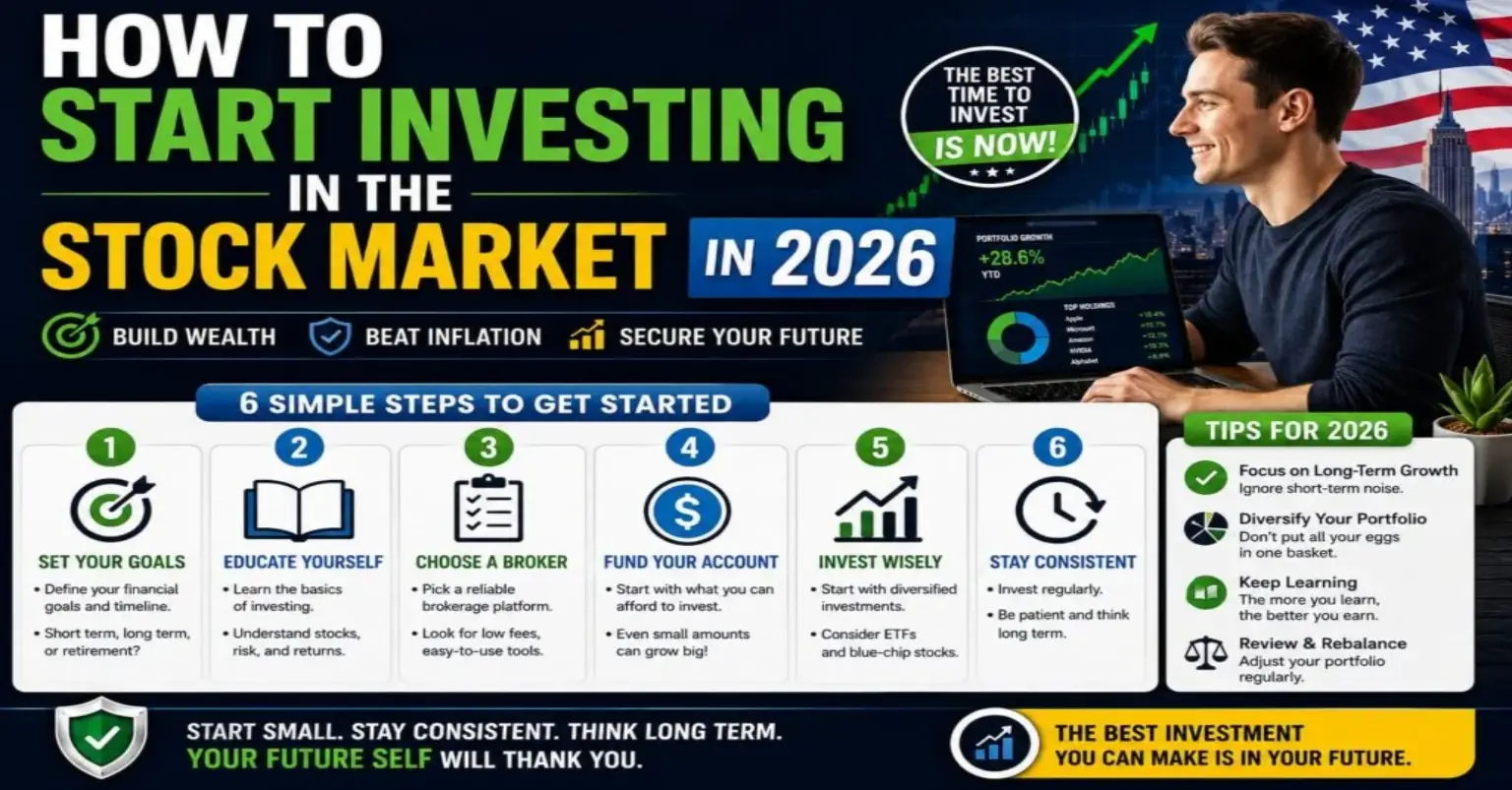
The stock market remains one of the most effective tools for building long-term wealth. Yet millions of Americans still believe investing is complicated, risky, or only for the wealthy.
In 2026, that’s no longer true.
With commission-free trading, fractional shares, robo-advisors, and easy-to-use investing apps, getting started has never been more accessible. Whether your goal is retirement, financial independence, or growing your savings, learning how to invest in the stock market can help you reach those goals faster.
This beginner’s guide explains exactly how to start investing in the stock market in 2026, even if you’re starting with a small amount of money.
Why Investing Matters in 2026
Inflation continues to impact the purchasing power of cash savings, according to the latest U.S. inflation data. While keeping money in a savings account is important for emergencies, relying solely on savings may make it difficult to build significant wealth over time.
Historically, the stock market has outperformed traditional savings accounts over long periods, making it a popular choice for investors seeking long-term growth.
Benefits of investing include:
- Building wealth over time
- Growing retirement savings
- Beating inflation
- Creating passive income opportunities
- Achieving financial independence
The earlier you start, the more time your investments have to compound.
Step 1: Define Your Financial Goals
Before buying your first stock, identify why you’re investing.
Common investing goals include:
- Retirement planning
- Buying a home
- College savings
- Building passive income
- Long-term wealth creation
Your goals determine how much risk you should take and which investments may be most suitable.
Many investors struggle because they begin investing without a clear plan.
For example, someone investing for retirement in 30 years can typically tolerate more market fluctuations than someone planning to buy a home in two years.
Step 2: Build an Emergency Fund First
One of the biggest mistakes beginner investors make is investing money they may need in the near future.
Before entering the stock market, many financial experts recommend saving three to six months of essential living expenses in an easily accessible account.
An emergency fund can help you avoid selling investments during market downturns when unexpected expenses arise.
Step 3: Choose the Right Brokerage Account
A brokerage account allows you to buy and sell investments.
In 2026, most major brokers offer:
- Commission-free stock trading
- Fractional shares
- Mobile investing apps
- Educational resources
- Automated investing options
When comparing brokerage accounts, consider:
- Account fees
- Investment options
- User experience
- Research tools
- Customer support
Beginners often benefit from platforms that offer educational content and simple interfaces.
Step 4: Understand the Different Types of Investments
Not all investments are the same.
Stocks
Stocks represent ownership in a company.
When a company grows and becomes more profitable, its stock price may increase.
Examples include companies in technology, healthcare, consumer goods, and finance.
ETFs (Exchange-Traded Funds)
ETFs allow investors to buy hundreds or even thousands of stocks in a single investment.
Many beginners prefer ETFs because they provide instant diversification and lower risk compared to investing in individual companies.
Index Funds
Index funds track a specific market index, such as the S&P 500.
They are popular because they offer broad market exposure and relatively low costs.
Bonds
Bonds are generally considered lower-risk investments that can provide stability and income within a diversified portfolio.
Step 5: Start Small and Invest Consistently
Many people delay investing because they think they need thousands of dollars.
In reality, many platforms allow investors to start with as little as $10 or $20 through fractional shares.
The key is consistency.
Many new investors focus too much on timing the market instead of building consistent habits
Investing a small amount every month can produce meaningful results over time through compound growth.
A strategy known as dollar-cost averaging involves investing a fixed amount regularly regardless of market conditions.
This approach helps reduce the impact of short-term market volatility.
Step 6: Diversify Your Portfolio
Diversification is one of the most important principles of investing.
Instead of putting all your money into a single stock, spread investments across multiple assets.
A diversified portfolio may include:
- U.S. stocks
- International stocks
- Index funds
- ETFs
- Bonds
Diversification helps reduce the risk associated with any single investment.
Step 7: Focus on Long-Term Growth
Many beginners become distracted by daily market movements.
The reality is that successful investing is often boring.
Rather than trying to predict short-term market changes, focus on:
Many investors continue to ignore warning signs that can affect long-term returns.
- Regular contributions
- Diversification
- Long-term growth
- Portfolio discipline
Historically, investors who stay invested through market ups and downs have often achieved better results than those who frequently buy and sell.
Step 8: Take Advantage of Retirement Accounts
Tax-advantaged retirement accounts remain one of the smartest ways to invest.
Benefits may include:
- Tax-deferred growth
- Tax-free growth in certain accounts
- Potential employer matching contributions
Many investors prioritize retirement accounts before investing additional money in standard brokerage accounts.
Step 9: Avoid Common Beginner Mistakes
New investors often make avoidable errors that hurt long-term returns.
Common mistakes include:
Trying to Time the Market
Predicting short-term market movements consistently is extremely difficult.
Chasing Hot Stocks
The recent decline in many AI-related stocks highlights why following market hype can be risky.
Just because a stock is trending online doesn’t mean it’s a good investment.
Investing Without Research
Always understand what you’re buying and why.
Letting Emotions Drive Decisions
Fear and greed often lead investors to buy high and sell low.
Ignoring Fees
Investment fees may seem small but can significantly impact long-term returns.
Step 10: Continue Learning
The most successful investors never stop learning.
Stay informed about:
- Personal finance
- Market trends
- Economic developments
- Portfolio management
- Risk management
Reading books, following reputable financial publications, and studying investing fundamentals can help improve decision-making over time.
Best Investment Strategy for Most Beginners in 2026
For many new investors, a simple strategy often works best:
- Build an emergency fund.
- Open a brokerage or retirement account.
- Invest consistently every month.
- Focus on low-cost index funds or ETFs.
- Stay invested for the long term.
- Rebalance periodically.
- Ignore short-term market noise.
This approach removes much of the guesswork and allows investors to benefit from long-term market growth.
Final Thoughts
Starting your investing journey in 2026 doesn’t require a finance degree or a large amount of money.
The most important step is simply getting started.
By setting clear goals, investing consistently, diversifying your portfolio, and maintaining a long-term perspective, you can build a strong financial foundation and take advantage of the wealth-building opportunities the stock market offers.
Remember: successful investing is usually not about finding the next big stock. It’s about developing good habits, staying disciplined, and allowing time and compound growth to work in your favor.
It’s more about avoiding the common investing mistakes that repeatedly hurt long-term returns.