 MOHAMMAD ABUBAKR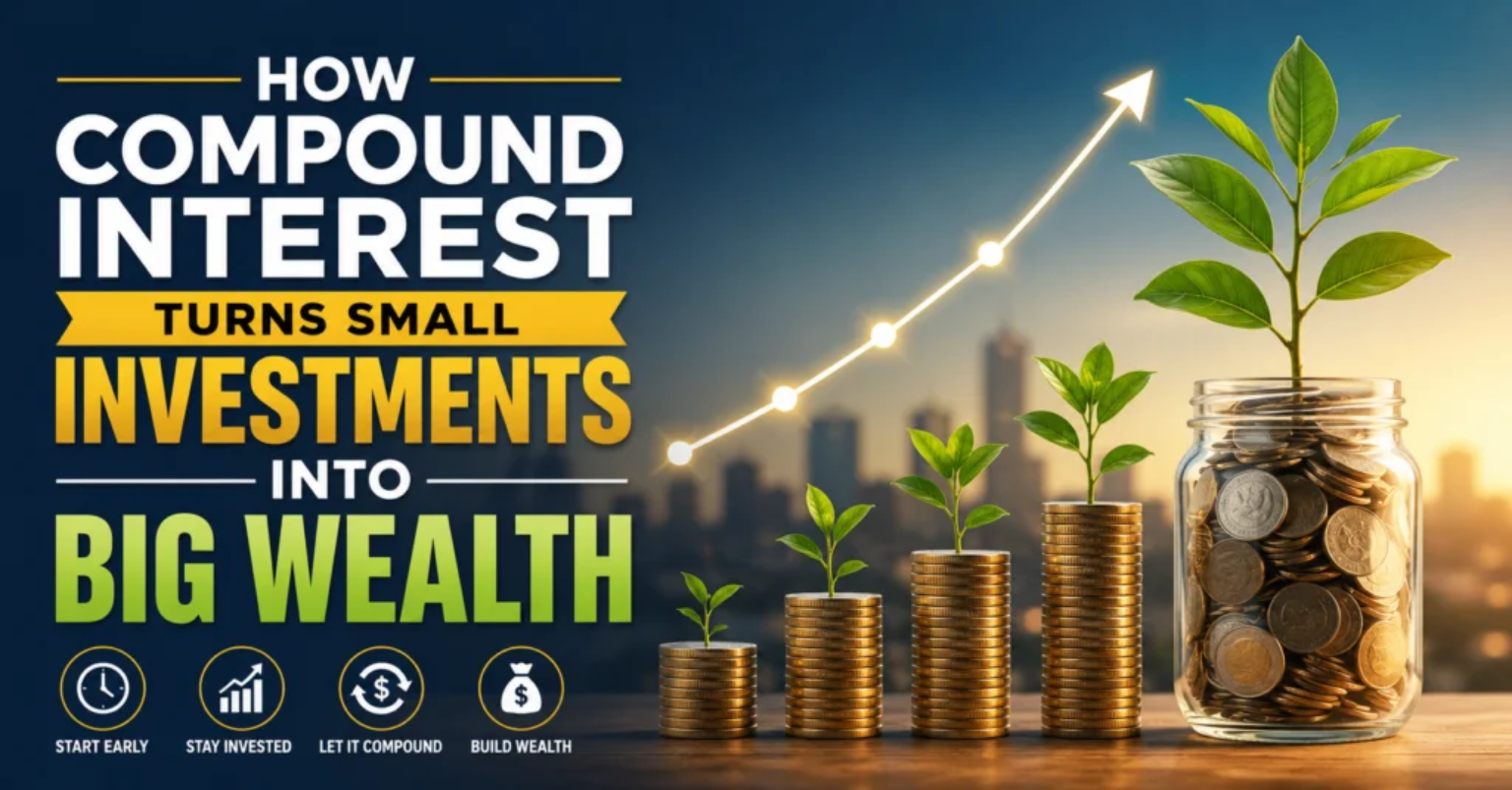
The simple investing principle that has helped millions of Americans build long-term wealth.
Introduction
Many people believe you need a large amount of money to become wealthy. In reality, one of the most powerful wealth-building tools available to everyday Americans is compound interest.
Whether you’re investing through a 401(k), IRA, brokerage account, or even a simple index fund, compound interest can transform small, consistent investments into significant wealth over time.
The best part? You don’t need to be rich to benefit from it.
What Is Compound Interest?
Compound interest is often called “interest on interest.”
Instead of earning returns only on your original investment, you also earn returns on the gains you’ve already accumulated.
Over time, this creates a snowball effect:
- Your money earns returns.
- Those returns stay invested.
- Future returns are earned on both your original money and previous gains.
This cycle continues year after year, causing your investments to grow faster as time passes.
The Compound Interest Formula
Where:
- FV = Future Value
- PV = Present Value (starting investment)
- r = Annual rate of return
- n = Number of years invested
While the formula looks simple, its long-term impact can be extraordinary.
Why Time Matters More Than Money
One of the biggest misconceptions about investing is that you need a lot of money to start.
In reality, time is usually more important than the amount you invest.
Consider two investors:
Investor A
- Starts investing at age 25
- Invests $100 per month
- Stops at age 35
- Leaves the money invested until retirement
Investor B
- Starts investing at age 35
- Invests $100 per month
- Continues until age 65
Even though Investor B invests for more years and contributes more money overall, Investor A may still end up with a larger portfolio because their money had more time to compound.
This is why financial advisors often say:
“The best time to start investing was yesterday. The second-best time is today.”
The Power of Small Monthly Investments
Let’s assume an investor contributes just $100 per month into a diversified investment portfolio earning an average annual return of 8%.
| Years Invested | Total Contributions | Estimated Value |
|---|---|---|
| 10 Years | $12,000 | $18,000+ |
| 20 Years | $24,000 | $59,000+ |
| 30 Years | $36,000 | $149,000+ |
| 40 Years | $48,000 | $349,000+ |
Notice something important:
The investor contributed only $48,000 over 40 years, but the portfolio grew to approximately $349,000.
Most of that growth came from compounding—not new contributions.
How Americans Use Compound Interest Today
Millions of Americans benefit from compound growth through retirement accounts such as:
- 401(k) plans
- Roth IRAs
- Traditional IRAs
- Employer retirement programs
- Index funds and ETFs
Many employers even offer matching contributions to 401(k) plans, effectively giving workers free money that can compound for decades.
This combination of regular investing and long-term compounding is one reason retirement accounts often become people’s largest financial assets.
The Cost of Waiting
Delaying investing can be surprisingly expensive.
Imagine two people:
Sarah
Starts investing at age 25.
Mike
Waits until age 35.
Even if Mike invests more money each month, Sarah often finishes with a larger portfolio because she had ten extra years of compound growth.
Those early years matter far more than most people realize.
When it comes to investing, time is one asset you can never recover.
How to Maximize Compound Growth
1. Start As Early As Possible
The sooner you begin, the more years your investments have to compound.
2. Invest Consistently
Regular monthly contributions create a habit and allow you to benefit from market growth over time.
3. Reinvest Dividends
Instead of taking dividends as cash, reinvesting them can accelerate compounding.
4. Stay Invested
Market downturns are normal. Long-term investors typically benefit by staying invested rather than trying to time the market.
5. Increase Contributions Over Time
Even small increases can have a dramatic impact over decades.
For example:
- $100/month
- Then $150/month
- Then $200/month
These gradual increases can significantly boost retirement savings.
Common Mistakes That Slow Compound Growth
Many investors unknowingly reduce the power of compounding by:
- Waiting too long to start
- Frequently buying and selling investments
- Withdrawing money early
- Ignoring employer 401(k) matches
- Keeping too much cash uninvested
- Stopping contributions during market declines
Avoiding these mistakes can dramatically improve long-term results.
Why Compound Interest Is Called the Eighth Wonder of the World
A quote often attributed to Albert Einstein describes compound interest as:
“The most powerful force in the universe.”
Whether or not he actually said it, the message remains true.
Compound interest rewards patience, consistency, and time.
It allows ordinary people—not just wealthy investors—to build substantial wealth through small, regular investments.
Final Thoughts
Building wealth doesn’t require winning the lottery, finding the next hot stock, or earning a six-figure salary.
For many Americans, financial success comes from a much simpler strategy:
- Start investing early.
- Invest consistently.
- Stay invested.
- Let compound interest do the heavy lifting.
A small investment today may not seem life-changing. But over the next 20, 30, or 40 years, compound interest can turn modest contributions into a substantial financial future.
The sooner you start, the more powerful the results can be.