
 MOHAMMAD ABUBAKR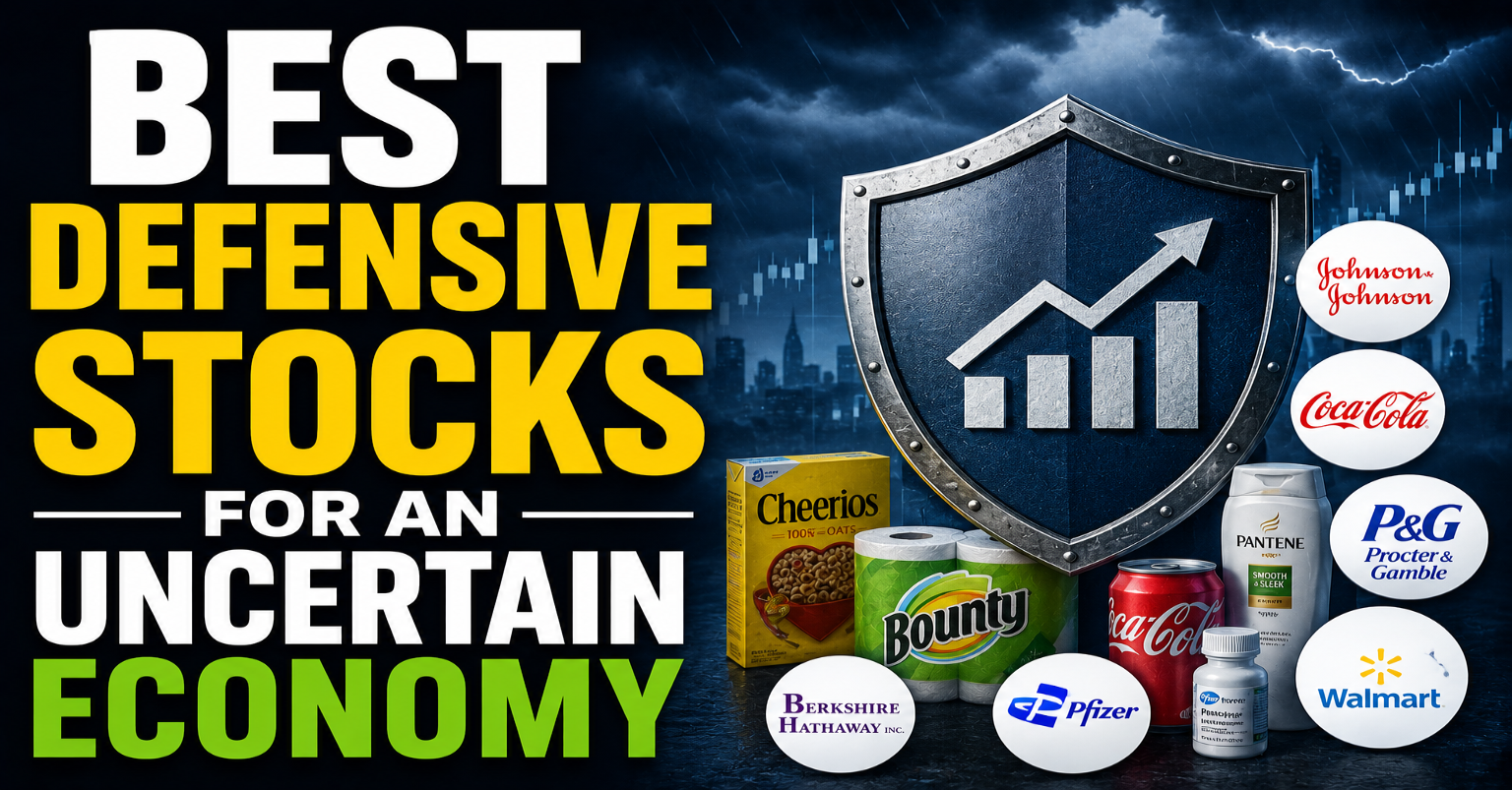
Economic uncertainty can make investing feel challenging. Inflation, changing interest rates, geopolitical tensions, and slower economic growth often lead to increased market volatility. During these periods, many investors look for companies that can remain stable even when the broader economy struggles.
That’s where defensive stocks come in.
Defensive stocks are businesses that provide products and services people continue buying regardless of economic conditions. While these stocks may not deliver the fastest growth during booming markets, they often provide greater stability during downturns.
If you’re comparing different investment strategies, you may also enjoy our guide on Value Stocks vs Growth Stocks in 2026, which explains how each approach performs in different market conditions.
In this guide, we’ll explain what defensive stocks are, the sectors investors are watching in 2026, and how they can help strengthen a diversified investment portfolio.
What Are Defensive Stocks?
Defensive stocks are shares of companies that tend to perform relatively well during economic slowdowns.
These businesses usually sell essential products or services that consumers need whether the economy is growing or shrinking.
Examples include:
- Food
- Household products
- Utilities
- Healthcare
- Prescription medications
- Consumer staples
Because demand remains relatively steady, defensive companies often generate more consistent revenue and earnings.
Why Investors Buy Defensive Stocks
Many investors add defensive stocks to reduce portfolio volatility.
These companies often offer:
- More stable earnings
- Reliable cash flow
- Dividend payments
- Lower price volatility
- Long-term financial strength
Although defensive stocks can still decline during market sell-offs, they have historically experienced smaller losses than many high-growth sectors.
Defensive Sectors to Watch in 2026
Instead of focusing only on individual companies, investors should understand which industries typically perform well during uncertain economic periods.
1. Consumer Staples
Consumer staples include products people purchase regularly, regardless of the economy.
Examples include:
- Groceries
- Cleaning supplies
- Personal care products
- Household essentials
Demand for these products remains relatively stable throughout economic cycles.
2. Healthcare
Healthcare spending tends to remain consistent even during recessions.
Companies involved in:
- Pharmaceuticals
- Medical devices
- Health insurance
- Healthcare services
often generate predictable revenue because medical care remains essential.
3. Utility Companies
Utility providers supply electricity, natural gas, and water.
Consumers continue paying for these services regardless of economic conditions.
Because of their stable business models, utility companies are often considered defensive investments.
4. Dividend-Paying Companies
Many mature businesses distribute a portion of their profits through dividends.
Dividend-paying companies may help investors generate income while reducing overall portfolio volatility.
However, dividend payments are never guaranteed.
5. Discount Retailers
During periods of economic uncertainty, many consumers focus more on saving money.
Retailers offering lower-priced products may benefit as shoppers seek greater value.
Characteristics of Strong Defensive Stocks
Rather than buying stocks solely because they’re labeled “defensive,” look for companies with solid fundamentals.
Important characteristics include:
- Consistent earnings
- Strong cash flow
- Manageable debt
- Long operating history
- Reliable dividend history
- Competitive market position
Financial strength often becomes especially important during economic downturns.
Benefits of Defensive Investing
Defensive stocks can provide several advantages.
These include:
- Reduced portfolio volatility.
- More stable returns.
- Dividend income.
- Greater resilience during recessions.
- Better risk management.
Many investors include defensive stocks as part of a diversified long-term investment strategy.
Risks of Defensive Stocks
No investment is completely risk-free.
Defensive stocks also have limitations.
Potential risks include:
- Slower growth during strong bull markets.
- Lower upside potential.
- Interest rate sensitivity for some sectors.
- Company-specific business risks.
Balancing defensive and growth investments may help improve long-term portfolio performance.
Should You Invest Only in Defensive Stocks?
Probably not.
Although defensive companies can provide stability, concentrating your entire portfolio in one investment style may reduce long-term growth potential.
Many financial professionals recommend diversification across multiple sectors and asset classes.
A balanced portfolio may include:
- Growth stocks
- Value stocks
- Defensive stocks
- Index funds
- Bonds
Diversification helps reduce the impact of any single investment underperforming.
Tips Before Buying Defensive Stocks
Before investing, consider these best practices:
- Review company financial statements.
- Compare dividend histories.
- Evaluate debt levels.
- Consider long-term earnings growth.
- Diversify across several sectors.
- Invest based on your financial goals rather than short-term headlines.
Successful investing is usually built on consistency and patience.
To learn more about diversification, investment risk, and building a long-term portfolio, visit Investor.gov, the official investor education website from the U.S. Securities and Exchange Commission (SEC).
Common Mistakes to Avoid
Many investors make emotional decisions during uncertain markets.
Avoid these common mistakes:
- Selling quality investments during market declines.
- Ignoring diversification.
- Buying solely because a stock pays a high dividend.
- Chasing short-term market trends.
- Focusing only on recent performance.
Maintaining a disciplined investment strategy can help reduce emotional decision-making.
Are Defensive Stocks a Good Choice in 2026?
Many investors continue increasing exposure to defensive sectors as they prepare for potential economic uncertainty.
However, the best investment strategy depends on your:
- Time horizon
- Risk tolerance
- Financial goals
- Current portfolio allocation
Instead of trying to predict every market movement, focus on building a diversified portfolio that can perform across different economic environments.
Final Thoughts
Defensive stocks can play an important role in protecting your investment portfolio during uncertain economic conditions. Companies in consumer staples, healthcare, utilities, and other essential industries often provide more stable earnings and lower volatility than many high-growth businesses.
While defensive stocks may not generate the highest returns during booming markets, they can help reduce risk and provide greater stability when markets become unpredictable.
The most successful long-term investors often combine defensive stocks with growth investments, value stocks, and index funds to create a balanced portfolio that can adapt to changing economic conditions.
Frequently Asked Questions
What are defensive stocks?
Defensive stocks are companies that provide essential products or services and tend to perform more consistently during economic downturns.
Which sectors are considered defensive?
Consumer staples, healthcare, utilities, and some dividend-paying companies are commonly viewed as defensive sectors.
Do defensive stocks always go up during recessions?
No. They can still lose value, but they have historically experienced smaller declines than many cyclical sectors.
Should beginners invest in defensive stocks?
Many beginners include defensive stocks as part of a diversified portfolio, but the right allocation depends on individual financial goals and risk tolerance.