 MOHAMMAD ABUBAKR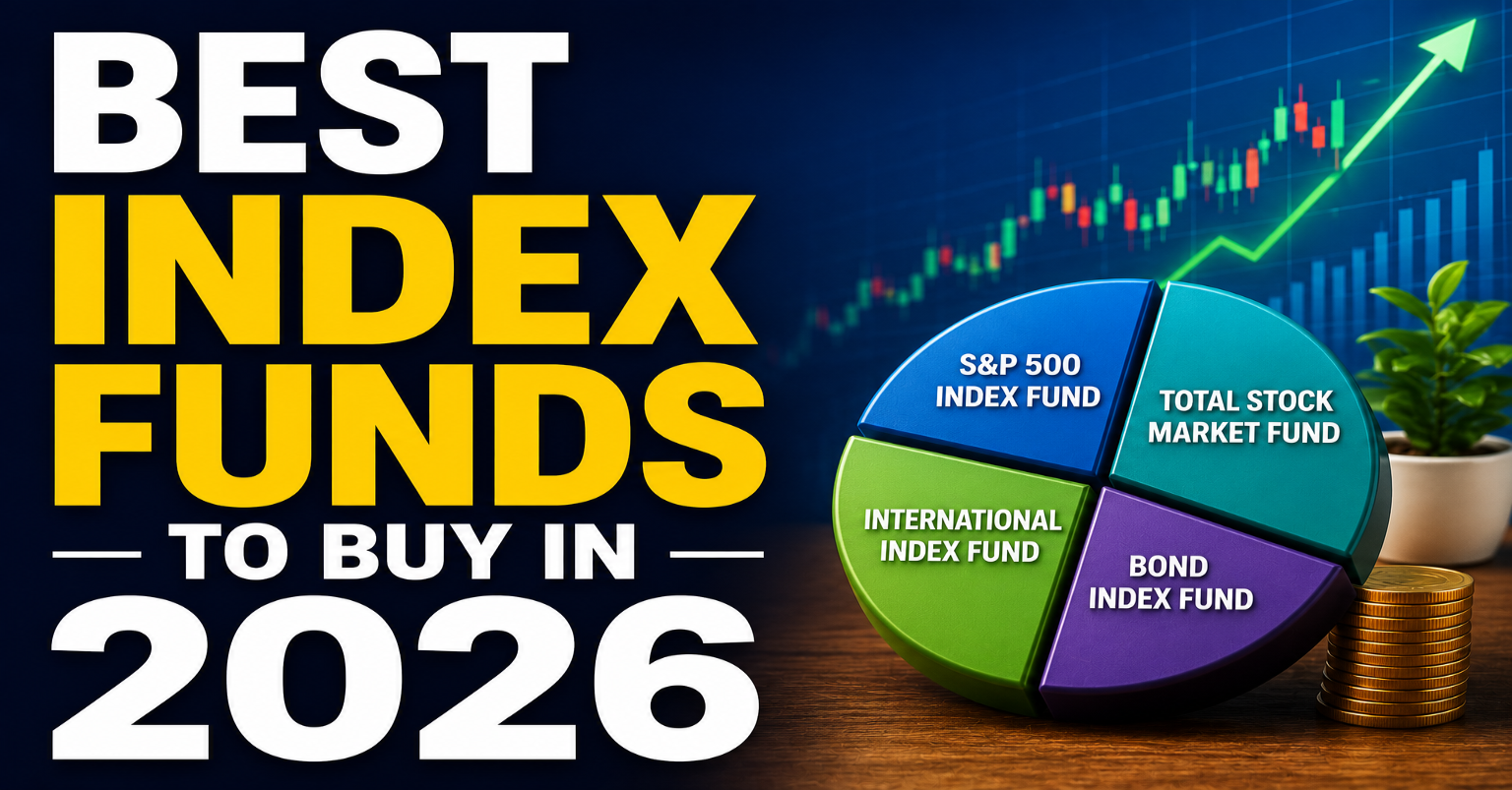
Index funds remain one of the most popular investment choices for both beginners and experienced investors. Their low fees, broad diversification, and long-term performance have made them a core holding in millions of investment portfolios.
In 2026, many investors continue turning to index funds because they offer a simple way to participate in the stock market without trying to pick individual winners. At the same time, experts are paying closer attention to diversification as U.S. stock indexes have become increasingly concentrated in a handful of large technology companies.
If you’re deciding between passive investing and selecting individual companies, read our guide on Growth Stocks That Could Bounce Back in 2026 to compare different investment approaches.
This guide explains the best types of index funds to consider in 2026, what makes a good index fund, and how to choose one that fits your financial goals.
What Is an Index Fund?
An index fund is a mutual fund or exchange-traded fund (ETF) designed to track the performance of a specific market index.
Instead of trying to beat the market, index funds aim to match the performance of indexes such as:
- S&P 500
- Total U.S. Stock Market
- Nasdaq-100
- International Stock Market
- Bond Market Indexes
Because they require less active management, index funds generally have lower fees than actively managed funds.
Why Index Funds Remain Popular in 2026
Several factors continue driving investors toward passive investing.
These include:
- Low expense ratios
- Broad diversification
- Simple investment strategy
- Lower portfolio turnover
- Long-term wealth-building potential
Passive investing has continued growing as investors seek lower costs and consistent market exposure.
Types of Index Funds Worth Considering
Rather than focusing on one specific fund, investors should understand the different categories available.
1. S&P 500 Index Funds
These funds track approximately 500 of the largest publicly traded U.S. companies.
They are often considered the foundation of many long-term investment portfolios.
Best for:
- Beginner investors
- Retirement accounts
- Long-term wealth building
2. Total U.S. Stock Market Index Funds
These funds provide exposure to thousands of publicly traded U.S. companies.
Unlike the S&P 500, they include:
- Large-cap stocks
- Mid-cap stocks
- Small-cap stocks
This broader diversification may reduce concentration risk.
3. International Index Funds
International funds invest in companies outside the United States.
Adding global exposure may improve diversification and reduce reliance on one country’s economy.
Many investment professionals continue recommending international diversification in 2026.
4. Bond Index Funds
Bond funds may help reduce portfolio volatility.
Although returns are generally lower than stocks over long periods, bonds can provide income and stability during market downturns.
5. Dividend Index Funds
Dividend-focused index funds invest in companies with long histories of paying dividends.
These funds may appeal to investors seeking regular income while maintaining diversified stock exposure.
What to Look for Before Buying an Index Fund
Not all index funds are identical.
Before investing, compare several important factors.
Low Expense Ratio
Lower fees allow more of your investment returns to remain in your portfolio.
Even small fee differences can become significant over decades.
Before investing, review the educational resources from Investor.gov, operated by the U.S. Securities and Exchange Commission (SEC), to better understand index funds, diversification, and long-term investing.
Tracking Performance
Good index funds closely follow their benchmark.
A lower tracking error generally indicates better performance relative to the index.
Diversification
A diversified fund reduces the impact of any single company.
Broad-market funds often provide better diversification than narrowly focused sector funds.
Fund Size
Larger funds generally offer greater liquidity and lower operating costs.
However, size should not be the only factor when making an investment decision.
Should Beginners Invest in Index Funds?
For many beginners, index funds provide an easy way to start investing.
Benefits include:
- Simple investment strategy
- Automatic diversification
- Lower management fees
- Reduced need to research individual stocks
Rather than trying to predict which companies will outperform, index funds allow investors to participate in overall market growth.
Common Mistakes to Avoid
Many investors make avoidable mistakes when buying index funds.
Avoid these common errors:
- Chasing recent performance
- Ignoring expense ratios
- Investing without diversification
- Trying to time the market
- Selling during short-term volatility
Successful investing usually requires patience rather than constant trading.
How to Build an Index Fund Portfolio
Many long-term investors combine several types of index funds.
A diversified portfolio may include:
- U.S. stock index funds
- International stock index funds
- Bond index funds
The exact allocation depends on your:
- Age
- Risk tolerance
- Investment timeline
- Financial goals
Review your portfolio periodically to ensure it continues matching your objectives.
Is 2026 a Good Time to Invest in Index Funds?
No one can predict future market performance with certainty.
However, history has shown that consistently investing over long periods has generally been more successful than trying to perfectly time market highs and lows.
If you’re investing for retirement or other long-term goals, making regular contributions may be more important than waiting for the “perfect” buying opportunity.
Final Thoughts
Index funds continue to be one of the simplest and most cost-effective ways to build long-term wealth in 2026.
Whether you choose an S&P 500 index fund, a total market fund, an international index fund, or a combination of several funds, diversification and consistency remain the keys to long-term success.
Instead of chasing short-term market trends, focus on your financial goals, invest regularly, keep costs low, and maintain a diversified portfolio. These habits have historically helped investors navigate both bull and bear markets more successfully.
Frequently Asked Questions
Are index funds good for beginners?
Yes. Many beginners choose index funds because they offer broad diversification, lower fees, and a simple long-term investment strategy.
What is the difference between an index fund and an ETF?
Both can track the same index. The main difference is that ETFs trade throughout the day like stocks, while traditional index mutual funds are priced once after the market closes.
Should I invest in more than one index fund?
Many investors build diversified portfolios by combining U.S. stock, international stock, and bond index funds.
Are index funds risk-free?
No. Index funds are still subject to market risk, and their value can rise or fall with the underlying investments.