
 MOHAMMAD ABUBAKR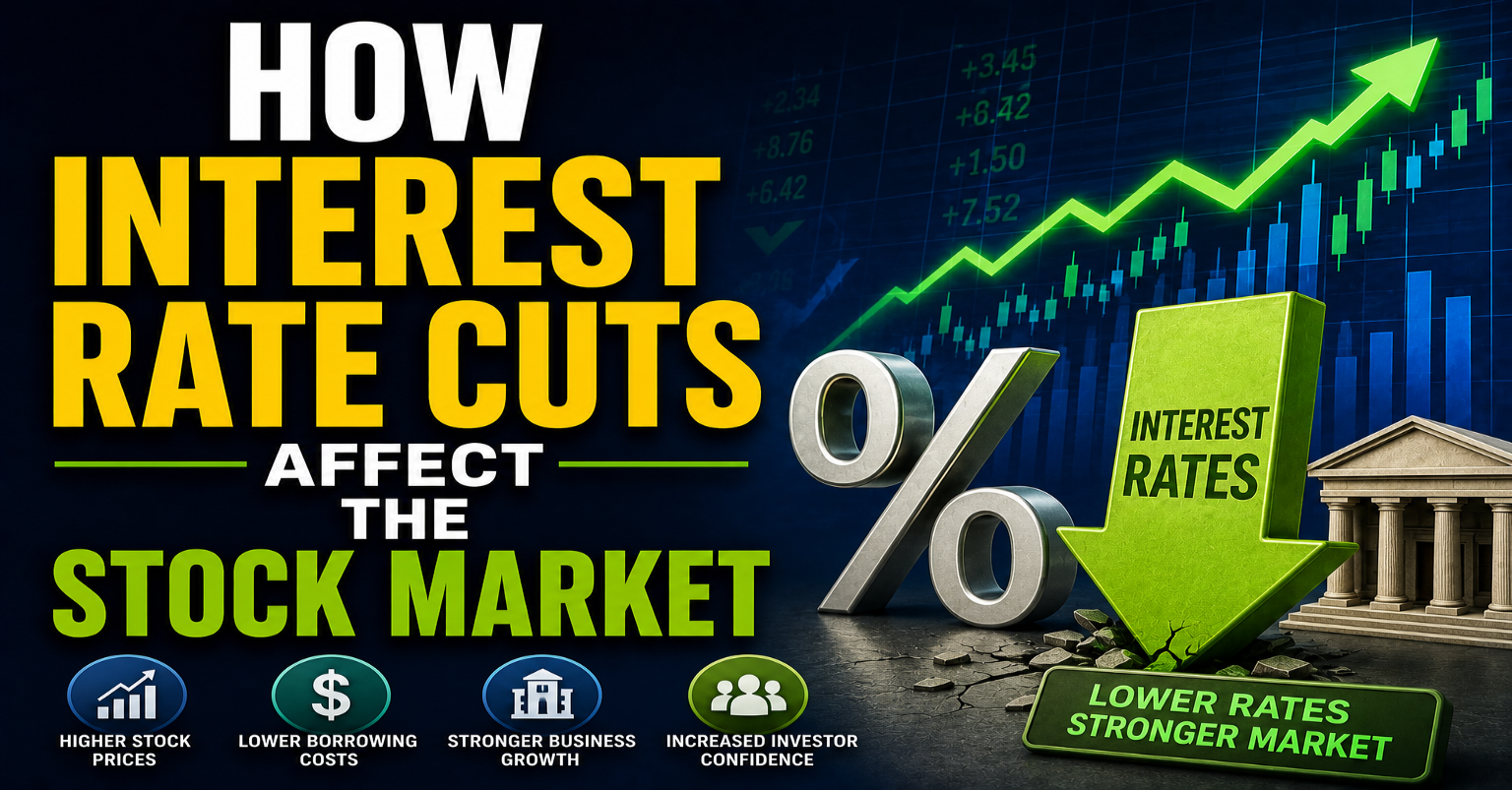
Interest rates play a major role in shaping the economy and the stock market. When the Federal Reserve lowers interest rates, the effects can be felt across businesses, consumers, and financial markets. Borrowing becomes cheaper, companies may invest more, and consumers often increase spending.
In 2026, investors are closely watching the Federal Reserve for signals about future rate cuts. While lower interest rates can create opportunities in the stock market, they don’t guarantee that stock prices will rise. Economic conditions, corporate earnings, and investor confidence also influence market performance.
You may also want to read our guide on Stocks That Could Benefit From Lower Interest Rates to learn which sectors investors often watch when borrowing costs begin to decline.
Understanding how interest rate cuts work can help you make better investment decisions instead of reacting to market headlines.
What Is an Interest Rate Cut?
An interest rate cut occurs when the Federal Reserve lowers its benchmark interest rate.
The goal is usually to:
- Encourage borrowing.
- Support economic growth.
- Increase business investment.
- Boost consumer spending.
- Improve employment.
Lower interest rates reduce the cost of borrowing for banks, businesses, and consumers.
Why Do Interest Rate Cuts Matter to Investors?
Interest rates affect company profits and investor behavior.
When borrowing costs decline:
- Businesses may finance expansion more easily.
- Consumers may spend more on homes, cars, and other large purchases.
- Investors may shift money from savings accounts and bonds into stocks in search of higher returns.
As a result, many sectors of the stock market may benefit from lower rates.
Which Sectors Often Benefit From Rate Cuts?
Although every market cycle is different, some sectors have historically performed well during periods of lower interest rates.
1. Technology
Technology companies often invest heavily in research, development, and expansion.
Lower financing costs may improve future growth opportunities.
2. Real Estate
Lower mortgage rates can increase demand for homes.
Real estate companies and REITs may also benefit from reduced borrowing costs.
3. Consumer Discretionary
When borrowing becomes more affordable, consumers may spend more on:
- Vehicles
- Travel
- Home improvement
- Electronics
- Entertainment
Companies in these industries may experience stronger sales.
4. Small-Cap Stocks
Many smaller companies rely on loans to support business growth.
Lower interest rates can reduce financing expenses and improve profitability.
5. Financial Services
The effect on banks and financial institutions can be mixed.
Although lower rates may reduce lending margins, increased loan demand and refinancing activity can offset some of those pressures.
Can Interest Rate Cuts Be Bad for Stocks?
Yes.
Not every rate cut leads to a strong stock market.
Sometimes the Federal Reserve lowers rates because the economy is weakening.
If businesses report declining earnings or unemployment rises sharply, stock prices may remain under pressure despite lower interest rates.
That’s why investors should consider the broader economic picture instead of focusing only on interest rate decisions.
How Rate Cuts Affect Different Types of Investments
Interest rate cuts can influence more than just stocks.
Bonds
Existing bonds often become more valuable when interest rates decline because newer bonds may offer lower yields.
Savings Accounts
Banks may reduce interest paid on savings accounts and certificates of deposit (CDs).
Housing Market
Lower mortgage rates may improve affordability and encourage more home purchases.
Dividend Stocks
Dividend-paying companies may attract investors seeking income as bond yields decline.
Should You Change Your Portfolio After a Rate Cut?
Many investors make the mistake of dramatically changing their portfolios based on a single Federal Reserve announcement.
Instead, consider these principles:
- Focus on your long-term financial goals.
- Maintain diversification.
- Review your asset allocation periodically.
- Avoid emotional investing.
- Continue investing consistently.
Long-term investing usually produces better results than reacting to short-term news.
Common Mistakes Investors Make
During periods of changing interest rates, investors often make avoidable mistakes.
These include:
- Trying to time the market.
- Chasing recent winners.
- Ignoring diversification.
- Selling quality investments during temporary declines.
- Investing based solely on headlines.
A disciplined investment plan can help reduce emotional decision-making.
Tips for Investing During Rate Changes
If interest rates begin falling:
- Continue contributing to your investment portfolio.
- Diversify across sectors.
- Focus on financially strong companies.
- Review your long-term goals.
- Avoid making large portfolio changes without careful analysis.
Remember that interest rates are only one factor affecting stock performance.
To better understand how monetary policy and investing work, visit Investor.gov, the official investor education website from the U.S. Securities and Exchange Commission (SEC), which offers free resources for investors.
Final Thoughts
Interest rate cuts can create favorable conditions for many businesses by lowering borrowing costs and encouraging economic activity. Technology companies, homebuilders, real estate firms, and consumer-focused businesses often receive increased attention during these periods.
However, interest rates don’t determine market performance on their own. Corporate earnings, inflation, consumer spending, and overall economic growth all play important roles in shaping investment returns.
Rather than trying to predict every Federal Reserve decision, focus on building a diversified portfolio, investing consistently, and maintaining a long-term perspective. Those habits have historically helped investors navigate changing market environments more successfully.
Frequently Asked Questions
Do interest rate cuts always cause stocks to rise?
No. Stock prices depend on many factors, including corporate earnings, economic growth, inflation, and investor confidence.
Which sectors usually benefit from lower interest rates?
Technology, real estate, consumer discretionary, homebuilders, and some small-cap companies often benefit from lower borrowing costs.
Should I buy stocks before a rate cut?
Instead of trying to predict interest rate decisions, many long-term investors focus on consistent investing and diversification.
Why does the Federal Reserve cut interest rates?
The Federal Reserve may lower rates to encourage borrowing, support employment, stimulate economic growth, and improve financial conditions.