
 MOHAMMAD ABUBAKR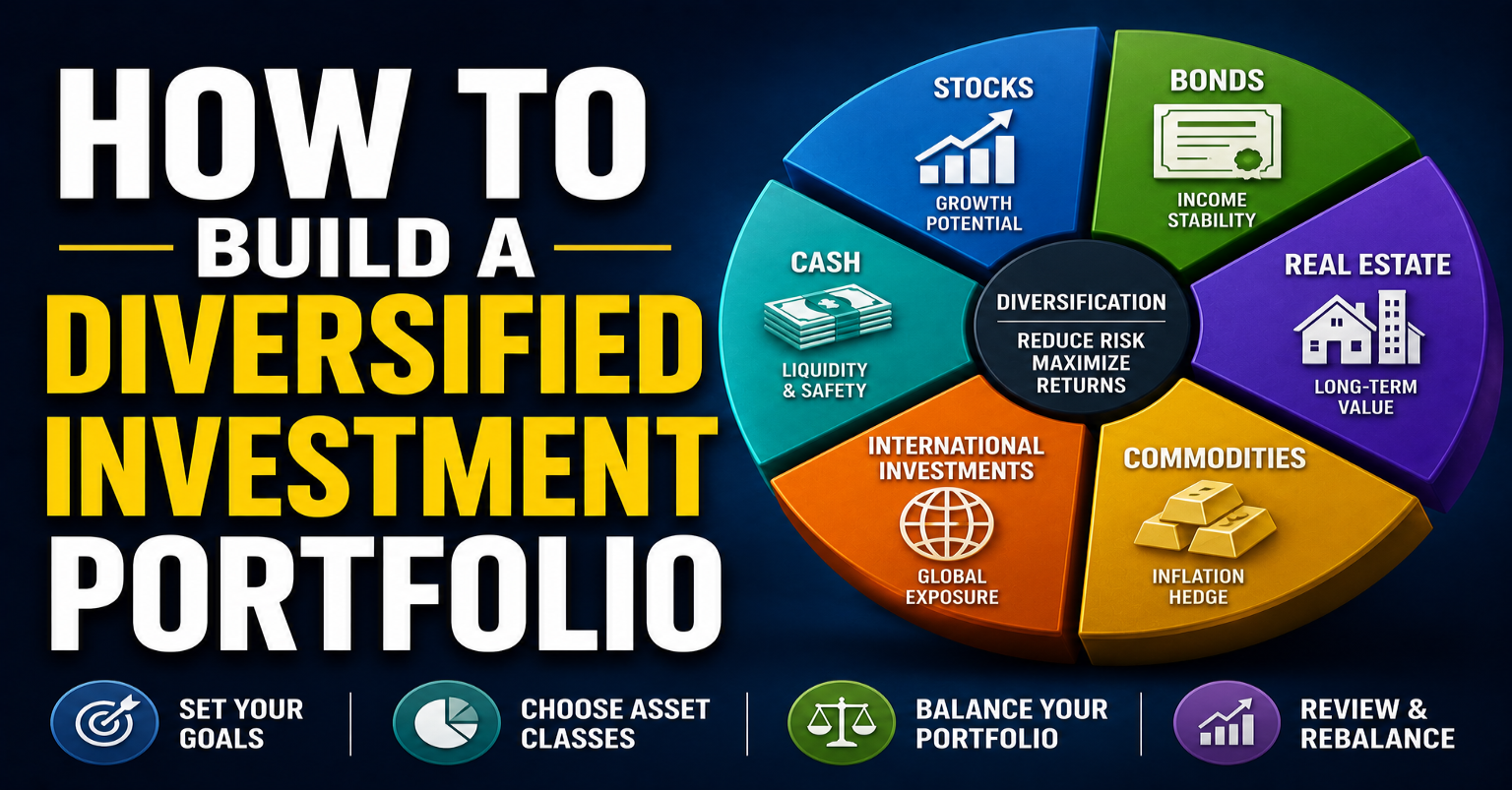
Building wealth isn’t just about picking winning stocks. One of the most effective ways to reduce investment risk is by creating a diversified portfolio. Diversification helps spread your investments across different asset classes, sectors, and regions, so your financial future doesn’t depend on the performance of a single investment.
In 2026, investors continue facing an uncertain economic environment. Inflation, interest rate changes, and market volatility remain important factors. Because of this, diversification has become even more valuable for long-term investors.
If you’re deciding how to invest new money, read our guide on Dollar-Cost Averaging vs Lump-Sum Investing to choose a strategy that fits your financial goals and risk tolerance.
This guide explains what portfolio diversification means, why it matters, and how you can build a balanced investment portfolio that supports your financial goals.
What Is Portfolio Diversification?
Diversification is the practice of spreading your investments across different types of assets instead of putting all your money into one investment.
The goal is simple:
Reduce the impact of poor performance from any single investment.
A diversified portfolio may include:
- U.S. stocks
- International stocks
- Bonds
- Index funds
- Exchange-Traded Funds (ETFs)
- Real Estate Investment Trusts (REITs)
- Cash or cash equivalents
Because different investments often perform differently under various market conditions, diversification can help smooth long-term returns.
Why Diversification Matters
No one can accurately predict which investment will outperform every year.
A diversified portfolio helps you:
- Reduce investment risk.
- Minimize losses from one asset class.
- Improve long-term consistency.
- Avoid concentrating too much money in one company or sector.
- Stay invested during market volatility.
Although diversification doesn’t eliminate risk, it can reduce the impact of market downturns.
Step 1: Define Your Investment Goals
Before choosing investments, determine what you’re investing for.
Common financial goals include:
- Retirement
- Buying a home
- College savings
- Building long-term wealth
- Financial independence
Your goals will influence your investment strategy and time horizon.
Step 2: Understand Your Risk Tolerance
Every investor has a different comfort level with market fluctuations.
Ask yourself:
- How would I react if my portfolio dropped 20%?
- How long can I keep my money invested?
- Do I prefer steady growth or higher potential returns?
Investors with longer time horizons often accept more stock market exposure, while those nearing retirement may prefer a more conservative allocation.
Step 3: Diversify Across Asset Classes
A strong portfolio usually includes more than just stocks.
Common asset classes include:
Stocks
Stocks provide long-term growth potential but can be volatile.
Bonds
Bonds generally offer more stability and may reduce portfolio volatility.
Real Estate
Real estate investments, including REITs, can provide additional diversification and income potential.
Cash
Keeping some cash available can help cover emergencies and provide flexibility during market downturns.
Step 4: Diversify Within Stocks
Owning multiple stocks isn’t enough.
Diversify across:
- Large-cap companies
- Mid-cap companies
- Small-cap companies
- Value stocks
- Growth stocks
- Dividend-paying companies
You should also consider exposure to different industries, such as:
- Technology
- Healthcare
- Financial services
- Consumer staples
- Energy
- Industrials
This reduces dependence on any single sector.
Step 5: Add International Investments
Many investors focus only on U.S. companies.
However, international investments can provide exposure to:
- Developed markets
- Emerging markets
- Global economic growth
Global diversification reduces reliance on the performance of one country’s economy.
Step 6: Use Low-Cost Index Funds and ETFs
For many investors, index funds and ETFs offer an easy way to achieve diversification.
Benefits include:
- Broad market exposure.
- Low expense ratios.
- Professional management.
- Easy portfolio building.
Many long-term investors use index funds as the foundation of their portfolios.
Step 7: Rebalance Your Portfolio
Over time, investment performance changes your portfolio allocation.
For example:
If stocks perform exceptionally well, they may represent a larger percentage of your portfolio than originally planned.
Rebalancing helps restore your desired asset allocation.
Many investors review their portfolios at least once each year.
Common Diversification Mistakes
Avoid these common errors:
- Investing only in one company.
- Concentrating on one sector.
- Ignoring international markets.
- Chasing recent winners.
- Trading too frequently.
- Forgetting to rebalance.
Diversification works best when maintained consistently over time.
Sample Diversified Portfolio
Your allocation depends on your goals and risk tolerance.
A long-term investor might consider a portfolio that includes:
- U.S. Stock Index Funds
- International Stock Funds
- Bond Funds
- REITs
- Cash Reserves
The exact percentages should reflect your personal financial situation, investment timeline, and ability to tolerate risk.
Tips for Long-Term Success
Building a diversified portfolio is only the beginning.
To improve your long-term results:
- Invest consistently.
- Increase contributions as your income grows.
- Avoid emotional decisions.
- Review your investments annually.
- Keep investment costs low.
- Stay focused on long-term goals.
Successful investing often depends more on discipline than on predicting short-term market movements.
For additional guidance on diversification, asset allocation, and investing basics, visit Investor.gov, the official investor education website from the U.S. Securities and Exchange Commission (SEC).
Final Thoughts
Diversification remains one of the most important principles of successful investing. While no portfolio can eliminate risk completely, spreading your investments across multiple asset classes, sectors, and geographic regions can help reduce volatility and improve long-term stability.
Whether you’re just starting your investing journey or expanding an existing portfolio, maintaining diversification, investing consistently, and reviewing your asset allocation regularly can help you stay on track toward your financial goals.
Remember, building wealth is usually a marathon—not a sprint.
Frequently Asked Questions
What is a diversified investment portfolio?
A diversified portfolio spreads investments across different asset classes, industries, and regions to reduce overall investment risk.
How many stocks should I own?
There isn’t a fixed number. Many investors use diversified index funds or ETFs to gain exposure to hundreds or even thousands of companies.
Should beginners diversify?
Yes. Diversification can help reduce the impact of any single investment performing poorly.
How often should I rebalance my portfolio?
Many investors review and rebalance their portfolios once or twice a year or after significant market movements.