 MOHAMMAD ABUBAKR
Introduction
A credit card sitting in your wallet can either be one of the most useful financial tools you own — or one of the most expensive. Most people assume they are using their cards responsibly. They pay the bill when they remember, they swipe for convenience, and they tell themselves they will pay off the balance “next month.”
But the truth is that credit card companies are extraordinarily good at designing products that earn revenue from predictable human behavior. Interest charges, late fees, and cash advance costs are not accidents. They are built into the business model.
According to the Consumer Financial Protection Bureau (CFPB), Americans paid billions of dollars in credit card interest and fees in recent years. Much of that came from a small number of avoidable mistakes that millions of cardholders make repeatedly.
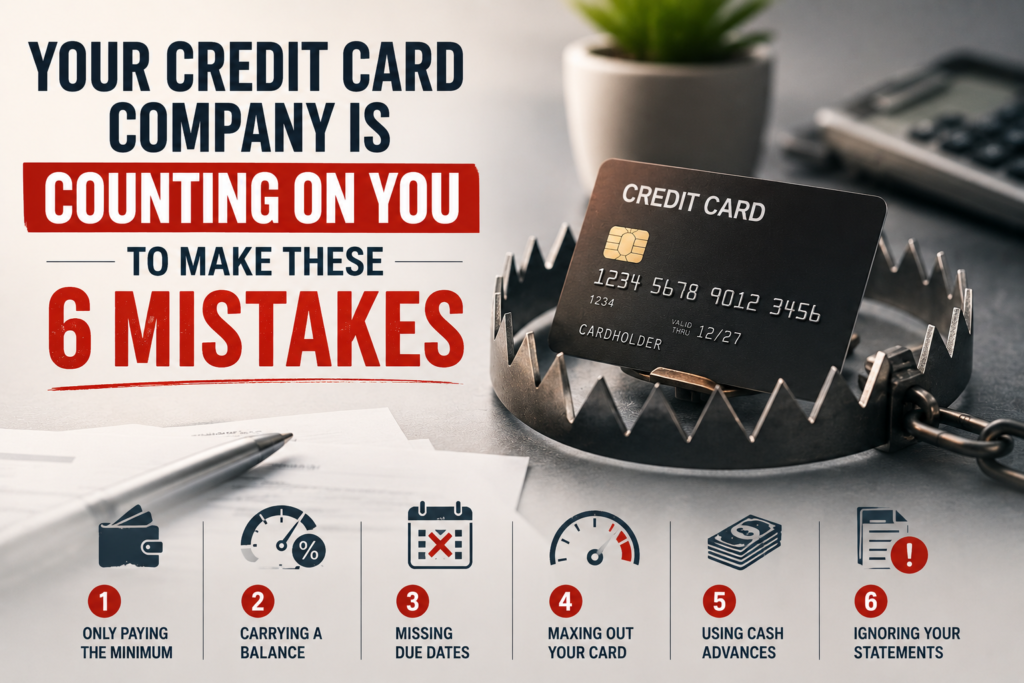
This article breaks down the six most costly credit card mistakes, explains exactly how they affect your wallet and your credit score, and gives you practical steps to avoid every one of them. Knowledge is the most powerful protection you have.
How Credit Card Companies Make Money
Before diving into the mistakes, it helps to understand how credit card companies generate revenue. These are legitimate, disclosed business practices — but they are designed to work in the company’s favor when cardholders are not paying close attention.
- Interest charges (APR): When you carry a balance from month to month, the card issuer charges interest on that balance at your annual percentage rate (APR). This is the single largest revenue source for most issuers.
- Late payment fees: Missing a payment due date typically triggers a fee, which the CFPB has noted can reach $30 or more per occurrence. Repeat late payments can result in penalty APRs.
- Cash advance fees: Withdrawing cash against your credit line comes with its own fee, usually 3% to 5% of the amount withdrawn, plus immediate interest charges.
- Foreign transaction fees: Many cards charge 1% to 3% on purchases made in foreign currencies or with international merchants.
- Balance transfer fees: Moving debt from one card to another typically costs 3% to 5% of the transferred amount.
- Interchange fees: Merchants pay a small percentage on each transaction. Cardholders do not pay this directly, but it funds rewards programs that encourage more spending.
None of these fees are hidden — they are disclosed in the cardholder agreement. The problem is that most people never read that agreement closely. That is exactly where the mistakes begin.
The 6 Credit Card Mistakes That Can Cost You Money
Mistake 1: Paying Only the Minimum Amount Due
Why People Make This Mistake
The minimum payment feels like an act of responsibility. You got the bill, you paid something, so you are in good standing, right? Credit card statements are legally required to show a minimum payment, and for many people that number feels manageable — especially when the full balance does not.
The Real Financial Impact
Paying only the minimum is one of the most expensive habits a cardholder can develop. When you pay just the minimum, the remaining balance continues to accrue interest at your full APR, which for many cards ranges from 20% to 29% or higher according to Federal Reserve data.
Here is a straightforward example. Suppose you carry a $5,000 balance at 24% APR. If you pay only the minimum each month — typically around 2% of the balance or a small flat amount — it could take more than 20 years to pay off that debt. Over that time, you could pay more in interest than the original balance itself.
The CFPB requires issuers to include a “minimum payment warning” on statements showing exactly how long payoff takes and how much interest you will pay. Most people skip right past it.
How to Avoid It
Pay the full statement balance every month whenever possible. If you cannot pay the full amount, pay as much above the minimum as you can afford. Even doubling the minimum payment dramatically shortens your payoff timeline and reduces total interest paid. Consider the debt avalanche or debt snowball method to eliminate balances strategically. (See our guide: Debt Snowball vs. Debt Avalanche.)
Mistake 2: Missing Payment Due Dates
Why People Make This Mistake
Life gets busy. A bill slips through the mental cracks, a due date falls on an awkward day, or someone simply forgets to log in and pay. It happens to careful, organized people all the time. The problem is that credit card issuers have very little tolerance for late payments — and the consequences arrive fast.
The Real Financial Impact
A late payment typically triggers an immediate late fee. Under current CFPB rules, these fees have been a point of regulatory focus, but they can still represent a meaningful unexpected cost. More seriously, a payment that is 30 or more days past due can be reported to the three major credit bureaus — Experian, Equifax, and TransUnion — and can remain on your credit report for up to seven years.
Beyond the fee, many issuers apply a penalty APR when a payment is missed. Penalty APRs can exceed 29%, and they apply to your existing balance going forward, not just new purchases.
How to Avoid It
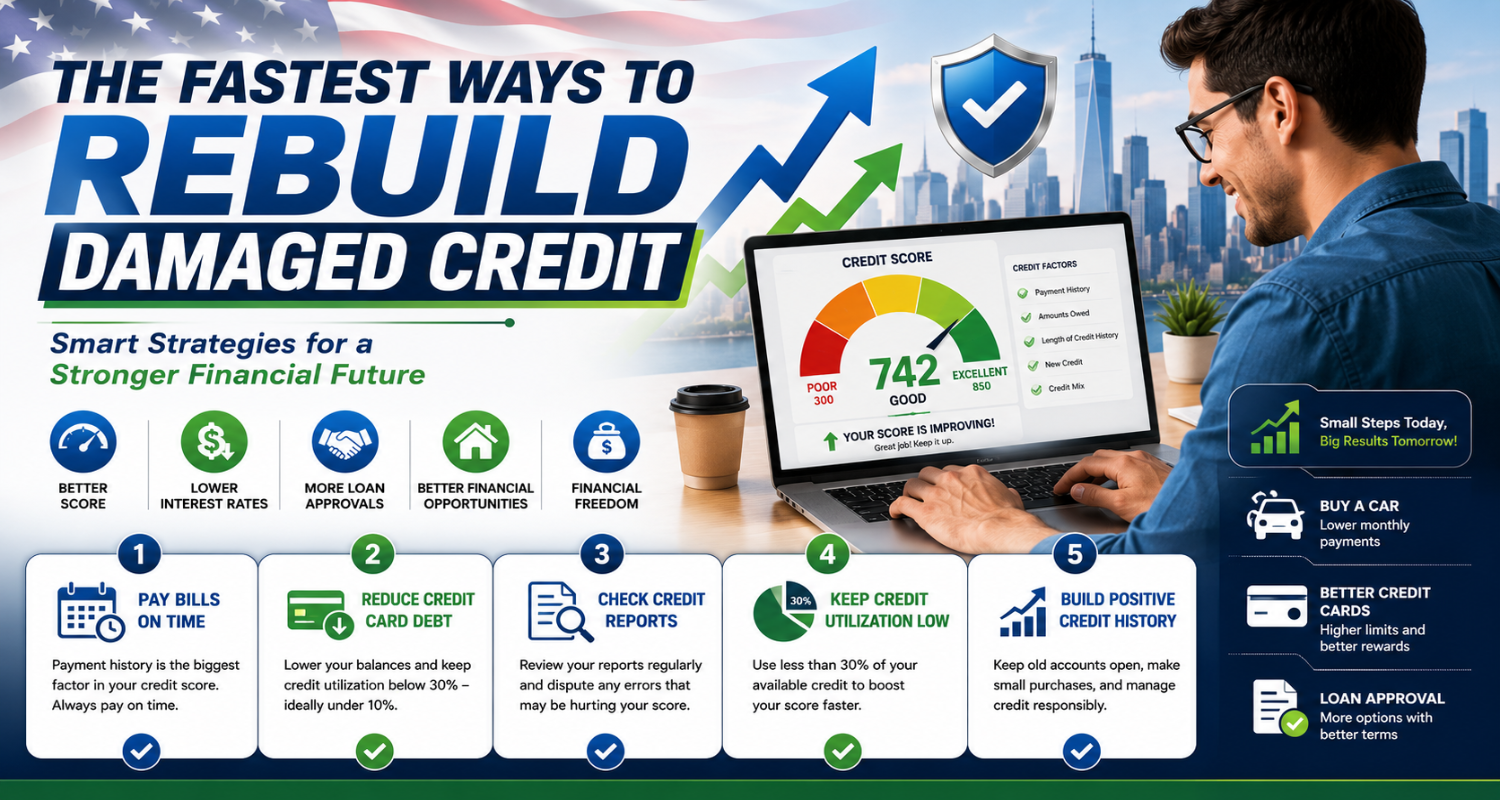
Set up automatic payments for at least the minimum amount due every month. This protects your credit report even when life gets chaotic. Then, separately, make manual payments toward the full balance at your own pace. Most major banks and card issuers make autopay easy to configure online or through their mobile app. You can also set calendar reminders or email alerts several days before each due date as a backup.
Mistake 3: Carrying a High Balance
Why People Make This Mistake
Using a credit card for everyday expenses — groceries, gas, subscriptions, dining out — can cause balances to creep upward without any single transaction feeling significant. Before long, the card is nearly maxed out, and the cardholder is surprised to learn that this affects their credit score even if they pay the bill on time.
The Real Financial Impact
Credit scoring models, including FICO and VantageScore, measure something called your credit utilization ratio. This is the percentage of your available credit that you are currently using. Most credit experts, including guidance from Experian and Equifax, suggest keeping utilization below 30% across all cards. Lower is generally better — consumers with the highest credit scores tend to use less than 10% of their available credit.
High utilization signals financial stress to lenders, even when it results from normal spending rather than debt trouble. A card with a $5,000 limit carrying a $4,000 balance has 80% utilization, which can drag down your credit score meaningfully.
How to Avoid It
Pay down balances before the statement closing date, not just before the due date. Issuers typically report your balance to the credit bureaus on the statement closing date, so your reported utilization reflects whatever your balance was at that moment. If you use your card heavily for rewards or convenience, making mid-cycle payments keeps your reported utilization low even with high spending volume.
Mistake 4: Ignoring Your APR
Why People Make This Mistake
When a card comes with a 0% introductory APR offer, it is easy to stop thinking about interest entirely. Everything feels free until the promotional period ends. Even outside of promotional offers, many cardholders simply do not know what their APR is — or they assume it does not matter as long as they intend to pay off the balance.
The Real Financial Impact
Your APR is the annual cost of borrowing on your card, and it compounds in ways that are not always intuitive. Credit card interest is typically calculated using the daily periodic rate, which is your APR divided by 365. Each day you carry a balance, a small fraction of that APR is added to what you owe.
When a 0% promotional period ends, the full purchase APR — often 20% or higher — begins applying to any remaining balance immediately. Many cardholders are caught off guard by the size of their first interest charge after a promotional period expires.
Variable APRs, which are tied to the Prime Rate set by the Federal Reserve, can also rise over time. A card that started at 18% may now be at 24% if rates have moved.
How to Avoid It
Know your card’s APR before carrying a balance. If you are on a 0% promotional offer, mark the exact end date of that promotion on your calendar and create a payoff plan that retires the full balance before that date. If you routinely carry a balance, compare cards to find the lowest available APR for your credit profile. (See our guide: Fixed vs. Adjustable Mortgage Explained — the same principles of rate awareness apply to credit products.)
Mistake 5: Taking Cash Advances
Why People Make This Mistake
A cash advance feels like a quick fix in a financial pinch. Your credit card works at the ATM, the money appears immediately, and the transaction is simple. What most cardholders do not realize is that a cash advance is one of the most expensive ways to access money on a credit card.
The Real Financial Impact
Cash advances come with two layers of extra cost. First, there is an upfront fee — typically 3% to 5% of the amount withdrawn. Second, there is no grace period on cash advance interest. Unlike purchases, where interest is only charged if you carry a balance past the due date, cash advance interest begins accruing the moment you take the money out. The cash advance APR is also frequently higher than the standard purchase APR, sometimes by 5 or more percentage points.
On a $1,000 cash advance with a 5% fee and a 29% cash advance APR, you start with $1,050 owed and immediately begin accumulating interest at a daily rate of nearly 0.08%. That adds up quickly.
How to Avoid It
Treat cash advances as a last resort, not a routine option. If you need cash urgently, consider alternatives first: a personal loan from a bank or credit union, borrowing from a friend or family member, or accessing a line of credit with better terms. Building an emergency fund — even a small one — is the most effective long-term protection against needing a cash advance. (See our Emergency Fund Guide.)
Mistake 6: Applying for Too Many Credit Cards
Why People Make This Mistake
New card offers come with compelling incentives: signup bonuses, 0% promotional rates, cash back rewards. Applying for several cards in a short time can seem like a smart way to maximize rewards. And while strategic credit management is valid, applying indiscriminately creates problems that can outweigh the benefits.
The Real Financial Impact
Each time you apply for a new credit card, the issuer performs a hard inquiry on your credit report. According to Experian, a single hard inquiry has a modest effect on your score — typically fewer than five points — but multiple inquiries in a short period create a pattern that credit scoring models flag as higher risk. Lenders interpret frequent applications as a sign of financial stress or aggressive credit-seeking.
There is also the impact on average account age. Credit scoring models reward longer credit histories. Adding several new accounts at once lowers the average age of your accounts, which can work against you, particularly if you are building credit for a major loan like a mortgage in the near future.
How to Avoid It
Apply for new credit cards intentionally and selectively, not impulsively. Space out applications by at least six months when possible. Before applying, research cards carefully and choose the one that best fits your actual spending patterns and financial goals. (See our guide: How Credit Scores Affect Mortgage Approval, for more on how credit behavior affects major financial decisions.)
How These Mistakes Affect Your Credit Score
Understanding why these mistakes matter requires a quick look at how credit scores are calculated. FICO scores, the most widely used scoring model, weigh five factors.
- Payment history (35%): This is the single most important factor. Late payments, missed payments, and accounts sent to collections all damage your score and remain on your report for years.
- Credit utilization (30%): The percentage of available credit you are using across all revolving accounts. High utilization reduces your score even if you pay on time.
- Length of credit history (15%): Older accounts and a longer average account age generally help your score. Opening many new accounts at once reduces this.
- New credit (10%): Recent hard inquiries and newly opened accounts factor into this category. Multiple applications in a short window can hurt.
- Credit mix (10%): Lenders like to see a variety of credit types managed responsibly — credit cards, installment loans, and so on. This is the least influential factor.
Each of the six mistakes described in this article connects directly to one or more of these factors. Missing payments hammers payment history. High balances damage utilization. Too many applications ding new credit and account age. These are not isolated problems — they are interconnected, and they compound over time.
12 Smart Credit Card Habits
Building better habits does not require a complete financial overhaul. Small, consistent changes have a disproportionately large impact over time.
- Pay the full statement balance whenever possible. This is the single most effective way to avoid interest charges entirely.
- Enable automatic payments. Set autopay for at least the minimum due so you never accidentally miss a payment. Then pay more manually each month.
- Track your spending weekly. You cannot manage what you do not measure. Reviewing transactions weekly catches errors, prevents surprises, and keeps you aware of your habits.
- Stay below 30% credit utilization — and aim lower. Thirty percent is a guideline, not a goal. Below 10% is where the best credit scores tend to cluster.
- Review your statement every month. Look for unauthorized charges, billing errors, and fee patterns. Catching a problem early is far easier than disputing it months later.
- Set personal spending limits below your credit limit. Give yourself a self-imposed ceiling — for example, never letting your balance exceed $500 even if your limit is $5,000.
- Avoid impulse purchases on credit. Credit cards make spending psychologically easier because money does not leave your account immediately. Pause before charging non-essential purchases.
- Monitor your credit reports regularly. You are entitled to free reports from all three major bureaus through AnnualCreditReport.com. Review them for errors, unfamiliar accounts, and signs of identity theft.
- Compare cards carefully before applying. Look beyond the signup bonus. Evaluate the ongoing APR, annual fee, rewards structure, and foreign transaction policy based on how you actually spend money.
- Build and maintain an emergency fund. A three-to-six-month financial cushion means you never have to reach for a credit card in a true emergency. (See our Emergency Fund Guide.)
- Understand your rewards program. Rewards expire, categories rotate, and redemption values vary. Know what your points or cash back are actually worth and how to use them before they disappear.
- Read your card’s terms and conditions. It is a long document and not enjoyable reading. But the APR, fee schedule, grace period terms, and penalty rate disclosures are all in there — and knowing them puts you firmly in control.
8 Common Credit Card Myths — Debunked
Misinformation about credit cards is widespread. Here are eight myths that trip up even financially attentive people.
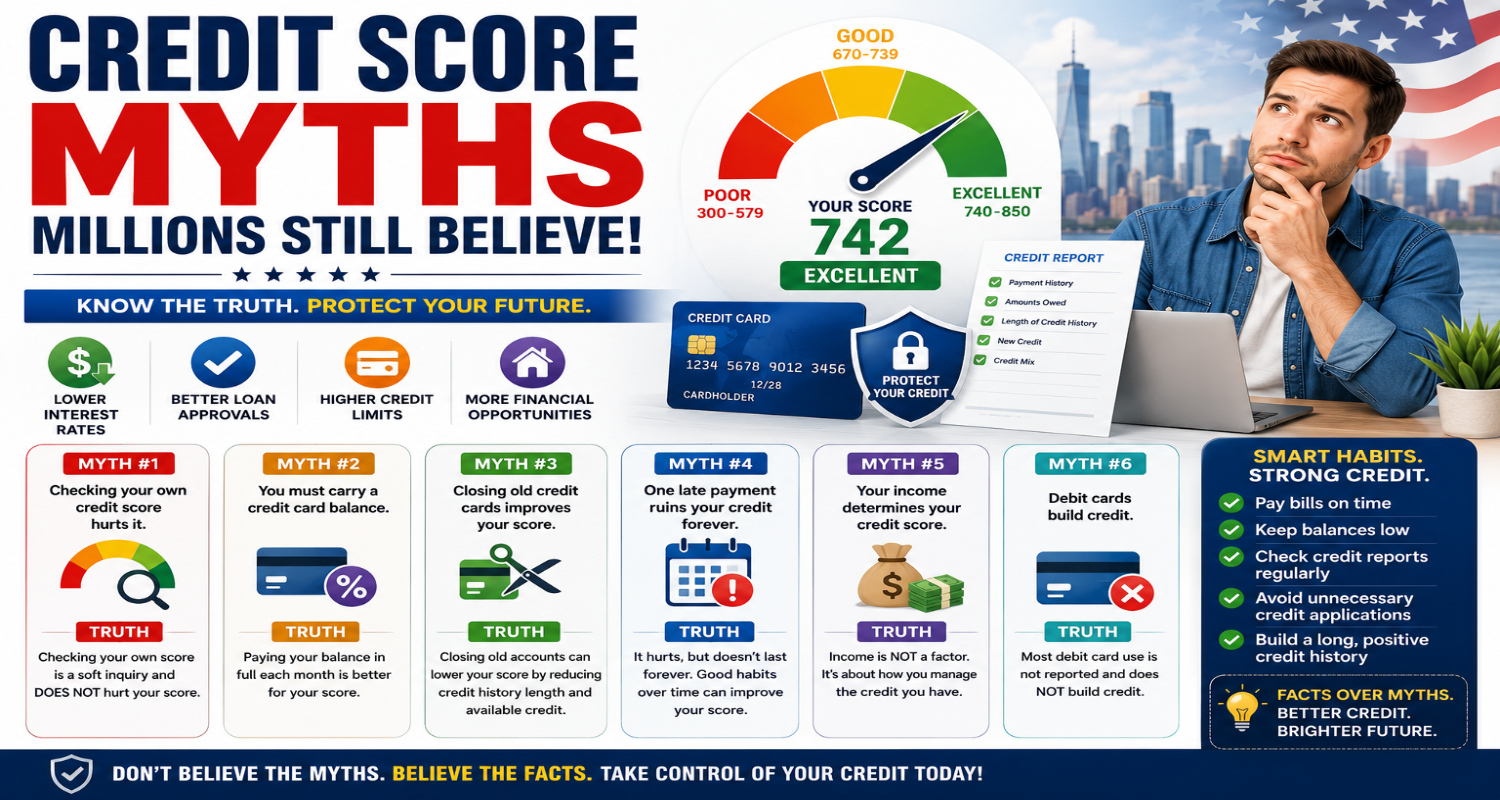
Myth 1: Carrying a balance improves your credit score. This is one of the most persistent myths in personal finance. You do not need to carry a balance — and pay interest — to build good credit. Paying your full balance on time every month demonstrates responsible credit management and builds your score without costing you a dime in interest.
Myth 2: Closing old credit cards is always a good idea. Closing a long-standing account removes that account’s credit limit from your available credit, which can raise your overall utilization ratio. It also may shorten your average account age. Unless the card has an annual fee you are not recovering in value, keeping old accounts open and occasionally active is often the smarter choice.
Myth 3: Checking your own credit score hurts it. Checking your own credit score or pulling your own credit report is called a soft inquiry. Soft inquiries do not affect your score at all. Only hard inquiries — initiated by lenders when you apply for credit — have the potential to lower your score, and only slightly.
Myth 4: Having multiple credit cards always leads to debt. The number of cards you own does not determine your debt level. Behavior does. Many financially disciplined people carry several cards for different reward categories and pay every balance in full monthly. The risk is not the card — it is the spending habit.
Myth 5: Missing one payment has no real consequences. A single late payment that is 30 or more days past due can be reported to the credit bureaus and stay on your report for up to seven years. It can lower your credit score significantly, trigger a late fee, and potentially activate a penalty APR. One missed payment is never harmless.
Myth 6: Your credit limit is your budget. Your credit limit is the maximum you are allowed to borrow, not a spending recommendation. Treating it as a budget ceiling encourages high utilization, which hurts your credit score and increases the likelihood of carrying expensive debt.
Myth 7: A high income automatically means good credit. Credit scoring models do not factor in your income at all. FICO and VantageScore scores are built entirely from your credit behavior — payment history, utilization, account age, inquiries, and credit mix. A high earner with poor payment habits has a lower score than a modest earner with a spotless repayment record.
Myth 8: You need to carry debt to have a credit history. Credit history is built by having open accounts and using them responsibly. A credit card you use for small purchases and pay off monthly every month creates a positive credit history without requiring you to owe anyone money at the end of the billing cycle.
Frequently Asked Questions
Q1: Does paying only the minimum hurt my credit score? Paying the minimum keeps your account in good standing and does not directly hurt your score — but if paying the minimum means you are accumulating a high balance, your credit utilization ratio rises, which can lower your score. It also keeps you in expensive debt much longer than necessary.
Q2: What is a good credit utilization ratio? Most credit experts recommend staying below 30% of your total available credit across all revolving accounts. However, consumers with the highest credit scores typically maintain utilization below 10%. Lower utilization is almost always better for your score.
Q3: How can I avoid paying credit card interest? Pay your full statement balance by the due date every month. Most credit cards offer a grace period — typically 21 to 25 days after the statement closing date — during which no interest is charged on purchases if the previous balance was paid in full. Carry no balance, pay no interest.
Q4: Is it bad to have multiple credit cards? Not inherently. Multiple cards can increase your total available credit, lowering your utilization ratio, and allow you to optimize rewards in different spending categories. The key is managing all accounts responsibly. The risk comes from opening too many accounts at once or spending more than you can pay off each month.
Q5: How often should I check my credit report? At a minimum, check your credit reports from all three major bureaus — Experian, Equifax, and TransUnion — at least once a year through AnnualCreditReport.com. More frequent monitoring, such as monthly or quarterly, is even better for catching errors or signs of identity theft quickly.
Q6: What happens if I miss a credit card payment? You will likely be charged a late fee. If the payment is 30 or more days past due, the issuer can report it to the credit bureaus, potentially damaging your credit score for years. Some issuers also apply a penalty APR to your balance. Contact your issuer immediately if you miss a payment — many will waive a first-time late fee if you ask and have a clean history.
Q7: What is the difference between a fixed and variable APR? A fixed APR does not change based on external interest rate indexes. A variable APR is tied to a benchmark — most commonly the Prime Rate published by the Federal Reserve — and can go up or down when that benchmark changes. Most consumer credit cards in the U.S. carry variable APRs.
Q8: Can I negotiate my credit card’s APR? Yes, in many cases. If you have a solid payment history with an issuer, calling customer service and requesting a rate reduction is worth trying. This works more often than most people expect, particularly for long-standing customers in good standing.
Q9: What is a penalty APR and when does it apply? A penalty APR is a higher interest rate that some issuers apply after a cardholder misses a payment or violates another card term, such as exceeding the credit limit. Penalty APRs can be significantly higher than the standard purchase APR. Read your cardholder agreement to understand when it applies and whether it can be reversed.
Q10: How long does a late payment stay on my credit report? A late payment that has been reported to the credit bureaus — typically after being 30 or more days past due — can remain on your credit report for up to seven years from the date of the original missed payment. Its impact on your score diminishes over time, but it does not disappear quickly.
Conclusion: Use Credit Cards as Tools, Not Shortcuts
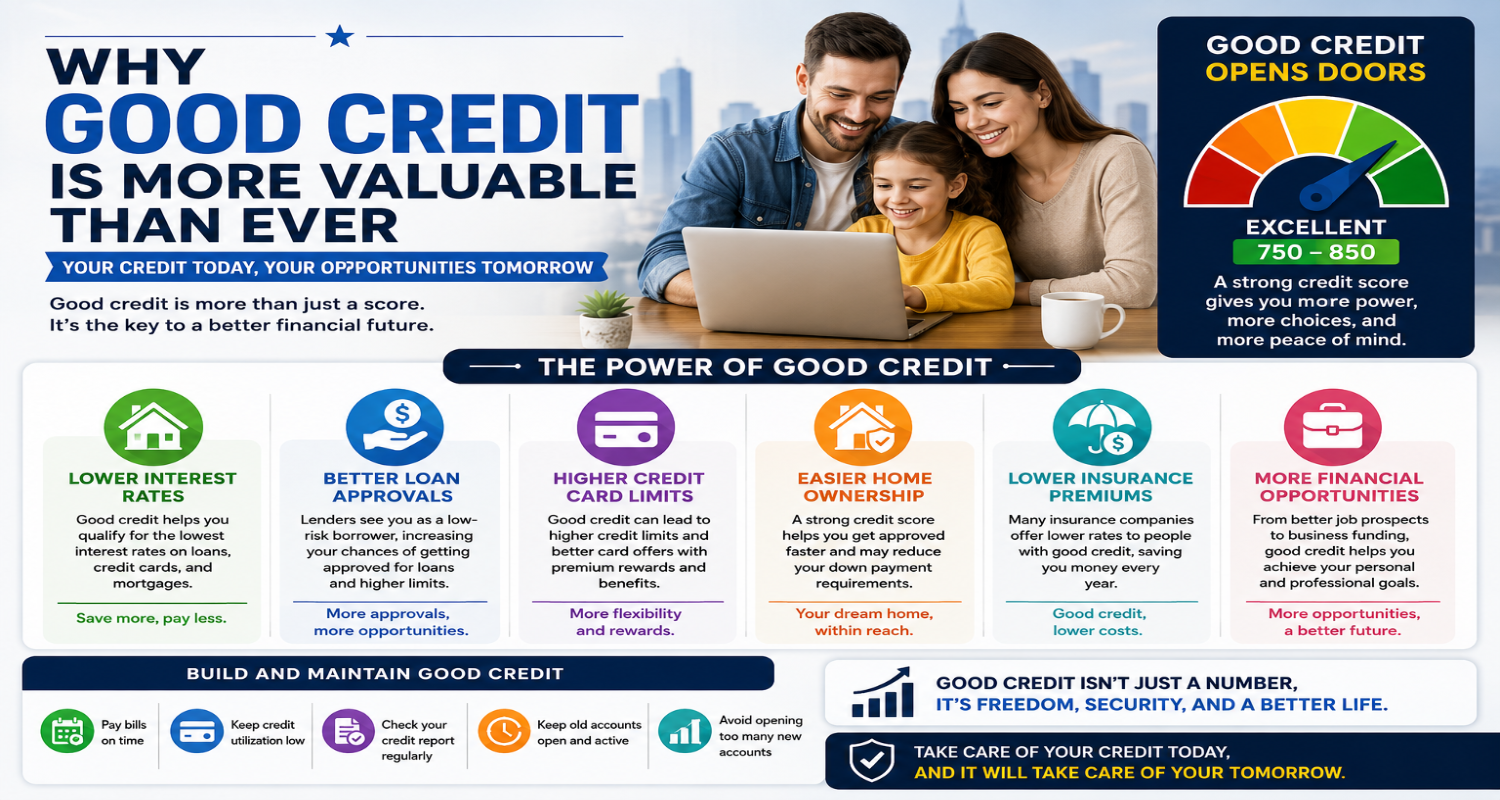
Credit cards are not the enemy. Used well, they build credit history, provide consumer protections, earn rewards, and help manage cash flow. The problem is not the product — it is the gap between how the product is marketed and how it actually works when you are not paying close attention.
Your credit card company profits most when you pay late, carry high balances, take cash advances, ignore your APR, and apply for cards you do not need. These behaviors generate the interest and fees that make the business model work.
You do not have to play along.
Pay your full balance when you can. Set up autopay. Know your APR. Stay below 30% utilization. Treat cash advances as a last resort. Apply for new cards with intention, not impulse. Monitor your credit report regularly. And never confuse your credit limit with your budget.
Credit cards reward cardholders who understand them. The information in this article is a starting point — now the next step is putting it to work in your own financial life.