 MOHAMMAD ABUBAKR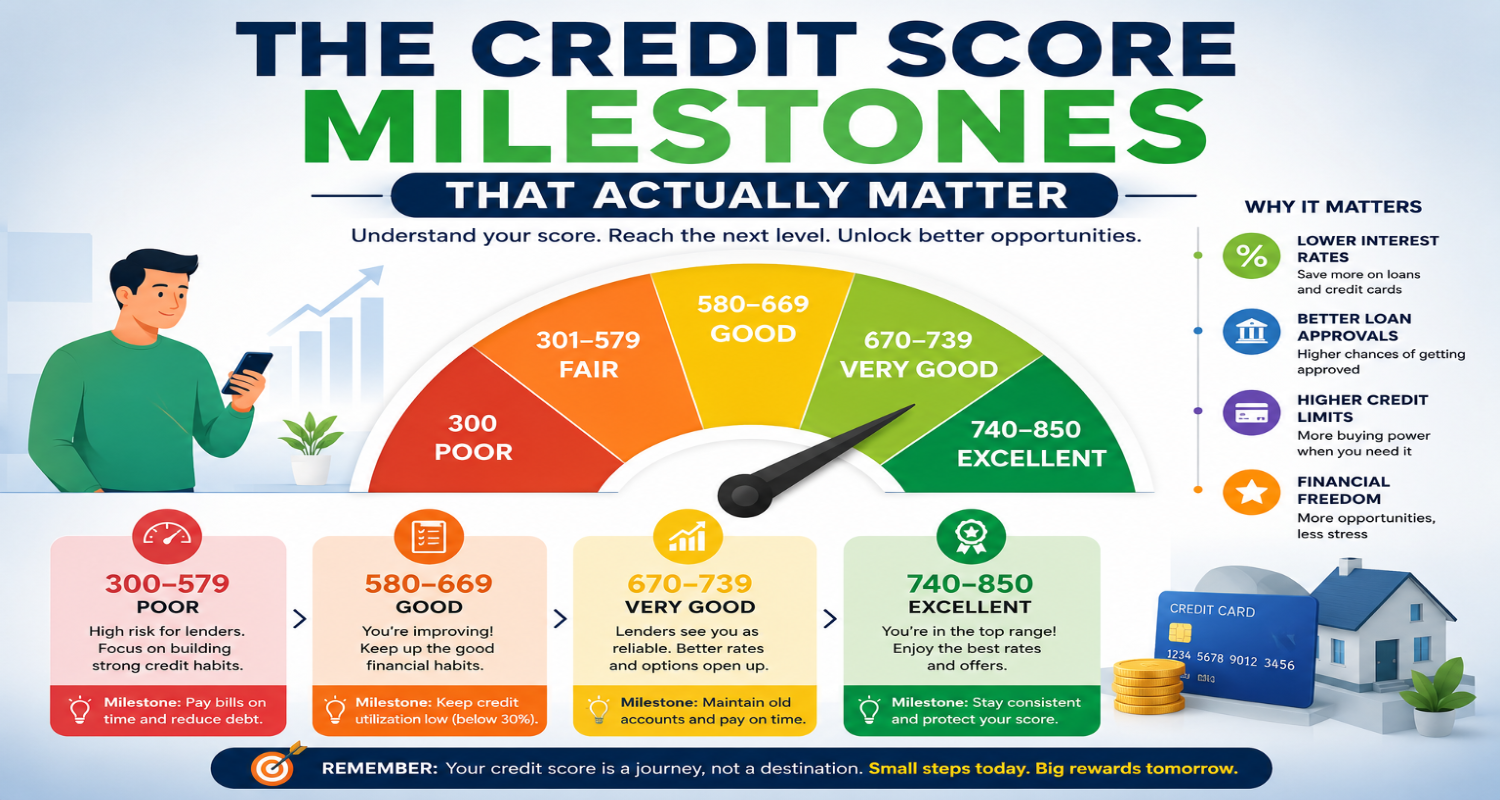
Your credit score is more than just a number. It can influence whether you qualify for a mortgage, receive a lower interest rate, or even get approved for a rental apartment. However, many people focus on reaching a perfect 850 credit score when, in reality, certain milestones matter much more than perfection.
Understanding these key credit score ranges helps you set realistic goals and make smarter financial decisions. Instead of chasing an almost impossible score, you can focus on milestones that actually improve your borrowing power and save you money.
In this guide, we’ll explore the credit score milestones that make the biggest difference, what each one means, and how you can move from one level to the next.
Understanding Credit Score Ranges
Most lenders use scoring models that range from 300 to 850. While the exact model may vary, these ranges are generally recognized.
How to Improve Your Credit Score Fast
| Credit Score | Rating |
|---|---|
| 300–579 | Poor |
| 580–669 | Fair |
| 670–739 | Good |
| 740–799 | Very Good |
| 800–850 | Exceptional |
Although every lender has different approval standards, moving into a higher category often provides noticeable financial benefits.
Milestone #1: Reaching 580
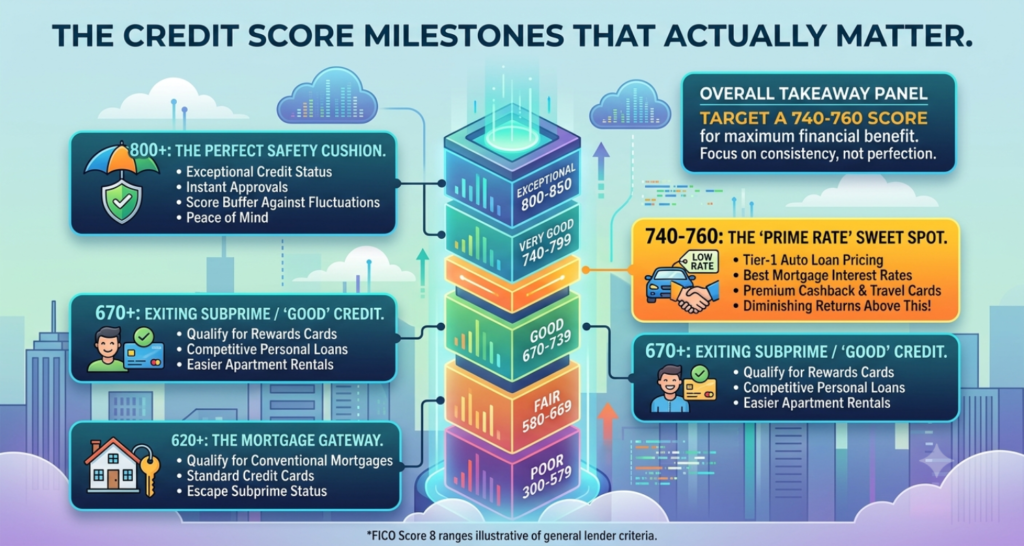
Getting above 580 is often the first major achievement.
Why?
Many lenders consider this the minimum score for several loan products. While borrowing costs may still be high, crossing this threshold opens more lending opportunities than staying below it.
Benefits may include:
- Better approval chances
- Access to additional credit card offers
- Easier qualification for some mortgages
- More financing options
If your score is below 580, focus first on building consistent payment history.
Milestone #2: Crossing 620
A score around 620 is another meaningful benchmark.
Many conventional lenders begin considering applicants more favorably at this level.
Potential advantages include:
- Improved auto loan approval
- Better refinancing opportunities
- More competitive credit cards
- Higher credit limits
Although interest rates may still not be ideal, reaching 620 demonstrates improving credit management.
Milestone #3: Hitting 670
Many financial experts consider 670 one of the most important milestones.
This score generally marks the beginning of the “Good” credit category.
At this point, borrowers often experience:
- Better mortgage options
- Lower personal loan rates
- Improved credit card rewards
- Easier apartment applications
Most importantly, lenders begin viewing you as a lower-risk borrower.
Because of this, many people save hundreds or even thousands of dollars over the life of a loan.
Milestone #4: Reaching 740
For many borrowers, 740 is the sweet spot.
Why?
Because many lenders reserve their most competitive interest rates for borrowers in this range.
Benefits often include:
- Lower mortgage interest rates
- Better auto financing
- Higher approval odds
- Premium rewards credit cards
- Larger borrowing limits
Interestingly, increasing your score from 740 to 850 may provide little additional financial benefit with many lenders.
That is why financial planners often recommend focusing on reaching 740 rather than chasing perfection.
Milestone #5: Crossing 800
An 800+ credit score is considered exceptional.
While this achievement looks impressive, the practical benefits over a 740 score are often modest.
Still, borrowers with scores above 800 may enjoy:
- Excellent approval odds
- Strong negotiating power
- Premium financial products
- Better insurance pricing in some states
- Confidence during major financial decisions
Reaching 800 shows years of responsible financial habits.
Why 850 Isn’t Necessary
Many people believe an 850 score is the ultimate goal.
In reality, very few consumers achieve a perfect score.
More importantly, most lenders treat borrowers with scores around 760–800 nearly the same as those with an 850.
Instead of obsessing over every single point, focus on maintaining healthy financial habits.
What Helps You Reach the Next Milestone?
Several factors influence your credit score.
Always Pay Bills on Time
Payment history remains the single biggest scoring factor.
Even one missed payment can significantly lower your score.
Keep Credit Utilization Low
Experts often recommend using less than 30% of your available credit.
For even better results, many consumers aim below 10%.
Avoid Opening Too Many Accounts
Every new application may temporarily reduce your score.
Only apply for credit when you truly need it.
Maintain Older Accounts
The age of your credit history matters.
Keeping long-standing accounts open can strengthen your overall profile.
Check Your Credit Reports
Errors happen more often than many people realize.
Reviewing your credit reports regularly helps you spot mistakes before they affect future loan applications.
Common Myths About Credit Score Milestones
Myth 1: You Need an 850 Score
False.
Scores above 740 already qualify many borrowers for excellent loan terms.
Myth 2: Checking Your Own Score Hurts Credit
False.
Checking your own credit is considered a soft inquiry and does not lower your score.
Myth 3: Closing Old Cards Always Helps
Not necessarily.
Closing older accounts may reduce your available credit and shorten your average account age.
Myth 4: Carrying a Balance Builds Credit
False.
You don’t need to pay interest to build a strong credit history.
Paying your balance in full each month is often the better strategy.
How Long Does It Take to Reach Each Milestone?
Every credit journey is unique.
Some consumers improve their score by 50 to 100 points within several months.
Others may need a year or more, depending on:
- Existing debt
- Payment history
- Credit age
- New credit inquiries
- Credit utilization
Consistency is far more important than speed.
Final Thoughts
The credit score milestones that actually matter are not about achieving perfection. Instead, they represent points where lenders begin offering better rates, easier approvals, and more valuable financial opportunities.
For most people, moving from 580 to 670 creates significant progress. Reaching 740 often unlocks the best borrowing terms available. Beyond 800, the improvements become smaller, although maintaining an exceptional score still demonstrates excellent financial responsibility.
Rather than chasing an elusive 850, focus on paying bills on time, keeping balances low, limiting unnecessary credit applications, and reviewing your credit reports regularly. These habits will help you reach—and maintain—the milestones that truly improve your financial future.
FAQ
What is the most important credit score milestone?
A score of 670 is widely considered important because it moves you into the “Good” credit category, improving approval odds and borrowing terms.
Is an 800 credit score worth it?
Yes, an 800 score is excellent, but the financial advantages over a score around 740 are often relatively small.
Can I improve my credit score quickly?
You may see improvements within a few months by making on-time payments, reducing credit card balances, and avoiding unnecessary credit applications.
Does checking my own credit score lower it?
No. Checking your own credit score uses a soft inquiry, which does not affect your credit score.