
 MOHAMMAD ABUBAKR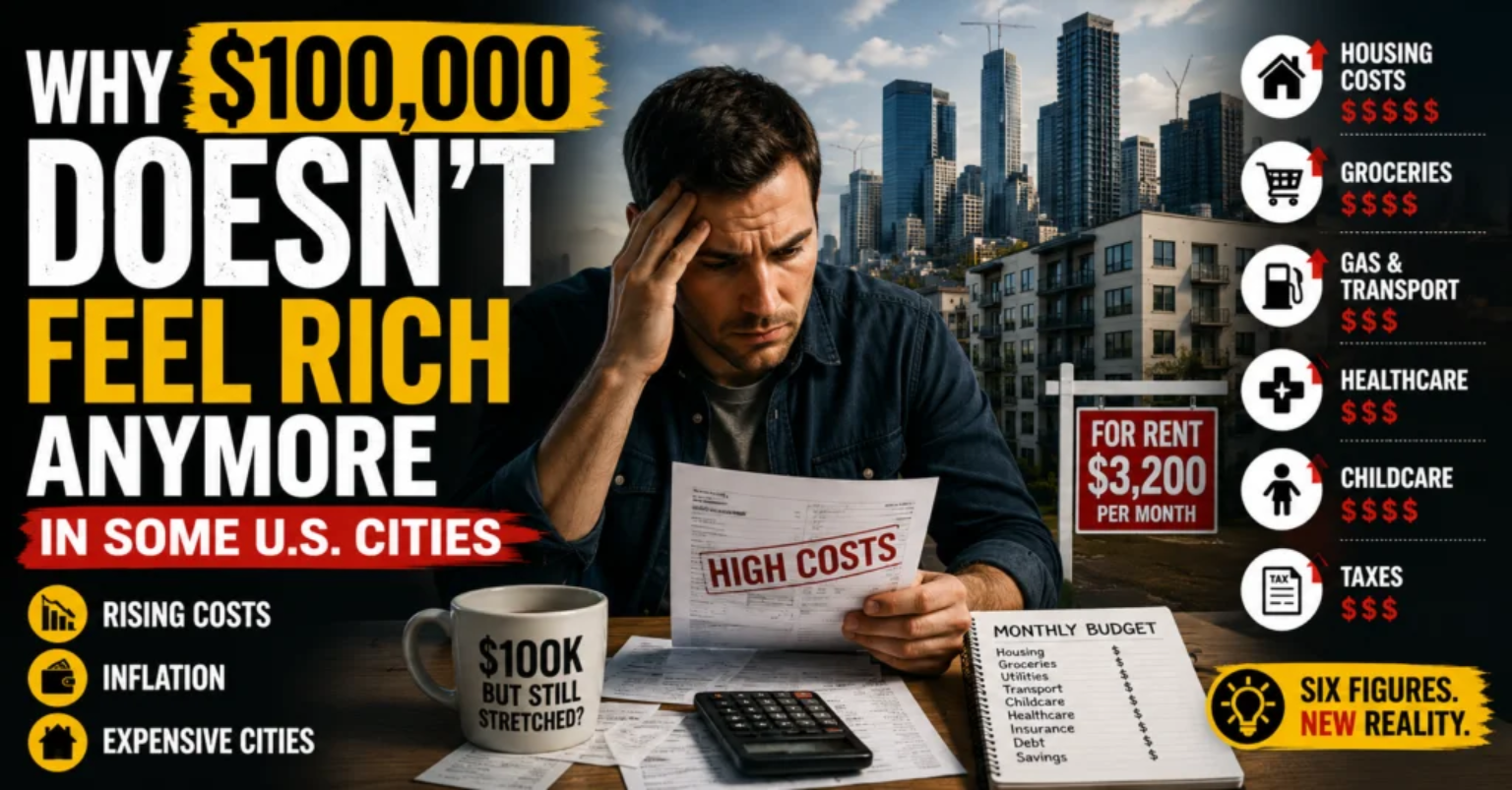
For decades, earning $100,000 a year was considered a major financial milestone in America. Reaching six figures often meant financial security, homeownership, family vacations, and a comfortable lifestyle.
Today, that picture looks very different.
In many U.S. cities, a $100,000 salary no longer provides the lifestyle people expect. Rising housing costs, inflation, healthcare expenses, childcare, and everyday living costs have dramatically changed what it means to earn six figures.
In fact, many Americans making $100,000 annually say they feel financially stretched rather than wealthy.
So what happened?
Let’s take a closer look at why $100,000 doesn’t feel rich anymore in some U.S. cities.
The Six-Figure Dream Has Changed
Years ago, earning $100,000 placed households firmly in the upper-middle class in many parts of the country.
Today, inflation has significantly reduced purchasing power.
What felt like a high income twenty years ago doesn’t buy nearly as much in 2026.
A salary that once supported a comfortable lifestyle may now cover only the essentials in high-cost metropolitan areas.
As living expenses continue to rise, many families find themselves budgeting carefully despite earning six figures.
Housing Costs Are Consuming More Income
Housing remains the biggest reason many Americans don’t feel wealthy on a $100,000 salary.
In cities such as:
- San Francisco
- New York City
- Los Angeles
- San Diego
- Boston
- Seattle
Home prices and rental costs have increased dramatically over the past decade.
In some areas, monthly rent for a modest apartment can exceed $3,000.
For homeowners, mortgage payments, property taxes, insurance, and maintenance costs continue to climb.
When housing consumes 30% to 50% of income, there is far less money available for savings and discretionary spending.
Inflation Has Reduced Purchasing Power
Inflation affects nearly every aspect of daily life.
Americans are paying more for:
- Groceries
- Gasoline
- Utilities
- Insurance
- Dining out
- Transportation
Even when salaries increase, rising prices often offset those gains.
As a result, many workers feel like they’re earning more money but getting less value in return.
This creates the perception that a six-figure salary doesn’t go as far as it once did.
Childcare Costs Can Rival a Mortgage
For families with young children, childcare can be one of the largest monthly expenses.
In many cities, full-time childcare can cost thousands of dollars per month.
Parents may spend:
- Daycare fees
- After-school programs
- Summer camps
- Educational activities
These costs add up quickly and can significantly impact a household budget.
A family earning $100,000 may find that childcare expenses alone consume a substantial portion of take-home pay.
Healthcare Expenses Continue to Rise
Healthcare remains one of the most expensive necessities in America.
Even individuals with employer-sponsored insurance often face:
- Monthly premiums
- Deductibles
- Copayments
- Prescription costs
Unexpected medical bills can place additional pressure on household finances.
Many Americans earning six figures still worry about major healthcare expenses because costs continue rising faster than wages.
Taxes Take a Bigger Bite Than Many Expect
A $100,000 salary sounds impressive on paper.
However, workers don’t take home the full amount.
Federal taxes, state taxes, Social Security contributions, and Medicare deductions reduce disposable income.
Depending on location and filing status, take-home pay can be significantly lower than expected.
This reality often surprises people who assume a six-figure salary automatically translates into financial freedom.
Lifestyle Costs Have Increased
Modern lifestyles come with expenses that previous generations didn’t face.
Many households now pay for:
- Internet services
- Streaming subscriptions
- Mobile phone plans
- Software memberships
- Online services
Individually, these costs may seem small.
Combined, they can add hundreds of dollars to monthly budgets.
These recurring expenses contribute to the feeling that money disappears quickly.
Saving for Retirement Is More Challenging
Financial advisors often recommend saving 10% to 15% of income for retirement.
For someone earning $100,000, that could mean setting aside $10,000 to $15,000 annually.
While this sounds reasonable, it becomes difficult when housing, healthcare, childcare, and daily expenses consume most of the budget.
Many six-figure earners struggle to save enough for retirement while maintaining their current standard of living.
Student Loan Payments Still Affect Many Professionals
Millions of Americans continue carrying student loan debt into their 30s, 40s, and even 50s.
Monthly loan payments can significantly reduce available income.
Professionals with advanced degrees may earn higher salaries, but they often carry larger education-related debt burdens as well.
This can make a six-figure income feel much less substantial.
Location Matters More Than Salary
One of the biggest factors influencing purchasing power is geography.
A $100,000 salary in a lower-cost city may provide a comfortable lifestyle with room for savings.
The same income in a high-cost metropolitan area may feel barely sufficient.
For example, housing costs alone can vary dramatically between states and cities.
This is why many Americans earning identical salaries experience very different financial realities.
What $100,000 Buys in Different Cities
| City | Financial Reality on $100,000 |
|---|---|
| New York City | Often considered middle class |
| San Francisco | Housing costs create significant pressure |
| Los Angeles | High living expenses reduce disposable income |
| Seattle | Strong salaries but rising housing costs |
| Dallas | More purchasing power than coastal cities |
| Indianapolis | Comfortable lifestyle possible |
| Columbus | Greater affordability and savings potential |
The same income can feel wealthy in one city and financially restrictive in another.
Is $100,000 Still a Good Salary?
Absolutely.
A six-figure income remains above the earnings of many American households.
It can provide financial stability, opportunities for saving, and a comfortable lifestyle in many regions.
However, it is no longer the universal symbol of wealth it once was.
Rising costs have changed expectations and reduced purchasing power, especially in expensive urban areas.
How Americans Are Adapting
To make their income go further, many people are:
- Moving to lower-cost cities
- Working remotely
- Reducing discretionary spending
- Paying down debt
- Increasing retirement contributions
- Seeking additional income streams
These strategies help households maintain financial security despite rising costs.
The Bottom Line
Why doesn’t $100,000 feel rich anymore in some U.S. cities?
The answer comes down to a combination of rising housing costs, inflation, healthcare expenses, childcare costs, taxes, and changing economic realities.
While earning six figures is still a significant achievement, it no longer guarantees the lifestyle many Americans associate with wealth.
In high-cost cities, a $100,000 salary often provides financial stability rather than luxury. Understanding how location and living expenses affect purchasing power can help families make smarter financial decisions and plan for a more secure future.