 MOHAMMAD ABUBAKR
Investing has become more accessible than ever.
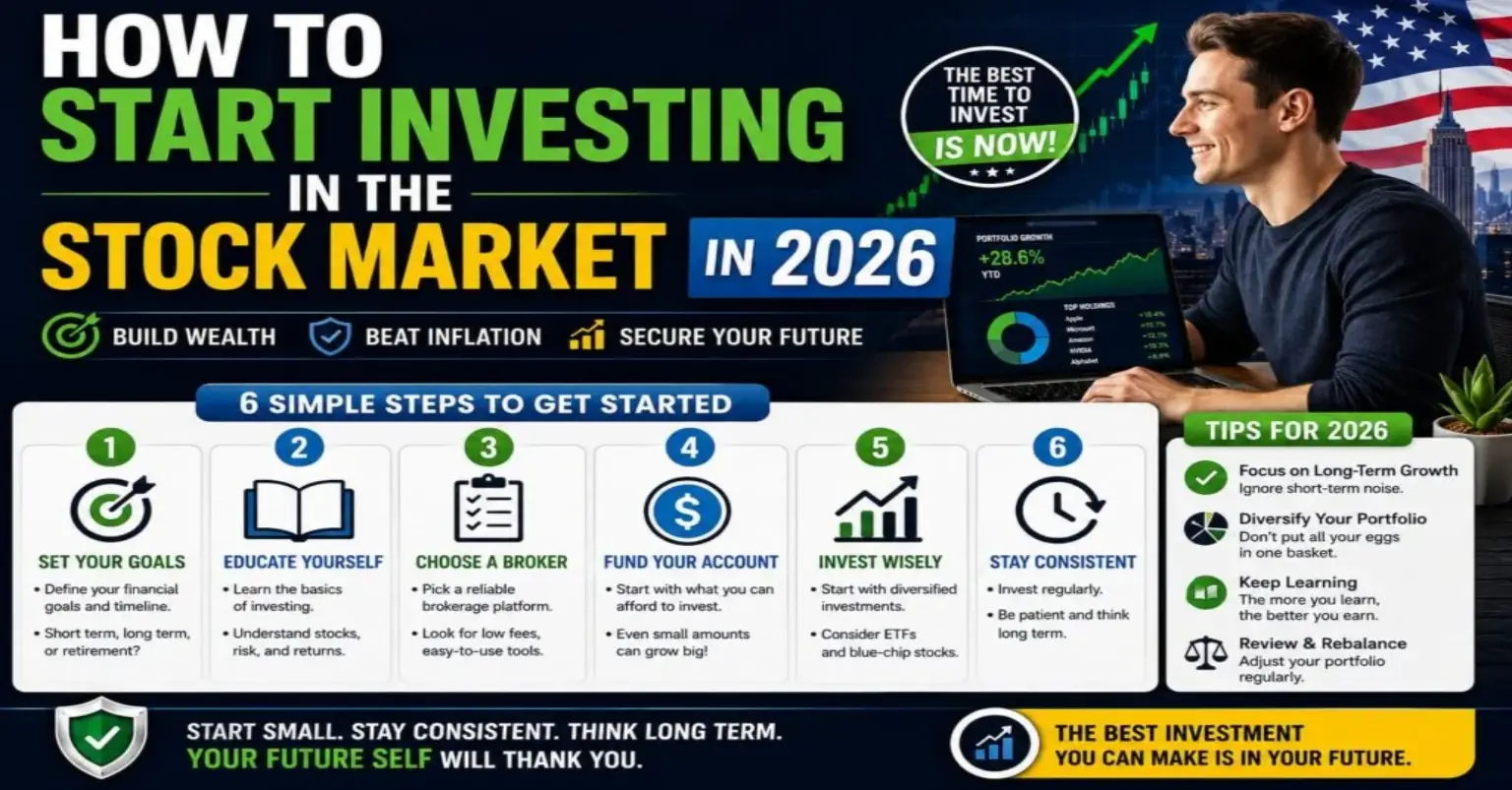
If you’re new to investing, first read our guide on How to Start Investing in the Stock Market in 2026.
With smartphone apps, commission-free trading, and endless financial content online, younger Americans are entering the stock market in record numbers.
However, instead of picking individual stocks like previous generations, many young investors are turning to Exchange-Traded Funds (ETFs) as their preferred investment choice.
So why are ETFs becoming more popular than individual stocks among Millennials and Gen Z investors?
Let’s explore the reasons behind this growing trend.
What Is an ETF?
An Exchange-Traded Fund (ETF) is a collection of investments bundled into a single fund. Instead of buying shares of one company, investors can buy an ETF that contains dozens, hundreds, or even thousands of stocks.
For example:
- An S&P 500 ETF owns shares of approximately 500 major U.S. companies that make up the widely followed U.S. stock market index.
- A Total Market ETF provides exposure to nearly the entire U.S. stock market.
- Sector ETFs focus on industries such as technology, healthcare, or energy.
ETFs trade on stock exchanges just like regular stocks, making them easy to buy and sell.
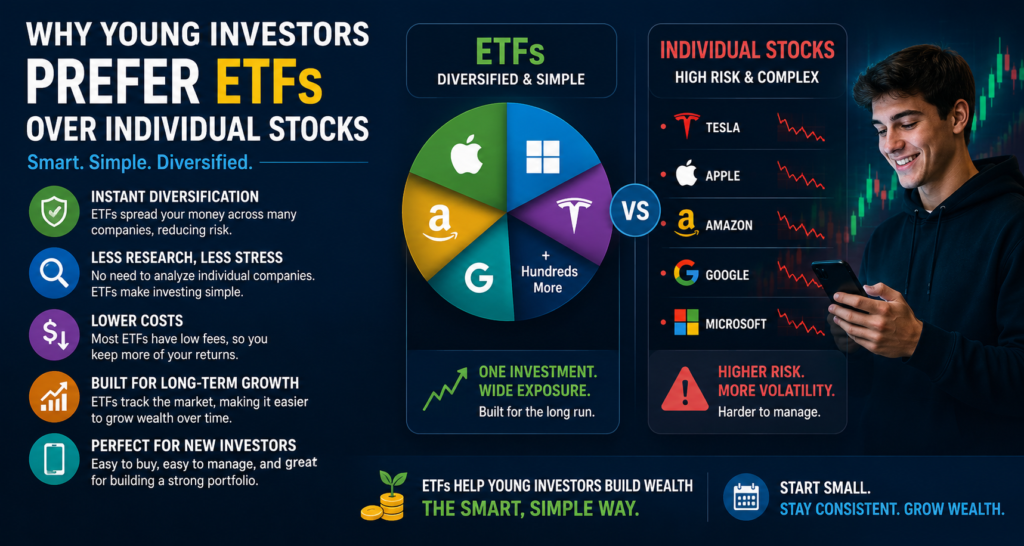
1. Instant Diversification Reduces Risk
One of the biggest reasons young investors choose ETFs is diversification.
When you invest in a single stock, your investment depends heavily on the performance of one company. If that company struggles, your portfolio can suffer significant losses.
With ETFs, your money is spread across many companies.
Example:
- Buying one technology stock may expose you to company-specific risks.
- Buying a technology ETF gives exposure to dozens or hundreds of tech companies.
This diversification helps reduce risk while still allowing investors to benefit from market growth.
2. ETFs Require Less Research
Picking winning stocks takes time.
Investors often need to analyze:
- Financial statements
- Earnings reports
- Industry trends
- Competition
- Valuations
For busy young professionals and students, this process can feel overwhelming.
ETFs offer a simpler solution.
Instead of researching hundreds of companies, investors can buy one fund that tracks an entire market or sector.
This convenience makes ETFs attractive for beginners.
3. Lower Costs Than Many Traditional Investments
Most popular ETFs have extremely low expense ratios.
Many broad-market ETFs charge less than:
- 0.10% annually
- Sometimes as little as 0.03%
This means investors keep more of their returns over time.
Lower costs are especially important for younger investors because small savings today can compound into significant wealth over decades.
4. Long-Term Performance Is Hard to Beat
Research consistently shows that many professional fund managers struggle to outperform major market indexes over long periods.
As a result, young investors increasingly believe that:
“If beating the market is difficult, why not simply own the market?”
Index ETFs allow investors to capture overall market growth without trying to predict which individual companies will outperform.
5. Investing Feels Less Stressful
Individual stocks can experience dramatic price swings.
A company can lose:
- 10%
- 20%
- Even 50%
of its value due to bad earnings, scandals, or economic challenges.
ETFs tend to be less volatile because losses in some companies may be offset by gains in others.
Many young investors appreciate the reduced stress and emotional pressure.
6. Easy Portfolio Building
Building a diversified portfolio with individual stocks can require buying many different companies.
ETFs simplify the process.
A beginner can create a diversified portfolio using only a few funds:
| ETF Type | Purpose |
|---|---|
| U.S. Market ETF | Core stock exposure |
| International ETF | Global diversification |
| Bond ETF | Stability and income |
| Dividend ETF | Additional cash flow potential |
This straightforward approach appeals to new investors.
7. Social Media and Financial Education
Financial influencers, personal finance blogs, and investing podcasts often emphasize:
- Low-cost investing
- Long-term wealth building
- Index fund strategies
Many younger investors are learning that consistent investing often matters more than trying to find the next hot stock.
As a result, ETFs have gained widespread popularity across social media investing communities.
8. Fractional Investing Works Well With ETFs
Many brokerage platforms now allow fractional investing.
This means investors can start with:
- $10
- $25
- $50
instead of needing hundreds or thousands of dollars.
Young Americans can gradually build diversified portfolios even on limited budgets.
Are Individual Stocks Still Worth Buying?
Individual stocks aren’t necessarily bad investments.
Some investors enjoy researching companies and are willing to accept higher risk in exchange for potentially higher returns.
Individual stocks may be suitable for:
- Experienced investors
- Active traders
- Investors with specialized industry knowledge
However, many financial experts recommend using ETFs as the foundation of a portfolio before adding individual stocks.
Potential Drawbacks of ETFs
ETFs offer many advantages, but they aren’t perfect.
Potential disadvantages include:
- Limited chance of outperforming the market significantly
- Some niche ETFs may have higher fees
- Market downturns can still impact ETF values
Investors should always understand what an ETF owns before investing.
The Bottom Line
Young Americans are increasingly choosing ETFs because they offer diversification, lower costs, simplicity, and long-term growth potential.
Instead of spending hours researching individual companies, investors can gain exposure to broad sections of the market through a single investment.
For beginners looking to build wealth steadily over time, ETFs provide a practical and efficient way to start investing while keeping risk manageable.
As investing continues to evolve, ETFs are likely to remain one of the most popular tools for the next generation of investors.