 MOHAMMAD ABUBAKR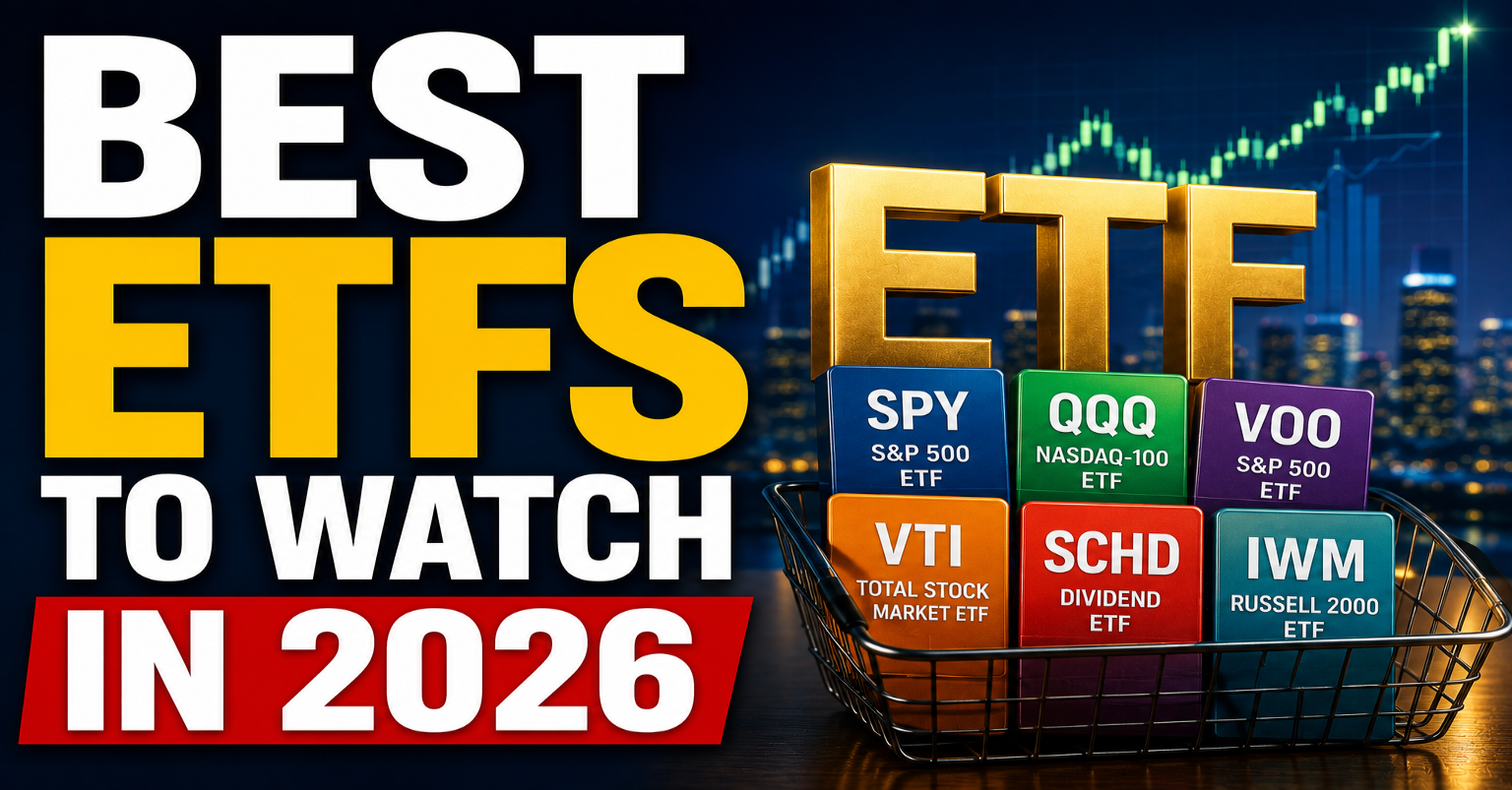
Exchange-Traded Funds (ETFs) continue to be one of the smartest investment choices for Americans who want long-term wealth without picking individual stocks. In 2026, investors face a market shaped by artificial intelligence, changing interest rates, inflation concerns, and global economic uncertainty.
As a result, choosing the right ETF has become more important than ever.
Fortunately, ETFs offer instant diversification, lower fees, and easy access to hundreds or even thousands of companies in a single investment. Whether you’re a beginner or an experienced investor, ETFs can help reduce risk while providing strong growth opportunities.
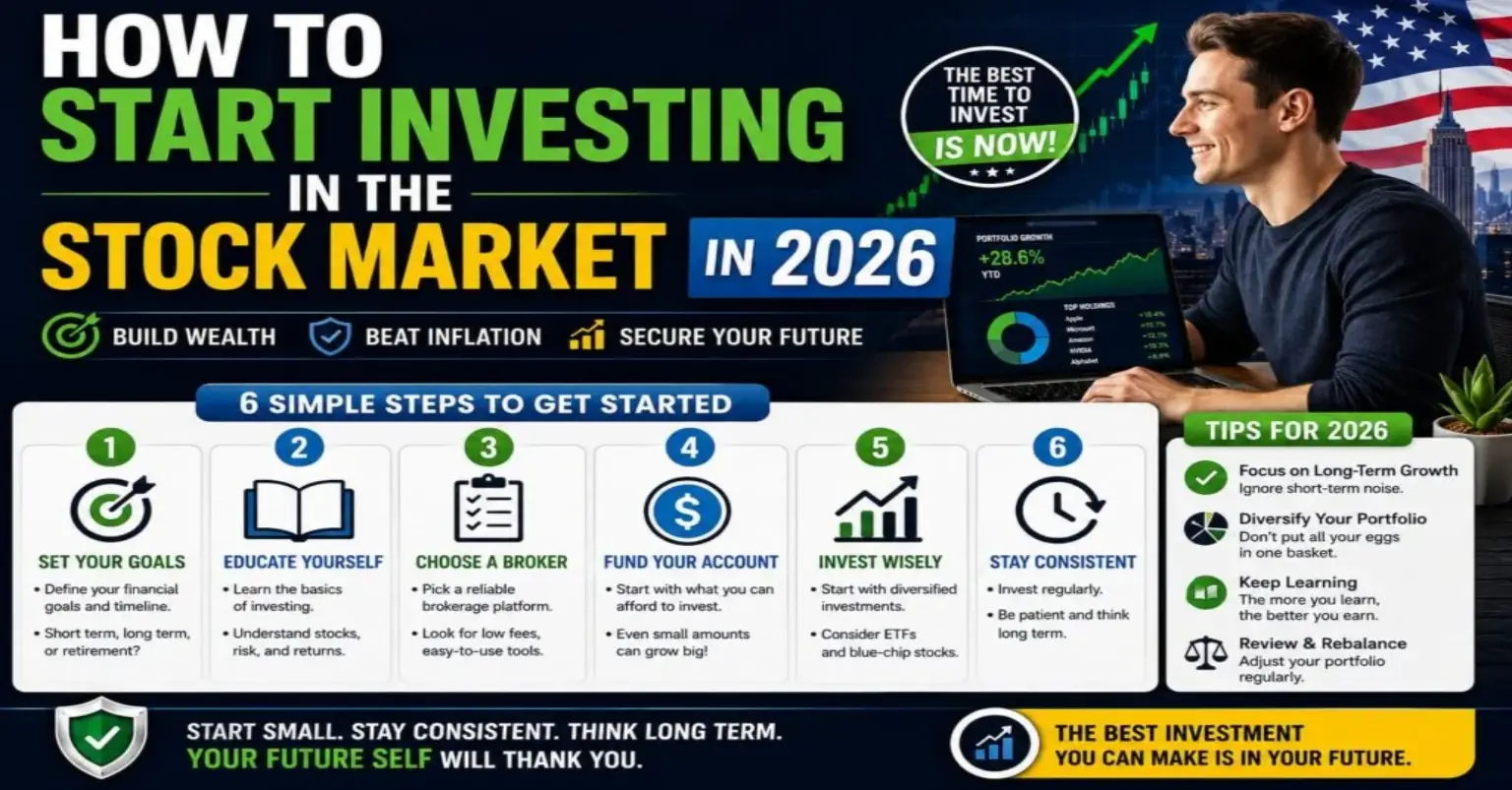
If you’re completely new to investing, it’s important to understand the basics before choosing an ETF. Read our guide on How to Start Investing in the Stock Market in 2026 to learn how to open an investment account, choose your first investments, and build a long-term strategy.
In this guide, we’ll explore the best ETFs to watch in 2026, explain why they deserve attention, and discuss how to choose ETFs that match your financial goals.
Why ETFs Continue to Grow in Popularity
ETFs have become one of the fastest-growing investment products in the United States.
Unlike mutual funds, ETFs trade throughout the day like stocks. Additionally, most ETFs charge lower expense ratios than actively managed funds.
Investors also appreciate the flexibility they provide.
Some ETFs focus on the entire U.S. stock market, while others target technology, healthcare, dividends, small-cap companies, bonds, or international markets.
Therefore, investors can build a diversified portfolio with just a few ETFs.
What Could Drive ETF Performance in 2026?
Several major trends may influence ETF returns this year.
These include:
- Artificial Intelligence expansion
- Falling or stable interest rates
- Strong corporate earnings
- Growing demand for dividend income
- Infrastructure spending
- Healthcare innovation
- Energy transition
- Continued growth in cloud computing
Although nobody can predict markets with certainty, these themes could create opportunities across different ETF sectors.
1. Total Stock Market ETFs
Total market ETFs remain one of the safest long-term investments.
Instead of betting on a single industry, these funds invest across thousands of U.S. companies.
Benefits include:
- Broad diversification
- Low fees
- Lower company-specific risk
- Strong historical performance
Investors who prefer a “buy and hold” strategy often begin with total market ETFs.
These funds work well for retirement accounts and long-term wealth building.
2. S&P 500 ETFs
S&P 500 ETFs continue to be among the most popular investment choices in America.
They track approximately 500 of the largest publicly traded U.S. companies.
Because these businesses include leaders in technology, healthcare, finance, and consumer products, investors gain exposure to many of the country’s strongest corporations.
Moreover, the S&P 500 has historically produced attractive long-term returns despite short-term market volatility.
3. Artificial Intelligence ETFs
AI remains one of the biggest investment themes heading into 2026.
Instead of buying one AI stock, investors can own an ETF containing dozens of companies involved in:
- Semiconductor manufacturing
- Cloud computing
- Robotics
- Data centers
- Machine learning
- Software development
Consequently, AI ETFs help reduce the risk associated with individual stocks while still participating in the industry’s growth.
4. Dividend ETFs
Dividend investing has regained attention as investors seek reliable income.
Dividend ETFs invest in companies with long histories of paying shareholders.
These funds may provide:
- Regular dividend income
- Lower volatility
- Strong balance sheets
- Long-term capital appreciation
Furthermore, many dividend-paying companies have survived multiple economic cycles.
That stability often attracts conservative investors.
5. Technology ETFs
Technology continues to shape nearly every part of the global economy.
Cloud computing, cybersecurity, artificial intelligence, and software services remain key growth areas.
Technology ETFs provide exposure to these fast-growing industries without relying on a single company.
Although tech stocks can experience volatility, long-term investors often benefit from continued innovation.
6. Healthcare ETFs
Healthcare spending continues to increase as America’s population ages.
Medical research, biotechnology, pharmaceuticals, and healthcare equipment companies may benefit from long-term demand.
Healthcare ETFs can also provide defensive characteristics during uncertain economic periods.
As a result, many diversified portfolios include healthcare exposure.
7. Semiconductor ETFs
Semiconductors power smartphones, AI systems, electric vehicles, gaming, and cloud computing.
Demand continues to expand across multiple industries.
Because chip manufacturing requires enormous investment and advanced technology, leading companies often enjoy competitive advantages.
Therefore, semiconductor ETFs remain worth watching throughout 2026.
8. Small-Cap ETFs
Large companies have dominated recent years.
However, smaller companies sometimes outperform during economic recoveries.
Small-cap ETFs offer exposure to businesses that still have significant room for growth.
Although these investments involve higher risk, they may deliver stronger returns during favorable market conditions.
9. International ETFs
Diversification should extend beyond U.S. borders.
International ETFs invest in developed and emerging markets around the world.
This helps reduce dependence on one country’s economy.
Additionally, international markets occasionally outperform U.S. stocks during different economic cycles.
10. Bond ETFs
Not every investor wants maximum growth.
Some prefer stability and income.
Bond ETFs may help balance a portfolio, especially during periods of stock market volatility.
Depending on the fund, investors can choose:
- Treasury bonds
- Corporate bonds
- Municipal bonds
- Short-term bonds
- Long-term bonds
A balanced portfolio often includes both stocks and bonds.
How to Choose the Right ETF
You can also learn more about how ETFs work, their benefits, risks, and investment considerations by reviewing the U.S. Securities and Exchange Commission – Exchange-Traded Funds guide. It provides reliable information that can help investors make informed decisions.
Not every ETF is suitable for every investor.
Before investing, consider these important factors.
Expense Ratio
Lower fees allow investors to keep more of their long-term returns.
Even small differences in annual costs can become significant over decades.
Holdings
Always review the companies included inside the ETF.
Understanding what you own helps reduce surprises during market swings.
Performance History
Past performance does not guarantee future returns.
However, reviewing long-term consistency can provide valuable insights.
Fund Size
Larger ETFs usually offer better liquidity and narrower bid-ask spreads.
That makes buying and selling easier.
Investment Goals
Growth investors may prefer technology or AI ETFs.
Income investors might focus on dividend or bond ETFs instead.
Risks to Remember
Although ETFs reduce individual company risk, they are not risk-free.
Investors should still prepare for:
- Market corrections
- Economic recessions
- Interest rate changes
- Inflation
- Geopolitical events
- Sector-specific downturns
Diversification helps reduce these risks, but it cannot eliminate them completely.
Therefore, investing with a long-term mindset remains essential.
Should Beginners Invest in ETFs?
For many beginners, ETFs represent an excellent starting point.
They simplify investing by providing instant diversification.
Additionally, investors avoid researching dozens of individual companies.
Many financial experts recommend building a core portfolio using broad market ETFs before adding specialized sector funds.
This strategy often reduces unnecessary risk while supporting long-term growth.
Final Thoughts
The best ETFs to watch in 2026 offer investors an opportunity to participate in major market trends while maintaining diversification. Total market ETFs, S&P 500 funds, dividend ETFs, AI-focused funds, healthcare ETFs, technology ETFs, semiconductor ETFs, and bond ETFs each serve different purposes within a balanced portfolio.
Instead of chasing short-term market headlines, successful investors usually stay focused on long-term goals. Regular investing, diversification, and patience often produce better results than attempting to time the market.
As always, review your investment objectives, risk tolerance, and time horizon before making any investment decisions. With a disciplined approach, ETFs can remain one of the most effective tools for building wealth over time.
Frequently Asked Questions (FAQs)
What is the best ETF to buy in 2026?
Broad market ETFs and S&P 500 ETFs remain popular choices because they offer diversification, low costs, and long-term growth potential.
Are ETFs safer than individual stocks?
Generally, yes. ETFs spread investments across many companies, reducing the impact of poor performance from any single stock.
Should beginners invest in ETFs?
Yes. ETFs are considered one of the easiest ways for beginners to build a diversified investment portfolio.
Can ETFs lose money?
Yes. ETF values rise and fall with the market. However, diversified ETFs often experience less volatility than individual stocks.
How many ETFs should I own?
Many investors build a strong portfolio with three to five diversified ETFs, depending on their financial goals and risk tolerance.