 MOHAMMAD ABUBAKR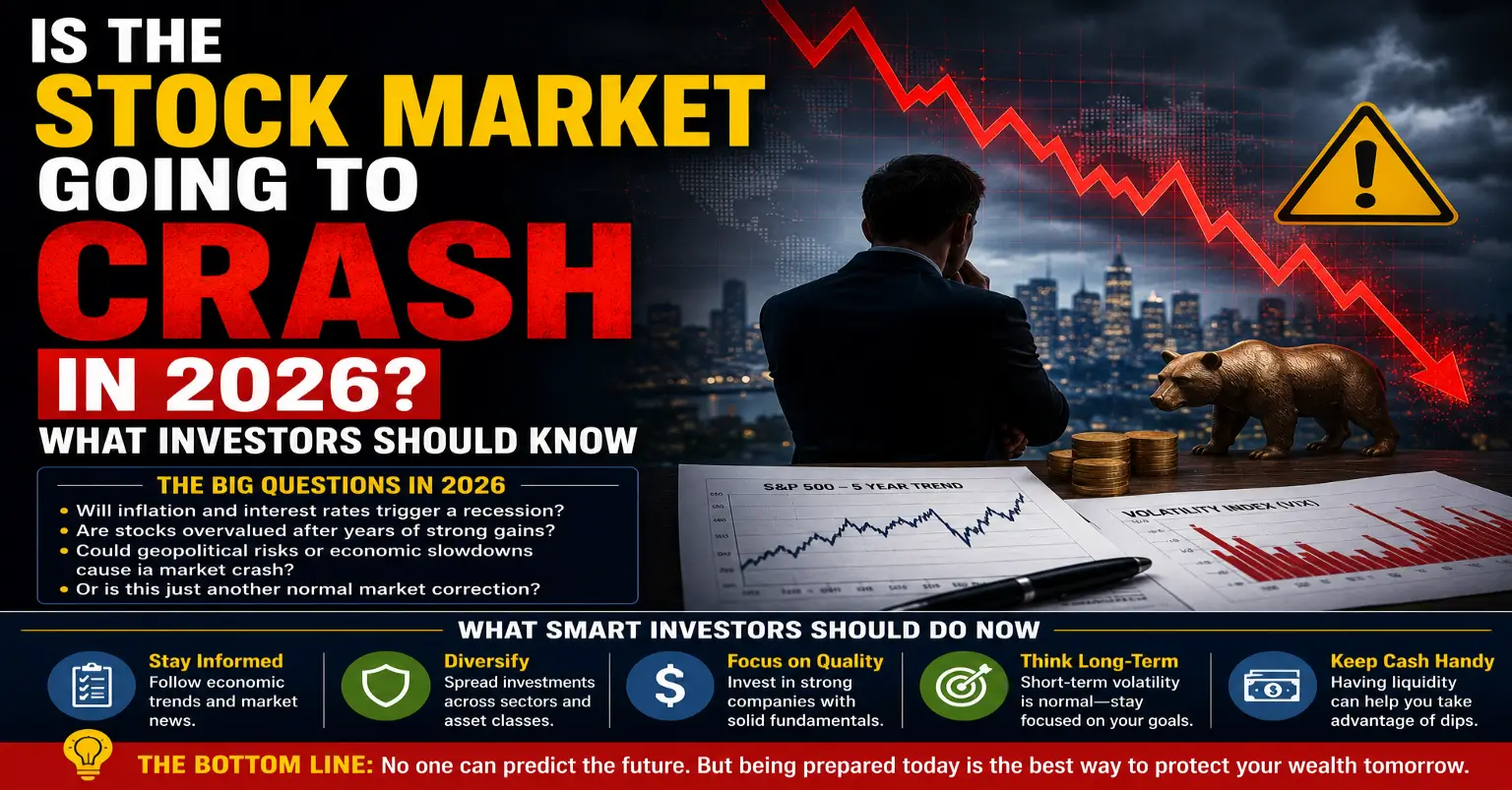
The U.S. stock market has experienced impressive gains over the past few years. However, many investors are asking the same question in 2026:
Is the stock market going to crash?
It’s a reasonable concern. Inflation remains a factor. Interest rates are still relatively high. Global conflicts continue to create uncertainty. In addition, technology stocks have become a major driver of market performance.
Although nobody can predict a market crash with certainty, investors can recognize warning signs and prepare for different outcomes.
Instead of reacting emotionally, smart investors focus on long-term strategies.
Let’s examine what could happen in 2026 and what investors should know before making investment decisions.
What Is a Stock Market Crash?
A stock market crash is a rapid and significant decline in stock prices over a short period.
Unlike a normal market correction, which usually involves a decline of around 10%, a crash often results in much larger losses.
However, history shows that markets have always recovered over time.
Therefore, investors should avoid making decisions based solely on fear.
Why Investors Are Worried in 2026
Several factors have increased market uncertainty.
These include:
- Higher interest rates
- Slower economic growth
- Persistent inflation
- Corporate earnings pressure
- Global geopolitical tensions
- High stock valuations
Although none of these factors guarantees a crash, together they can increase market volatility.
As a result, investors should remain cautious while staying focused on long-term goals.
High Stock Valuations
Many analysts believe certain sectors remain expensive.
Technology companies, especially those connected to artificial intelligence, have experienced strong price gains.
Consequently, valuations have reached levels that some investors consider difficult to justify.
When expectations become too optimistic, even good earnings may disappoint investors.
That often leads to sharp price declines.
Interest Rates Continue to Matter
Interest rates influence nearly every part of the economy.
Higher borrowing costs reduce consumer spending and corporate profits.
They also make bonds more attractive compared to stocks.
Therefore, rising rates often place pressure on stock prices.
If the Federal Reserve keeps rates elevated longer than expected, markets could remain volatile.
Corporate Earnings Are Critical
Stock prices ultimately follow company earnings.
Strong profits usually support higher share prices.
Weak earnings, however, can trigger market declines.
Investors should watch quarterly earnings reports carefully.
Companies that miss expectations often experience large price swings.
Investor Sentiment Can Change Quickly
Markets are driven by both data and emotions.
Fear spreads rapidly during uncertain periods.
Likewise, optimism can push prices higher than fundamentals justify.
Because of this, market sentiment often changes faster than economic conditions.
Long-term investors should avoid making emotional investment decisions.
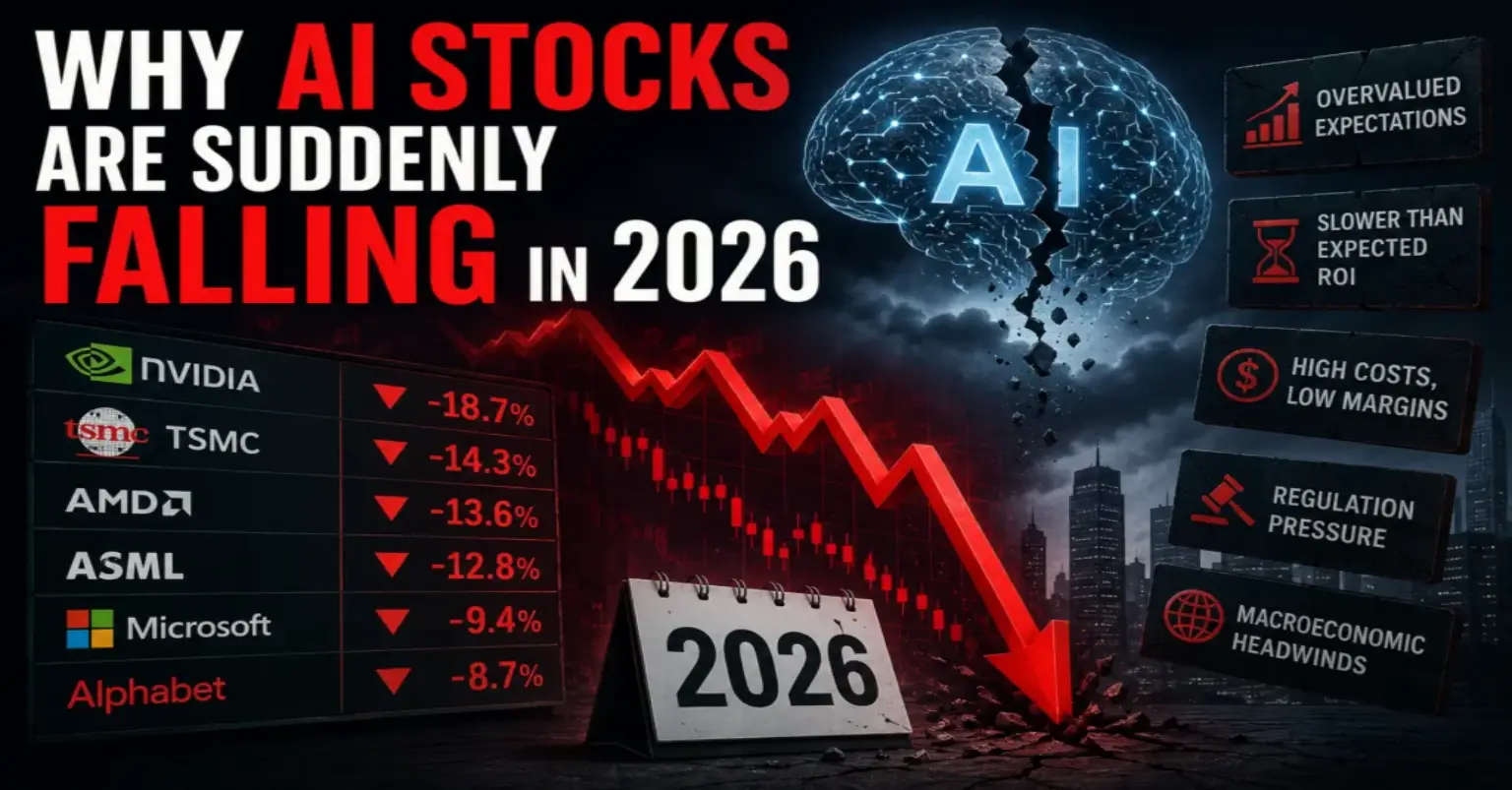
Could Artificial Intelligence Stocks Create a Bubble?
Artificial intelligence remains one of the hottest investment themes in 2026.
Many AI companies have reported impressive growth.
Nevertheless, some investors worry that valuations have become too aggressive.
If expectations become unrealistic, certain AI stocks could experience significant corrections.
That doesn’t necessarily mean the entire market will crash.
Instead, it could simply reflect normal market cycles.
If you’ve noticed increased volatility among AI-related companies, understanding the reasons behind recent price declines can provide valuable context before making investment decisions.
Warning Signs Investors Should Watch
Although predicting crashes is impossible, investors should monitor several indicators.
These include:
- Declining corporate earnings
- Rising unemployment
- Weak consumer spending
- Higher market volatility
- Increasing corporate debt
- Falling investor confidence
One indicator alone rarely signals a crash.
However, multiple warning signs deserve attention.
Should You Sell Your Investments?
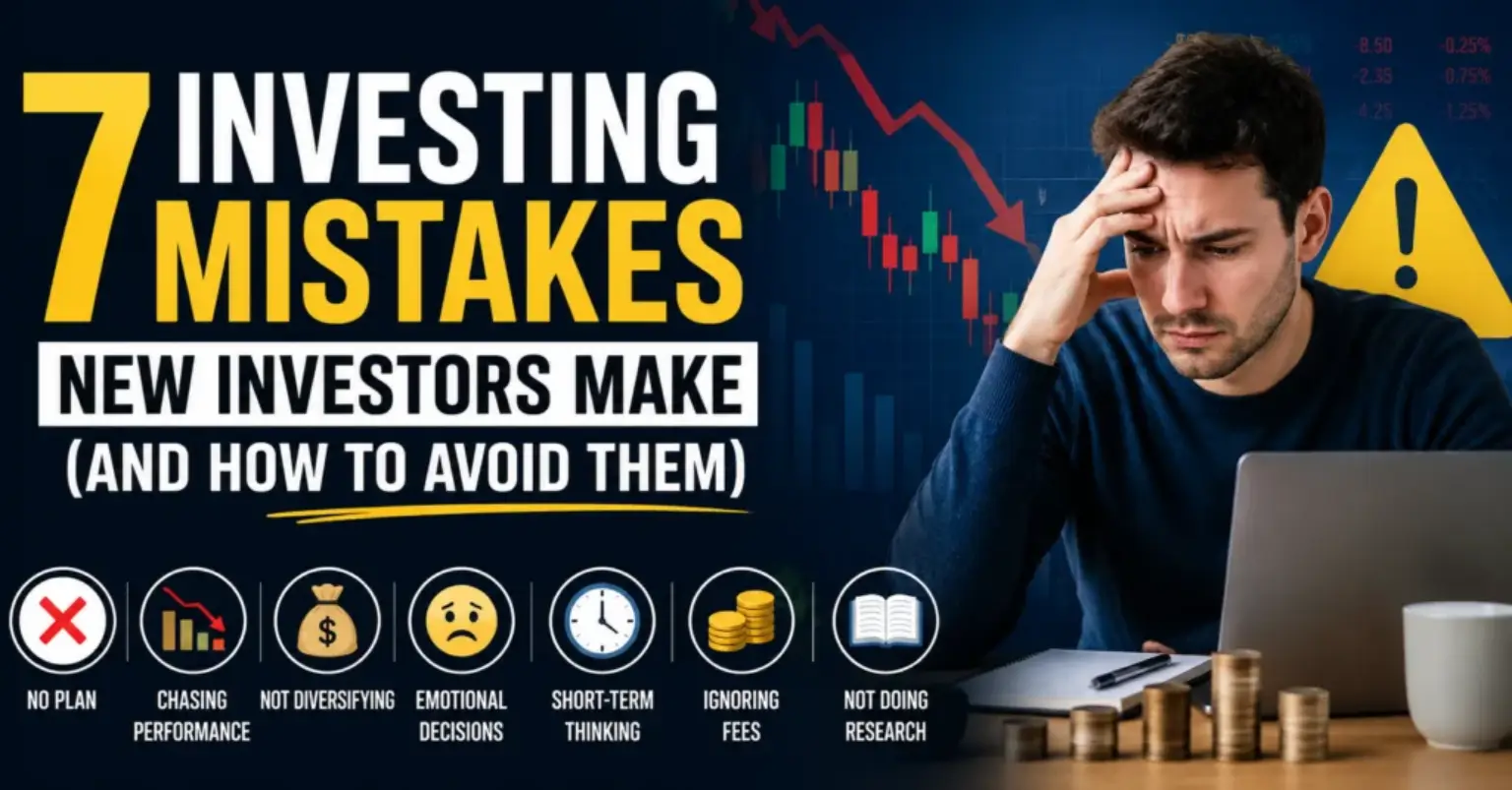
Many investors panic when markets decline.
History suggests that emotional selling often hurts long-term returns.
Instead of selling everything, consider reviewing your portfolio.
Ask yourself:
- Are you diversified?
- Are your investments aligned with your goals?
- Can you tolerate short-term volatility?
- Are you investing for the long term?
Answering these questions may help reduce emotional decisions.
Smart Strategies During Market Uncertainty
Successful investors often focus on discipline rather than predictions.
Consider these strategies:
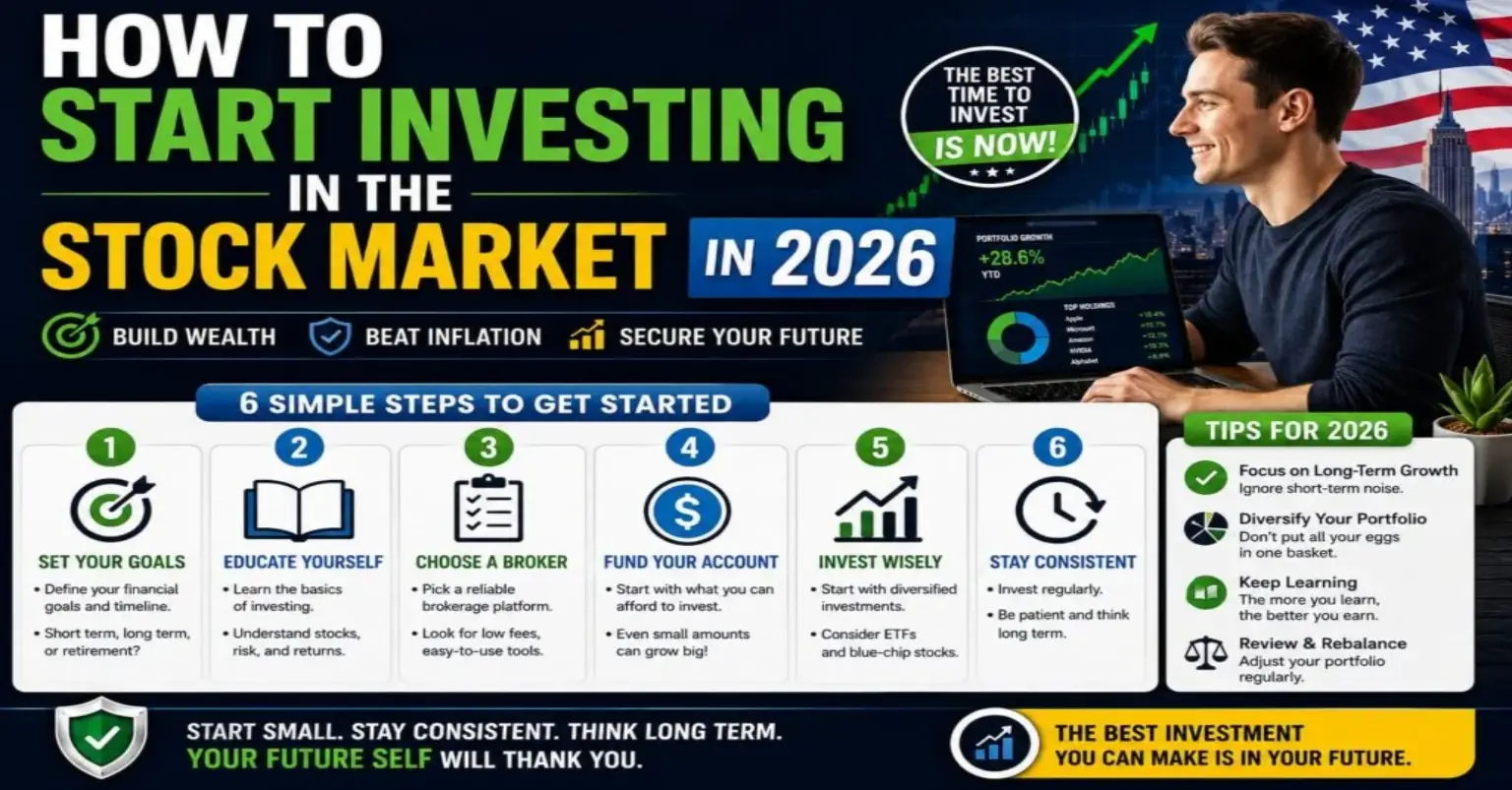
- Continue investing regularly.
- Diversify across different sectors.
- Maintain an emergency fund.
- Avoid excessive risk.
- Review your asset allocation annually.
- Focus on long-term goals.
- Ignore daily market headlines.
Consistency usually produces better results than trying to time the market.
What History Teaches Investors
Every major market decline has eventually been followed by recovery.
The stock market has experienced recessions, financial crises, and periods of high inflation.
Yet over the long term, diversified investors have generally been rewarded for staying invested.
Although future performance is never guaranteed, history reminds us that patience often matters more than perfect timing.
Is 2026 the Right Time to Invest?
No one knows exactly what markets will do next.
Prices may rise.
They may fall.
Or they may move sideways for months.
Instead of trying to predict short-term movements, investors should focus on building diversified portfolios that match their financial goals and risk tolerance.
Long-term investing has historically outperformed emotional market timing.
Final Thoughts
So, is the stock market going to crash in 2026?
The honest answer is that nobody knows.
There are legitimate risks, including higher interest rates, elevated stock valuations, and economic uncertainty.
However, uncertainty has always been part of investing.
Rather than trying to predict the next crash, focus on diversification, consistent investing, and maintaining a long-term perspective.
Investors who remain disciplined during volatile markets are often better positioned when conditions improve.
For reliable investor education and market resources, visit the U.S. Securities and Exchange Commission – Investor.gov. This official U.S. government website offers educational tools, investment guidance, and resources to help investors make informed financial decisions.