 MOHAMMAD ABUBAKR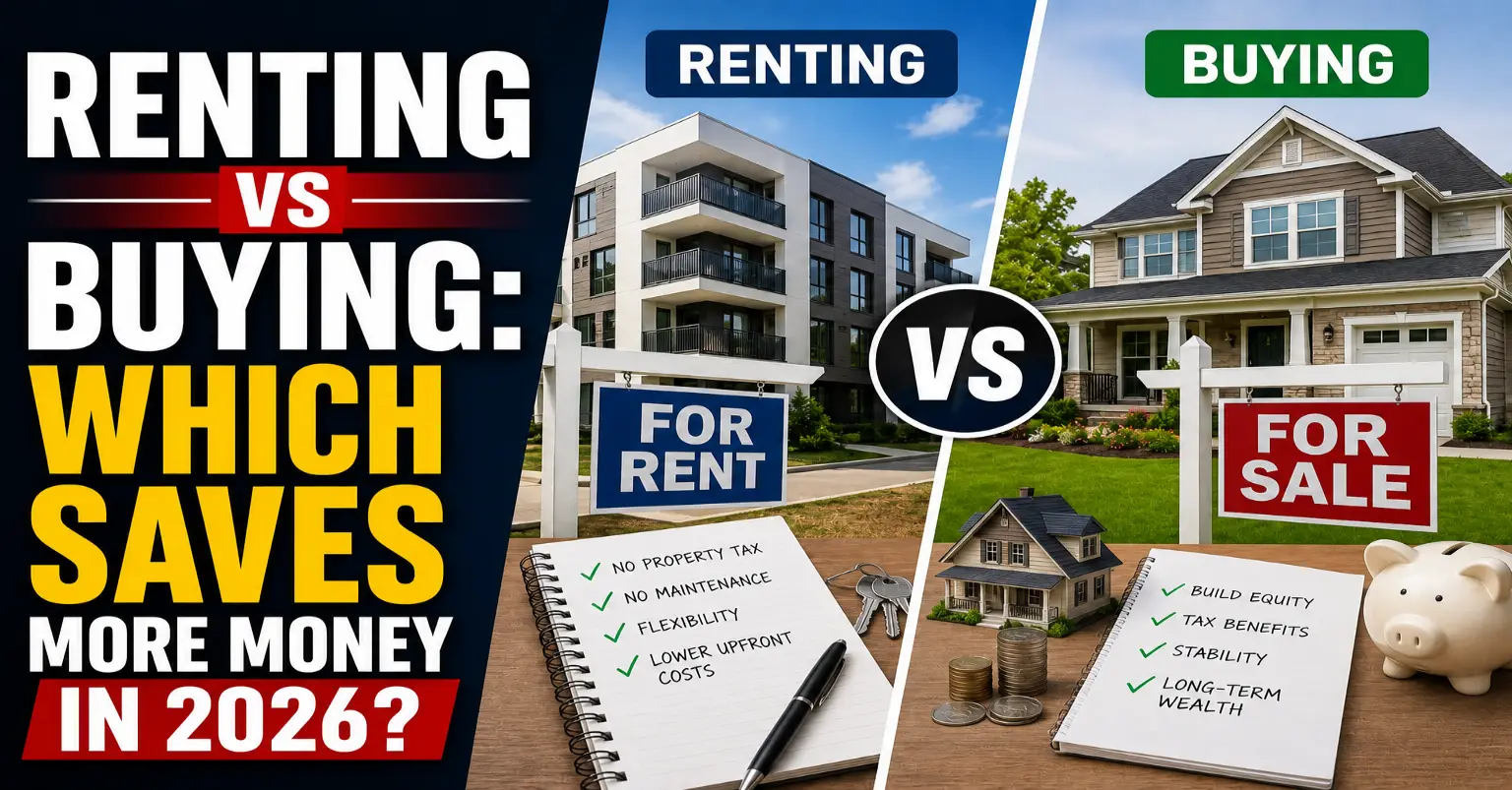
For many Americans, deciding between renting and buying a home is one of the biggest financial choices they will ever make. In 2026, higher mortgage rates, rising home prices, and increasing rental costs have made the decision even more difficult.
So, does renting or buying save more money in 2026?
The answer depends on your income, location, financial goals, and how long you plan to stay in one place. While buying a home can help build long-term wealth, renting offers flexibility and lower upfront costs.
Let’s compare both options to help you decide which one makes more financial sense.
Renting vs Buying: Understanding the Costs
At first glance, renting usually seems cheaper.
Most renters only pay a security deposit and the first month’s rent before moving in. Homebuyers, however, must cover a down payment, closing costs, inspections, and moving expenses.
Therefore, buying requires a much larger initial investment.
However, those upfront costs may pay off over time through home equity.
Monthly Housing Costs
Monthly expenses are different for renters and homeowners.
Renters generally pay:
- Monthly rent
- Renters insurance
- Utilities
Homeowners often pay:
- Mortgage payment
- Property taxes
- Homeowners insurance
- Maintenance
- HOA fees (if applicable)
- Utilities
Although owning a home usually costs more each month, part of every mortgage payment builds equity.
Rent payments do not.
Home Prices Remain High in 2026
Home prices remain above historical averages in many U.S. markets.
Although some cities have experienced slower price growth, affordability continues to challenge first-time buyers.
Because of this, many Americans are choosing to rent while they save for a larger down payment.
Others still prefer buying because they expect property values to appreciate over the long term.
Mortgage Rates Affect Affordability
Interest rates continue to influence housing affordability.
Higher mortgage rates increase monthly payments.
Consequently, buyers often qualify for smaller loan amounts.
Still, many experts believe waiting for lower rates isn’t always the best strategy.
If rates fall later, homeowners may have the opportunity to refinance.
Meanwhile, renters continue paying rising rental prices without building ownership.
Renting Offers More Flexibility
Flexibility is one of renting’s biggest advantages.
Renters can relocate more easily for work or family.
There are fewer responsibilities for maintenance.
Major repairs are usually handled by the landlord.
Therefore, renting works well for people who expect to move within a few years.
Buying Builds Long-Term Wealth
One of the biggest benefits of homeownership is building equity.
Every mortgage payment gradually increases your ownership in the property.
If home values rise, your equity can grow even faster.
Over time, this can become one of your largest financial assets.
For people planning to stay in the same home for several years, buying often creates more long-term financial value.
Maintenance Costs Matter
Many first-time buyers underestimate maintenance expenses.
Roof repairs, plumbing issues, HVAC replacements, and landscaping all cost money.
Financial experts often recommend budgeting 1% to 2% of the home’s value each year for maintenance.
Renters usually avoid these unexpected costs.
As a result, their monthly budget can be more predictable.
Tax Benefits Have Changed
Some homeowners may qualify for tax deductions related to mortgage interest and property taxes.
However, these benefits depend on income, filing status, and current tax laws.
Not every homeowner receives significant tax savings.
Therefore, buyers should not rely solely on tax benefits when deciding.
Local Markets Make a Big Difference
There is no single U.S. housing market.
Some cities remain highly competitive.
Others have become more affordable.
In areas where rent has increased rapidly, buying may offer better long-term value.
Conversely, expensive housing markets may make renting the smarter short-term decision.
Always compare local prices before making a choice.
When Renting Makes More Sense
Renting may be the better option if you:
- Plan to move within five years
- Need financial flexibility
- Have limited savings
- Want lower upfront costs
- Prefer fewer maintenance responsibilities
When Buying Makes More Sense
Buying may be the better choice if you:
- Have stable employment
- Can comfortably afford monthly payments
- Have a strong credit score
- Plan to stay for several years
- Want to build long-term wealth
Which Option Saves More Money?
There is no universal answer.
Buying often saves more money over the long term because homeowners build equity and may benefit from property appreciation.
If you’re still unsure whether now is the right time to purchase a home, understanding today’s housing market conditions can help you make a more confident financial decision.
Renting, however, can cost less in the short term because of lower upfront expenses and reduced maintenance costs.
The best choice depends on your financial situation rather than market headlines.
Tips Before Deciding
Before choosing between renting and buying:
- Compare monthly housing costs.
- Review mortgage rates.
- Check your credit score.
- Calculate maintenance expenses.
- Build an emergency fund.
- Consider how long you’ll stay.
- Research local housing markets.
Taking these steps will help you make a confident financial decision.
For trusted home-buying information, mortgage resources, and budgeting tools, visit the Consumer Financial Protection Bureau Home Buying Guide.
Final Thoughts
The debate over renting vs buying will continue in 2026 because every buyer’s situation is different.
If flexibility is your priority, renting may be the better choice.
If your goal is long-term wealth and financial stability, buying a home could provide greater value over time.
Instead of trying to perfectly time the housing market, focus on your income, savings, credit score, and long-term plans. Making a decision based on your personal finances is far more important than following market trends alone.