 MOHAMMAD ABUBAKR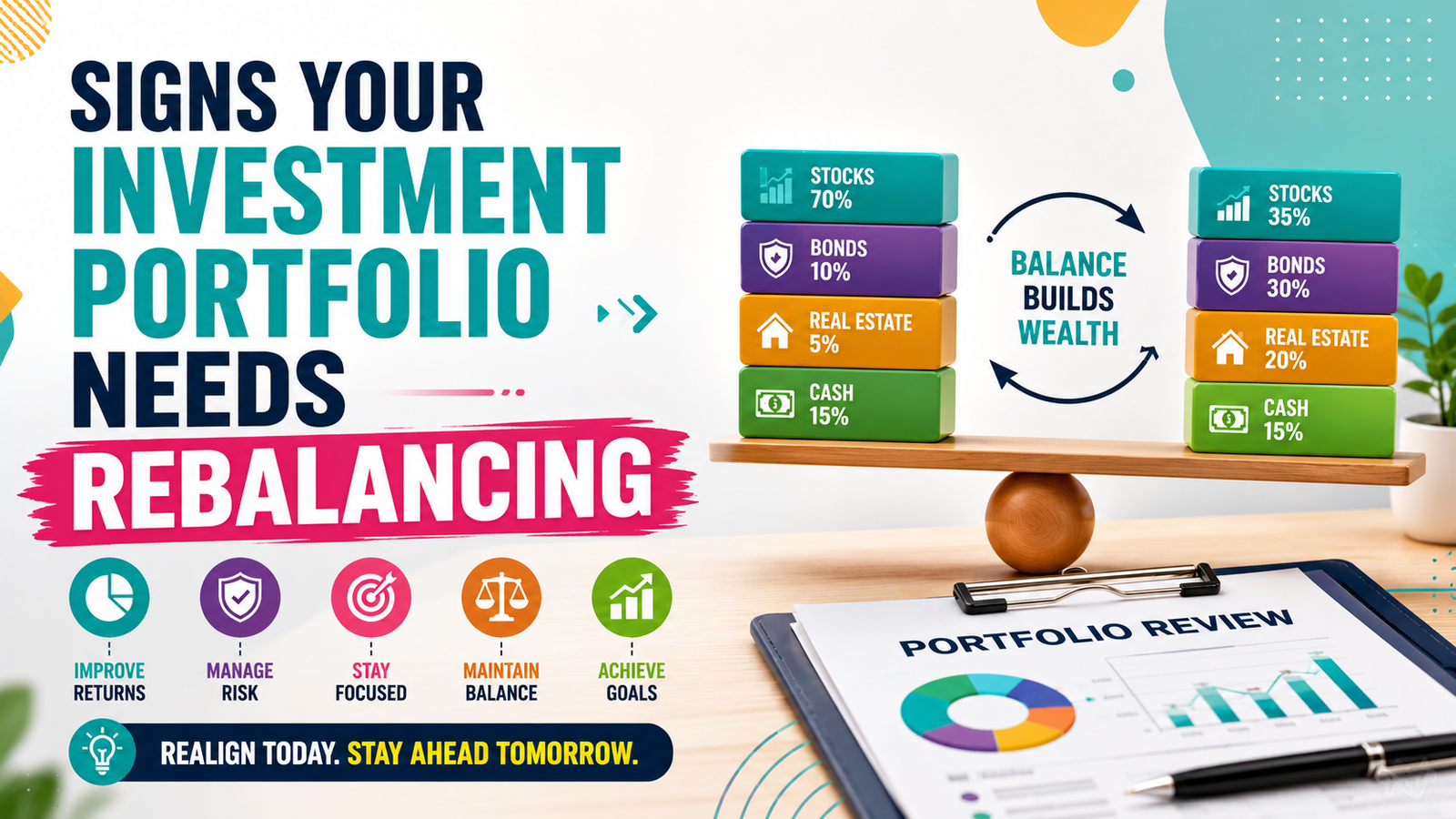
Discover the key signs your investment portfolio needs rebalancing to maintain your financial goals and manage investment risk.
Investing is not a one-time decision. Instead, it requires regular attention to keep your financial plan on track. Many investors build a diversified portfolio and assume it will continue working without changes. However, markets constantly move. As a result, your original investment mix can slowly drift away from your target allocation.
That is why understanding the signs your investment portfolio needs rebalancing is essential. Rebalancing helps you maintain the level of risk you originally planned for while keeping your investments aligned with your long-term financial goals
In this guide, you’ll learn the most common warning signs that indicate it’s time to rebalance your portfolio and how doing so can improve your investing strategy.
What Is Portfolio Rebalancing?
Portfolio rebalancing is the process of adjusting your investments back to your intended asset allocation. For example, you may have started with:
- 60% Stocks
- 30% Bonds
- 10% Cash
After several years of strong stock market growth, your allocation might change to:
- 75% Stocks
- 20% Bonds
- 5% Cash
Although your portfolio has grown, it has also become riskier. Therefore, rebalancing involves selling a portion of assets that have grown too much and buying assets that now represent a smaller percentage.
Consequently, your portfolio returns to its original investment strategy.
Why Portfolio Rebalancing Matters
Markets rarely move evenly. Some investments outperform, while others fall behind. Because of this, your portfolio naturally changes over time.
Without regular adjustments, you may experience:
- Higher investment risk
- Less diversification
- Greater portfolio volatility
- Poor alignment with financial goals
- Emotional investing decisions
For these reasons, professional investors often review their portfolios on a regular schedule.
7 Signs Your Investment Portfolio Needs Rebalancing
1. Your Asset Allocation Has Changed Significantly
This is the clearest sign.
Suppose your investment plan called for:
- 70% Stocks
- 20% Bonds
- 10% Cash
After a strong bull market, stocks may represent 82% of your portfolio.
Although higher returns seem positive, your risk exposure has increased considerably.
Many financial planners recommend reviewing your allocation whenever an asset class moves more than 5% away from its target.
2. One Investment Has Become Too Large
Sometimes a single stock performs exceptionally well.
Imagine buying shares of a technology company several years ago. Today, that investment could represent 25% or even 35% of your total portfolio.
While impressive, this creates concentration risk.
If that company experiences a sharp decline, your overall portfolio could suffer significant losses.
Therefore, trimming oversized positions helps reduce unnecessary risk.
3. Your Financial Goals Have Changed
Life changes. Your investment strategy should change as well.
You may have:
- Started a family
- Bought a home
- Changed careers
- Started a business
- Planned for retirement
Each milestone affects your investment needs.
For instance, someone nearing retirement usually prefers lower portfolio volatility than someone in their twenties.
Accordingly, rebalancing keeps your investments aligned with your current goals rather than your past circumstances.
4. You’re Taking More Risk Than You Realize
Bull markets often make investors feel comfortable with risk.
However, many people don’t realize how much their stock exposure has increased.
If the market suddenly falls, they discover their portfolio is much more aggressive than expected.
Regular rebalancing prevents this hidden risk from building over time.
As a result, you’ll likely feel more confident during periods of market uncertainty.
5. Market Volatility Has Changed Your Portfolio
Large market swings can dramatically alter your investment allocation.
For example:
- Stocks may decline sharply.
- Bonds may hold their value.
- Cash becomes a larger percentage.
Eventually, market recoveries create new imbalances.
Rather than reacting emotionally, disciplined investors review their portfolios after major market events.
This approach encourages long-term thinking instead of short-term panic.
6. It’s Been More Than a Year Since Your Last Review
Even if markets appear stable, your portfolio should not be ignored indefinitely.
Many financial professionals recommend checking allocations:
- Quarterly
- Semi-annually
- Annually
Annual reviews help identify hidden imbalances before they become serious.
Moreover, regular reviews allow you to update beneficiary information, contribution levels, and investment objectives.
7. Your Portfolio No Longer Matches Your Risk Tolerance
Risk tolerance naturally changes over time.
For example, younger investors often accept larger market swings because retirement is decades away.
Meanwhile, retirees typically prioritize stability and income.
If your investments no longer reflect your comfort level, rebalancing may be necessary.
Ultimately, your portfolio should help you sleep well at night—not create unnecessary stress.
How Often Should You Rebalance?
There is no single rule.
However, most investors use one of these approaches:
Calendar Rebalancing
Review investments:
- Every six months
- Once each year
This method is simple and easy to follow.
Threshold Rebalancing
Instead of following a schedule, rebalance whenever an asset allocation changes by 5% to 10%.
Many experienced investors prefer this method because it responds directly to market changes.
Combination Approach
Some investors combine both strategies.
For example:
- Review annually.
- Rebalance only if allocations exceed predetermined limits.
This balances discipline with flexibility.
Common Rebalancing Mistakes to Avoid
Waiting Too Long
Ignoring your portfolio for years increases risk.
Instead, review it consistently.
Chasing Market Winners
Investors often buy more of the year’s best-performing assets.
Unfortunately, yesterday’s winners don’t always become tomorrow’s leaders.
Diversification remains more reliable than chasing trends.
Ignoring Taxes
Selling investments may trigger capital gains taxes.
Therefore, consider tax-efficient strategies before making major adjustments.
Tax-advantaged accounts can often simplify the rebalancing process.
Forgetting Investment Costs
Frequent trading may increase transaction costs.
Because of this, avoid making unnecessary adjustments every few weeks.
A disciplined schedule usually works better.
Benefits of Portfolio Rebalancing
Rebalancing provides several long-term advantages.
It can help:
- Maintain your desired risk level
- Improve diversification
- Reduce emotional investing
- Keep investments aligned with financial goals
- Encourage disciplined investing habits
- Prevent overexposure to individual assets
- Support long-term wealth building
Although rebalancing does not guarantee higher returns, it helps manage risk more effectively.
Tips for Rebalancing Your Portfolio
Before making changes, consider these best practices:
- Review your asset allocation at least once a year.
- Compare your current investments with your target allocation.
- Rebalance gradually if needed.
- Consider taxes before selling investments.
- Avoid emotional decisions during market volatility.
- Continue investing consistently, regardless of short-term market movements.
Small adjustments made regularly are often more effective than major changes after years of neglect.
Frequently Asked Questions
What is portfolio rebalancing?
Portfolio rebalancing means adjusting your investments to match your original asset allocation and risk level.
Is rebalancing good during a market decline?
Yes. Rebalancing during market downturns may help you buy undervalued assets while maintaining diversification.
How often should I rebalance my investments?
Most experts recommend reviewing your portfolio at least once a year or whenever your allocation changes by 5% to 10%.
Does rebalancing improve investment returns?
Not necessarily. Its primary purpose is managing risk and maintaining your investment strategy over the long term.
Can beginners rebalance their own portfolios?
Yes. Many brokerage platforms provide asset allocation tools that make rebalancing relatively simple for beginner investors.
Final Thoughts
Understanding the signs your investment portfolio needs rebalancing can help you become a more disciplined investor. Markets change every day, and your portfolio naturally changes with them. Therefore, reviewing your investments regularly is just as important as choosing the right assets in the first place.
Rather than chasing market trends, focus on maintaining a diversified portfolio that reflects your financial goals and risk tolerance. Over time, consistent rebalancing can help reduce unnecessary risk while keeping your long-term investment plan on track.
Investor.gov – Asset Allocation and Diversification