 MOHAMMAD ABUBAKR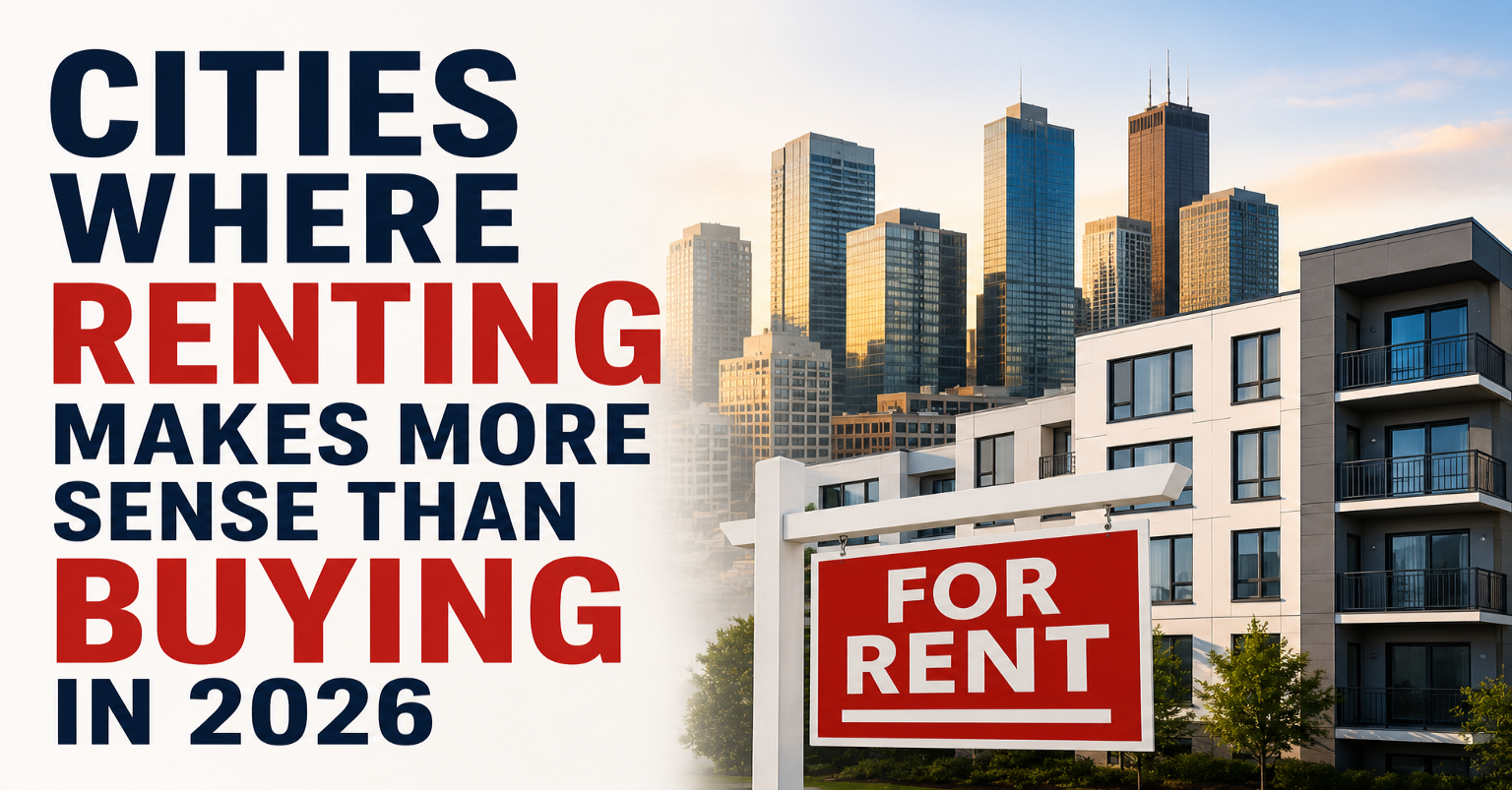
For many Americans, owning a home has long been considered part of the American Dream. However, in 2026, rising home prices, elevated mortgage rates, and increasing property taxes have changed the equation. In many U.S. cities, renting is now the more affordable and financially flexible option.
Although buying a home can help build long-term wealth, it isn’t always the right move. Depending on where you live, renting may save thousands of dollars each year while allowing you to invest the difference elsewhere.
If you’re still deciding between renting and owning, you may also find our guide on Renting vs Buying: Which Saves More Money in 2026? helpful before making a long-term decision.
In this guide, we’ll look at the cities where renting makes more sense than buying, explain why this trend is growing, and help you decide which option fits your financial goals.
Why Renting Is Becoming More Attractive
The cost of homeownership has increased significantly over the past few years.
Several factors are making renting a better option in many cities:
- Higher mortgage interest rates.
- Expensive home prices.
- Rising homeowners insurance premiums.
- Increased property taxes.
- Higher maintenance and repair costs.
As a result, many households find that renting offers lower monthly housing costs and greater financial flexibility.
For additional housing affordability data and homeownership research, visit the Joint Center for Housing Studies of Harvard University, which regularly publishes reports on U.S. housing market trends.
Cities Where Renting Makes More Sense Than Buying
While local conditions vary, these cities currently have some of the largest gaps between monthly rent and homeownership costs.
1. San Francisco, California
San Francisco remains one of the most expensive housing markets in America.
Although rents are high, buying often costs much more due to million-dollar home prices, large down payments, and high mortgage payments.
For many professionals, renting allows greater flexibility while avoiding massive housing expenses.
2. San Jose, California
Home prices in San Jose continue to rank among the highest in the country.
Even households with strong incomes often find that renting costs substantially less than owning.
Many buyers also face high property taxes and maintenance expenses.
3. Los Angeles, California
Los Angeles offers many attractive neighborhoods, but affordability remains a major challenge.
With elevated mortgage payments and limited inventory, renting often makes better financial sense for residents planning to stay only a few years.
4. New York City, New York
Buying property in New York City requires significant upfront costs.
Besides high purchase prices, buyers must consider closing costs, maintenance fees, and property taxes.
Many residents prefer renting because it offers greater flexibility and lower initial financial commitments.
5. Seattle, Washington
Seattle home prices remain relatively expensive despite slower price growth.
Renters can often save money each month compared to homeowners, especially when mortgage rates remain elevated.
6. Boston, Massachusetts
Boston’s competitive housing market continues to challenge first-time buyers.
Many young professionals and families choose renting while building savings for future home purchases.
7. Miami, Florida
Although Florida attracts many new residents, Miami’s housing costs have increased rapidly.
Higher insurance premiums and property taxes make owning considerably more expensive than renting in many neighborhoods.
Why Buying Costs More Than the Mortgage
Many first-time buyers focus only on the monthly mortgage payment.
However, homeowners pay for much more.
Additional costs include:
- Property taxes.
- Homeowners insurance.
- HOA fees.
- Repairs and maintenance.
- Landscaping.
- Appliance replacement.
- Closing costs.
These expenses can add hundreds—or even thousands—of dollars to annual housing costs.
When Renting Is the Better Financial Choice
Renting may be the smarter decision if:
- You expect to move within five years.
- Home prices are extremely high in your city.
- Mortgage rates remain elevated.
- You are still building your emergency fund.
- You want greater career flexibility.
- You prefer avoiding unexpected repair costs.
In these situations, renting can reduce financial stress while allowing you to invest or save more money.
When Buying Still Makes Sense
Although renting has advantages, buying remains a strong option for many Americans.
Homeownership may be better if:
- You plan to stay in one location for several years.
- You have a stable income.
- You have saved for a down payment.
- You want to build home equity.
- Local home prices remain affordable.
Over time, owning a home can still create long-term wealth in many markets.
Renting vs Buying: Cost Example
Imagine two families living in the same city.
Buying
- Mortgage payment
- Property taxes
- Insurance
- Maintenance
- HOA fees
Total monthly housing cost: Higher
Renting
- Monthly rent
- Renters insurance
Total monthly housing cost: Lower
The renter may invest the monthly savings into retirement accounts, ETFs, or other investments.
Depending on investment returns, this strategy can sometimes outperform homeownership over shorter periods.
Financial Benefits of Renting
Renting offers several advantages beyond lower monthly costs.
These include:
- Greater flexibility.
- Lower upfront expenses.
- No maintenance responsibilities.
- Easier relocation.
- More predictable housing costs.
These benefits appeal to many young professionals and families in expensive metro areas.
Common Mistakes Renters Make
Even renters should avoid costly financial mistakes.
Common errors include:
- Spending too much on rent.
- Skipping renters insurance.
- Not saving for a future home purchase.
- Ignoring lease renewal terms.
- Failing to build an emergency fund.
A smart renter uses lower housing costs as an opportunity to strengthen overall finances.
Should You Wait Before Buying?
If home prices remain high in your local market, waiting may be reasonable.
However, delaying solely because you expect prices to fall can be risky.
Instead, evaluate:
- Your income.
- Your savings.
- Mortgage affordability.
- Local market conditions.
- Long-term housing plans.
Buying a home should fit your financial situation—not just market timing.
Final Thoughts
In 2026, renting makes more sense than buying in several expensive U.S. cities. Markets such as San Francisco, San Jose, Los Angeles, New York City, Seattle, Boston, and Miami continue to challenge homebuyers with high prices and elevated ownership costs.
That doesn’t mean buying is a bad investment. Instead, it highlights the importance of choosing the option that matches your financial goals, career plans, and budget.
Whether you rent or buy, the best decision is one that supports long-term financial stability rather than stretching your finances too thin.
Frequently Asked Questions
Is renting cheaper than buying in 2026?
In many expensive U.S. cities, yes. Monthly rent is often lower than the total monthly cost of owning a home.
Which cities are better for renting?
Cities such as San Francisco, New York City, Los Angeles, San Jose, Seattle, Boston, and Miami often favor renters because of high homeownership costs.
Should I rent if mortgage rates are high?
It depends on your finances and long-term plans. Renting may provide greater flexibility while you save for a future purchase.
Can renting help build wealth?
Yes. If you consistently invest the money you save by renting, you may build significant long-term wealth.