 MOHAMMAD ABUBAKR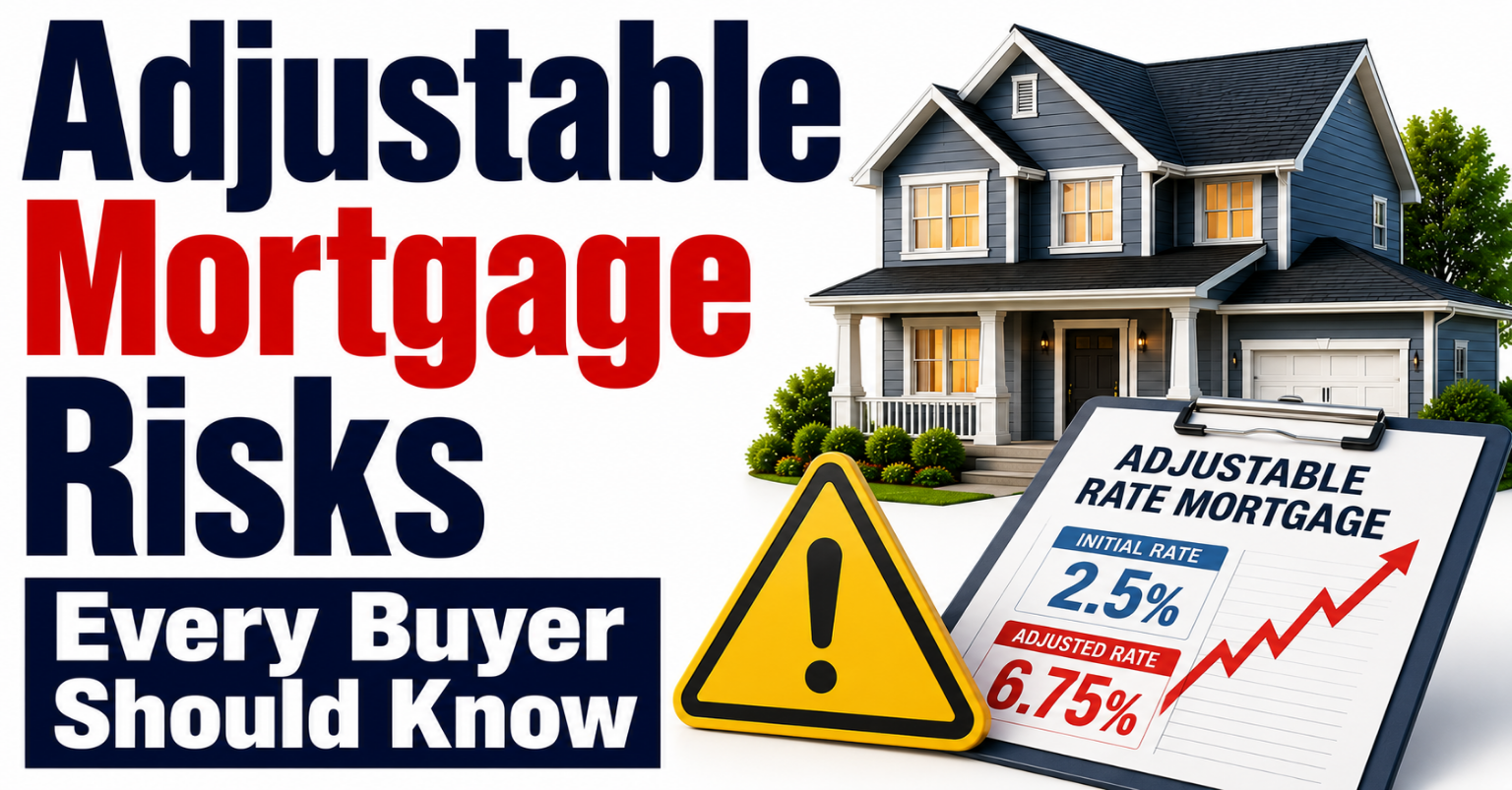
Buying a home is one of the biggest financial decisions most Americans will ever make. While searching for the right mortgage, many buyers notice that adjustable-rate mortgages (ARMs) often advertise lower interest rates than fixed-rate loans. At first glance, they seem like an easy way to reduce monthly payments. However, the lower starting rate tells only part of the story.
An adjustable-rate mortgage can save money in the early years. Even so, the interest rate does not stay the same forever. Once the introductory period ends, the rate may increase, causing monthly payments to rise. Because of this, buyers should understand every potential risk before signing a mortgage agreement.
That does not mean every ARM is a bad choice. Instead, it means borrowers should know exactly how these loans work and whether they fit their financial plans.
This guide explains the biggest adjustable mortgage risks, how they affect homeowners, and what you can do to protect yourself before choosing this type of loan.
What Is an Adjustable-Rate Mortgage?
An adjustable-rate mortgage is a home loan with an interest rate that changes over time.
Unlike a fixed-rate mortgage, which keeps the same interest rate throughout the loan, an ARM starts with a fixed rate for a specific period. After that period ends, the lender adjusts the interest rate based on a financial index plus a margin.
For example, you may see loans described as:
- 3/1 ARM
- 5/1 ARM
- 7/1 ARM
- 10/1 ARM
The first number shows how many years the introductory rate remains fixed.
The second number indicates how often the interest rate can adjust afterward.
Although the initial rate is usually lower than a fixed mortgage, future payments are less predictable.
Therefore, understanding how adjustments work is essential before borrowing.
Why Buyers Choose Adjustable Mortgages
Many first-time buyers are attracted to adjustable-rate mortgages for good reasons.
Initially, these loans often provide:
- Lower monthly payments
- Lower introductory interest rates
- Increased buying power
- Better short-term affordability
For buyers planning to sell or refinance before the adjustment period ends, an ARM may appear attractive.
Nevertheless, unexpected life changes can alter those plans.
As a result, buyers should prepare for both the best-case and worst-case scenarios.
Risk #1: Your Monthly Payment Can Increase
One of the biggest risks is payment uncertainty.
During the fixed-rate period, your mortgage payment usually remains stable.
However, once that period expires, the interest rate may rise.
Consequently, your monthly payment could increase significantly.
For example, a homeowner paying $1,900 per month might suddenly owe several hundred dollars more after the first adjustment.
That increase can strain a household budget, especially if income has not grown at the same pace.
Because of this, buyers should calculate whether they could comfortably afford higher payments before choosing an ARM.
Risk #2: Rising Interest Rates
Interest rates change for many reasons.
Inflation, Federal Reserve policy, and economic conditions all influence borrowing costs.
When market rates rise, adjustable mortgage rates often rise as well.
As a result, homeowners may experience multiple payment increases during the life of the loan.
Although some ARMs include limits on how much rates can increase, those limits do not eliminate the risk completely.
Instead, they simply reduce how quickly rates can climb.
Understanding these limits is an important part of comparing mortgage offers.
Risk #3: Budgeting Becomes More Difficult
Most families prefer predictable monthly expenses.
A fixed mortgage provides that consistency.
An adjustable mortgage does not.
Because payments may change over time, creating a long-term household budget becomes more challenging.
For example, homeowners may struggle to estimate future housing costs when planning for retirement, college savings, or other financial goals.
Therefore, buyers who value financial stability often prefer fixed-rate loans.
Risk #4: Refinancing May Not Always Be Possible
Many borrowers expect to refinance before their adjustable rate increases.
While this strategy can work, it depends on future circumstances.
Several factors could make refinancing difficult:
- Higher interest rates
- Lower home values
- Reduced income
- Credit score changes
- Employment changes
If refinancing is unavailable, homeowners may have no choice but to accept the higher adjustable payment.
Consequently, relying entirely on refinancing can be risky.
Instead, buyers should ensure they could manage the mortgage even if refinancing never happens.
Risk #5: Home Values Can Change
Some buyers believe rising home values will always create refinancing opportunities.
Unfortunately, housing markets do not always move upward.
Property values sometimes decline due to economic conditions or local market changes.
If your home’s value falls, refinancing may become more difficult.
In some cases, homeowners may even owe more than the property’s current market value.
Although this situation is uncommon in healthy housing markets, it remains an important risk to consider.
Planning only for rising home prices can create unnecessary financial pressure later.
Risk #6: Higher Lifetime Interest Costs
Many borrowers focus on the attractive introductory interest rate.
However, the total cost of the loan depends on future adjustments.
If interest rates increase several times, the overall borrowing cost may exceed that of a fixed-rate mortgage.
Consequently, what appeared to be a cheaper loan initially could become much more expensive over the long term.
For buyers expecting to remain in their homes for many years, this possibility deserves careful attention.
Comparing the total lifetime cost—not just the first few years—can lead to a better financial decision.
Understanding Rate Caps
Fortunately, most adjustable-rate mortgages include rate caps.
These limits restrict how much the interest rate can increase.
Common caps include:
- Initial adjustment cap
- Annual adjustment cap
- Lifetime adjustment cap
While these protections help reduce sudden payment shocks, they do not prevent increases entirely.
Instead, they slow the pace at which rates can rise.
Therefore, reviewing your loan’s cap structure is just as important as comparing interest rates.
Risk #7: Financial Goals May Change
Life rarely follows a perfect plan.
Many buyers choose an adjustable-rate mortgage because they expect to move within a few years. However, unexpected events can change those plans.
For example, you may:
- Change jobs.
- Start a family.
- Decide to stay in your current home.
- Delay relocating because of the housing market.
If you remain in the home longer than expected, you could face several interest rate adjustments.
As a result, your housing costs may become much higher than you originally planned.
Therefore, think about where you realistically expect to live over the next 10 years instead of assuming everything will go according to plan.
Risk #8: Higher Debt-to-Income Ratio
When your mortgage payment increases, your monthly debt also increases.
Consequently, your debt-to-income (DTI) ratio may rise.
A higher DTI can affect your financial flexibility.
For example, it may become more difficult to:
- Qualify for another mortgage.
- Buy a new vehicle.
- Obtain a personal loan.
- Refinance your current mortgage.
Keeping housing costs manageable protects your future borrowing power.
Risk #9: Market Uncertainty
Economic conditions change constantly.
Inflation, employment trends, and financial markets all influence mortgage rates.
Although nobody can predict future interest rates with certainty, adjustable-rate borrowers are directly affected by these changes.
Meanwhile, homeowners with fixed-rate mortgages continue making the same principal and interest payment regardless of market conditions.
That stability becomes especially valuable during periods of economic uncertainty.
Who Should Consider an Adjustable-Rate Mortgage?
Despite the risks, adjustable-rate mortgages can work well for certain buyers.
An ARM may be suitable if you:
- Plan to move within a few years.
- Expect a significant increase in income.
- Intend to pay off the mortgage quickly.
- Have substantial financial savings.
- Understand and accept the possibility of higher payments.
Even then, buyers should calculate whether they could still afford the mortgage after the highest possible rate adjustment.
Preparing for the worst-case scenario reduces financial stress later.
Who Should Avoid an Adjustable Mortgage?
A fixed-rate mortgage may be a better option if you:
- Plan to stay in your home long term.
- Prefer predictable monthly payments.
- Have a tight household budget.
- Worry about rising interest rates.
- Want greater financial stability.
Although the starting interest rate may be slightly higher, predictable payments often provide valuable peace of mind.
For many families, financial certainty is worth paying a little more upfront.
Adjustable Mortgage vs. Fixed Mortgage
Both mortgage types have advantages.
However, the right choice depends on your financial goals.
| Feature | Adjustable-Rate Mortgage | Fixed-Rate Mortgage |
|---|---|---|
| Initial Interest Rate | Usually lower | Usually higher |
| Monthly Payment | May increase | Remains stable |
| Long-Term Predictability | Lower | Higher |
| Best For | Short-term homeowners | Long-term homeowners |
| Interest Rate Risk | Yes | No |
Instead of focusing only on today’s interest rate, compare the total cost of ownership over the years you expect to keep the home.
If you’re comparing different home loan options, read our guide on Should You Pay Off Your Mortgage Early? to learn how mortgage repayment strategies can reduce interest costs and improve your long-term financial future.
How to Reduce Adjustable Mortgage Risk
If you decide an ARM fits your situation, several strategies can reduce potential problems.
Understand Every Loan Detail
Read the loan agreement carefully.
Pay close attention to:
- Adjustment schedule
- Interest rate index
- Lender margin
- Rate caps
- Maximum lifetime interest rate
Knowing these details helps you avoid surprises later.
Build an Emergency Fund
A larger emergency fund provides protection if your monthly payment increases unexpectedly.
Financial experts generally recommend saving several months of living expenses.
This reserve can make payment adjustments much easier to manage.
Pay Extra Toward the Principal
Reducing your loan balance early lowers future interest costs.
Even small additional principal payments can make a meaningful difference over time.
Consistency is more important than making large occasional payments.
Monitor Interest Rates
Keep track of mortgage market trends.
If fixed mortgage rates become attractive, refinancing may help you secure predictable monthly payments.
Review your options regularly instead of waiting until your adjustable rate changes.
Avoid Borrowing at Your Maximum Budget
Many buyers qualify for larger mortgages than they can comfortably afford.
Instead, leave room in your budget for possible payment increases.
Buying below your maximum approval amount provides greater financial flexibility.
Questions to Ask Before Choosing an ARM
Before signing your mortgage documents, ask your lender these important questions:
- When does the first rate adjustment occur?
- Which financial index determines my rate?
- How often can my interest rate change?
- What are the annual and lifetime rate caps?
- What would my payment be if rates reached the maximum allowed?
Understanding these answers helps you make a confident decision.
The Consumer Financial Protection Bureau Mortgage Resources explain adjustable-rate mortgages, loan estimates, and mortgage terms in plain language. Reviewing these resources can help you compare loan options with confidence.
Final Thoughts
Adjustable-rate mortgages can provide lower monthly payments during the first few years of homeownership. For some buyers, that advantage makes an ARM an attractive financing option.
However, lower introductory rates also come with additional risk. Rising interest rates, changing monthly payments, and refinancing uncertainty can increase long-term housing costs.
Instead of choosing a mortgage based only on the initial payment, evaluate your financial goals, expected length of homeownership, income stability, and comfort with future payment changes.
For buyers who expect to remain in their homes for many years, a fixed-rate mortgage often provides greater financial security. On the other hand, buyers with short-term plans and strong financial flexibility may benefit from an adjustable-rate loan.
Ultimately, the best mortgage is the one that supports your long-term financial health—not just your budget today.