
 MOHAMMAD ABUBAKR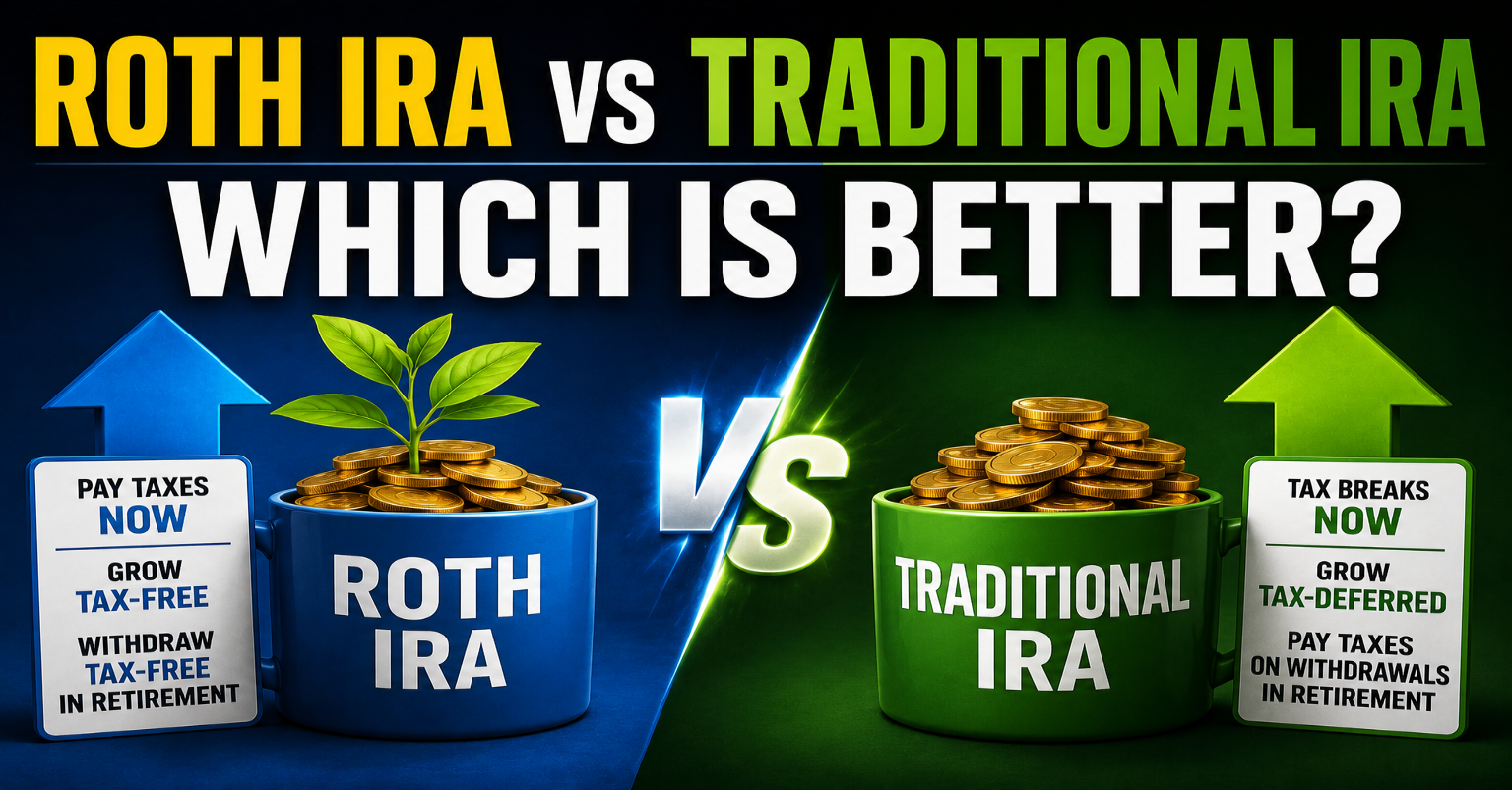
Introduction
Planning for retirement is one of the smartest financial decisions you can make. However, choosing the right retirement account can feel confusing. Many Americans compare a Roth IRA vs Traditional IRA because both offer valuable tax advantages and long-term growth opportunities.
Although these accounts share many similarities, they also have important differences. The biggest difference is when you receive the tax benefit. A Roth IRA allows tax-free withdrawals in retirement if you meet the requirements, while a Traditional IRA may provide a tax deduction when you contribute.
The right choice depends on your income, tax situation, retirement goals, and expectations for the future.
In this guide, you’ll learn the key differences between a Roth IRA and a Traditional IRA, along with their advantages and disadvantages, so you can decide which option better fits your financial plan.
What Is a Roth IRA?
A Roth IRA is an individual retirement account funded with money that has already been taxed.
Because you pay taxes before contributing, qualified withdrawals in retirement are generally tax-free.
Many investors choose a Roth IRA because it offers flexibility and potential tax savings later in life.
Key Benefits of a Roth IRA
- Tax-free qualified withdrawals
- Tax-free investment growth
- No required minimum distributions (RMDs) during the account owner’s lifetime
- Contributions can generally be withdrawn at any time without taxes or penalties (subject to IRS rules)
- Ideal for long-term retirement investing
A Roth IRA can be especially attractive if you expect to be in a higher tax bracket during retirement.
What Is a Traditional IRA?
A Traditional IRA is another popular retirement account designed to help Americans save for retirement.
Unlike a Roth IRA, contributions to a Traditional IRA may be tax-deductible, depending on your income and whether you participate in an employer-sponsored retirement plan.
Your investments grow tax-deferred, meaning you usually pay taxes when you withdraw money during retirement.
Key Benefits of a Traditional IRA
- Potential tax deduction on contributions
- Tax-deferred investment growth
- Lower taxable income in the contribution year (if eligible)
- Suitable for investors seeking immediate tax savings
Many people choose a Traditional IRA because it can reduce their current tax bill while allowing investments to grow over time.
Roth IRA vs Traditional IRA: Key Differences
Although both accounts are designed for retirement savings, they work differently.
| Feature | Roth IRA | Traditional IRA |
|---|---|---|
| Contributions | Made with after-tax dollars | May be tax-deductible |
| Investment Growth | Tax-free | Tax-deferred |
| Retirement Withdrawals | Generally tax-free | Generally taxable |
| Required Minimum Distributions | No (during owner’s lifetime) | Yes, beginning at the applicable IRS age |
| Best For | Investors expecting higher future taxes | Investors seeking current tax savings |
Understanding these differences can help you choose the account that better aligns with your financial goals.
Advantages of a Roth IRA
Many investors prefer a Roth IRA because of its long-term tax benefits.
Some advantages include:
1. Tax-Free Retirement Income
Qualified withdrawals are generally free from federal income tax.
As a result, you can better estimate your retirement income without worrying about future tax rates.
2. No Required Minimum Distributions
Unlike a Traditional IRA, a Roth IRA does not require minimum withdrawals during the original account owner’s lifetime.
This allows your investments to continue growing if you do not need the money immediately.
3. Helpful for Younger Investors
Many younger workers currently have lower incomes.
If they expect their earnings and tax rates to increase over time, paying taxes now through a Roth IRA may be beneficial.
Advantages of a Traditional IRA
A Traditional IRA also offers several important benefits.
1. Potential Immediate Tax Savings
Eligible contributions may reduce your taxable income for the year.
This can lower your current tax bill while allowing your investments to grow.
2. Tax-Deferred Growth
You generally do not pay taxes on investment gains each year.
Instead, taxes are usually paid when money is withdrawn during retirement.
This allows your investments to compound without annual tax payments on earnings.
3. A Good Choice for Higher Earners
If you expect to be in a lower tax bracket after retirement, a Traditional IRA may provide greater overall tax savings.
For many investors, this can make it an attractive retirement planning option.
Which IRA Is Better for You?
There is no single answer that works for everyone. The better choice depends on your current income, expected future tax rate, and retirement goals.
A Roth IRA may be a better option if you:
- Expect to be in a higher tax bracket during retirement.
- Want tax-free qualified withdrawals.
- Prefer not to take required minimum distributions (RMDs) during your lifetime.
- Have many years before retirement, giving your investments more time to grow.
A Traditional IRA may be a better option if you:
- Want a potential tax deduction today.
- Expect to be in a lower tax bracket after you retire.
- Want to reduce your taxable income in the current year.
- Prefer immediate tax savings over future tax-free withdrawals.
Choosing the right IRA depends on your personal financial situation. Many investors even contribute to both accounts when eligible.
Common Mistakes to Avoid
Selecting the wrong retirement account can affect your long-term savings. Fortunately, these common mistakes are easy to avoid.
1. Choosing an IRA Without Understanding the Tax Rules
Many people open an IRA without knowing how contributions and withdrawals are taxed.
Take time to understand the tax treatment before investing.
2. Waiting Too Long to Start Saving
Time is one of the biggest advantages in retirement investing.
Starting early allows compound growth to work in your favor.
3. Ignoring Contribution Limits
The IRS sets annual contribution limits for IRAs.
Contributing more than the allowed amount may result in penalties.
4. Investing Too Conservatively
Some investors leave their retirement savings in cash for many years.
While cash offers stability, it may not keep pace with inflation over the long term.
A diversified investment portfolio may provide better growth opportunities.
How to Decide Between a Roth IRA and a Traditional IRA
Ask yourself these questions before choosing an account:
- Do I expect my income to increase over time?
- Would I benefit more from a tax deduction today?
- Do I want tax-free income during retirement?
- How many years do I have until retirement?
- What is my long-term investment strategy?
Your answers can help you determine which account better matches your financial goals.
👉 Internal Link Placement
Add your internal link here.
Anchor Text:
How Much Money Do You Really Need to Retire Comfortably?
Suggested sentence:
Opening an IRA is only one part of retirement planning. To estimate how much you’ll need for retirement, read our How Much Money Do You Really Need to Retire Comfortably? guide.
Contribution Limits and Tax Rules
IRA contribution limits and eligibility rules may change over time.
Income limits can also affect whether you qualify to contribute directly to a Roth IRA or deduct Traditional IRA contributions.
For that reason, always review the latest IRS guidance before making retirement contributions.
Before making IRA contributions, check the latest contribution limits, eligibility rules, and tax information on the official Internal Revenue Service (IRS) Retirement Plans website.
Frequently Asked Questions
Is a Roth IRA better than a Traditional IRA?
Not necessarily. A Roth IRA is often better for people who expect higher taxes in retirement, while a Traditional IRA may benefit those looking for immediate tax savings.
Can I have both a Roth IRA and a Traditional IRA?
Yes. Many investors contribute to both accounts if they meet the eligibility requirements and stay within the annual IRS contribution limits.
Which IRA is best for young investors?
Many younger investors prefer a Roth IRA because they may currently be in a lower tax bracket and could benefit from tax-free qualified withdrawals in retirement.
Can I switch from a Traditional IRA to a Roth IRA?
Yes. This process is called a Roth conversion. However, it may create a tax bill, so it’s important to understand the financial impact before making the decision.
Final Thoughts
Both Roth IRAs and Traditional IRAs are excellent tools for building long-term retirement wealth.
The best choice depends on your tax situation, income, and financial goals. Instead of focusing only on today’s tax savings, think about how your retirement income may be taxed in the future.
If you’re unsure which account fits your needs, consider speaking with a qualified financial professional. A well-planned retirement strategy today can help provide greater financial security tomorrow.