 MOHAMMAD ABUBAKR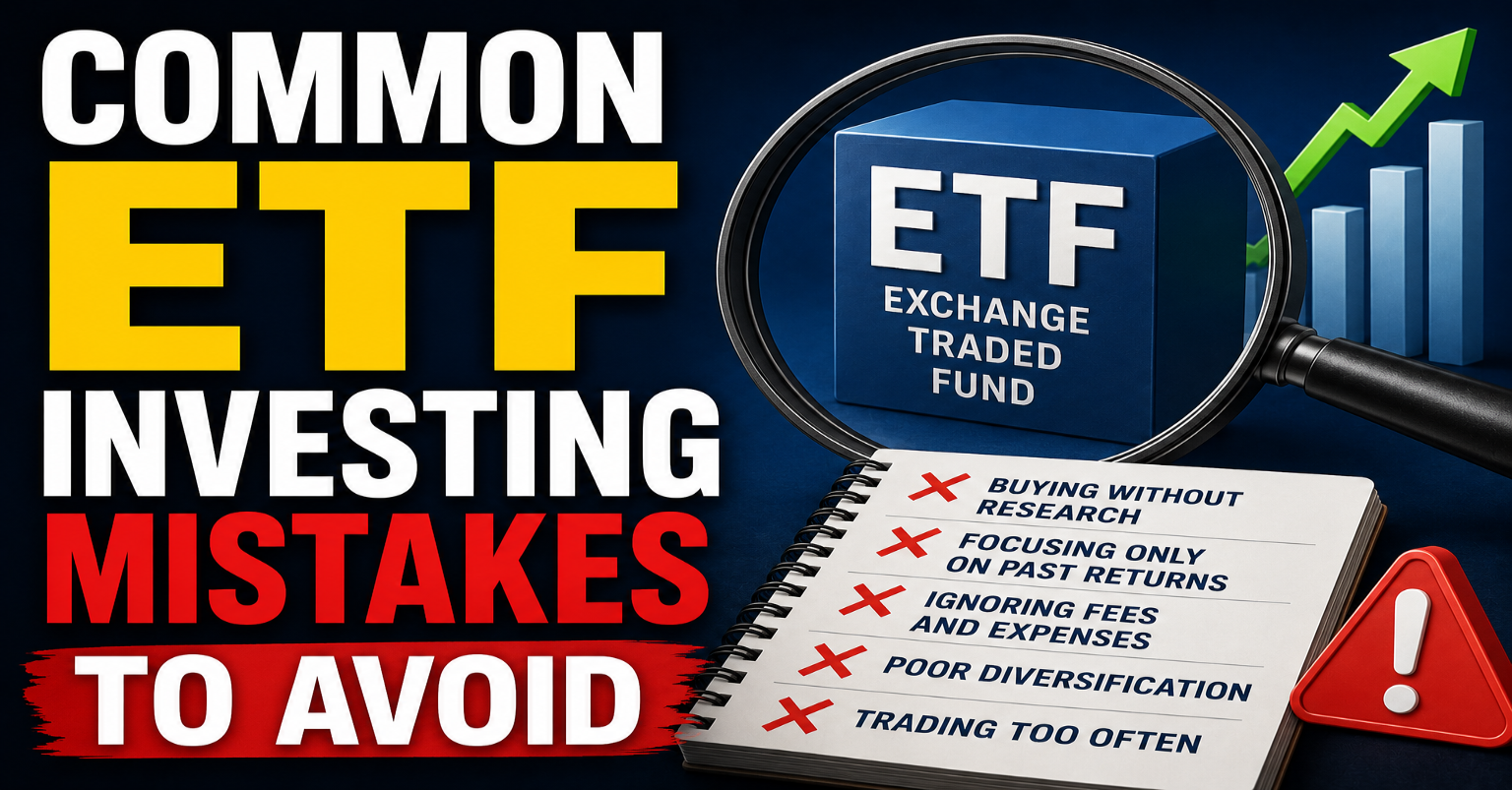
Introduction
Exchange-traded funds (ETFs) have become one of the most popular investment options in the United States. They offer diversification, lower costs, and easy access to different markets. Because of these benefits, both beginner and experienced investors continue to add ETFs to their portfolios.
However, buying an ETF does not automatically make you a smart investor. Many people make simple mistakes that reduce their returns or expose them to unnecessary risk. Some choose the wrong ETF, while others ignore fees or fail to diversify.
The good news is that these mistakes are easy to avoid. With the right knowledge and a long-term plan, you can use ETFs to build wealth while keeping your investment strategy on track.
In this guide, you’ll discover the most common ETF investing mistakes and learn practical ways to avoid them.
Why ETFs Are Popular
ETFs combine the benefits of diversification with the flexibility of trading like a stock.
Many investors choose ETFs because they offer:
- Instant diversification
- Lower expense ratios
- Easy buying and selling
- Access to different industries
- Exposure to U.S. and international markets
- Long-term growth potential
Although ETFs simplify investing, they still require careful planning.
Why More Americans Are Investing in ETFs Instead of Individual Stocks
Mistake #1: Buying an ETF Without Understanding It
Many investors buy an ETF simply because it has performed well recently.
Unfortunately, past performance does not guarantee future results.
Before investing, understand:
- What the ETF invests in
- Its investment objective
- Its level of risk
- The companies or assets it holds
- Its long-term strategy
Taking a few minutes to research an ETF can help you avoid costly mistakes later.
Mistake #2: Ignoring Expense Ratios
One of the biggest advantages of ETFs is their low cost.
However, not every ETF has the same fees.
Even a small difference in expense ratios can reduce your returns over many years.
For example, an ETF charging 0.75% annually will generally cost much more over time than one charging 0.05%.
Always compare fees before investing.
Lower costs allow more of your money to remain invested.
Mistake #3: Not Diversifying Enough
Some investors believe buying one ETF automatically creates a diversified portfolio.
That is not always true.
For example, a technology ETF invests mainly in technology companies.
If that sector performs poorly, your portfolio could decline significantly.
Instead, consider spreading your investments across different types of ETFs, such as:
- Total U.S. stock market ETFs
- International ETFs
- Bond ETFs
- Dividend ETFs
- Small-cap ETFs
Diversification helps reduce the impact of a single sector performing poorly.
Mistake #4: Chasing Performance
Many investors buy ETFs only after they have produced impressive returns.
Unfortunately, strong past performance often attracts investors near the market peak.
Instead of chasing yesterday’s winners, focus on your long-term investment goals.
A disciplined investment strategy usually delivers better results than constantly switching to the latest top-performing ETF.
Mistake #5: Trading ETFs Too Often
ETFs work best when used as long-term investments.
However, some investors treat them like short-term trading tools.
Frequent buying and selling can:
- Increase trading costs
- Create unnecessary taxes
- Lead to emotional decisions
- Reduce long-term returns
Instead, build a diversified portfolio and allow your investments time to grow.
Patience remains one of the most valuable investing skills.
Mistake #6: Ignoring Your Investment Goals
Not every ETF is right for every investor.
Some ETFs focus on growth, while others aim to generate income or preserve capital. Choosing an ETF without considering your financial goals can lead to disappointing results.
Before investing, ask yourself:
- Am I investing for retirement?
- Do I need regular income?
- How long can I keep my money invested?
- What level of risk am I comfortable taking?
Selecting ETFs that match your goals helps you stay committed to your investment plan.
Mistake #7: Overlapping Your ETF Holdings
Many investors own several ETFs that hold the same companies.
For example, a total U.S. market ETF and a large-cap ETF may both have significant investments in the same technology companies.
Although it appears diversified, your portfolio may actually be concentrated in a few stocks.
Review your ETF holdings regularly to avoid unnecessary overlap.
A simpler portfolio is often easier to manage.
Mistake #8: Forgetting to Rebalance Your Portfolio
As the market changes, your ETF allocation changes too.
One ETF may grow much faster than the others. As a result, it can become a larger portion of your portfolio than you intended.
Rebalancing helps restore your target allocation.
Many investors review their portfolios once or twice a year and make small adjustments when needed.
This approach keeps your investment risk aligned with your financial goals.
Mistake #9: Investing Based on Market Headlines
Financial news can create excitement or fear.
When markets rise quickly, investors often rush to buy. When markets fall, many panic and sell.
Making decisions based on headlines instead of research can hurt long-term returns.
Instead, focus on your investment strategy.
Remember that market volatility is normal, and successful investors usually stay invested through different market cycles.
Mistake #10: Expecting Quick Profits
ETFs are designed to support long-term investing.
However, some investors expect large gains within weeks or months.
Building wealth takes time.
Consistent investing, patience, and compound growth often produce better results than trying to make quick profits.
Set realistic expectations and give your investments time to grow.
How to Avoid ETF Investing Mistakes
Avoiding common mistakes is often more important than finding the “perfect” ETF.
Follow these simple strategies:
- Research every ETF before investing.
- Compare expense ratios.
- Diversify across different asset classes.
- Invest consistently through dollar-cost averaging.
- Review your portfolio once or twice each year.
- Avoid emotional investing.
- Keep your long-term goals in mind.
To learn more about ETFs, diversification, and investment risk, visit the official Investor.gov website from the U.S. Securities and Exchange Commission (SEC). It offers free educational resources for investors.
Frequently Asked Questions
Are ETFs good for beginners?
Yes. Many ETFs provide instant diversification, lower fees, and an easy way to invest in hundreds of companies through a single fund.
How many ETFs should I own?
There is no perfect number. Many investors build a well-diversified portfolio with three to five ETFs that cover different asset classes.
Can ETFs lose money?
Yes. Like all investments, ETFs can decline in value when the markets fall. Diversification helps manage risk, but it does not eliminate it.
Should I invest in one ETF or several?
That depends on your goals. A broad-market ETF may be enough for some investors, while others may choose multiple ETFs for additional diversification.
Final Thoughts
ETFs have changed the way millions of Americans invest. They offer simplicity, diversification, and low costs. However, they are not risk-free.
By avoiding these common ETF investing mistakes, you can make better decisions and build a stronger portfolio over time.
Focus on your long-term goals instead of short-term market movements. Review your investments regularly, diversify wisely, and stay disciplined.
Small improvements in your investing habits today can make a meaningful difference in your financial future.