
 MOHAMMAD ABUBAKR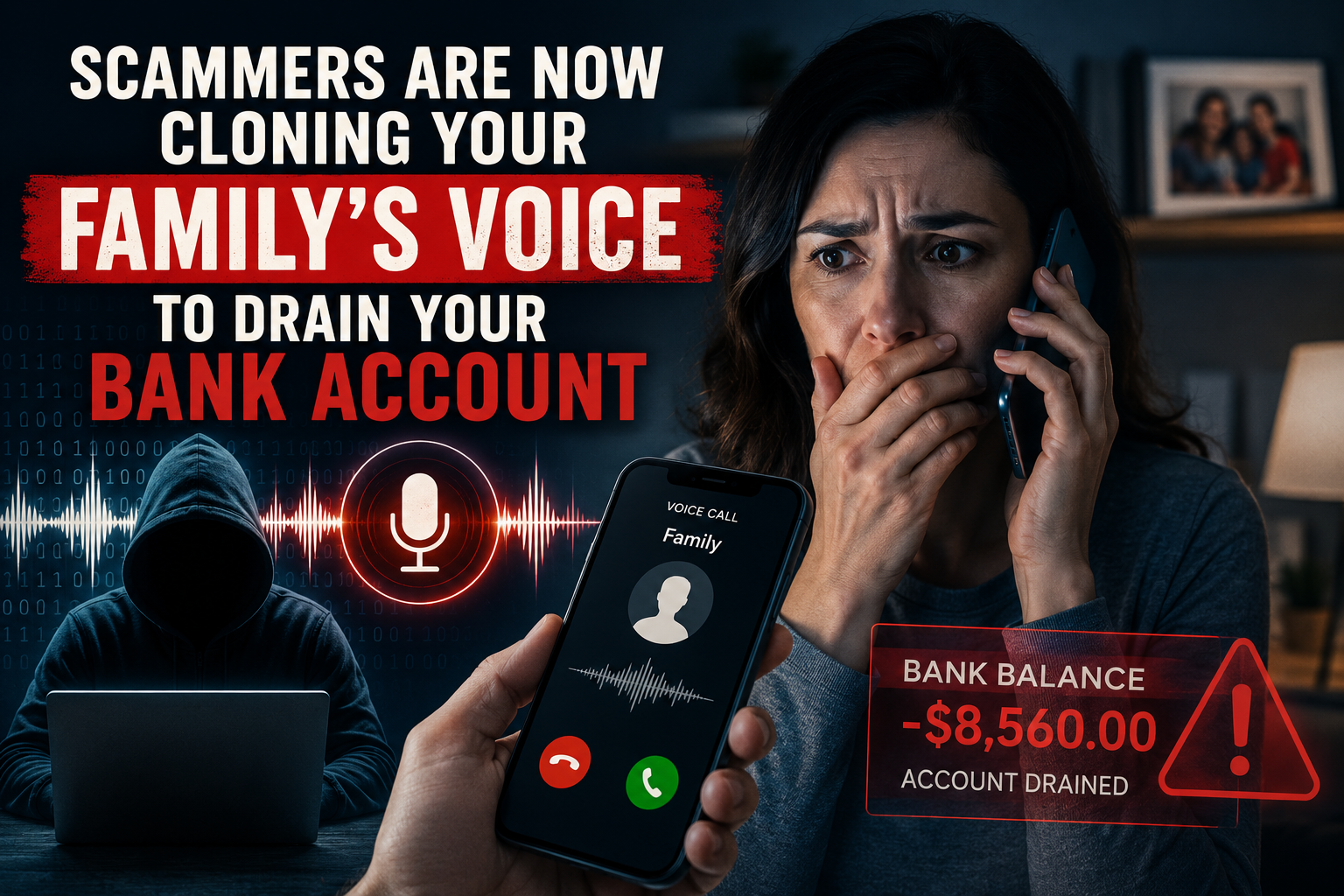
The Phone Call That Changed Everything
It was a Tuesday afternoon when Michael, a 58-year-old father from Ohio, received a call that stopped his heart. On the other end of the line, his daughter Emma was sobbing — her voice shaking, words tumbling over each other. She said she’d been in a car accident. She said she needed bail money. She said she was scared and alone.
Michael didn’t hesitate. He wired $4,200 within the hour.
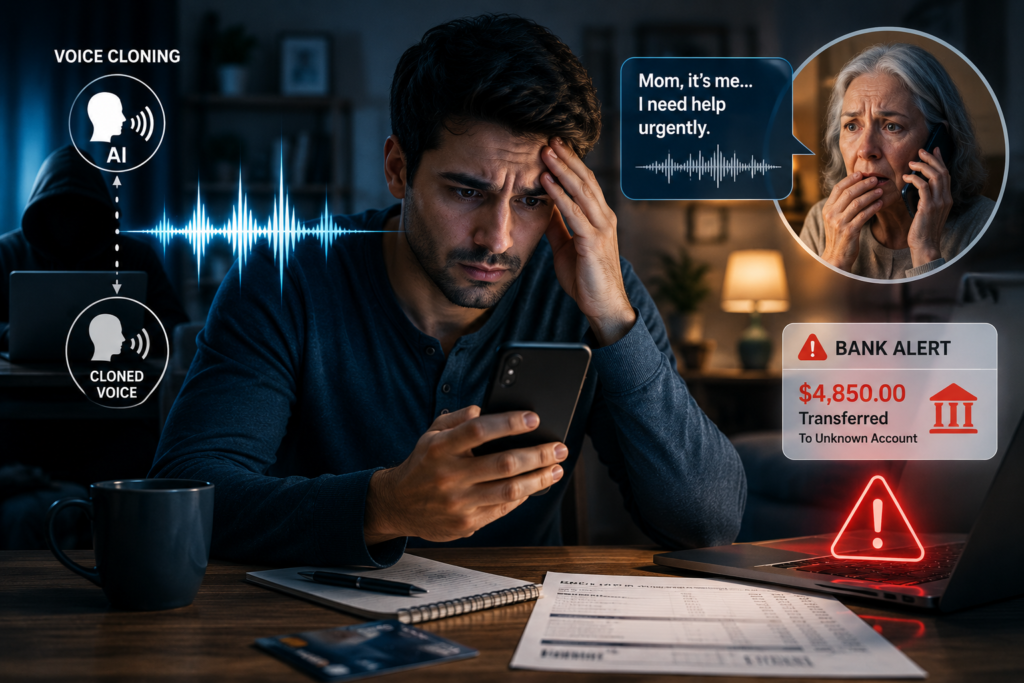
Twenty minutes later, Emma called him from her own phone — cheerful, completely unaware. She hadn’t been in any accident. She hadn’t called him at all.
The voice Michael heard wasn’t Emma. It was a perfect digital copy created by an AI voice cloning scam — and Michael lost his life savings to a criminal he never saw.
This is not a rare story anymore. The AI voice cloning scam is one of the fastest-growing financial frauds in the United States, targeting families across every age group and income level. According to the Federal Trade Commission (FTC), imposter scams cost Americans over $2.7 billion in a single recent year — and voice cloning is rapidly becoming the preferred weapon of choice.
In this guide, you will learn exactly how the AI voice cloning scam works, the seven warning signs to watch for, and twelve practical steps to protect your family before a call like Michael’s ever reaches you.
What Is an AI Voice Cloning Scam?
Voice cloning is a technology that uses artificial intelligence to analyze and replicate a person’s voice. Feed a cloning tool even a few seconds of someone speaking, and it can generate new audio in that exact voice — saying whatever the scammer wants it to say.
Think of it like a digital impression. Just as a skilled actor can imitate a celebrity, AI can imitate a real person’s voice with frightening accuracy — capturing their tone, their accent, the way they breathe between sentences.
Why Is It So Dangerous Now?
Until recently, producing realistic synthetic voice audio required expensive equipment and highly trained technicians. Today, several commercially available and even free AI tools can clone a voice using nothing more than a 3–10 second audio sample. That means a single Instagram video, a Facebook reel, a TikTok clip, or even your outgoing voicemail greeting is potentially enough raw material for a scammer to work with.
The technology is advancing faster than most people realize — and most potential victims have no idea this kind of scam even exists.
How the AI Voice Cloning Scam Actually Works
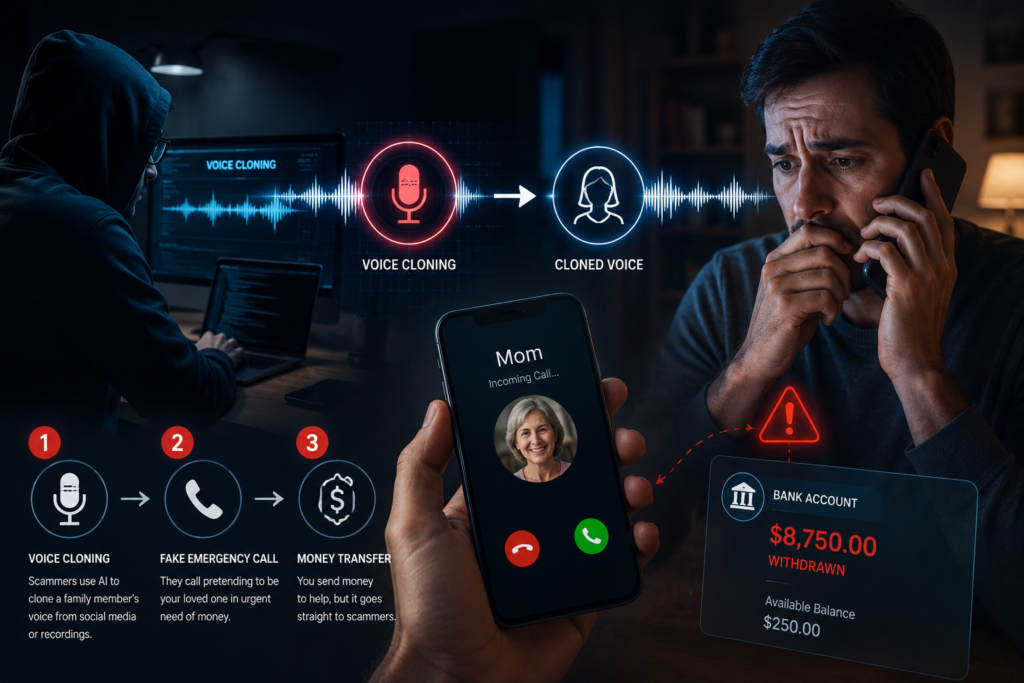
Understanding the mechanics helps you recognize it in real time. Here is how a typical AI voice cloning scam unfolds from start to finish:
| STEP 1 | Harvest Audio: Scammers collect short voice clips from public sources — social media videos, YouTube, podcasts, WhatsApp voice notes, voicemail greetings, or TikTok reels. Even 3–10 seconds is enough. |
| STEP 2 | Clone the Voice: The audio is fed into an AI voice cloning tool. Within minutes, the tool produces a synthetic voice that sounds nearly identical to the real person. |
| STEP 3 | Research the Target: Scammers study the victim’s social media to identify family members, relationships, common travel, and emergency contacts. |
| STEP 4 | Create an Emergency Story: A believable crisis is scripted — a car accident, an arrest, a hospital visit, a mugging abroad. The more emotional and urgent, the better. |
| STEP 5 | Make the Call: Using a spoofed or unknown number, they call the family member using the cloned voice. A real scammer may also stay on the line acting as a police officer or attorney. |
| STEP 6 | Demand Immediate Payment: They insist on untraceable payment — wire transfer, gift cards, cryptocurrency, or peer-to-peer apps like Zelle or Venmo. |
| STEP 7 | Money Disappears: Funds are transferred to overseas accounts or converted to crypto within seconds. Most victims never recover the money. |
7 Warning Signs It’s an AI Voice Cloning Scam
Knowing these red flags could save your family thousands of dollars — or more.
Warning Sign #1: Immediate Demand for Money
Why It Matters: Legitimate emergencies almost never require a family member to wire money within minutes. Real hospitals, law enforcement, and attorneys have official payment processes.
| Real-Life Example: “Mom, you need to send $3,000 right now or they’re going to keep me overnight.” A real emergency would never come with a payment deadline measured in minutes. |
| What To Do: Stop. Hang up. Call your family member directly on the number you already have saved. |
Warning Sign #2: Intense Pressure to Stay on the Phone
Why It Matters: Scammers keep victims on the line to prevent them from making verification calls. This is a deliberate tactic to maintain the emotional panic they have created.
| Real-Life Example: “Don’t hang up — if you hang up they’ll take away my phone privileges and I won’t be able to call you again.” |
| What To Do: Tell the caller you need one minute to call your bank or another family member. A real loved one will understand. A scammer will resist. |
Warning Sign #3: Request for Gift Cards, Crypto, or Wire Transfers
Why It Matters: No legitimate emergency — legal, medical, or otherwise — requires payment in iTunes gift cards, Google Play cards, or Bitcoin. These are untraceable and irreversible.
| Real-Life Example: “Go to Walmart and buy five $500 Apple gift cards. Don’t tell the cashier why — just read me the codes on the back.” |
| What To Do: End the call immediately. Gift card and crypto payment demands are the single clearest sign of a scam. |
Warning Sign #4: Caller Refuses a Video Call
Why It Matters: A cloned voice cannot appear on a live video call. If the person is truly your family member, they can show their face.
| Real-Life Example: “My phone camera is broken” or “The connection is too bad for video” are common excuses. |
| What To Do: Insist on a FaceTime or video call. If refused, assume it is not your family member. |
Warning Sign #5: Call Comes From an Unknown or Blocked Number
Why It Matters: Scammers use number-spoofing technology or prepaid burner phones. Your real family member’s name will not appear on caller ID.
| Real-Life Example: The call shows as “Unknown” or a random out-of-state number you don’t recognize, even though the voice sounds exactly like your son. |
| What To Do: Never trust caller ID alone. Always verify by calling the person’s real number stored in your contacts. |
Warning Sign #6: Extreme Emotional Manipulation
Why It Matters: Scammers engineer panic on purpose. Fear shuts down rational thinking. The more distressed the voice sounds, the less likely the victim is to pause and verify.
| Real-Life Example: Sobbing, screaming, whispering “please help me” — all scripted to trigger your protective instincts before your logical brain can engage. |
| What To Do: Take one slow breath. The few seconds it takes to pause and verify could save you thousands of dollars. |
Warning Sign #7: “Don’t Tell Anyone” or Secrecy Demands
Why It Matters: Isolation is a classic fraud tactic. Scammers know that a second opinion from a spouse, sibling, or friend will almost certainly expose the scam.
| Real-Life Example: “Please don’t tell Dad — I don’t want him to worry.” or “The attorney said to keep this confidential until the charges are dropped.” |
| What To Do: Legitimate emergencies do not require secrecy. Tell someone immediately — another family member, a neighbor, your bank. |
How AI Scammers Find Their Victims
You may wonder: how do scammers get my family member’s voice in the first place? The answer is closer than you think.
Public Social Media
Every video your child posts on TikTok, Instagram Reels, or YouTube is potential raw material. Even a 5-second clip of someone talking or laughing is enough for modern AI cloning tools to work with.
Voice Messages and Voicemail
WhatsApp voice notes, recorded voicemail greetings, and audio messages are all potential sources. If you have ever sent a voice note in a group chat, that audio exists on multiple devices and platforms.
Podcasts and Online Interviews
Small business owners, entrepreneurs, students, and professionals who have appeared in podcasts, webinars, or online interviews have hours of voice data publicly available online.
Data Breaches
Personal information from data breaches — names, phone numbers, family relationships, home addresses — helps scammers script highly convincing and personalized emergency scenarios.
What Scammers Know Before They Call
By combining voice audio with public social media data, scammers often already know your family member’s name, your name, where they go to school, who their friends are, and what kind of car they drive. This makes the fabricated story disturbingly believable.
Can They Really Clone a Voice That Well?
This is the question most people ask — and the honest answer is: yes, surprisingly well, but not perfectly.
What Is Possible Today
Modern AI voice cloning tools can replicate tone, accent, speech rhythm, and emotional inflection from short audio samples. In a high-stress phone call, where the victim is already panicking, the difference between a real voice and a cloned one can be nearly impossible to detect.
Current Limitations
Current cloning technology still has weaknesses. The voice may sound slightly robotic during longer sentences. Background audio may not match the supposed location. The emotional range may feel slightly off in extended conversation. These are clues — but only if you are calm enough to notice them.
The Bottom Line
You should not rely on your ear to detect a fake voice. The technology is already good enough to fool most people in an emotionally charged moment. Your defense must be a process — not a sound judgment.
Who Is Most at Risk?
The AI voice cloning scam targets people across all demographics, but certain groups are particularly vulnerable:
Parents and Grandparents
Older adults are more likely to respond instinctively to a child or grandchild in distress and less likely to be familiar with voice cloning technology. The FTC reports that adults over 60 lose significantly more money per fraud incident than younger victims.
High Social Media Users
Anyone who posts frequent videos, voice messages, or audio content online provides scammers with rich source material. Teenagers and young adults are especially exposed through TikTok, Instagram, and YouTube.
Small Business Owners
Business owners who have appeared in podcasts, video ads, webinars, or promotional content have extensive voice libraries publicly available, making them prime cloning targets.
Remote Workers
Workers who regularly communicate via audio or video calls in remote settings may have recordings accessible across multiple platforms or company tools.
Families With Recent Travel
Scammers research social media to find families where a member is currently traveling — a perfect setup for a “stranded abroad” emergency scenario.
How to Protect Yourself and Your Family: 12 Practical Tips
These steps can significantly reduce your risk of falling victim to an AI voice cloning scam.
- Create a Family Safe Word: Agree on a secret word or phrase that only your immediate family knows. If a caller claiming to be a family member cannot say the safe word, hang up immediately. Change it every few months.
- Always Verify Using a Separate Call: Never trust the incoming call. Hang up and call the person directly using the number saved in your contacts. If they are truly in trouble, you will reach them or their voicemail.
- Never Send Money Under Emotional Pressure: Establish a personal rule: no money transfers are made during a phone call, no matter how urgent the situation sounds. Give yourself at least 30 minutes and one verification call before any transfer.
- Limit Public Voice Recordings: Review your privacy settings on TikTok, Instagram, YouTube, and Facebook. Set accounts to private where possible. Avoid posting long voice-only content on public platforms.
- Enable Multi-Factor Authentication (MFA): Activate MFA on your bank accounts, email, and social media. This prevents scammers from accessing your accounts even if they obtain your personal details.
- Freeze or Delay Wire Transfers: Ask your bank about adding a time delay or verbal verification step to wire transfers and large withdrawals. Many banks offer this feature on request.
- Protect Your Social Media Privacy: Audit what personal information is publicly visible on your profiles — family names, relationships, travel plans, and daily routines are all valuable data for scammers.
- Educate Elderly Relatives: Have a direct conversation with parents and grandparents about how voice cloning works. Show them this article. Practice the safe word with them. Their willingness to pause and verify could save them from devastating losses.
- Set Up Banking Alerts: Enable real-time transaction alerts for all bank and credit card accounts. Immediate notification of any transfer gives you the best chance of catching fraud before funds are gone.
- Monitor Your Accounts Daily: Check your bank and credit accounts every day — not just weekly. Early detection significantly improves the chances of recovering stolen funds.
- Report Suspicious Calls: Report suspicious calls to the FTC at reportfraud.ftc.gov and to the FBI’s Internet Crime Complaint Center at ic3.gov. Your report helps protect others.
- Stay Updated on New Scam Tactics: Subscribe to fraud alerts from the FTC, AARP, or your bank. Scam tactics evolve quickly, and staying informed is one of the most powerful defenses available to you.
What To Do If You Already Sent Money
Act immediately. Every minute matters. Here is the exact sequence of steps to follow:
- Contact Your Bank or Credit Union Immediately: Call the fraud department using the number on the back of your card or your bank’s official website. Report the transfer and ask if it can be recalled or reversed. Wire transfers and gift card codes cannot always be recovered, but speed greatly improves your chances.
- Freeze Affected Accounts If Necessary: Ask your bank to freeze any compromised accounts to prevent additional unauthorized transactions while the investigation is underway.
- File a Report With the FTC: Go to reportfraud.ftc.gov and file a detailed report. The FTC uses this data to build cases against fraud rings and to issue consumer alerts.
- File a Complaint With the FBI IC3: Submit a complaint at ic3.gov. The FBI’s Internet Crime Complaint Center tracks AI-assisted fraud cases nationally and can coordinate recovery efforts in some situations.
- Change All Passwords Immediately: Update passwords on your email, banking, and social media accounts. Use unique, complex passwords for each one. Consider a trusted password manager.
- Enable Additional Security on All Accounts: Turn on multi-factor authentication everywhere it is available, especially on financial accounts and email.
- Monitor Your Credit Reports: Request free copies of your credit reports from all three bureaus at annualcreditreport.com. Place a fraud alert or credit freeze if you believe your personal information was also compromised.
- Warn Your Family and Contacts: Let family members know what happened so they can be alert to follow-up scam attempts. Scammers sometimes contact victims multiple times, including with fake “recovery” services that steal additional money.
Common Myths About AI Voice Cloning Scams — Busted
Myth: AI Can Perfectly Fool Everyone Every Time
Reality: Current voice cloning is highly convincing but not flawless. In longer conversations or on high-quality audio calls, subtle inconsistencies may appear. However, in short, emotionally charged calls, the technology is effective enough to deceive most people — which is precisely why scammers keep calls brief and urgent.
Myth: My Bank Will Always Refund the Money
Reality: Recovery depends entirely on how the money was sent and how quickly you report it. Wire transfers, cryptocurrency payments, and gift card codes are generally not recoverable. Even with bank wires, recovery is not guaranteed and takes time.
Myth: Private Social Media Accounts Make You Completely Safe
Reality: Private accounts reduce but do not eliminate your risk. Friends, followers, or even mutual contacts who share your content — including tagged videos where you speak — can still expose your voice to public platforms.
Myth: Only Celebrities or Wealthy People Are Targeted
Reality: Scammers target ordinary families specifically because they are more likely to panic, less likely to have fraud protocols in place, and represent millions of potential victims.
Myth: Young People Don’t Fall for These Scams
Reality: While older adults lose more money per incident, younger people are not immune. Studies from the FTC have found that adults under 40 are actually more likely to report losing money to fraud, often because of digital payment familiarity that makes transfers feel routine.
Myth: If It Sounds Like My Family Member, It Must Be Them
Reality: This is the exact belief that makes this scam so effective. Voice cloning technology can replicate tone, accent, and speech patterns well enough to fool even close family members — especially under emotional duress.
Myth: Scammers Need Hours of Audio to Clone a Voice
Reality: Modern AI cloning tools can produce convincing results from as little as 3 seconds of clear audio. A single social media clip is genuinely sufficient.
Myth: Reporting the Scam Is Pointless
Reality: Your report matters. The FTC, FBI, and CFPB use complaint data to identify fraud networks, issue public warnings, and — in some cases — help victims recover funds. Always report, even if you feel embarrassed.
Frequently Asked Questions
Can AI really clone a voice from just a short recording?
Yes. Modern AI voice cloning tools can produce convincing results from as few as 3–10 seconds of clear audio. This makes any public video, voice note, or voicemail greeting a potential source for scammers.
How can I tell if the voice I’m hearing is fake?
In a brief, emotionally charged call, it is very difficult to detect a cloned voice by ear alone. Your best protection is a process: hang up, call back on the number you know, and use a pre-agreed family safe word.
What should I do if I receive a suspicious call?
Stay calm. Do not send any money. Tell the caller you need to call them back. Hang up. Call your family member directly. If you suspect fraud, report it to the FTC at reportfraud.ftc.gov and the FBI IC3 at ic3.gov.
Can scammers access my bank account just by hearing my voice?
Not directly. Voice biometrics used by banks are separate systems from general voice cloning. However, scammers may use personal details gathered alongside cloned voices to impersonate you to bank representatives — especially via phone-based customer service.
Are elderly people more vulnerable to this scam?
Research from the FTC consistently shows that adults over 70 lose more money per fraud incident than any other age group. However, this scam targets all ages. Education and preparation are the most effective defenses regardless of age.
What payment methods do AI voice cloning scammers prefer?
Scammers demand untraceable, irreversible payment methods: gift card redemption codes, wire transfers, cryptocurrency, and peer-to-peer payment apps like Zelle or Venmo. Any demand for these payment types should be treated as an immediate red flag.
What is a family safe word and how does it help?
A family safe word is a secret code word or phrase agreed upon in advance that any family member can use to verify their identity in an emergency call. Scammers cannot know this word — so if the caller cannot provide it, you know the call is fake.
Is it legal for companies to offer voice cloning technology?
The legal landscape is evolving rapidly. Several states and countries are moving to regulate AI voice cloning, particularly when used for fraud. However, enforcement remains challenging due to the international nature of most scam operations.
How common is the AI voice cloning scam in the U.S.?
The FTC reported over $2.7 billion lost to imposter scams in a recent year, with AI-assisted voice fraud identified as one of the fastest-growing subcategories. The FBI’s IC3 has issued multiple public warnings about the increase in AI-powered phone fraud.
Where should I report an AI voice cloning scam?
Report to the FTC at reportfraud.ftc.gov, the FBI’s Internet Crime Complaint Center at ic3.gov, and your state attorney general’s consumer protection office. Also notify your bank’s fraud department immediately if any money was transferred.