 MOHAMMAD ABUBAKR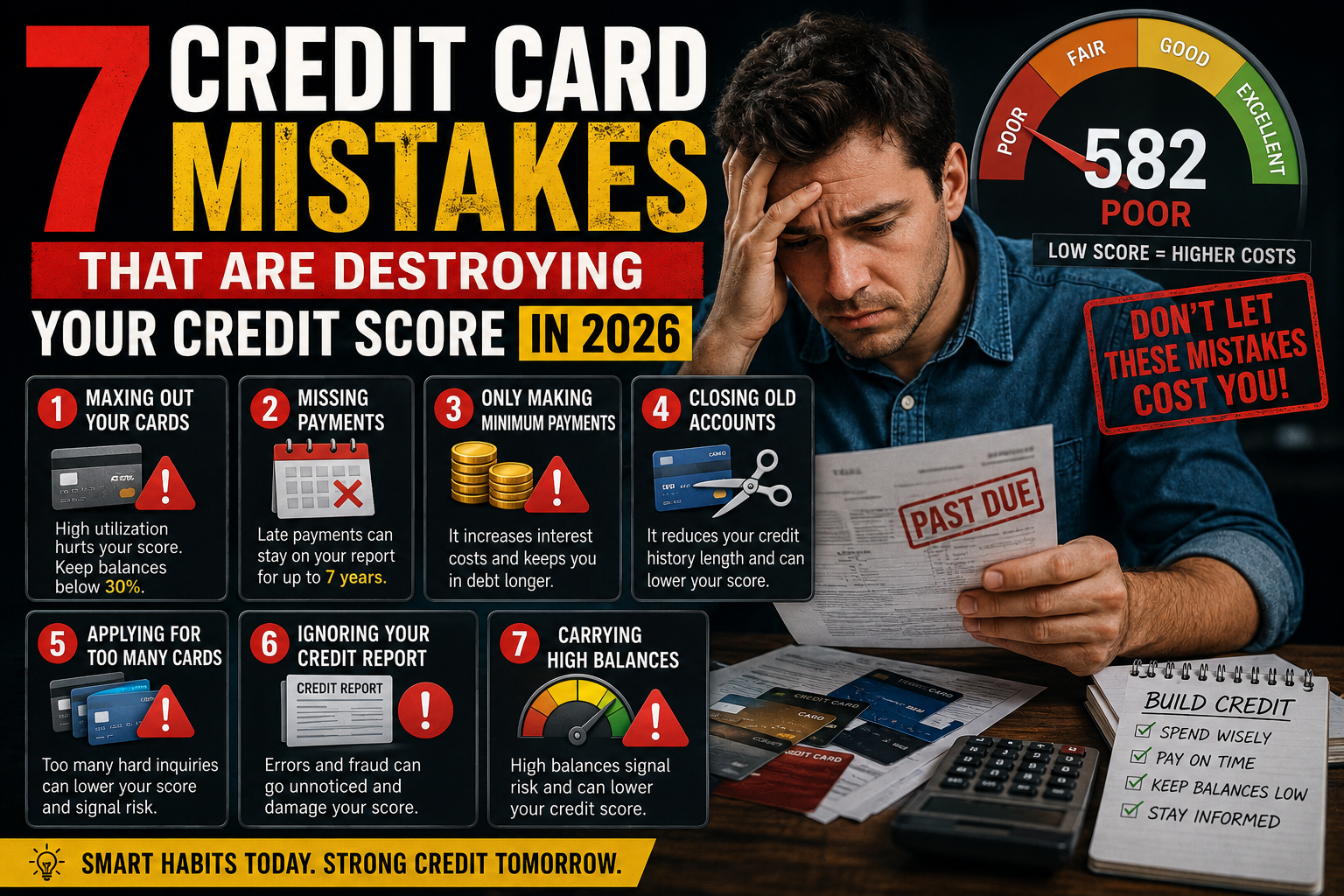
Your credit score affects more than just your ability to get a credit card. It can influence mortgage approvals, auto loan rates, apartment applications, and even insurance costs. Because of that, maintaining a strong credit profile has become increasingly important in 2026.
It can also influence major financial milestones throughout your life.
Unfortunately, many Americans damage their credit scores without realizing it. A few common credit card mistakes can quietly lower your score and make borrowing more expensive. While some errors seem small, their long-term impact can be significant.
The good news is that most of these mistakes are completely avoidable. By understanding how credit scores work, you can protect your financial future and improve your borrowing power.
Here are seven credit card mistakes that may be destroying your credit score in 2026.
1. Missing Even One Payment
Payment history remains the most important factor in most credit scoring models.
As a result, a single missed payment can hurt your score far more than many people expect.
Late payments may stay on your credit report for years. Furthermore, lenders often view missed payments as a warning sign of financial stress.
Common reasons for missed payments include:
- Forgetting due dates
- Traveling frequently
- Managing multiple cards
- Cash flow problems
Fortunately, this mistake is easy to prevent.
Setting up automatic payments or calendar reminders can help ensure bills are paid on time every month.
Therefore, payment consistency should always be your top priority.
2. Maxing Out Your Credit Cards
Many cardholders focus only on making payments. However, credit utilization is also a major factor in your credit score.
Credit utilization measures how much of your available credit you are using.
For example:
- Credit limit: $10,000
- Balance: $8,000
- Utilization rate: 80%
A high utilization ratio can signal increased financial risk.
Most experts recommend keeping utilization below 30%.
Even better, staying below 10% often produces stronger credit score results.
Consequently, reducing balances can improve your score even if you never miss a payment.
3. Applying for Too Many Credit Cards
Opening multiple credit cards within a short period can damage your credit profile.
Each application typically creates a hard inquiry on your credit report.
While one inquiry may have a minor effect, several inquiries can raise concerns among lenders.
Frequent applications may suggest:
- Financial difficulties
- Excessive borrowing needs
- Increased credit risk
Therefore, apply for new credit only when necessary.
Being selective helps protect your score and preserves future borrowing options.
4. Closing Old Credit Card Accounts
Many people assume closing unused credit cards improves their finances.
In reality, this decision can sometimes lower a credit score.
Older accounts contribute to the average age of your credit history.
In addition, closing an account reduces your total available credit.
As a result:
- Credit utilization may increase
- Average account age may decrease
Both factors can negatively affect your score.
Before closing an older card, consider how the decision might impact your overall credit profile.
Sometimes keeping the account open is the better choice.
5. Carrying High Balances Month After Month
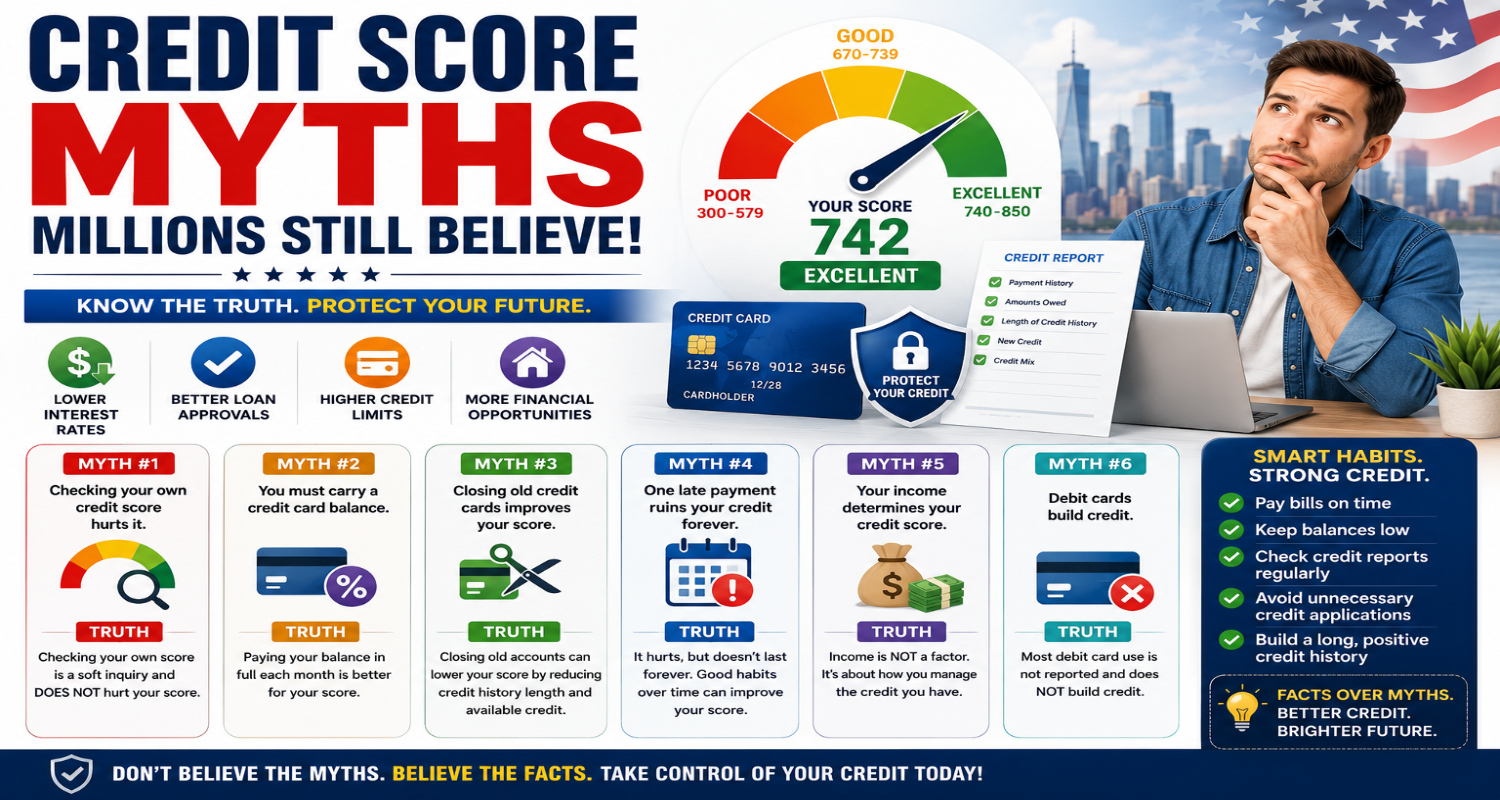
A common credit myth suggests carrying a balance helps build credit.
That belief is false.
You do not need to carry debt to maintain a strong credit score.
In fact, consistently carrying large balances can create several problems:
- Higher interest charges
- Increased utilization ratios
- Greater financial stress
Paying balances in full whenever possible remains one of the smartest financial habits.
Moreover, avoiding interest charges frees up money for savings and investments.
6. Ignoring Errors on Your Credit Report
Credit report mistakes occur more often than many consumers realize.
Examples include:
- Incorrect account balances
- Duplicate accounts
- Fraudulent activity
- Reporting errors
If left unresolved, these issues may negatively affect your score.
For that reason, reviewing your credit reports regularly is important.
Consumers can access their free credit reports through the official website authorized by federal law.
Monitoring your reports allows you to identify problems before they become costly.
Additionally, early action can simplify the dispute process.
7. Using Credit Cards for Everyday Overspending
Credit cards can be useful financial tools. Yet they can also encourage spending beyond your means.
Many consumers rely on credit cards to cover expenses they cannot currently afford.
Over time, this behavior can lead to:
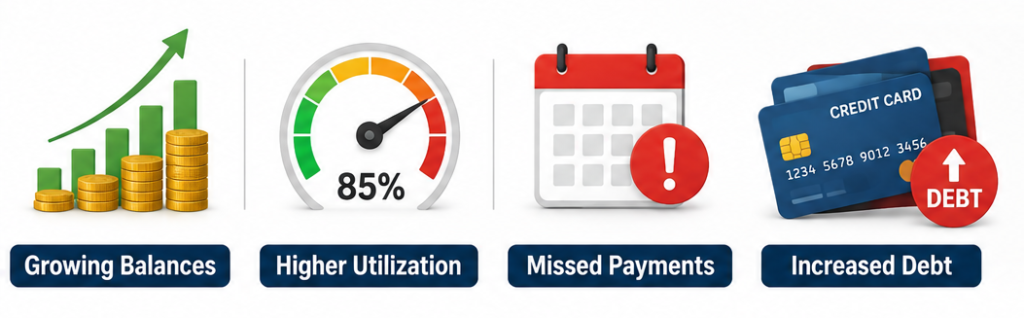
Consequently, credit scores often suffer alongside financial stability.
Using credit cards responsibly requires treating them as payment tools rather than extra income.
That mindset can prevent many common financial problems.
Why Credit Scores Matter More in 2026
Lenders continue using credit scores as a key measure of risk.
A strong score may help you:
- Qualify for lower interest rates
- Secure better credit card offers
- Obtain favorable mortgage terms
- Save money on auto loans
On the other hand, a lower score can increase borrowing costs dramatically.
Even a small difference in interest rates can cost thousands of dollars over time.
Therefore, protecting your credit score is one of the most valuable financial habits you can develop.
Simple Habits That Improve Credit Scores
Building strong credit does not require complicated strategies.
Instead, focus on a few proven habits:
- Pay every bill on time
- Keep utilization low
- Avoid unnecessary applications
- Monitor credit reports regularly
- Maintain older accounts when appropriate
- Pay balances in full whenever possible
These habits may seem simple.
Nevertheless, they often produce the biggest long-term results.
How Long Does It Take to Rebuild Credit?
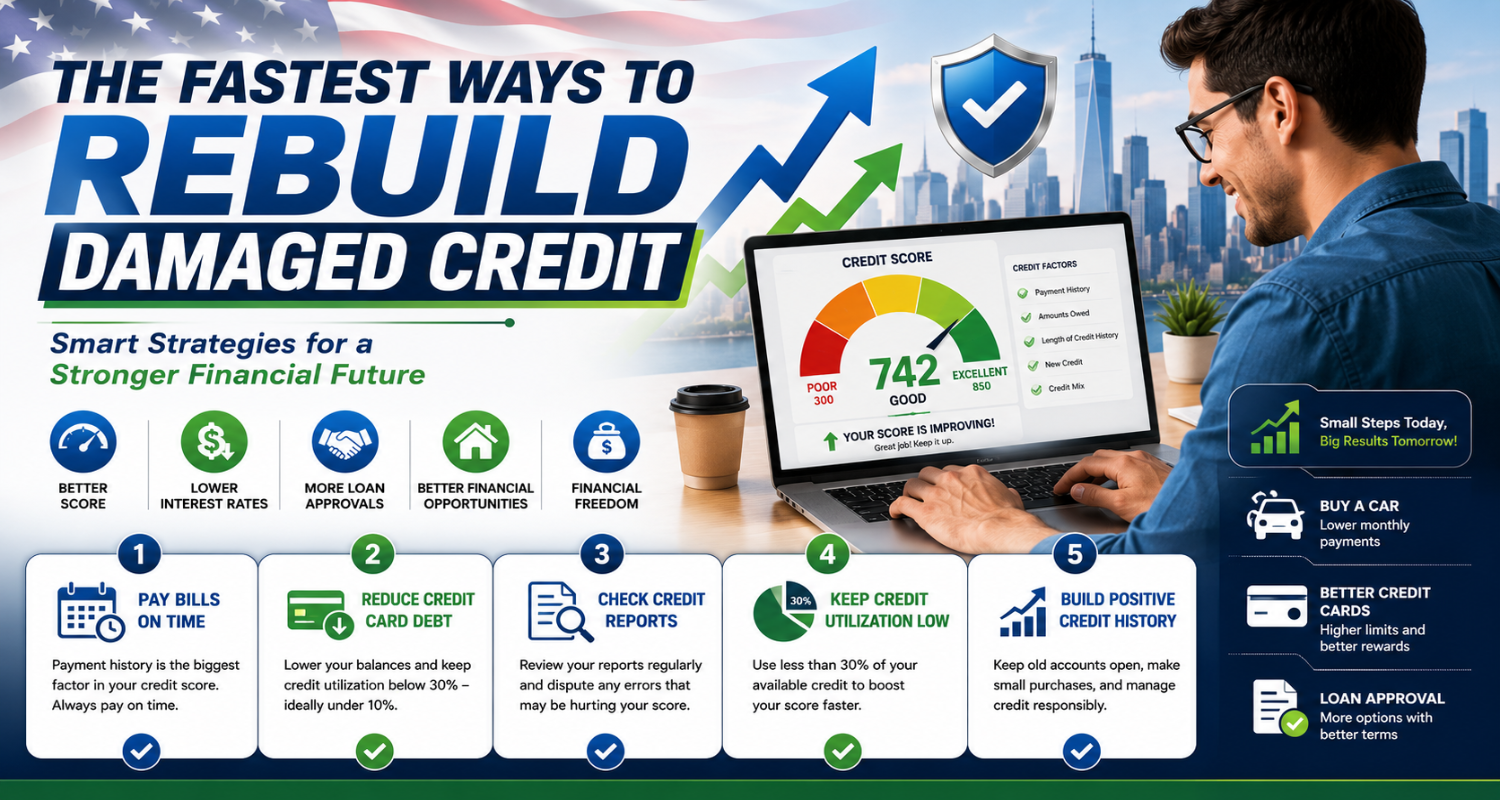
Credit improvement does not happen overnight.
The timeline depends on the severity of previous mistakes.
Some positive changes may appear within a few months.
More serious issues, such as missed payments, can take longer to recover from.
Even so, consistent financial behavior typically leads to gradual improvement.
Patience and discipline remain essential throughout the process.
Final Thoughts
Credit card mistakes can quietly damage your financial future. Missing payments, carrying high balances, applying for too much credit, and closing old accounts are among the most common errors affecting Americans in 2026.
Fortunately, most of these problems are preventable. By paying on time, keeping utilization low, monitoring your credit reports, and using credit responsibly, you can strengthen your credit profile and avoid unnecessary financial setbacks.
Your credit score is more than just a number. It is a reflection of your financial habits. Protecting it today can open the door to better opportunities, lower borrowing costs, and greater financial flexibility in the years ahead.