 MOHAMMAD ABUBAKR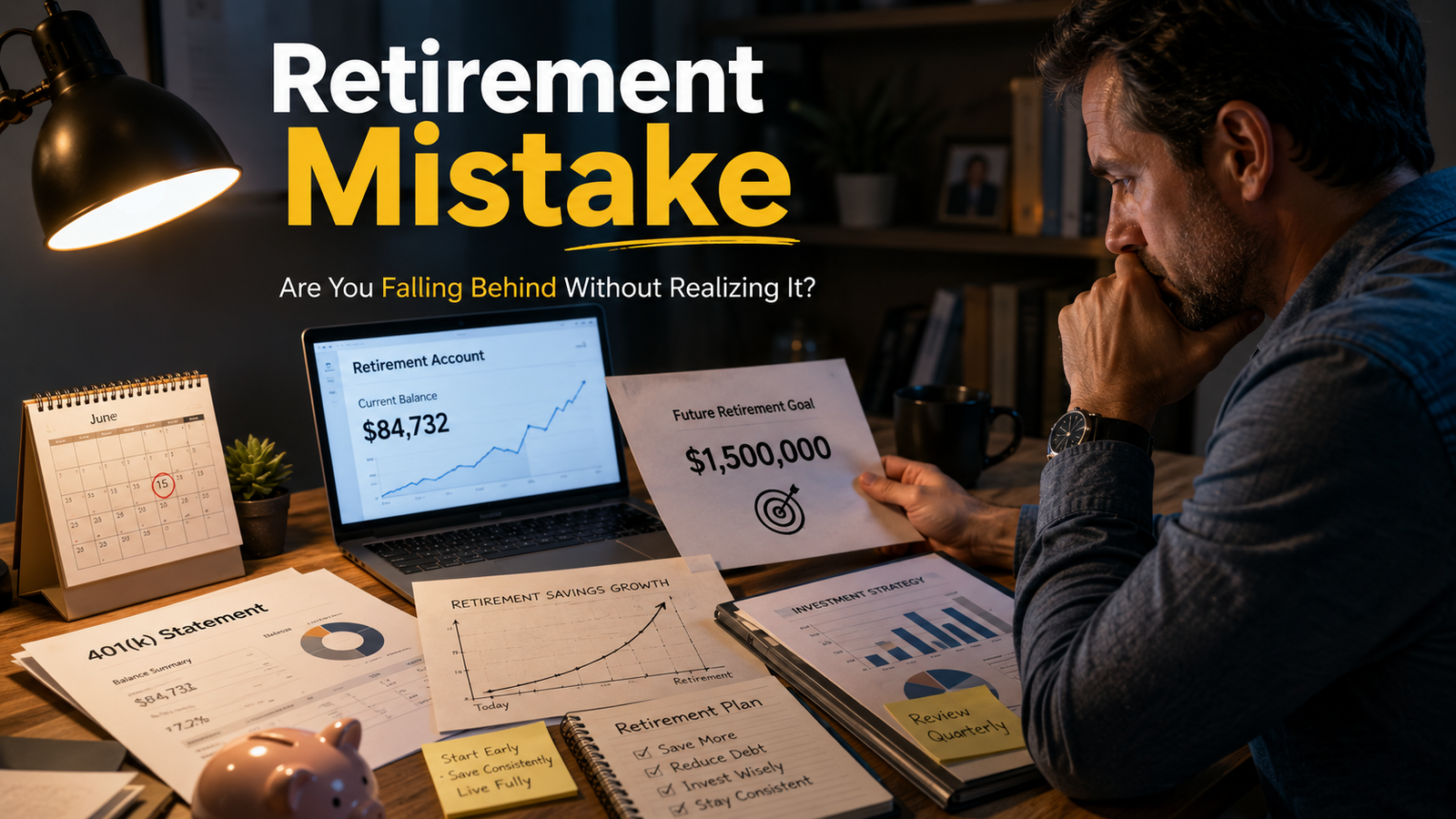
Maria is 34 years old. She has a good job, pays her bills on time, and even has a little money in savings. By most measures, she’s doing fine.
But last year, she sat down with a financial planner and got some news that hit harder than she expected. Maria had pushed off serious retirement saving for almost a decade. Not because she didn’t care, but because retirement always felt far away. There was always something more urgent: student loans, a wedding, a down payment, a new baby.
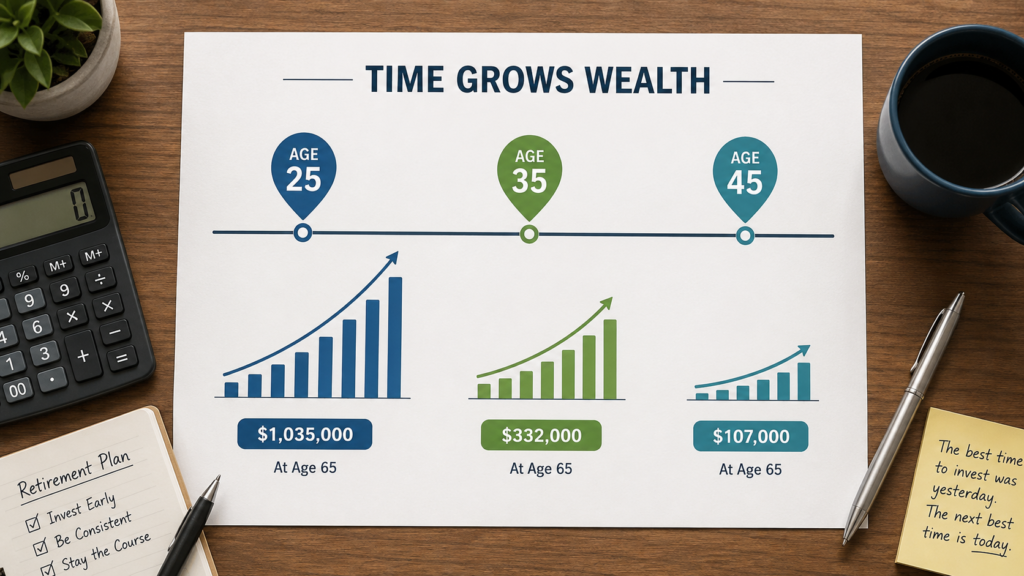
Her planner ran the numbers. If Maria had started investing seriously at 25 instead of 34, she could have ended up with hundreds of thousands of dollars more by the time she retired. Same income. Same lifestyle. Just nine fewer years of waiting.
This is not a rare story. It’s one of the most common retirement mistakes Americans make before age 40: putting off serious retirement saving and investing because it feels optional in your 20s and 30s. By the time it feels urgent, in your 40s or 50s, the most valuable years for growing your money are already gone.
The good news is that this mistake is fixable. Understanding why it happens, and what it costs, is the first step toward avoiding it or correcting course.
Why Retirement Planning Should Start Early
Time Is the Real Advantage
When people think about retirement investing, they often focus on how much money they’re putting in. But the bigger factor is usually how much time that money has to grow.
Think of your retirement savings like a snowball rolling down a hill. A small snowball that starts rolling at the top of a long hill ends up bigger than a larger snowball that only rolls a short distance. Time, not size, makes the biggest difference.
How Compound Interest Works
Compound interest means you earn returns not just on the money you put in, but also on the returns that money has already earned. Each year builds on the year before.
Here’s a simple way to picture it. Say you invest $5,000 and it grows by 7% in one year. You now have $5,350. The next year, that 7% growth applies to $5,350, not the original $5,000. Over time, this snowball effect becomes the main engine of growth, not your contributions.
Why Waiting Five or Ten Years Hurts So Much
Imagine two friends, Alex and Jordan. Alex starts investing $300 a month at age 25. Jordan waits and starts the same $300 a month at age 35. Both invest until age 65, and both earn the same average annual return.
Alex invests for 40 years. Jordan invests for 30 years. That’s just a ten-year head start for Alex. But because of compound growth, Alex could end up with roughly double what Jordan has at retirement, even though Alex only put in 33% more money overall.
The ten years Jordan waited weren’t just ten missed years of contributions. They were ten years of missed growth on top of growth, which is the most expensive part to lose.
Saving vs. Investing: They’re Not the Same Thing
A lot of people use “saving” and “investing” interchangeably, but for retirement, they work very differently.
Saving usually means putting money somewhere safe, like a savings account, where it earns very little interest. Investing means putting money into assets like stocks, bonds, or mutual funds that have a history of growing over the long term, but can also go up and down in value.
For short-term goals, like an emergency fund or a vacation, saving makes sense. For long-term goals, like retirement, investing is usually necessary because savings accounts often don’t grow fast enough to keep up with inflation over 20 or 30 years.
7 Retirement Mistakes That Can Cost You Thousands
1. Waiting Too Long to Start Saving
Why it happens: Retirement feels abstract in your 20s and 30s. Other financial goals, like paying off debt or buying a home, feel more urgent and immediate.
Example: Someone who waits until 35 to start investing $400 a month, instead of starting at 25, could end up with significantly less money at retirement, even if they later try to “catch up” by investing more.
Long-term impact: Every year you delay is a year of compound growth you can never get back, even if you contribute the exact same total amount later.
How to fix it: Start with whatever amount you can manage now, even if it’s small. Starting at $100 a month today is better than waiting until you can afford $500 a month next year.
2. Not Contributing Enough to a 401(k)
Why it happens: Many people contribute just a small percentage of their paycheck, often because that’s the default amount set by their employer, without ever increasing it.
Example: Someone contributing 3% of their salary to a 401(k) for 30 years will end up with far less than someone contributing 10–15%, even with similar investment returns.
Long-term impact: Low contribution rates mean your retirement account grows slowly, and you may need to work longer or significantly reduce your lifestyle in retirement.
How to fix it: Gradually increase your contribution rate over time, especially after a raise. Many retirement plans offer automatic annual increases you can set up once and forget.
3. Missing Employer Matching Contributions
Why it happens: Some employees don’t contribute enough to get their full employer match, often because they don’t understand how matching works or assume they can’t afford to.
Example: If an employer matches 50% of contributions up to 6% of salary, and an employee only contributes 3%, they’re leaving free money on the table every single paycheck.
Long-term impact: Missing an employer match isn’t just losing that immediate contribution. It’s losing decades of compound growth on money that was essentially free.
How to fix it: Check your plan details and contribute at least enough to get the full match. This should usually be a top financial priority, even before other investing goals.
4. Ignoring an IRA or Other Tax-Advantaged Accounts
Why it happens: People often assume a 401(k) is the only retirement account they need, or they find IRAs confusing and put off opening one.
Example: Someone who only uses a 401(k) might miss out on the broader investment choices and potential tax advantages that an IRA can offer alongside it.
Long-term impact: Relying on just one type of account can limit your investment options and may reduce your overall tax efficiency in retirement.
How to fix it: Learn the basic differences between a traditional IRA and a Roth IRA, and consider using one in addition to a workplace retirement plan if you’re eligible.
5. Keeping Too Much Money in Cash
Why it happens: Cash feels safe. Watching an investment account go up and down can feel stressful, especially for new investors.
Example: Someone who keeps most of their retirement savings in a regular savings account, rather than investing it, may earn a return that doesn’t even keep pace with inflation over time.
Long-term impact: Over decades, inflation can quietly shrink the purchasing power of cash, meaning your money buys less in the future even though the number on your statement hasn’t changed.
How to fix it: Keep cash for short-term needs and emergencies, but use long-term retirement accounts to invest in a diversified mix of assets suited to your timeline and comfort with risk.
6. Withdrawing Retirement Savings Early
Why it happens: Financial emergencies, job loss, or simply needing cash can tempt people to withdraw from a 401(k) or IRA before retirement age.
Example: Someone who withdraws $10,000 from a retirement account in their 30s doesn’t just lose that $10,000. They lose decades of potential growth on that money, plus they may owe taxes and an early withdrawal penalty.
Long-term impact: Early withdrawals can permanently shrink your retirement nest egg and may trigger taxes and penalties that make the true cost even higher than the amount withdrawn.
How to fix it: Build a separate emergency fund so you’re not tempted to dip into retirement accounts. Treat early withdrawals as a last resort, not a backup plan.
7. Never Reviewing or Adjusting Your Investment Strategy
Why it happens: Many people set up their retirement account once and never look at it again, assuming it will take care of itself.
Example: Someone’s investment mix might have been appropriate at 25, but the same mix might no longer fit their goals or risk tolerance at 45 without ever being adjusted.
Long-term impact: An outdated strategy can mean taking on too much risk near retirement, or being too conservative early on and missing out on growth.
How to fix it: Review your retirement accounts at least once a year. Check your contribution rate, your investment mix, and whether your goals have changed.
Hidden Retirement Risks Most People Ignore
Inflation Reducing Purchasing Power
Inflation means prices rise over time, so the same amount of money buys less in the future. A retirement plan needs to account for this, or your savings may not stretch as far as you expect decades from now.
Healthcare Costs in Retirement
Healthcare tends to become more expensive as people age, and Medicare doesn’t cover everything. Many retirees underestimate how much of their budget will go toward medical expenses.
Lifestyle Inflation
As people earn more, they often spend more, upgrading their home, car, or habits to match their income. This can make it harder to increase retirement savings, even as earnings grow.
Market Volatility
Investment markets go up and down. This is normal, but it can be unsettling, especially for people new to investing who haven’t experienced a downturn before.
Longevity Risk
People are living longer than in previous generations, which is good news, but it also means retirement savings may need to last 25, 30, or even more years.
Taxes in Retirement
Many people assume their tax bill disappears in retirement, but withdrawals from traditional retirement accounts are often taxed as income. Planning for this in advance can prevent surprises later.
Sequence of Returns Risk
This is a less commonly discussed risk, but an important one. It refers to the danger of experiencing poor investment returns in the early years of retirement, right when you start withdrawing money. Even if your average return over many years looks fine, a few bad years early on, combined with withdrawals, can have an outsized negative impact on how long your money lasts.
How to Build a Strong Retirement Plan Before 40
- Start investing as early as possible. Even small amounts benefit from extra years of compound growth.
- Increase retirement contributions every year. Small annual increases add up significantly over time.
- Take full advantage of employer matching. This is essentially free money toward your retirement.
- Diversify your investments. Spreading money across different asset types can help manage risk.
- Review your retirement accounts annually. Check contribution rates, account balances, and investment choices.
- Build an emergency fund separately. This protects your retirement accounts from being used for short-term needs.
- Avoid high-interest debt. Interest on debt, especially credit cards, can work against your financial progress.
- Keep investment costs low. High fees can quietly reduce your returns over many years.
- Set realistic retirement goals. Knowing roughly what you’re aiming for helps guide your saving and investing decisions.
- Rebalance your portfolio periodically. This keeps your investment mix aligned with your goals and risk tolerance.
10 Smart Retirement Habits to Build Wealth
- Pay yourself first. Treat retirement contributions like a non-negotiable bill, not an afterthought.
- Automate retirement contributions. Automation removes the temptation to skip a month.
- Increase savings after every raise. Put part of each raise toward retirement before lifestyle creep catches up.
- Invest consistently during market ups and downs. This approach, often called dollar-cost averaging, can smooth out the impact of market swings over time.
- Avoid emotional investing. Reacting to short-term market news can lead to costly decisions.
- Keep learning about personal finance. A little ongoing education helps you make better decisions over decades.
- Track your net worth yearly. This gives you a clear picture of your overall financial progress.
- Protect your income with adequate insurance. Disability or life insurance can protect your retirement plan if the unexpected happens.
- Review beneficiaries on retirement accounts. Life changes, like marriage or having kids, should be reflected in your accounts.
- Think long term instead of chasing quick returns. Retirement investing is a marathon, not a sprint.
Common Myths About Retirement Planning
Myth 1: Retirement planning can wait until your 40s or 50s. In reality, the years before 40 are some of the most valuable for compound growth. Waiting reduces the time your money has to grow.
Myth 2: Social Security alone will be enough. Social Security is designed to replace only part of pre-retirement income for most people, not all of it. Most people will need personal savings and investments to maintain their lifestyle.
Myth 3: You need a high income to start investing. Many retirement accounts allow you to start with small, regular contributions. Consistency often matters more than the size of each contribution.
Myth 4: Investing is too risky for beginners. While all investing carries some risk, long-term, diversified investing has historically been one of the more effective ways to grow wealth over decades, even though returns are never guaranteed.
Myth 5: It’s too late if you didn’t start in your 20s. While starting earlier helps, starting in your 30s or 40s still gives your money meaningful time to grow before traditional retirement age.
Myth 6: Cash is always the safest retirement strategy. Cash feels safe in the short term, but it can lose purchasing power to inflation over the long term, making it a risky choice for decades-long goals like retirement.
Frequently Asked Questions
How much should I save for retirement before age 40? There’s no single number that fits everyone, since it depends on income, goals, and lifestyle. A common general guideline some financial professionals mention is aiming to have a multiple of your annual salary saved by certain ages, but it’s worth discussing your specific situation with a financial professional.
What is the best age to start retirement planning? The earlier, the better, ideally as soon as you start earning income. However, any age is a reasonable time to start if you haven’t already.
Should I prioritize a 401(k) or an IRA? Many people start with their 401(k), especially up to the employer match, then consider an IRA for additional savings. The right mix depends on your personal tax situation and goals.
How does compound interest help retirement savings? Compound interest allows your investment returns to generate their own returns over time, which can significantly accelerate growth the longer your money stays invested.
Can I retire comfortably if I start late? It’s often still possible, though it may require higher contribution rates, working a bit longer, or adjusting retirement goals. Starting now is almost always better than waiting further.
What happens if I withdraw retirement funds early? Early withdrawals from many retirement accounts can trigger income taxes and an additional penalty, on top of losing future growth on that money.
How often should I review my retirement plan? At least once a year, or after major life events like a new job, marriage, or having children.
Is employer matching really that valuable? Yes. Employer matching is essentially additional compensation, and missing it means turning down part of your potential pay.
How much of my income should go toward retirement? Many financial professionals suggest aiming for a meaningful double-digit percentage of income over time, but the right amount depends on your personal circumstances and goals.
How can beginners start investing for retirement? Beginners can start by contributing to a workplace retirement plan if available, or opening an IRA, and choosing simple, diversified investment options while learning more over time.
Final Thoughts
The biggest retirement mistake millions of Americans make before turning 40 isn’t one dramatic decision. It’s the quiet habit of waiting. Waiting until income feels higher, waiting until debt feels more manageable, waiting until retirement feels less far away.
But time is the one resource you can’t get back in investing. Every year of delay is a year of compound growth that’s gone for good.
The encouraging part is that you don’t need a perfect plan to get started. You need a consistent one. Start with what you can contribute today, take advantage of employer matching if it’s available, and review your plan regularly as your life changes.
Progress, not perfection, is what builds long-term wealth. Every dollar invested early has more time to grow than a dollar invested later, and that simple truth is worth acting on now.
This article is for educational purposes only and does not constitute financial or investment advice. Investment returns are not guaranteed, and markets can fluctuate. Consider speaking with a qualified financial professional about your individual situation before making retirement planning decisions.