
 MOHAMMAD ABUBAKR
Creating a budget doesn’t have to be complicated. In fact, the best budgeting plans are often the simplest ones. Many people give up on budgeting because they believe it requires tracking every penny or making major lifestyle changes. However, a realistic budget should help you manage your money without feeling restricted.
In 2026, rising living costs, inflation, and economic uncertainty make budgeting more important than ever. Fortunately, small financial habits can lead to significant long-term results. By following a few practical budgeting strategies, you can reduce financial stress, increase your savings, and work toward your financial goals with confidence.
Daily Habits That Are Costing You Thousands Every Year
This guide covers simple budgeting tips that actually work, whether you’re just starting your financial journey or looking to improve your current money management plan.
Why Budgeting Is Important
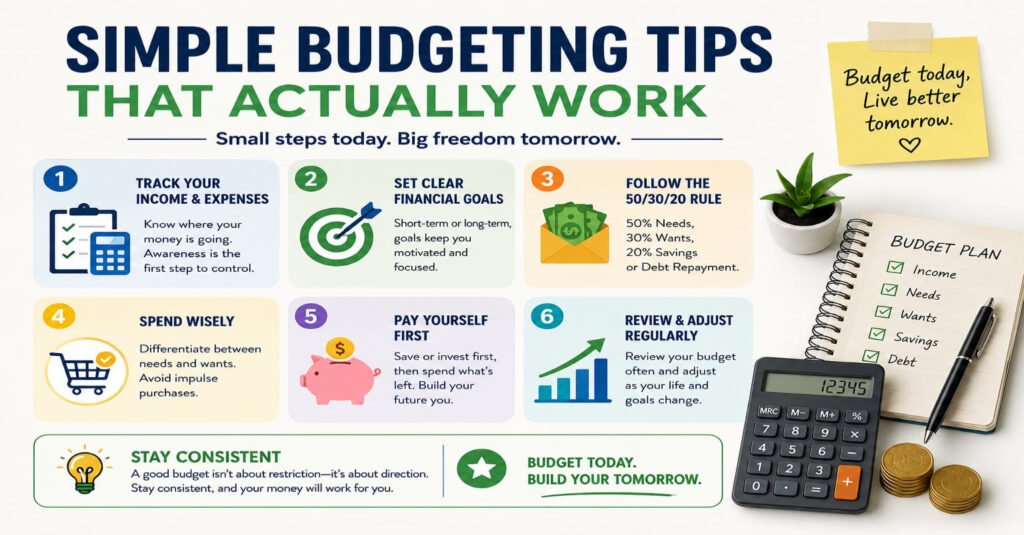
A budget is simply a plan for your money.
Instead of wondering where your paycheck went each month, budgeting helps you decide where your money should go before you spend it.
A good budget can help you:
- Control spending
- Build an emergency fund
- Pay off debt faster
- Save for retirement
- Reduce financial stress
- Reach long-term financial goals
Most importantly, budgeting gives you greater confidence in your financial decisions.
10 Simple Budgeting Tips That Actually Work
1. Know Where Your Money Goes
Before creating a budget, track your spending for at least one month.
Review your:
- Bank statements
- Credit card transactions
- Mobile payment apps
- Cash purchases
Many people discover they’re spending more than expected on small daily expenses.
Awareness is the first step toward improving your finances.
2. Use the 50/30/20 Rule
The 50/30/20 budgeting method is popular because it’s easy to follow.
Divide your after-tax income into three categories:
- 50% for necessities
- 30% for personal wants
- 20% for savings and debt repayment
Although every household is different, this framework provides a helpful starting point for many families.
3. Set Realistic Financial Goals
Budgeting becomes much easier when you have clear goals.
Examples include:
- Building a $10,000 emergency fund
- Paying off credit card debt
- Saving for a home
- Investing for retirement
- Taking a vacation
Specific goals provide motivation to stick with your budget.
4. Pay Yourself First
Instead of saving whatever money remains at the end of the month, save first.
Schedule automatic transfers into:
- Savings accounts
- Retirement accounts
- Investment accounts
This habit makes saving consistent and removes the temptation to spend first.
5. Cut Unnecessary Monthly Expenses
Review recurring expenses every few months.
Look for:
- Unused subscriptions
- Premium streaming services
- Expensive phone plans
- Memberships you rarely use
Eliminating even a few unnecessary expenses can free up hundreds of dollars each year.
6. Plan Your Grocery Shopping
Food is one of the easiest categories to control.
Before shopping:
- Make a grocery list.
- Plan meals for the week.
- Avoid shopping while hungry.
- Compare store prices.
- Buy only what you’ll use.
These simple habits reduce food waste and lower grocery bills.
7. Avoid Impulse Purchases
Impulse spending quietly damages many budgets.
Before making a non-essential purchase, try waiting 24 hours.
Ask yourself:
- Do I really need this?
- Can I afford it comfortably?
- Will I still want it tomorrow?
This short pause often prevents unnecessary spending.
8. Build an Emergency Fund
Unexpected expenses happen.
Car repairs, medical bills, or home maintenance can quickly disrupt your finances.
Aim to save at least three to six months of essential living expenses.
Having emergency savings reduces the need to rely on credit cards or loans.
9. Review Your Budget Every Month
Your budget should evolve as your life changes.
Each month, review:
- Income
- Expenses
- Savings progress
- Debt payments
- Financial goals
Regular reviews help you identify problems before they become major financial setbacks.
10. Increase Savings When Your Income Grows
Many people increase spending immediately after receiving a raise.
Instead, direct part of every salary increase toward:
- Retirement savings
- Investment accounts
- Emergency savings
- Debt repayment
This strategy builds wealth without requiring dramatic lifestyle changes.
Budgeting Mistakes to Avoid
Even the best budget won’t work if you make these common mistakes.
Creating an Unrealistic Budget
A budget that’s too restrictive is difficult to maintain.
Allow room for entertainment and occasional treats.
Forgetting Irregular Expenses
Budget for annual or seasonal expenses such as:
- Car insurance
- Holiday shopping
- Property taxes
- School supplies
- Home maintenance
Planning ahead prevents financial surprises.
Not Tracking Spending
Budgets only work when you monitor your progress.
Checking your finances regularly helps you stay accountable.
Giving Up After One Mistake
Everyone overspends occasionally.
Instead of abandoning your budget, adjust it and continue moving forward.
Consistency matters more than perfection.
Simple Ways to Save More Every Month
If you’re looking to improve your finances, consider these habits:
- Cook more meals at home.
- Cancel subscriptions you don’t use.
- Shop with a list.
- Compare insurance rates annually.
- Use automatic savings transfers.
- Limit online impulse purchases.
- Pay off high-interest debt.
- Review monthly bills regularly.
Small improvements repeated consistently often create meaningful financial progress.
Benefits of Following a Budget
A realistic budget offers more than just savings.
It can help you:
- Reduce financial anxiety
- Improve spending habits
- Increase retirement savings
- Reach financial goals faster
- Build wealth over time
- Prepare for emergencies
- Make confident financial decisions
Budgeting provides a roadmap for long-term financial success.
Frequently Asked Questions
What’s the easiest budgeting method?
The 50/30/20 rule is one of the simplest budgeting methods because it divides your income into needs, wants, and savings.
How often should I review my budget?
Review your budget at least once a month. Regular adjustments help keep your spending aligned with your financial goals.
Should I budget even if I have a high income?
Yes. Budgeting helps manage expenses, increase savings, and avoid lifestyle inflation regardless of income level.
How much should I save every month?
The amount depends on your financial situation. Many experts recommend saving at least 20% of your income when possible.
Can budgeting help reduce debt?
Absolutely. A well-planned budget allows you to allocate more money toward debt repayment while still covering essential expenses.
Final Thoughts
Budgeting isn’t about restricting your lifestyle—it’s about giving your money a purpose. By understanding where your income goes, setting realistic goals, and making small adjustments to your spending habits, you can improve your financial future without feeling overwhelmed.
The most successful budgets are the ones you can stick with consistently. Focus on progress instead of perfection, review your finances regularly, and make changes as your goals evolve. Over time, these simple budgeting habits can help you save more, reduce debt, and build lasting financial security.