
 MOHAMMAD ABUBAKR
Filing your taxes can feel overwhelming, especially if you’re unsure about the latest tax rules or filing requirements. Even a small mistake can delay your refund, trigger additional paperwork, or lead to penalties. Fortunately, most tax filing errors are preventable with careful preparation.
Whether you’re filing taxes for the first time or you’ve been doing it for years, understanding the most common mistakes can save you time, money, and stress. In 2026, electronic filing and tax software have made the process easier, yet many taxpayers still make avoidable errors.
This guide explains the most common tax filing mistakes to avoid and shares practical tips to help you file your federal tax return with confidence.
Anchor Text: Best Ways to Increase Your Tax Refund
Why Tax Filing Accuracy Matters
Submitting an accurate tax return is important for several reasons.
It can help you:
- Receive your refund faster.
- Avoid IRS notices.
- Reduce the chance of penalties.
- Claim every deduction and credit you’re eligible for.
- Prevent delays caused by missing information.
Taking a little extra time before filing often pays off.
10 Common Tax Filing Mistakes to Avoid
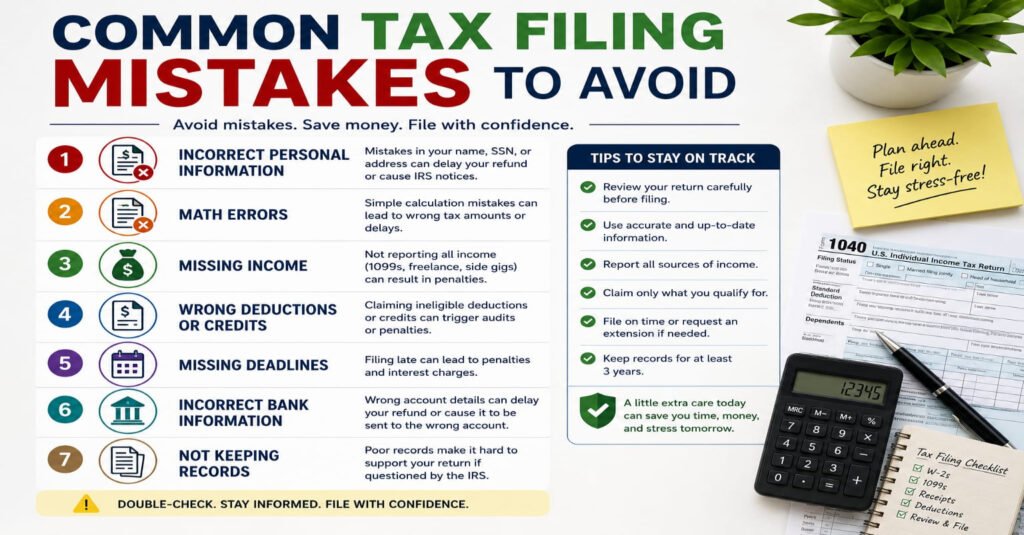
1. Filing With Incorrect Personal Information
One of the simplest mistakes is entering incorrect personal details.
Always verify your:
- Full legal name
- Social Security number
- Date of birth
- Current mailing address
- Bank account information for direct deposit
Even a small typo can delay processing or your refund.
Review your return carefully before submitting it.
2. Choosing the Wrong Filing Status
Your filing status affects your tax bracket, deductions, and eligibility for certain tax credits.
Common filing statuses include:
- Single
- Married Filing Jointly
- Married Filing Separately
- Head of Household
- Qualifying Surviving Spouse
Selecting the wrong status may result in paying more tax than necessary or claiming benefits you don’t qualify for.
If you’re unsure, review the IRS guidelines before filing.
3. Forgetting to Report All Income
Many taxpayers accidentally leave out income reported on tax forms.
Common examples include:
- W-2 wages
- Freelance income
- Interest income
- Dividend income
- Retirement distributions
- Investment gains
The IRS receives copies of many tax forms from employers and financial institutions.
Reporting all income helps avoid future notices or adjustments.
4. Missing Valuable Tax Credits
Tax credits directly reduce the amount of tax you owe.
Some taxpayers fail to claim credits because they don’t realize they’re eligible.
Depending on your situation, you may qualify for credits related to:
- Education
- Childcare
- Retirement savings
- Energy-efficient home improvements
Review available credits each year because eligibility rules can change.
5. Overlooking Tax Deductions
Tax deductions lower your taxable income.
Although many people claim the standard deduction, others may benefit from itemizing deductions if their eligible expenses are higher.
Potential deductions may include:
- Mortgage interest
- Charitable donations
- Certain business expenses
- Medical expenses that qualify under IRS rules
Maintaining organized records throughout the year makes claiming deductions much easier.
6. Making Math Errors
Math mistakes are less common with modern tax software, but they still happen when filing manually.
Common issues include:
- Incorrect addition
- Miscalculated tax credits
- Wrong withholding amounts
- Data entry mistakes
Always double-check calculations before submitting your return.
7. Missing the Tax Filing Deadline
Filing late may result in penalties and interest if you owe taxes.
Mark important tax deadlines on your calendar well in advance.
If you need more time, you may be able to request a filing extension.
However, remember that an extension to file isn’t necessarily an extension to pay any taxes owed.
8. Entering Incorrect Bank Information
Many taxpayers choose direct deposit because it’s the fastest way to receive a refund.
Before submitting your return, verify:
- Routing number
- Account number
- Bank account type
Incorrect banking details may delay your refund or require additional processing.
9. Not Keeping Tax Records
Many people throw away important tax documents too soon.
Keep copies of:
- Tax returns
- W-2 forms
- 1099 forms
- Receipts for deductions
- Contribution records
- Other supporting documents
Good recordkeeping can help if questions arise later or if you need to amend a return.
10. Filing Without Reviewing Your Return
Many tax errors occur because taxpayers rush to submit their returns.
Before filing, review:
- Personal information
- Income amounts
- Deductions
- Tax credits
- Bank details
- Signatures, if required
A final review often catches simple mistakes that could otherwise delay processing.
Tips for Filing Your Taxes More Accurately
Following a few best practices can make tax season much less stressful.
Consider these tips:
- Gather all tax documents before starting.
- Organize receipts throughout the year.
- File electronically whenever possible.
- Double-check every entry.
- Save copies of your completed return.
- Review IRS updates annually.
- File before the deadline to avoid last-minute mistakes.
Preparation is one of the easiest ways to reduce filing errors.
Common Tax Filing Myths
“If I Made a Small Mistake, It Doesn’t Matter.”
Even small mistakes can delay refunds or require corrections.
Accuracy always matters.
“I Don’t Need to Keep Tax Records.”
Keeping copies of tax documents is important for future reference and possible IRS questions.
“Tax Software Eliminates Every Error.”
Tax software helps reduce mistakes, but it still depends on accurate information entered by the taxpayer.
Always review your return before submitting it.
“Filing Early Increases My Audit Risk.”
The timing of your return doesn’t determine whether you’re audited.
Filing early may actually help you receive your refund sooner and reduce the risk of tax-related identity theft.
Frequently Asked Questions
What is the most common tax filing mistake?
Incorrect personal information, missing income, and choosing the wrong filing status are among the most common tax filing mistakes.
Can filing mistakes delay my refund?
Yes. Errors may require additional review, correction, or verification before the IRS processes your refund.
Should I file electronically?
Electronic filing is generally faster, more accurate, and allows quicker refund processing when combined with direct deposit.
What happens if I forget to report income?
If you discover an error after filing, you may need to file an amended tax return. Reporting all income helps prevent IRS notices and penalties.
How can I reduce tax filing mistakes?
Review your return carefully, keep organized records, gather all tax documents before filing, and verify every entry before submitting your return.
Final Thoughts
Tax filing doesn’t have to be stressful. Most common mistakes are easy to avoid with careful preparation, accurate recordkeeping, and a thorough review before submitting your return. Taking a few extra minutes to verify your information can help you avoid delays, penalties, and unnecessary frustration.
Whether you prepare your taxes yourself or work with a professional, staying organized throughout the year is one of the best ways to simplify tax season. By avoiding these common tax filing mistakes, you’ll be better prepared to file accurately, maximize your eligible tax benefits, and receive your refund as quickly as possible.
Internal Revenue Service (IRS) – Filing Requirements and Tax Tips