 MOHAMMAD ABUBAKR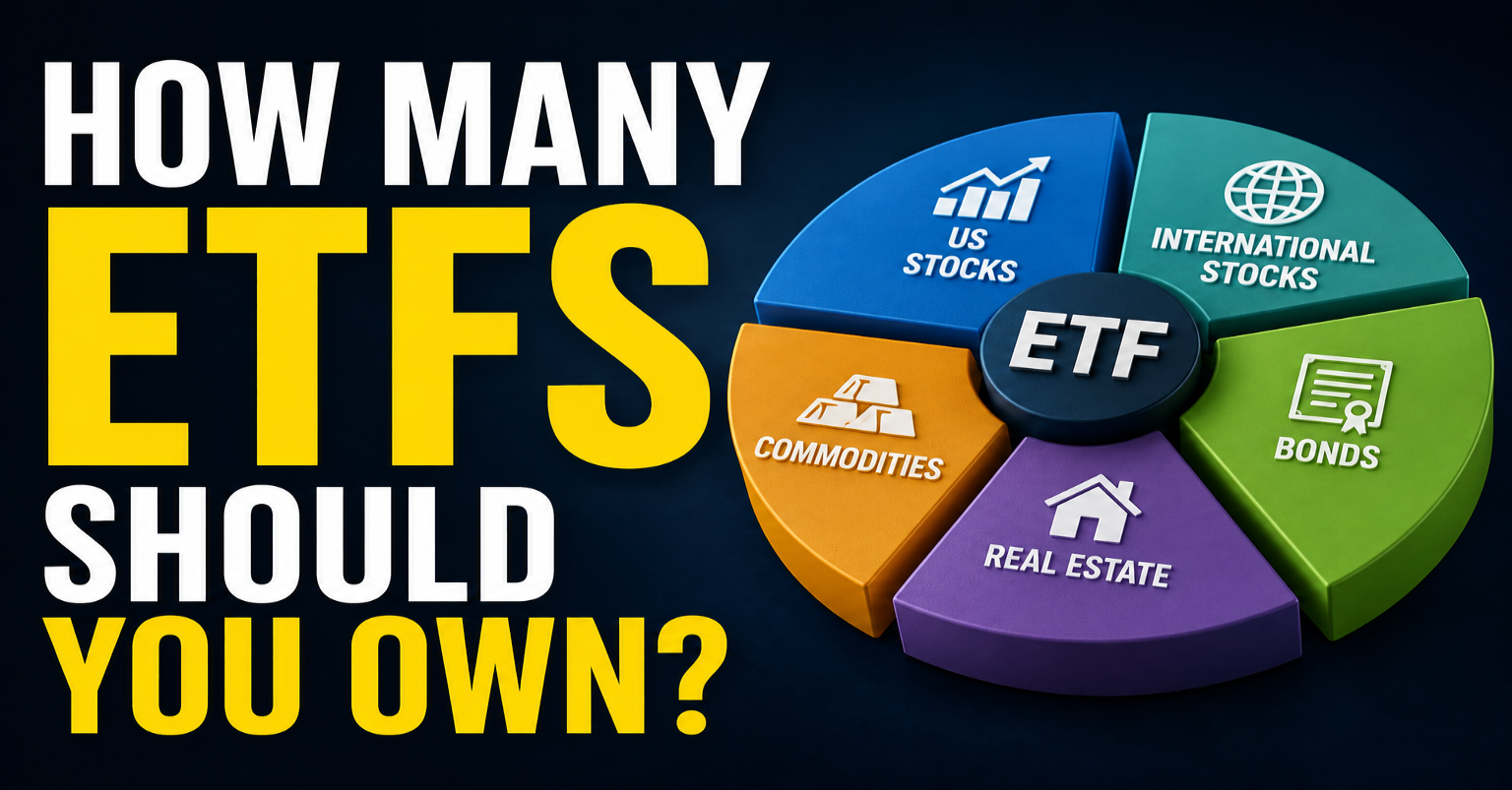
Exchange-traded funds (ETFs) have become one of the most popular investment choices for Americans because they offer diversification, lower costs, and flexibility. Whether you’re investing for retirement, building long-term wealth, or creating passive income, ETFs can help simplify your portfolio.
However, one question often confuses new investors: How many ETFs should you own? Some investors believe more ETFs automatically mean better diversification. Others try to keep their portfolio as simple as possible.
The truth is that owning more ETFs doesn’t always improve your investment results. In many cases, a small number of carefully selected ETFs can provide broad market exposure while keeping your portfolio easy to manage.
Monthly ETF Investing Strategy for Beginners
This guide explains how many ETFs you may need, why diversification matters more than quantity, and how to avoid common ETF investing mistakes.
Why ETFs Are Popular
ETFs combine many investments into a single fund.
Depending on the ETF, you may gain exposure to:
- U.S. stocks
- International stocks
- Bonds
- Real estate
- Dividend-paying companies
- Specific industries
- Commodities
Instead of researching dozens of individual stocks, one ETF can provide access to hundreds or even thousands of companies.
That simplicity makes ETFs attractive for both beginners and experienced investors.
Is There an Ideal Number of ETFs?
There isn’t a universal answer.
The right number depends on your:
- Financial goals
- Investment timeline
- Risk tolerance
- Desired level of diversification
- Portfolio size
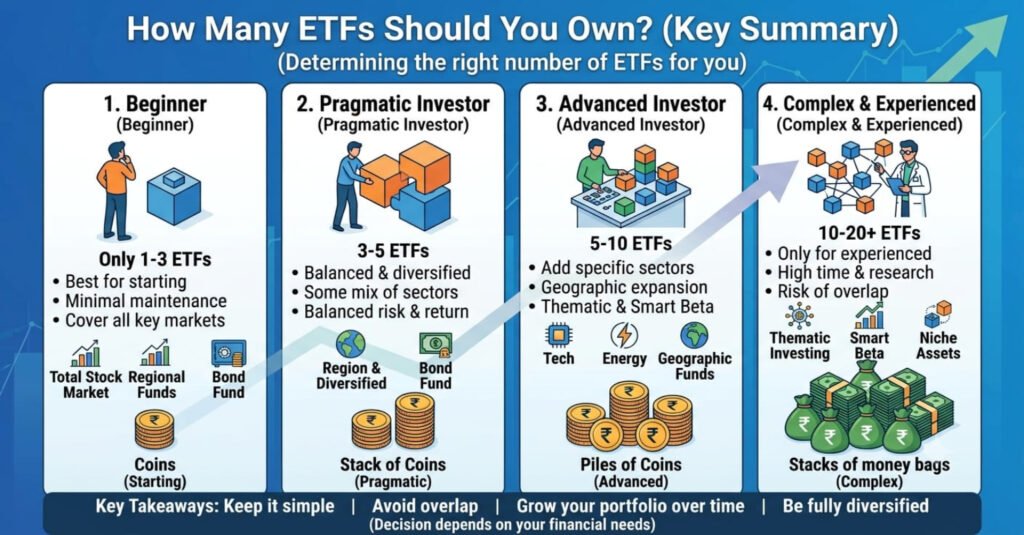
For many long-term investors, three to five well-diversified ETFs can provide broad exposure without making portfolio management difficult.
Some investors prefer only one broad-market ETF, while others include additional funds for international markets, bonds, or specific sectors.
The focus should be on diversification—not simply adding more funds.
Why More ETFs Aren’t Always Better
Owning a large number of ETFs may appear diversified, but it can create unnecessary complexity.
Common problems include:
- Overlapping holdings
- Duplicate investments
- Difficult portfolio management
- More frequent rebalancing
- Confusing asset allocation
For example, two different U.S. stock ETFs may own many of the same companies.
Adding more funds doesn’t automatically increase diversification if the investments overlap significantly.
A Simple ETF Portfolio for Beginners
Many beginners benefit from keeping their portfolios straightforward.
A basic portfolio might include:
1. U.S. Stock ETF
Provides exposure to large, medium, and small U.S. companies.
This often serves as the foundation of a long-term portfolio.
2. International Stock ETF
Adds exposure to companies outside the United States.
International diversification helps reduce reliance on one country’s economy.
3. Bond ETF
Bonds can reduce overall portfolio volatility and provide more stability during periods of market uncertainty.
Many investors increase bond exposure as they approach retirement.
4. Optional Specialty ETF
Depending on your goals, some investors choose a fourth ETF focused on areas such as:
- Dividend stocks
- Real estate
- Technology
- Small-cap companies
This should complement—not replace—a diversified core portfolio.
How Diversification Really Works
Diversification is about spreading investment risk across different asset classes rather than simply owning many funds.
A diversified ETF portfolio may include investments across:
- Different industries
- Multiple countries
- Companies of various sizes
- Stocks and bonds
This approach can reduce the impact of poor performance from any single investment.
Factors That Influence the Number of ETFs You Need
Your Financial Goals
Someone saving for retirement may build a different portfolio than someone investing for a home purchase.
Long-term goals often support broader stock exposure.
Shorter-term goals may require a more conservative allocation.
Your Risk Tolerance
Investors comfortable with market volatility may allocate more to stock ETFs.
Those seeking greater stability may include additional bond ETFs.
Choose a portfolio you can maintain during both rising and falling markets.
Your Investment Experience
Beginners often benefit from simplicity.
As your knowledge grows, you may decide to expand your portfolio thoughtfully.
Adding complexity should always have a clear purpose.
Your Time Horizon
Investors with decades before retirement often have more time to recover from market downturns.
Those approaching retirement may emphasize diversification and income generation.
Common ETF Investing Mistakes
Buying Too Many Similar ETFs
Many investors unknowingly purchase several ETFs that own nearly identical companies.
Always review each ETF’s holdings before investing.
Chasing Recent Performance
The best-performing ETF this year may not remain the best performer next year.
Investment decisions should focus on long-term objectives rather than recent returns.
Ignoring Asset Allocation
The percentage invested in stocks, bonds, and other assets often matters more than the number of ETFs you own.
Build a balanced allocation based on your financial goals.
Never Rebalancing
Over time, market performance changes your portfolio allocation.
Reviewing and rebalancing periodically helps maintain your intended level of risk.
Tips for Building an ETF Portfolio
Follow these habits to create a stronger long-term investment strategy.
- Keep your portfolio simple.
- Focus on diversification.
- Invest consistently.
- Review your holdings annually.
- Avoid duplicate investments.
- Keep investment costs low.
- Stay focused on long-term goals.
Simple portfolios are often easier to maintain during periods of market volatility.
When Should You Add More ETFs?
Adding another ETF may make sense if it serves a specific purpose.
Examples include:
- Expanding international exposure.
- Increasing bond allocation.
- Adding dividend income.
- Improving portfolio diversification.
- Adjusting for changing financial goals.
Avoid adding ETFs simply because they are popular or recently performed well.
Every investment should have a clear role within your portfolio.
Frequently Asked Questions
Is one ETF enough?
For some investors, a single broadly diversified ETF may provide sufficient market exposure. Others prefer adding international stocks or bonds to create a more balanced portfolio.
Can I own too many ETFs?
Yes. Owning too many ETFs may lead to overlapping investments, unnecessary complexity, and more difficult portfolio management.
Should beginners buy multiple ETFs?
Many beginners benefit from owning a small number of diversified ETFs instead of building an overly complicated portfolio.
How often should I review my ETF portfolio?
Most long-term investors review their portfolios once or twice a year and rebalance when necessary.
Are sector ETFs necessary?
Sector ETFs can complement a portfolio but generally shouldn’t replace diversified core investments. They may increase concentration risk if they make up a large portion of your holdings.
Final Thoughts
The number of ETFs you own is far less important than how well they work together. A carefully planned portfolio with a few diversified ETFs can often provide broad market exposure, reduce risk, and remain easy to manage. Adding more funds doesn’t automatically improve diversification, especially if those ETFs hold many of the same companies.
Instead of focusing on quantity, build a portfolio that aligns with your financial goals, risk tolerance, and investment timeline. Review your investments regularly, rebalance when needed, and stay committed to a long-term strategy. In many cases, simplicity is one of the greatest strengths of successful ETF investing.
Investor.gov – Exchange-Traded Funds (ETFs)