 MOHAMMAD ABUBAKR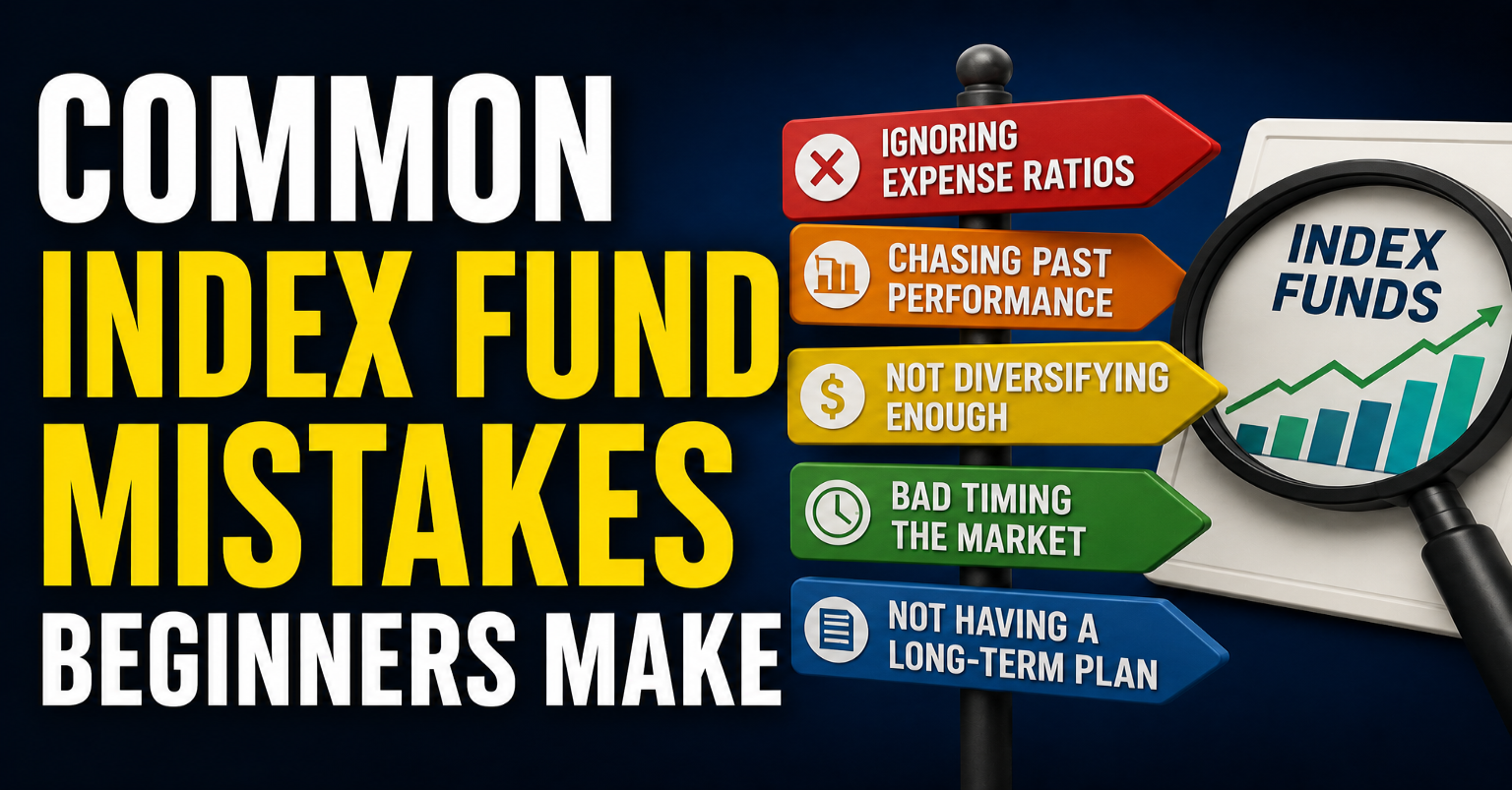
Index funds have become one of the most popular investment choices in the United States. They offer broad diversification, low costs, and a simple way to invest in the stock market without picking individual stocks. For beginners, they can be an excellent foundation for long-term wealth building.
However, buying an index fund doesn’t automatically guarantee investment success. Many new investors make avoidable mistakes that can reduce returns or cause unnecessary stress. Some invest without a clear plan, while others react emotionally when the market becomes volatile.
The good news is that most of these mistakes are easy to avoid. By understanding them early, you can build better investing habits and stay focused on your long-term financial goals.
How to Create a Simple Investment Plan
This guide explains the most common index fund mistakes beginners make and how you can avoid them to become a more confident investor.
Why Index Funds Are Popular
An index fund is designed to track the performance of a market index rather than trying to outperform it.
Instead of investing in a single company, one index fund can provide exposure to hundreds or even thousands of businesses.
Many investors choose index funds because they offer:
- Broad diversification
- Lower investment costs
- Simple portfolio management
- Long-term growth potential
- Passive investing
Although index funds are straightforward, they still require a disciplined investment approach.
1. Waiting Too Long to Start Investing
Many beginners spend months—or even years—trying to learn everything before investing.
While education is valuable, delaying your first investment can reduce the benefits of compound growth.
Starting with a modest amount and investing consistently often matters more than waiting for the perfect time.
Time in the market has historically been more valuable than trying to predict the best entry point.
2. Trying to Time the Market
One of the biggest mistakes new investors make is waiting for a market crash before investing.
Unfortunately, predicting short-term market movements is extremely difficult.
Many investors who wait for lower prices end up missing long periods of market growth.
Instead, consider investing regularly through dollar-cost averaging.
This strategy removes much of the emotion from investing.
3. Investing Without Clear Goals
Buying an index fund without knowing why you’re investing can lead to poor decisions later.
Before investing, identify your goals.
Examples include:
- Retirement
- Financial independence
- Buying a home
- College savings
- Long-term wealth building
Your goals help determine your investment timeline and risk tolerance.
4. Ignoring Diversification
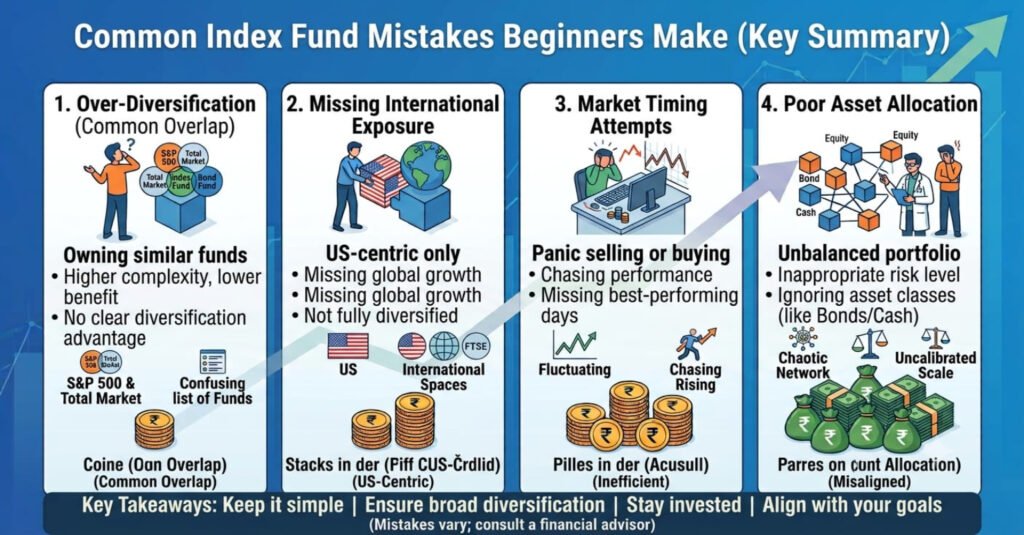
Some beginners believe owning one investment automatically provides complete diversification.
While many broad-market index funds are highly diversified, adding exposure to different asset classes may further strengthen your portfolio.
Depending on your goals, diversification could include:
- U.S. stocks
- International stocks
- Bonds
- Real estate investments
Balanced diversification can help reduce overall portfolio risk.
5. Selling During Market Declines
Market downturns are a normal part of investing.
However, fear often causes beginners to sell after prices have already fallen.
Selling during a decline may lock in losses and make it difficult to benefit from future market recoveries.
Long-term investors generally stay focused on their financial plan rather than reacting to temporary market movements.
6. Checking Your Portfolio Every Day
Watching daily market fluctuations can create unnecessary anxiety.
Short-term price changes rarely affect long-term investment success.
Instead of monitoring your investments constantly, review your portfolio periodically.
Many investors check their portfolios only a few times each year.
7. Investing More Than You Can Afford
Investing is important, but it shouldn’t come at the expense of your financial stability.
Before investing, prioritize:
- Emergency savings
- High-interest debt management
- Essential monthly expenses
Only invest money that can remain invested for your intended time horizon.
8. Ignoring Investment Fees
Although index funds typically have lower fees than actively managed funds, expense ratios still vary.
Higher fees reduce long-term returns.
Before investing, compare:
- Expense ratios
- Fund structure
- Investment objectives
- Long-term performance history
Even small differences in annual costs can become significant over decades.
9. Owning Too Many Similar Funds
Many beginners buy several index funds that track nearly identical investments.
This creates unnecessary overlap without providing meaningful diversification.
Instead of collecting many funds, focus on building a portfolio where each investment serves a specific purpose.
A simple portfolio is often easier to manage.
10. Forgetting to Rebalance
Over time, strong-performing investments may grow into a larger percentage of your portfolio.
Without periodic rebalancing, your portfolio may become riskier than intended.
Review your investment allocation once or twice each year.
Rebalancing helps maintain your target level of risk.
How to Build Better Investing Habits
Successful investing is often driven by consistent habits rather than perfect market timing.
Develop these habits early:
- Invest every month.
- Stay diversified.
- Keep investment costs low.
- Increase contributions as income grows.
- Reinvest dividends when appropriate.
- Review your portfolio annually.
- Stay focused on long-term goals.
Small improvements can produce meaningful results over time.
Benefits of Avoiding These Mistakes
By avoiding common beginner mistakes, you can:
- Build confidence as an investor.
- Reduce emotional decision-making.
- Improve long-term consistency.
- Lower unnecessary investment costs.
- Stay committed during market volatility.
- Increase your potential for long-term wealth accumulation.
Investing becomes much easier when you follow a simple, disciplined plan.
Frequently Asked Questions
Are index funds good for beginners?
Yes. Many beginners choose index funds because they offer broad diversification, lower costs, and a simple way to invest in the stock market.
Should I keep investing during market declines?
Many long-term investors continue investing during downturns as part of a consistent investment strategy. This approach may allow them to buy shares at different price levels over time.
How many index funds should a beginner own?
The ideal number depends on your financial goals and asset allocation. Many beginners build diversified portfolios using only a few carefully selected index funds.
How often should I check my investments?
Daily monitoring is generally unnecessary. Many investors review their portfolios once or twice each year unless their financial circumstances change.
Why are low fees important?
Lower fees allow more of your investment returns to remain invested, which can improve long-term growth through compounding.
Final Thoughts
Index funds have helped millions of investors build wealth because they offer simplicity, diversification, and lower costs. However, even the best investment can produce disappointing results if it’s paired with poor habits. Waiting too long to start, trying to time the market, ignoring fees, or making emotional decisions during market downturns are mistakes that can slow your financial progress.
Instead, focus on what you can control. Invest consistently, maintain a diversified portfolio, keep costs low, and review your investments periodically rather than reacting to daily market news. By avoiding these common beginner mistakes, you’ll be better positioned to stay invested, build confidence, and work toward your long-term financial goals.
Investor.gov – Mutual Funds and Index Funds