
 MOHAMMAD ABUBAKR
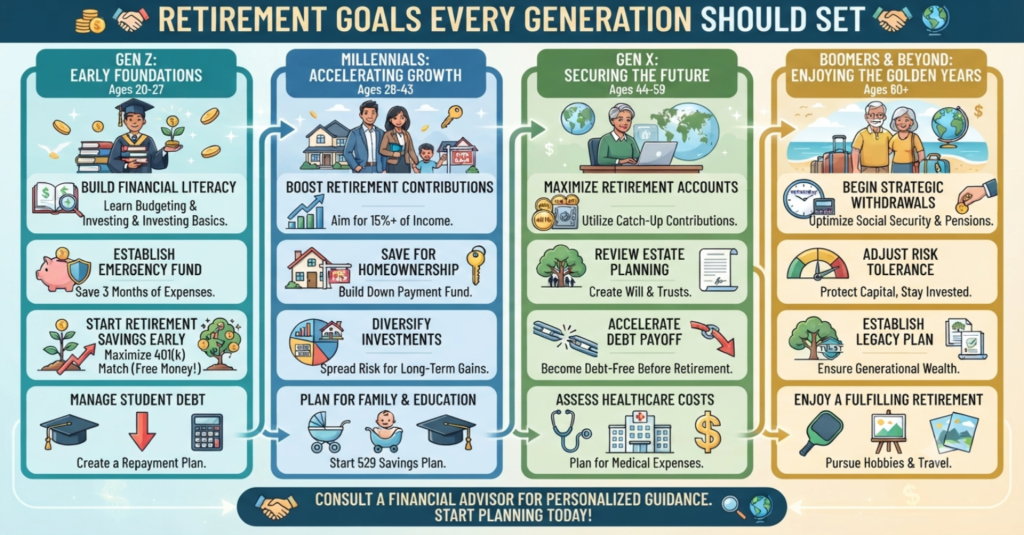
Retirement planning looks different at every stage of life. However, one thing remains the same: the earlier you set clear financial goals, the better prepared you may be for the future. Although retirement might seem far away when you’re young, the decisions you make today can have a lasting impact on your financial security.
Fortunately, retirement planning doesn’t require perfection. Instead, it requires consistency. Saving regularly, investing wisely, managing debt, and reviewing your progress can help you build confidence regardless of your age. Consequently, every generation has meaningful opportunities to improve its financial future.
Moreover, retirement goals should evolve as your life changes. A recent college graduate has different priorities than someone approaching retirement. Therefore, adjusting your strategy over time helps ensure your financial plan stays aligned with your current needs and future objectives.
Whether you’re just beginning your career or preparing to retire, these retirement goals can help guide your financial decisions.
Retirement Planning Starts Earlier Than You Think
Let’s explore the retirement goals every generation should consider.
Retirement Goals for Your 20s
Your twenties provide one of the biggest advantages in retirement planning—time.
Although your income may still be growing, starting early allows your investments more years to benefit from compound growth.
Important goals include:
- Create your first retirement savings plan.
- Build an emergency fund.
- Develop a monthly budget.
- Avoid high-interest debt.
- Begin investing consistently.
Furthermore, don’t worry if you can’t contribute large amounts at first.
Instead, focus on building the habit of saving regularly.
Retirement Goals for Your 30s
Many people experience career growth during their thirties.
However, this decade often includes new financial responsibilities such as buying a home or raising a family.
Therefore, balancing current expenses with future retirement needs becomes especially important.
Consider these goals:
- Increase retirement contributions.
- Review your investment portfolio.
- Pay down expensive debt.
- Protect your income with appropriate insurance.
- Avoid lifestyle inflation.
Moreover, directing part of every raise toward retirement savings can significantly improve long-term results.
Retirement Goals for Your 40s
By your forties, retirement may begin feeling much more real.
Consequently, this is an excellent time to measure your progress.
Ask yourself:
- Am I saving enough?
- Is my retirement plan on track?
- Do I need to increase contributions?
- Is my investment strategy diversified?
- Am I prepared for unexpected expenses?
Additionally, reviewing your financial goals every year helps identify areas that may need improvement before retirement gets closer.
Retirement Goals for Your 50s
Your fifties often become one of the most important decades for retirement planning.
Instead of making dramatic investment changes, focus on strengthening the foundation you’ve already built.
Important goals include:
- Maximize retirement contributions.
- Reduce remaining debt.
- Estimate retirement income needs.
- Review healthcare planning.
- Update estate planning documents.
Furthermore, many workers become eligible for catch-up retirement contributions during this stage.
Consequently, this can be an excellent opportunity to increase retirement savings.
Retirement Goals for Your 60s and Beyond
As retirement approaches, your financial priorities may begin to shift.
Rather than focusing only on growing your investments, many people also concentrate on preserving wealth and creating reliable retirement income.
Important goals include:
- Develop a retirement income strategy.
- Manage investment withdrawals carefully.
- Review healthcare costs.
- Maintain emergency savings.
- Update beneficiary information regularly.
Moreover, reviewing your financial plan every year helps ensure it continues supporting your retirement lifestyle.
Retirement Habits That Benefit Every Generation
Although retirement goals change with age, several financial habits remain valuable throughout life.
These include:
- Save consistently.
- Invest regularly.
- Review your financial plan annually.
- Keep investment costs low.
- Build an emergency fund.
- Avoid unnecessary debt.
- Continue learning about personal finance.
- Increase retirement contributions whenever possible.
Consequently, these habits can strengthen your financial future regardless of your current age or income.
Common Retirement Planning Mistakes by Generation
Every generation faces unique financial challenges. However, some retirement planning mistakes appear repeatedly. Fortunately, recognizing these issues early can help you stay on track.
In Your 20s: Waiting to Start
Many young adults assume retirement is too far away to worry about.
As a result, they postpone saving for several years.
Instead, begin contributing as soon as possible. Even small, regular contributions can benefit from decades of compound growth.
In Your 30s: Spending Every Raise
Career advancement often leads to higher income.
Nevertheless, many people increase their spending just as quickly.
Rather than allowing lifestyle inflation to take over, direct part of every raise toward retirement savings.
Consequently, your retirement fund can grow without making major changes to your daily lifestyle.
In Your 40s: Ignoring Progress
Retirement may still seem years away.
However, your forties are the ideal time to evaluate whether you’re on pace to meet your retirement goals.
Review your:
- Savings rate
- Investment portfolio
- Debt levels
- Retirement accounts
- Financial goals
Making adjustments now is often easier than waiting until later.
In Your 50s: Taking Too Much Risk
Some investors try to make up for lost time by taking excessive investment risks.
Unfortunately, this approach may increase portfolio volatility when retirement is getting closer.
Instead, review your asset allocation carefully and make changes based on your financial goals and risk tolerance.
In Your 60s and Beyond: Forgetting to Plan for Income
Saving for retirement is only part of the process.
You also need a strategy for turning your savings into retirement income.
Therefore, estimate your expected expenses and create a withdrawal plan that supports your long-term financial needs.
How to Adjust Your Retirement Goals Over Time
Life rarely follows a perfect plan.
Because of that, your retirement strategy should evolve as your circumstances change.
Review your goals after major life events such as:
- Marriage
- Divorce
- Buying a home
- Having children
- Changing careers
- Receiving a promotion
- Starting a business
- Approaching retirement
Furthermore, reviewing your retirement plan every year allows you to make gradual improvements instead of waiting until problems become more difficult to solve.
Habits That Support Retirement Success
Strong financial habits often matter more than trying to predict the market.
Consider adopting these habits throughout your career:
- Save automatically every payday.
- Increase contributions after raises.
- Keep investment costs low.
- Diversify your investments.
- Maintain an emergency fund.
- Reduce high-interest debt.
- Review your retirement accounts annually.
- Continue learning about personal finance.
- Track your progress toward retirement.
- Stay focused on long-term goals.
Although these habits may seem simple, they can make a meaningful difference over several decades.
Frequently Asked Questions
What’s the best age to start saving for retirement?
The best time to begin is as early as possible. Starting early gives your investments more time to grow through compound returns.
Can I still build a good retirement if I start late?
Yes. Although starting early offers advantages, increasing your savings, investing consistently, and reducing unnecessary expenses can still improve your retirement outlook.
How often should I review my retirement plan?
Many financial professionals recommend reviewing your retirement strategy at least once each year or after major life events that affect your finances.
Should my investment strategy change as I get older?
In many cases, yes. Your investment mix may gradually change as your retirement timeline, income needs, and risk tolerance evolve. Review your portfolio regularly to ensure it still aligns with your goals.
What’s the biggest retirement planning mistake?
One of the most common mistakes is delaying retirement savings. Waiting reduces the amount of time your money has to benefit from long-term growth.
Final Thoughts
Retirement planning isn’t a one-time decision. Instead, it’s a lifelong process that evolves with every stage of your financial journey. Whether you’re in your twenties, forties, or preparing to retire, setting clear goals and reviewing them regularly can help you stay on the path toward long-term financial security.
Moreover, every generation has unique opportunities to strengthen its retirement plan. Saving consistently, investing wisely, managing debt, and increasing contributions over time can all improve your future financial outlook. Consequently, even small actions taken today can create meaningful results over the years.
Above all, don’t compare your progress with someone else’s. Focus on building a retirement strategy that matches your goals, lifestyle, and financial situation. By staying disciplined and making thoughtful adjustments along the way, you can create a retirement plan that supports the future you want.
Investor.gov – Retirement Toolkit