 MOHAMMAD ABUBAKR
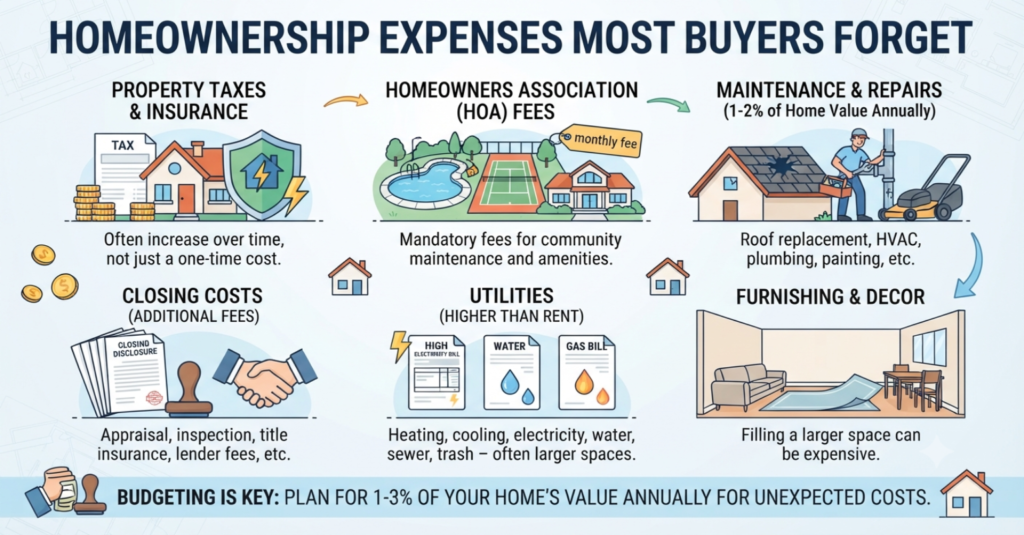
Buying a home is one of the biggest financial decisions most Americans will ever make. While many buyers carefully plan for the down payment and monthly mortgage, they often overlook several ongoing expenses that come with owning a home. As a result, unexpected costs can put pressure on even a well-planned budget.
Fortunately, understanding these expenses before purchasing a home can help you prepare financially. Instead of being surprised after closing, you can create a realistic budget that includes both expected and unexpected costs. Consequently, you’ll be in a stronger position to enjoy homeownership without unnecessary financial stress.
Moreover, homeownership involves much more than making a monthly mortgage payment. Property taxes, insurance, maintenance, utilities, and repairs all play an important role in your overall housing costs. Therefore, planning for these expenses is just as important as qualifying for a mortgage.
Whether you’re buying your first home or planning your next move, knowing what to expect can help you make smarter financial decisions.
How Much Emergency Savings Should Homeowners Have?
Let’s explore the homeownership expenses that many buyers forget to include in their budget.
1. Property Taxes
Property taxes are one of the largest ongoing homeownership expenses.
Although they may be included in your monthly mortgage payment through an escrow account, they still represent a significant annual cost.
Furthermore, property tax rates vary by:
- State
- County
- City
- School district
Additionally, taxes may increase over time if your home’s assessed value rises.
Therefore, research local tax rates before purchasing a property.
2. Homeowners Insurance
Mortgage lenders typically require homeowners insurance.
However, many buyers underestimate how much coverage may cost.
Insurance premiums depend on several factors, including:
- Home value
- Location
- Construction type
- Coverage limits
- Claims history
Moreover, premiums may increase over time because of inflation or changing weather risks.
Review your policy regularly to ensure it still provides appropriate protection.
3. Home Maintenance
Every home requires regular maintenance.
Unlike renting, homeowners are responsible for keeping the property in good condition.
Routine maintenance may include:
- HVAC servicing
- Gutter cleaning
- Lawn care
- Roof inspections
- Exterior painting
- Pest control
Although these expenses may seem manageable individually, they can add up quickly over the course of a year.
Consequently, setting aside money for routine maintenance is a smart financial habit.
4. Unexpected Repairs
Even well-maintained homes can experience unexpected problems.
For example, you may suddenly need to replace:
- Water heaters
- Roof shingles
- Plumbing fixtures
- Appliances
- Electrical components
- Heating or cooling systems
Therefore, maintaining a home repair fund can help reduce financial stress when emergencies occur.
Many homeowners choose to save regularly for these unexpected costs.
5. Utility Bills
Utility costs often increase after purchasing a larger home.
Monthly expenses may include:
- Electricity
- Natural gas
- Water
- Sewer service
- Trash collection
- Internet service
Furthermore, seasonal weather can significantly affect heating and cooling costs.
Review average utility expenses before purchasing a home so you can create a realistic monthly budget.
6. Homeowners Association (HOA) Fees
Not every property has HOA fees.
However, many condominiums, townhomes, and planned communities require monthly or annual dues.
These fees may help cover:
- Community landscaping
- Swimming pools
- Fitness centers
- Clubhouses
- Security services
- Exterior maintenance
Consequently, HOA costs should always be included when comparing homes.
7. Landscaping and Yard Care
Outdoor maintenance is another expense many buyers overlook.
Depending on your property, costs may include:
- Lawn mowing
- Fertilizer
- Tree trimming
- Irrigation maintenance
- Snow removal
- Garden supplies
Although some homeowners perform these tasks themselves, others hire professional landscaping services.
Therefore, consider both your budget and the amount of time you’re willing to spend maintaining your property.
8. Appliance Replacement
Household appliances eventually wear out.
Even newer homes may require replacements over time.
Common examples include:
- Refrigerators
- Dishwashers
- Washing machines
- Dryers
- Ovens
- Microwaves
Instead of waiting for an appliance to fail unexpectedly, consider setting aside money each month for future replacements.
As a result, these purchases become easier to manage financially.
9. Private Mortgage Insurance (PMI)
Many homebuyers purchase a home with a smaller down payment.
Consequently, they may be required to pay Private Mortgage Insurance (PMI).
Although PMI doesn’t build home equity, it increases your monthly housing costs until certain loan requirements are met.
Therefore, ask your lender whether PMI applies to your mortgage and when it may be removed.
Understanding this expense before closing can help you create a more accurate monthly budget.
10. Closing Costs
The down payment isn’t the only upfront expense when buying a home.
Closing costs can include several fees, such as:
- Loan origination fees
- Appraisal fees
- Title insurance
- Attorney or settlement fees
- Recording fees
- Prepaid taxes and insurance
Furthermore, these costs are usually due before you receive the keys.
Planning for them in advance can prevent last-minute financial stress.
11. Home Security and Safety Upgrades
Many new homeowners choose to improve security soon after moving in.
Common upgrades include:
- Smart doorbells
- Security cameras
- Alarm systems
- Smoke detectors
- Carbon monoxide detectors
- Smart locks
Although these improvements are optional, they often provide added convenience and peace of mind.
As a result, it’s wise to include them in your overall moving budget.
12. Furniture and Home Improvements
Buying a home often creates the desire to furnish or update the space.
However, those purchases can become expensive very quickly.
Examples include:
- Living room furniture
- Bedroom sets
- Window coverings
- Patio furniture
- Lighting fixtures
- Interior paint
Instead of purchasing everything immediately, prioritize the most important items first.
Meanwhile, spread larger projects over time to avoid unnecessary debt.
Common Mistakes First-Time Homebuyers Make
Even well-prepared buyers can overlook important financial details.
Fortunately, avoiding these common mistakes can help reduce future stress.
Spending the Entire Savings on the Down Payment
Using all of your savings for the purchase may leave little money for emergencies.
Instead, keep an emergency fund available after closing.
Unexpected repairs and moving expenses are common during the first year of homeownership.
Underestimating Maintenance Costs
Some buyers assume maintenance expenses will be minimal.
However, every home requires ongoing care.
Setting aside money each month for repairs and maintenance helps prevent financial surprises.
Ignoring Rising Housing Costs
Mortgage payments may stay relatively stable with a fixed-rate loan.
Nevertheless, other expenses such as insurance, property taxes, utilities, and maintenance can increase over time.
Review your budget regularly to prepare for these changes.
Buying More Home Than You Can Comfortably Afford
Qualifying for a larger mortgage doesn’t always mean it’s the right financial decision.
Instead, choose a home that allows room in your budget for savings, retirement contributions, and unexpected expenses.
Financial flexibility often provides greater long-term security than purchasing the largest home possible.
Smart Budgeting Tips for Homeowners
Creating a realistic homeownership budget helps you stay financially prepared.
Consider these practical habits:
- Build a dedicated home repair fund.
- Review insurance coverage annually.
- Compare utility providers when possible.
- Schedule regular home maintenance.
- Save for appliance replacements.
- Track annual property tax changes.
- Avoid unnecessary home improvement debt.
- Maintain an emergency fund.
- Plan for seasonal expenses.
- Review your household budget every month.
Although these habits require consistency, they can make homeownership much more affordable over the long term.
Frequently Asked Questions
What homeownership expense surprises buyers the most?
Many first-time buyers are surprised by ongoing maintenance and repair costs. Unlike renting, homeowners are responsible for fixing and maintaining the property.
How much should homeowners save for maintenance?
The exact amount varies depending on the home’s age, condition, and size. Setting aside money every month for future repairs can help reduce financial stress.
Are property taxes included in my mortgage?
In many cases, yes. Many lenders collect property taxes through an escrow account as part of the monthly mortgage payment. However, this depends on your loan terms.
Why should I keep an emergency fund after buying a home?
Unexpected expenses such as roof repairs, plumbing issues, or appliance replacements can happen at any time. An emergency fund helps cover these costs without relying on high-interest debt.
Is buying a less expensive home a smart financial decision?
For many buyers, choosing a home that comfortably fits their budget provides greater financial flexibility. It may also leave more money available for savings, investments, and future goals.
Final Thoughts
Owning a home is an exciting milestone, but the mortgage payment is only one part of the overall cost. Property taxes, insurance, maintenance, repairs, utilities, and other ongoing expenses all contribute to the true cost of homeownership. Therefore, understanding these costs before you buy can help you avoid financial surprises and create a more realistic budget.
Moreover, successful homeowners prepare for both expected and unexpected expenses. Building an emergency fund, saving for future repairs, and reviewing your household budget regularly can make managing your home much easier. Consequently, you’ll be better equipped to handle challenges without disrupting your long-term financial goals.
Above all, purchase a home that fits comfortably within your budget rather than stretching your finances to the limit. A balanced approach allows you to enjoy homeownership while continuing to save, invest, and build long-term financial security.