 MOHAMMAD ABUBAKR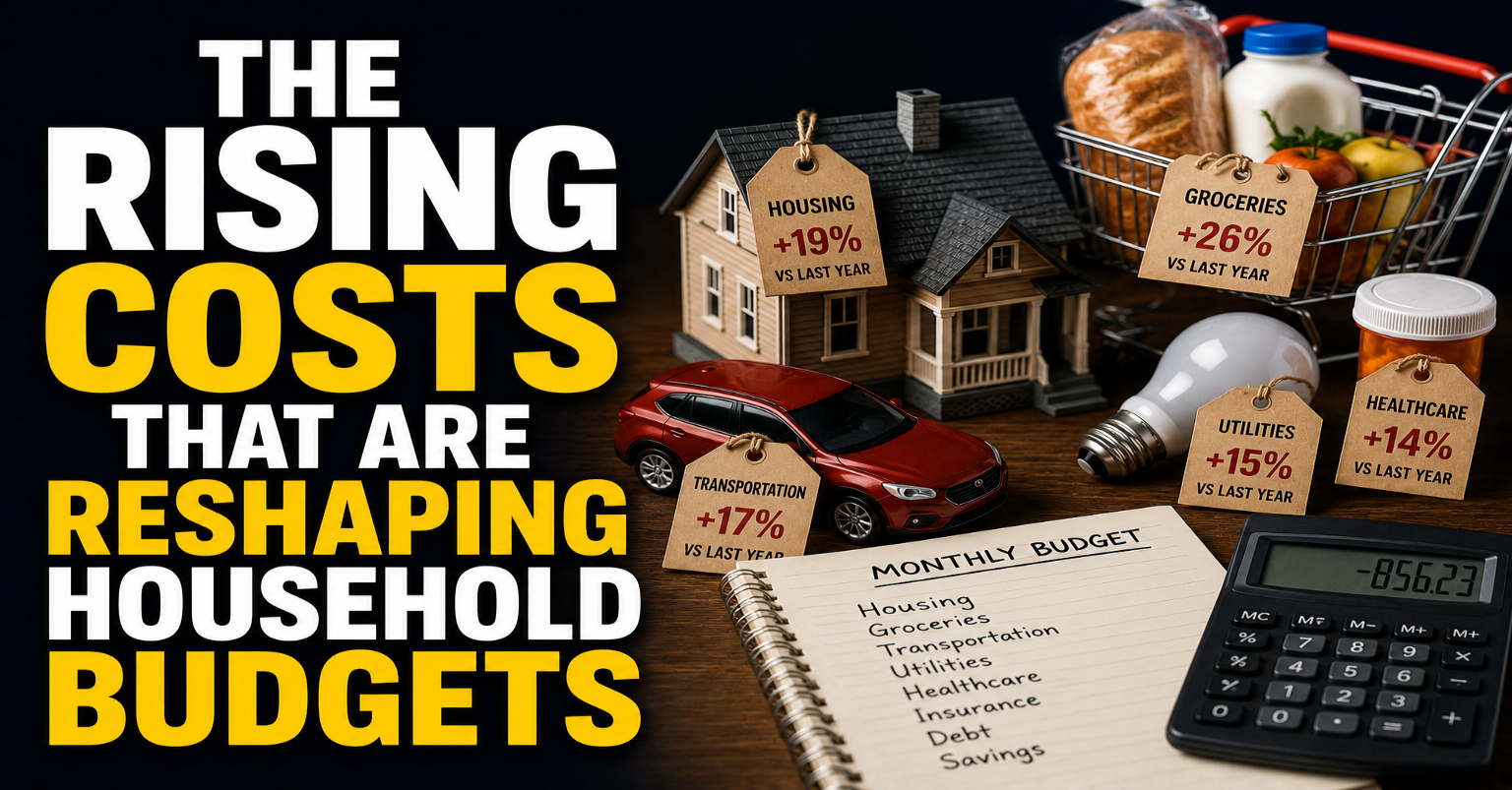
Household budgets have changed dramatically over the past few years. Although incomes have increased for some Americans, many families continue to feel financial pressure as the cost of essential goods and services keeps rising. Consequently, managing everyday expenses now requires more planning than ever before.
Fortunately, understanding where these rising costs come from can help households make better financial decisions. Instead of reacting to every price increase, reviewing your spending habits and adjusting your budget can improve your long-term financial stability. Moreover, small changes made consistently often have a meaningful impact over time.
Today’s household budget extends well beyond rent or mortgage payments. Healthcare, groceries, transportation, insurance, childcare, and subscription services all compete for a larger share of monthly income. Therefore, recognizing these financial trends allows families to prepare for future expenses while continuing to work toward their financial goals.
Whether you’re building an emergency fund, paying down debt, or saving for retirement, understanding today’s rising costs is an important step toward making informed financial decisions.
The True Cost of Living in America Today
1. Housing Continues to Consume More Income
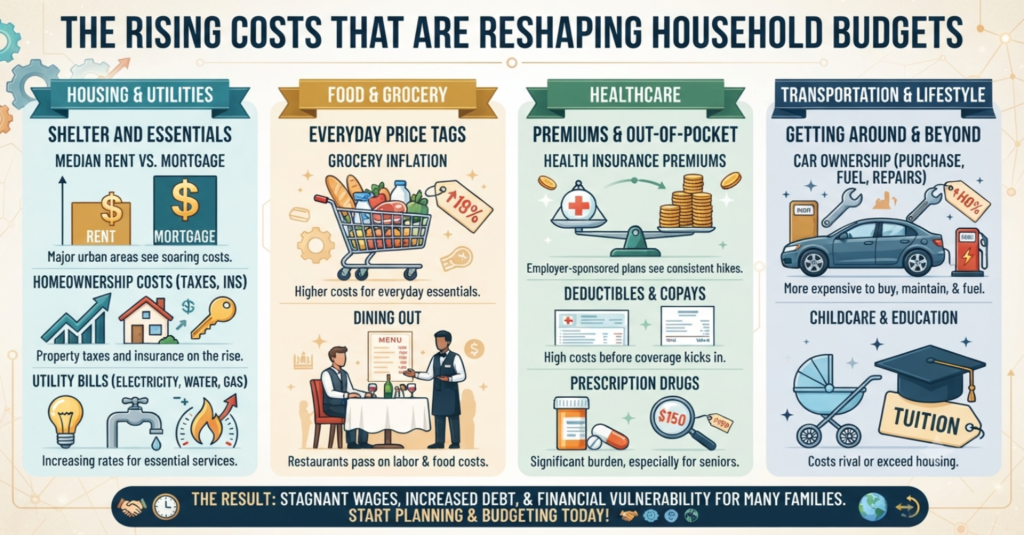
Housing remains the largest monthly expense for many Americans.
Whether you rent or own a home, housing costs often include:
- Rent or mortgage payments
- Property taxes
- Homeowners or renters insurance
- Maintenance and repairs
- Utility bills
As a result, higher housing costs leave less room for savings and discretionary spending.
Furthermore, reviewing your housing budget regularly can help you prepare for future increases.
2. Grocery Prices Continue to Affect Family Budgets
Food is another essential expense that continues to influence household finances.
Although shopping habits can reduce costs, many families still spend more than they did just a few years ago.
Helpful strategies include:
- Planning meals in advance
- Buying generic brands
- Comparing store prices
- Reducing food waste
- Using shopping lists
Consequently, careful grocery planning may help offset higher food prices.
3. Transportation Costs Extend Beyond Fuel
Owning a vehicle involves much more than buying gasoline.
Monthly transportation expenses may include:
- Vehicle payments
- Auto insurance
- Routine maintenance
- Registration fees
- Parking expenses
Moreover, these recurring costs can significantly affect a household’s overall budget.
4. Healthcare Remains a Major Financial Concern
Healthcare continues to represent a significant portion of many household budgets.
Common expenses include:
- Insurance premiums
- Prescription medications
- Deductibles
- Doctor visits
- Vision and dental care
Therefore, planning for medical expenses throughout the year can reduce unexpected financial stress.
5. Utility Bills Continue to Increase
Electricity, water, natural gas, internet service, and mobile phone plans are essential household expenses.
Although each bill may appear manageable individually, together they can create a substantial monthly cost.
Furthermore, improving energy efficiency and reviewing service plans regularly may help lower these expenses.
6. Insurance Premiums Continue to Rise
Insurance protects your finances from unexpected events.
However, increasing premiums can place additional pressure on household budgets.
Many families pay for:
- Health insurance
- Auto insurance
- Homeowners insurance
- Renters insurance
- Life insurance
Consequently, comparing policies periodically may help you identify better coverage or lower premiums.
7. Childcare and Education Require Larger Budgets
Families with children often experience additional financial responsibilities.
These expenses may include:
- Childcare
- School supplies
- College savings
- Tutoring
- Extracurricular activities
Therefore, long-term planning becomes increasingly important as education costs continue to grow.
8. Subscription Services Quietly Add Up
Many households subscribe to multiple digital services.
Examples include:
- Video streaming
- Music platforms
- Cloud storage
- Software subscriptions
- Fitness memberships
Although each subscription may seem affordable, several recurring charges can noticeably affect your monthly budget.
Reviewing subscriptions regularly can help eliminate services you no longer use.
9. Debt Payments Reduce Monthly Flexibility
Many households dedicate a significant portion of their income to debt payments.
Common obligations include:
- Credit card balances
- Auto loans
- Student loans
- Personal loans
- Home equity loans
Consequently, these monthly payments can leave less money available for savings, investing, or unexpected expenses.
Moreover, reducing high-interest debt often creates additional room in the household budget over time.
10. Taxes Affect Take-Home Income
Your paycheck doesn’t reflect the amount you actually have available to spend.
Federal taxes, state taxes where applicable, payroll taxes, and property taxes all reduce disposable income.
Therefore, creating a budget based on your net income instead of your gross salary provides a more accurate financial picture.
Additionally, reviewing your tax situation each year may help you identify deductions or credits for which you qualify.
11. Inflation Changes Everyday Spending Habits
Inflation affects far more than major purchases.
Instead, it gradually increases the price of everyday essentials.
Families often notice higher costs for:
- Household supplies
- Personal care products
- Clothing
- Restaurant meals
- Entertainment
As a result, many Americans have adjusted their spending habits by comparing prices, delaying purchases, and focusing more on value.
12. Financial Planning Has Become More Important Than Ever
As living costs continue to evolve, long-term planning plays an even greater role in financial success.
Rather than reacting to every economic headline, households benefit from reviewing their financial plans regularly.
A well-rounded financial strategy may include:
- Monthly budgeting
- Emergency savings
- Retirement contributions
- Investment planning
- Debt reduction goals
Furthermore, updating your financial plan after major life events helps ensure it continues to reflect your priorities.
Common Budgeting Mistakes to Avoid
Even a good income can be difficult to manage without a clear financial plan.
Fortunately, avoiding these common mistakes can help you adapt to rising costs.
Ignoring Small Recurring Expenses
Daily purchases and recurring subscriptions may seem insignificant.
However, together they can consume hundreds of dollars each month.
Therefore, review your recurring expenses regularly and eliminate services that no longer provide value.
Failing to Build Emergency Savings
Unexpected expenses are inevitable.
Without emergency savings, many households rely on high-interest credit cards or loans.
Instead, contribute to an emergency fund consistently, even if you begin with modest amounts.
Spending Every Pay Raise
Higher earnings create valuable opportunities.
Nevertheless, increasing spending every time your income rises can slow long-term financial progress.
Instead, consider directing part of each raise toward savings or retirement contributions.
Not Reviewing Insurance Coverage
Insurance needs change over time.
Consequently, reviewing your policies periodically helps ensure you’re neither underinsured nor paying for unnecessary coverage.
Smart Ways to Reduce Monthly Expenses
Although some rising costs are unavoidable, many financial habits can improve your household budget.
Consider these practical strategies:
- Create a realistic monthly budget.
- Plan meals before grocery shopping.
- Compare insurance quotes annually.
- Reduce high-interest debt.
- Cancel unused subscriptions.
- Improve home energy efficiency.
- Save automatically every payday.
- Track your monthly spending.
- Review recurring bills regularly.
- Increase retirement savings whenever possible.
While each strategy may produce modest savings on its own, together they can significantly strengthen your financial position.
Frequently Asked Questions
Why are household budgets under more pressure today?
Many families face higher costs for housing, groceries, healthcare, insurance, transportation, childcare, and other essential expenses. As these costs rise, they consume a larger share of household income.
What expense has the biggest impact on most families?
Housing is typically the largest monthly expense. Rent, mortgage payments, property taxes, insurance, maintenance, and utilities often account for a substantial portion of a household budget.
How can households reduce rising monthly expenses?
Reviewing recurring bills, creating a budget, reducing unnecessary spending, comparing service providers, paying down high-interest debt, and building emergency savings can all improve financial flexibility.
Should I update my budget every year?
Yes. Reviewing your budget annually—and after major life changes—helps ensure it reflects your current income, expenses, and financial goals.
Can small spending changes really improve financial health?
Absolutely. Consistently reducing unnecessary expenses and saving even modest amounts can create meaningful long-term financial benefits.
Final Thoughts
The rising costs reshaping household budgets affect far more than a few monthly bills. Housing, groceries, transportation, healthcare, insurance, taxes, and everyday essentials all influence how families manage their finances. Consequently, understanding where your money goes has become an essential part of maintaining long-term financial stability.
Moreover, while economic conditions continue to evolve, strong financial habits remain within your control. Budgeting carefully, reviewing recurring expenses, reducing high-interest debt, and saving consistently can help you adapt to changing costs without losing sight of your long-term goals.
Above all, remember that financial resilience isn’t built overnight. Instead, it grows through thoughtful decisions made consistently over time. By staying informed, reviewing your financial plan regularly, and making intentional spending choices, you can navigate rising expenses with greater confidence while building a stronger financial future.
Consumer Financial Protection Bureau – Budgeting and Saving