 MOHAMMAD ABUBAKR
Introduction
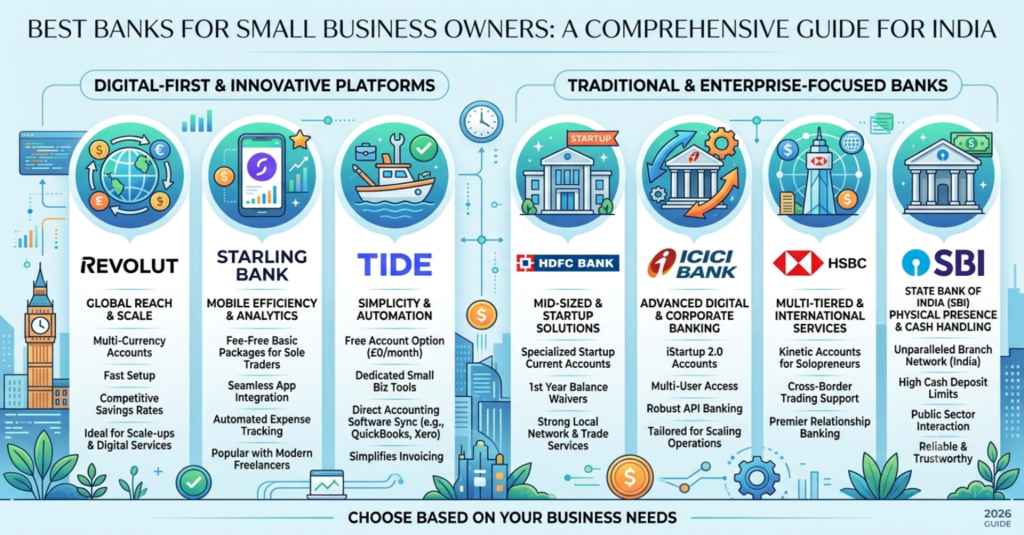
Choosing the right bank is one of the first financial decisions every business owner should make.
A business bank does more than hold your money.
It helps you manage cash flow, process payments, apply for loans, and separate personal and business finances.
However, not every bank offers the same features.
Some focus on low fees.
Others provide better digital banking tools or flexible lending options.
Therefore, comparing your choices before opening an account can save both time and money.
In this guide, we’ll look at some of the best banks for small business owners in 2026 and explain what makes each one a strong choice.
What Should You Look for in a Business Bank?
Before opening an account, compare more than just monthly fees.
A good business bank should support your company’s long-term growth.
Consider these important features:
- Low or no monthly maintenance fees
- Easy online and mobile banking
- Business checking accounts
- Business savings accounts
- Merchant payment services
- Business credit cards
- Small business loans
- ATM access
- Customer support
- FDIC insurance
Choose a bank that matches both your current needs and future business goals.
Choosing the right bank is only one part of managing your finances. Read our How to Create a Business Budget That Works guide to learn how to control expenses, improve cash flow, and build a stronger financial foundation for your business.
1. Chase Bank
Chase remains one of the most popular choices for U.S. small business owners.
Its large branch network and wide range of financial products make it attractive for businesses that expect to grow.
Key advantages include:
- Multiple business checking options
- Business credit cards
- Merchant payment services
- SBA loan support
- Mobile banking app
- Thousands of ATMs nationwide
Chase may be a strong choice if you prefer in-person banking along with modern digital tools.
2. Bank of America
Bank of America offers business banking solutions for companies of different sizes.
Entrepreneurs can choose from several checking accounts depending on transaction volume and business needs.
Popular features include:
- Cash flow management tools
- Business credit cards
- Payroll integration
- Mobile check deposit
- Business savings accounts
- Lending options
Businesses that already use Bank of America for personal banking may appreciate managing everything in one place.
3. Bluevine
Bluevine has become a popular option for online businesses and startups.
Because it operates primarily online, it offers a streamlined banking experience.
Highlights include:
- Competitive business checking
- No monthly maintenance fee on eligible accounts
- Fast online account opening
- Mobile banking
- Payment integrations
- Business line of credit options
Bluevine is often attractive for entrepreneurs who prefer digital banking over visiting physical branches.
4. Mercury
Mercury is designed primarily for startups, technology companies, and online businesses.
Although it operates digitally, it provides several modern financial tools.
Key features include:
- Online business checking
- Team account access
- Payment automation
- Virtual debit cards
- API integrations
- Expense management tools
Technology-focused companies often appreciate Mercury’s modern banking platform.
5. U.S. Bank
U.S. Bank offers flexible banking options for both new and established businesses.
Its combination of physical branches and digital services appeals to many entrepreneurs.
Benefits include:
- Business checking accounts
- Equipment financing
- SBA lending
- Treasury management
- Merchant services
- Mobile banking
Businesses looking for traditional banking with strong lending options may find U.S. Bank to be a good fit.
Compare Features Before Choosing
The best bank depends on your business.
Some entrepreneurs prioritize low fees.
Others value lending options or advanced online tools.
Instead of choosing the first bank you find, compare account features carefully.
A little research today can help your business save money for years.
6. Capital One
Capital One is a strong choice for many small businesses, especially those located near its branch network.
It combines digital banking with practical business services.
Popular features include:
- Business checking accounts
- Online and mobile banking
- Business credit cards
- Cash deposit options
- Fraud monitoring
- Account alerts
Business owners who value simple banking tools may appreciate Capital One’s user-friendly experience.
7. Relay
Relay is an online banking platform built for small businesses that want better money management.
One of its biggest advantages is the ability to organize funds into multiple accounts.
Key features include:
- Multiple checking accounts
- Expense management tools
- Team permissions
- Accounting software integration
- Online payments
- No minimum balance requirement on eligible accounts
Relay can work well for businesses that carefully track budgets and cash flow.
Online Banks vs. Traditional Banks
Both options offer advantages.
The right choice depends on how you operate your business.
Online Banks
Advantages:
- Lower fees
- Fast account setup
- Modern mobile apps
- Easy integrations with accounting software
- Convenient digital banking
Potential drawbacks:
- Few or no physical branches
- Limited cash deposit options
Traditional Banks
Advantages:
- Branch locations
- Face-to-face customer service
- Cash handling
- Broader lending options
- Established banking relationships
Potential drawbacks:
- Higher monthly fees on some accounts
- More account requirements
Evaluate your daily banking needs before making a decision.
How to Choose the Right Business Bank
Every business is different.
Before opening an account, compare the following:
- Monthly maintenance fees
- Minimum balance requirements
- Transaction limits
- ATM availability
- Loan options
- Business credit cards
- Mobile banking features
- Customer service quality
- Payment processing services
- Integration with accounting software
Selecting the right bank early can save both time and money as your business grows.
Common Banking Mistakes Business Owners Make
Even experienced entrepreneurs sometimes overlook important banking details.
Avoid these common mistakes:
- Opening a personal account instead of a business account.
- Ignoring monthly service fees.
- Failing to compare multiple banks.
- Mixing business and personal finances.
- Choosing a bank without considering future growth.
- Overlooking online banking features.
- Not reviewing account terms regularly.
Making informed banking decisions helps improve financial management and supports long-term business success.
Before opening a business bank account, review the FDIC Deposit Insurance resources to understand how deposit insurance works, coverage limits, and how to confirm that your bank is FDIC-insured. Understanding these protections can help you make more informed banking decisions.
Frequently Asked Questions
Do I need a separate business bank account?
Yes.
Keeping business and personal finances separate simplifies bookkeeping, tax preparation, and financial reporting.
Which bank is best for a new small business?
The best option depends on your needs.
Compare fees, digital tools, lending options, customer support, and branch availability before choosing.
Are online business banks safe?
Many online banks use strong security measures and offer FDIC insurance through partner banks where applicable.
Always verify coverage and account protections before opening an account.
Can I switch business banks later?
Yes.
Many businesses change banks as they grow or when better services become available.
Before switching, compare fees, features, and account requirements carefully.
Final Thoughts
Choosing the right business bank is about more than opening an account.
It is about finding a financial partner that supports your company’s growth.
Compare fees carefully.
Evaluate digital tools.
Think about future lending needs.
Review customer support options.
Most importantly, choose a bank that matches the way your business operates today while giving you room to grow tomorrow.