
 MOHAMMAD ABUBAKR
Introduction
A business budget is more than a spreadsheet.
It is a financial roadmap that helps you control spending, plan for growth, and prepare for unexpected expenses.
Without a budget, it becomes much harder to understand where your money is going.
As a result, even businesses with strong sales can experience financial problems.
The good news is that creating a budget does not have to be complicated.
With the right approach, you can build a budget that supports your goals while giving your business greater financial stability.
In this guide, you’ll learn how to create a business budget that works and how to use it to make smarter financial decisions.
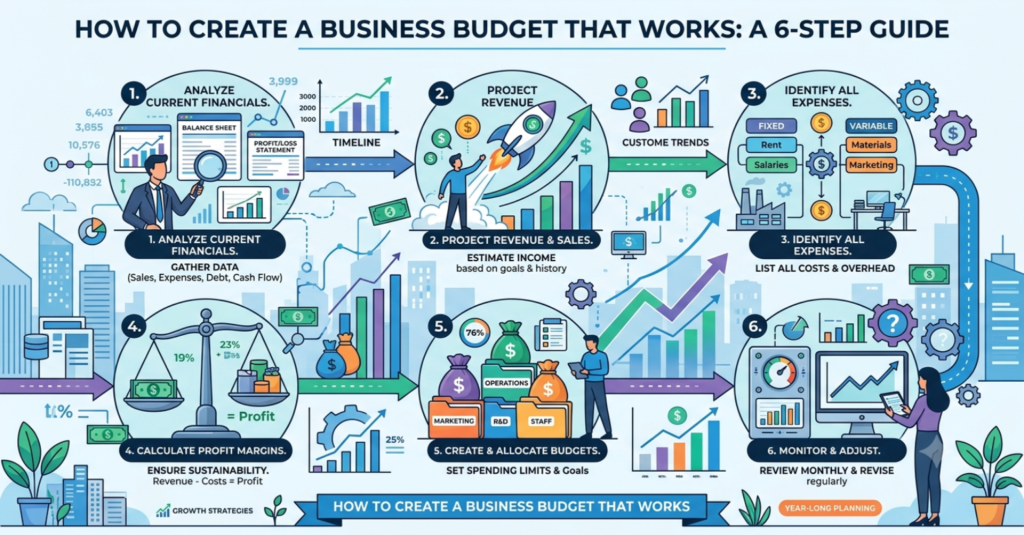
Why Every Business Needs a Budget
A budget gives you control over your finances.
Instead of reacting to financial problems, you can plan ahead.
A well-prepared budget helps you:
- Track income
- Control expenses
- Improve cash flow
- Prepare for taxes
- Set realistic financial goals
- Make informed business decisions
Businesses that monitor their budgets regularly are often better prepared for changing market conditions.
1. Calculate Your Expected Revenue
Every budget begins with estimated income.
Start by calculating how much revenue your business expects to generate each month.
Consider sources such as:
- Product sales
- Service income
- Subscription revenue
- Consulting fees
- Online sales
If your business is new, use conservative estimates based on market research instead of optimistic guesses.
Accurate revenue projections create a stronger financial foundation.
2. List Your Fixed Expenses
Fixed expenses remain relatively consistent from month to month.
Examples include:
- Office rent
- Loan payments
- Insurance premiums
- Internet service
- Software subscriptions
- Employee salaries
Knowing your fixed costs helps you understand the minimum amount of revenue your business needs each month.
3. Estimate Variable Expenses
Variable expenses change depending on business activity.
These costs may include:
- Marketing
- Shipping
- Inventory
- Utilities
- Travel
- Office supplies
Review previous spending whenever possible.
Estimating these costs accurately improves budgeting decisions throughout the year.
Understanding your ongoing operating costs is essential for accurate budgeting. Read our Business Expenses You Should Never Ignore guide to identify the expenses every business owner should plan for before creating a monthly budget.
4. Build an Emergency Reserve
Unexpected expenses are part of running any business.
Equipment can fail.
Sales may slow.
Operating costs may increase.
Including an emergency reserve in your budget provides financial flexibility during difficult periods.
Even a modest reserve can reduce stress when unexpected costs appear.
5. Set Spending Limits
A budget should guide spending decisions.
Assign spending limits to each major category.
For example:
- Marketing
- Payroll
- Equipment
- Inventory
- Office expenses
- Professional services
Having clear limits helps prevent overspending while keeping your business financially healthy.
6. Review Your Budget Every Month
A budget should evolve as your business grows.
Review it regularly to compare expected results with actual performance.
During each review, ask yourself:
- Did revenue meet expectations?
- Which expenses increased?
- Can unnecessary costs be reduced?
- Are my financial goals still realistic?
Monthly reviews allow you to adjust before small issues become major financial problems.
Build a Budget That Supports Growth
A successful budget does more than reduce expenses.
It also helps your business grow.
By planning carefully and monitoring your finances consistently, you create opportunities to invest in areas that increase revenue and improve long-term profitability.
7. Track Every Dollar You Spend
A budget only works when it reflects your actual spending.
Therefore, record every business expense, even small purchases.
Keep track of:
- Office supplies
- Marketing costs
- Software subscriptions
- Travel expenses
- Utility bills
- Equipment repairs
Using accounting software or a bookkeeping system makes this process much easier.
Accurate records also help you prepare for tax season.
8. Separate Business and Personal Finances
Many new entrepreneurs make the mistake of using one account for everything.
Unfortunately, this creates confusion and makes budgeting less accurate.
Instead, open a dedicated business bank account.
This simple step helps you:
- Monitor business performance
- Track expenses accurately
- Simplify bookkeeping
- Prepare financial reports
- File taxes more efficiently
Keeping finances separate gives you a clearer picture of your company’s health.
9. Plan for Seasonal Changes
Many businesses experience busy and slow periods.
Retail stores often see higher sales during the holidays.
Service businesses may have slower months depending on demand.
Review past trends if they are available.
Then adjust your budget to prepare for seasonal changes.
Planning ahead helps you manage cash flow throughout the year.
10. Adjust Your Budget as Your Business Grows
A business budget should never remain static.
As revenue increases, your expenses and priorities will also change.
Review your financial goals regularly.
You may decide to invest more in:
- Marketing
- New equipment
- Employee training
- Technology
- Product development
Updating your budget keeps it aligned with your current business needs.
Common Business Budgeting Mistakes
Even experienced business owners make budgeting mistakes.
Fortunately, many of them are easy to avoid.
- Overestimating future sales.
- Ignoring small recurring expenses.
- Forgetting emergency savings.
- Mixing business and personal spending.
- Creating a budget but never reviewing it.
- Failing to monitor cash flow.
- Spending before revenue becomes consistent.
Avoiding these mistakes can improve financial stability and support long-term growth.
The U.S. Small Business Administration (SBA) offers free budgeting templates, business planning resources, funding guidance, and financial management tools. Reviewing these resources can help entrepreneurs create realistic budgets and make informed financial decisions as their businesses grow.
Frequently Asked Questions
How often should I update my business budget?
Review your budget every month.
Regular updates help you identify changes in revenue, expenses, and cash flow before they become larger problems.
What is the difference between fixed and variable expenses?
Fixed expenses usually remain the same each month, such as rent or insurance.
Variable expenses change based on business activity, such as marketing, shipping, or inventory.
Can a small business operate without a budget?
It can, but doing so increases financial risk.
A budget helps you control spending, prepare for unexpected costs, and make informed decisions.
What is the biggest budgeting mistake?
One of the most common mistakes is overestimating revenue while underestimating expenses.
Using realistic projections creates a more reliable financial plan.
Final Thoughts
Creating a business budget is one of the smartest investments you can make.
It helps you understand where your money is going and gives you greater confidence when making financial decisions.
Track your income carefully.
Monitor every major expense.
Review your budget consistently.
Most importantly, adjust your plan as your business grows.
A realistic budget will not eliminate every challenge.
However, it will help you respond to those challenges with better financial control and long-term confidence.