
 MOHAMMAD ABUBAKR
Introduction
Starting a business is exciting.
However, running a successful business requires much more than having a great idea.
Every year, thousands of small businesses lose money because of avoidable mistakes.
Some errors reduce profits.
Others create legal or financial problems that are difficult to fix.
The good news is that many of these mistakes can be prevented with proper planning and smart decision-making.
Whether you are launching your first business or managing a growing company, understanding these common mistakes can save you thousands of dollars and help your business grow with confidence.
In this guide, we’ll explore the small business mistakes that cost owners thousands and explain how to avoid them.
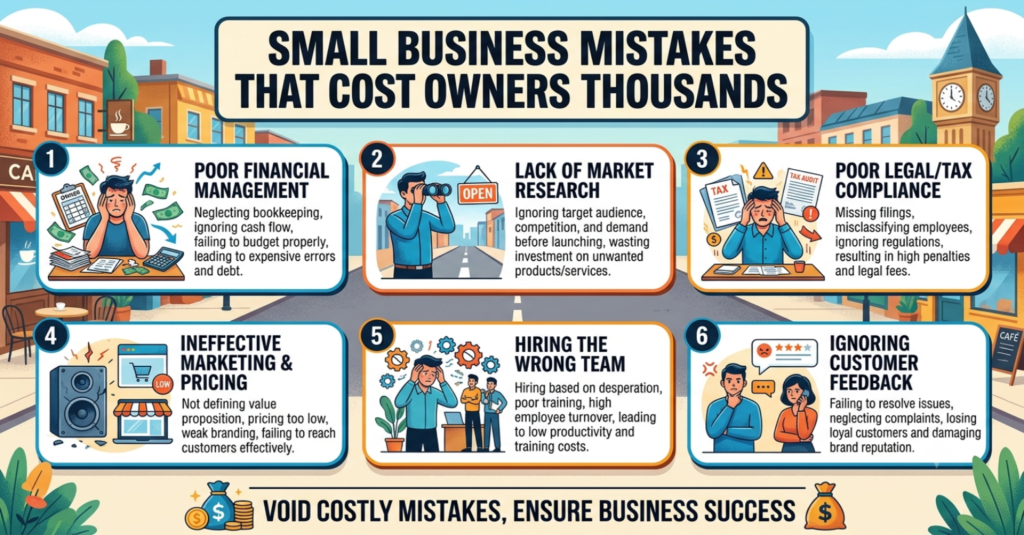
Why Small Business Mistakes Can Be Expensive
Small mistakes often become large financial problems over time.
For example, poor budgeting may lead to cash shortages.
Likewise, weak marketing can reduce sales.
Ignoring customer feedback may also damage your reputation.
Fortunately, recognizing these risks early allows you to make better business decisions before problems become costly.
1. Starting Without a Business Plan
Many entrepreneurs rush into business without creating a clear plan.
Unfortunately, this often leads to confusion and poor financial decisions.
A business plan should outline:
- Your products or services
- Target customers
- Startup costs
- Pricing strategy
- Marketing plan
- Revenue goals
Even a simple business plan provides direction and helps you stay focused as your business grows.
If you’re still in the planning stage, read our How to Start a Small Business in the USA guide to learn the essential steps for choosing a business structure, registering your company, and creating a strong foundation for long-term success.
2. Mixing Personal and Business Finances
Using one bank account for both personal and business expenses creates unnecessary confusion.
It becomes harder to:
- Track profits
- Prepare tax returns
- Monitor cash flow
- Measure business performance
Opening a separate business bank account improves organization and makes accounting much easier.
It also presents a more professional image to customers and lenders.
3. Ignoring Cash Flow
Many businesses earn healthy sales but still experience financial problems.
The reason is often poor cash flow management.
Cash flow measures the money moving into and out of your business.
If expenses consistently exceed available cash, paying employees, suppliers, or bills becomes difficult.
Review your cash flow every month.
Planning ahead helps you avoid unexpected shortages.
4. Underpricing Products or Services
New business owners sometimes charge too little because they fear losing customers.
However, pricing too low can reduce profits and make growth difficult.
When setting prices, consider:
- Material costs
- Labor
- Operating expenses
- Marketing costs
- Desired profit margin
Competitive pricing should still allow your business to remain profitable.
Remember, customers often value quality and service as much as price.
5. Neglecting Marketing
Even outstanding businesses need consistent marketing.
Many owners spend months creating products but very little time attracting customers.
Develop a marketing strategy that includes several channels, such as:
- Search engine optimization (SEO)
- Email marketing
- Social media
- Local networking
- Referral programs
- Online advertising
Track your results regularly.
Then focus more on the channels that generate the highest return.
6. Hiring Too Quickly
Growing businesses often need additional help.
However, hiring before your revenue is stable can create unnecessary financial pressure.
Before adding employees, ask yourself:
- Can the business consistently afford payroll?
- Will this hire increase productivity?
- Is there enough work available?
Hiring at the right time helps protect your cash flow while supporting long-term growth.
Build a Strong Foundation First
Many successful businesses did not grow overnight.
Instead, they focused on building strong systems from the beginning.
Good financial management.
Clear planning.
Consistent marketing.
Excellent customer service.
These habits help reduce costly mistakes while supporting sustainable growth.
7. Ignoring Customer Feedback
Customers often tell you exactly how to improve your business.
Unfortunately, many owners ignore reviews, complaints, or suggestions.
Listening to customer feedback can help you:
- Improve products or services
- Increase customer satisfaction
- Build stronger relationships
- Identify problems early
Respond professionally to both positive and negative reviews.
Small improvements based on customer feedback can lead to higher sales and better customer loyalty.
8. Failing to Track Business Expenses
Every dollar matters in a small business.
Without accurate expense tracking, it becomes difficult to understand where your money is going.
Keep records of:
- Office expenses
- Marketing costs
- Software subscriptions
- Equipment purchases
- Travel expenses
- Utility bills
Using accounting software or working with a bookkeeper can simplify financial management and prepare you for tax season.
9. Trying to Do Everything Yourself
Many entrepreneurs believe they must handle every task alone.
Although this approach may save money initially, it often slows business growth.
Instead, focus on the work that creates the greatest value.
Whenever possible, outsource or delegate tasks such as:
- Bookkeeping
- Graphic design
- Website maintenance
- Payroll
- Administrative work
Freeing up your time allows you to focus on growing the business.
10. Ignoring Legal and Tax Requirements
Legal and tax responsibilities should never be overlooked.
Missing deadlines or failing to follow regulations can result in costly penalties.
Depending on your business, you may need to:
- File business taxes
- Renew licenses
- Maintain accurate financial records
- Report employee payroll taxes
- Follow local business regulations
Staying organized throughout the year makes compliance much easier.
If necessary, seek guidance from a qualified accountant or tax professional.
How to Avoid Costly Business Mistakes
Building a successful business requires continuous improvement.
These simple habits can help reduce expensive mistakes:
- Review your finances every month.
- Monitor cash flow regularly.
- Invest in marketing consistently.
- Create realistic business goals.
- Keep learning about your industry.
- Listen to customer feedback.
- Separate business and personal finances.
- Plan before making major financial decisions.
Small improvements made consistently often produce the biggest long-term results.
The U.S. Small Business Administration (SBA) provides free tools, business planning guides, funding information, mentorship programs, and educational resources for entrepreneurs. Reviewing these resources can help business owners avoid common mistakes and make informed decisions as their companies grow.
Frequently Asked Questions
What is the biggest mistake small business owners make?
Many experts believe poor cash flow management is one of the most common reasons businesses struggle.
Even profitable businesses can fail if they run out of available cash.
Why do small businesses fail?
Although every situation is different, common reasons include poor planning, weak marketing, pricing mistakes, limited cash flow, and inadequate financial management.
Should every small business have a business plan?
Yes.
Even a simple business plan provides direction, helps set financial goals, and supports better decision-making.
How often should business owners review their finances?
Reviewing financial reports every month helps identify problems early and improves long-term planning.
Final Thoughts
Running a successful business is not about avoiding every mistake.
Instead, it is about recognizing problems early and making better decisions over time.
Create a clear business plan.
Protect your cash flow.
Price your products wisely.
Invest in marketing.
Stay organized with taxes and financial records.
Most importantly, continue learning as your business grows.
Small improvements today can prevent expensive mistakes tomorrow and help build a stronger, more profitable business.