
 MOHAMMAD ABUBAKR
Starting a small business is one of the most effective ways to build financial independence.
Every year, thousands of Americans launch businesses to earn extra income, follow their passion, or create long-term wealth.
Although becoming a business owner can feel overwhelming, the process becomes much easier when you understand each step.
From choosing the right business idea to registering your company and finding customers, careful planning can increase your chances of success.
In this guide, you’ll learn how to start a small business in the USA, avoid common mistakes, and build a strong foundation for long-term growth.
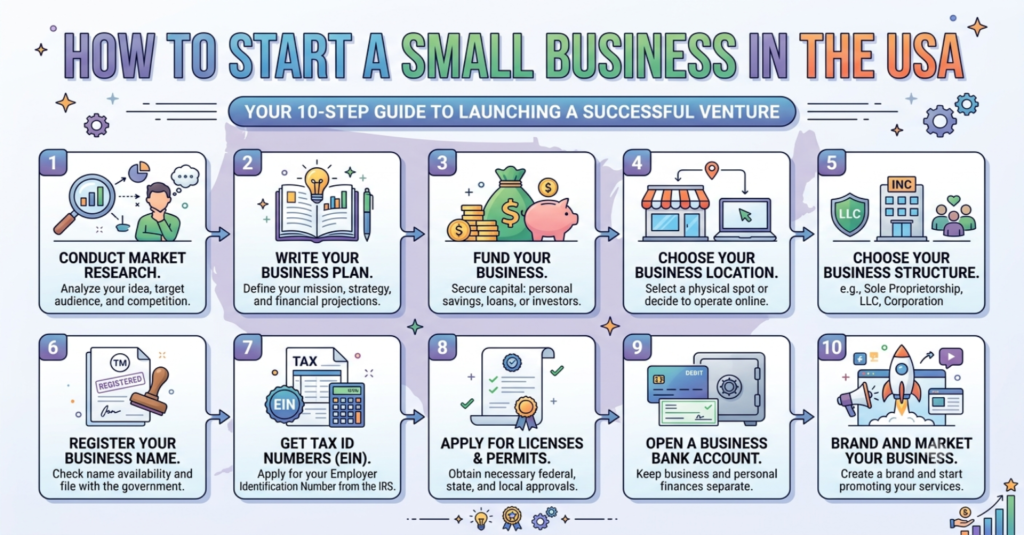
Why Start a Small Business?
Owning a business offers opportunities that traditional employment may not provide.
Some of the biggest benefits include:
- Greater income potential
- Flexible work schedules
- Personal independence
- Tax advantages for eligible businesses
- Opportunities to build long-term wealth
- The ability to create jobs within your community
While every business carries some risk, careful planning can improve your chances of success.
1. Choose the Right Business Idea
Every successful business begins with solving a problem.
Instead of choosing an idea simply because it is popular, focus on products or services that people actually need.
Ask yourself:
- What skills do I already have?
- What problems can I solve?
- Who is my ideal customer?
- Is there enough demand?
- Can I compete with existing businesses?
Research your market before investing money.
Understanding customer needs helps you make better business decisions from the beginning.
2. Write a Simple Business Plan
A business plan provides direction.
It does not need to be hundreds of pages long.
Instead, include the most important information, such as:
- Business description
- Products or services
- Target customers
- Marketing strategy
- Startup costs
- Expected income
- Business goals
A written plan helps you stay focused while making future decisions.
It may also help if you apply for financing.
3. Choose a Business Structure
Selecting the right legal structure affects taxes, liability, and daily operations.
Common options include:
- Sole Proprietorship
- Partnership
- Limited Liability Company (LLC)
- Corporation
Each structure has different advantages and responsibilities.
Many small business owners choose an LLC because it offers liability protection while remaining relatively simple to manage.
Consider speaking with a legal or tax professional if you are unsure which option best fits your situation.
4. Register Your Business
After choosing your business structure, complete any required registrations.
Depending on your business and location, you may need to:
- Register your business name.
- Form an LLC or corporation.
- Apply for an Employer Identification Number (EIN).
- Register for state taxes.
- Obtain local business licenses or permits.
Registration requirements vary by state and city.
Completing these steps correctly helps your business operate legally.
5. Open a Business Bank Account
Keeping business and personal finances separate makes bookkeeping much easier.
A dedicated business bank account can help you:
- Track expenses.
- Manage income.
- Prepare tax returns.
- Build business credibility.
- Simplify accounting.
Using separate accounts also creates a clearer financial record if you apply for business financing later.
6. Estimate Your Startup Costs
Understanding your startup budget helps you avoid financial surprises.
Typical startup expenses may include:
- Business registration fees
- Equipment
- Inventory
- Website development
- Marketing
- Insurance
- Office supplies
- Professional services
Estimate both one-time costs and ongoing monthly expenses.
Planning ahead improves cash flow management during the early stages of your business.
Small businesses play a vital role in creating jobs and strengthening local communities. Read our Why Small Businesses Are Driving America’s Economic Growth in 2026 to learn why entrepreneurs continue to shape the U.S. economy.
Build Your Business One Step at a Time
Many entrepreneurs believe they need everything to be perfect before launching.
However, successful businesses often improve gradually.
Start with a solid foundation.
Continue learning.
Listen to customer feedback.
Then make improvements as your business grows.
Progress usually matters more than perfection.
7. Secure Funding for Your Business
Not every business requires a large investment.
However, some businesses need funding for equipment, inventory, or marketing.
Common funding options include:
- Personal savings
- Small business loans
- Business lines of credit
- Grants
- Investors
- Crowdfunding
Before borrowing money, calculate how much your business actually needs.
Taking on unnecessary debt can create financial pressure during the early stages of growth.
8. Build Your Online Presence
In today’s digital world, customers expect businesses to have an online presence.
Even local businesses benefit from being easy to find online.
Start by creating:
- A professional website
- A Google Business Profile
- Business social media accounts
- An email address using your business domain
Make sure your website loads quickly, works well on mobile devices, and clearly explains your products or services.
A strong online presence builds credibility and helps attract new customers.
9. Create a Marketing Strategy
A great business still needs customers.
Therefore, develop a simple marketing plan before launching.
Effective marketing channels include:
- Search engine optimization (SEO)
- Content marketing
- Email marketing
- Social media
- Local networking
- Referral programs
- Online advertising
Track your results regularly.
Then invest more in the marketing channels that produce the best return.
10. Keep Learning and Improving
Successful entrepreneurs never stop learning.
Markets change.
Customer preferences evolve.
Technology continues to advance.
Therefore, review your business regularly and look for ways to improve.
Ask customers for feedback.
Monitor your competitors.
Track your finances.
Most importantly, stay flexible.
Businesses that adapt often perform better over the long term.
Common Mistakes New Business Owners Make
Many entrepreneurs face challenges during their first few years.
Fortunately, avoiding these common mistakes can improve your chances of success.
- Starting without market research.
- Mixing personal and business finances.
- Ignoring cash flow.
- Underpricing products or services.
- Skipping written contracts.
- Neglecting marketing.
- Trying to do everything alone.
- Failing to understand tax responsibilities.
Learning from these mistakes early can save both time and money.
The U.S. Small Business Administration (SBA) offers free resources for entrepreneurs, including business planning tools, funding guidance, licensing information, mentorship programs, and educational materials. Reviewing these resources can help new business owners understand legal requirements and make informed decisions before launching a company.
Frequently Asked Questions
How much money do I need to start a small business?
Startup costs vary widely.
Some online businesses can begin with only a few hundred dollars, while retail or manufacturing businesses may require much larger investments.
Create a detailed budget before launching.
Do I need an LLC to start a business?
No.
Many businesses begin as sole proprietorships.
However, an LLC may provide liability protection and other benefits depending on your situation.
Consult a qualified legal or tax professional before deciding.
Can I start a business while working a full-time job?
Yes.
Many successful entrepreneurs begin their businesses as side projects.
This approach can reduce financial risk while allowing you to test your idea.
What is the biggest reason small businesses fail?
Although every business is different, poor cash flow management, weak planning, limited market demand, and insufficient marketing are among the most common reasons.
Final Thoughts
Starting a small business in the USA requires planning, patience, and consistent effort.
Although the process may seem complex at first, breaking it into manageable steps makes it much more achievable.
Choose the right business idea.
Create a realistic plan.
Register your business properly.
Manage your finances carefully.
Continue learning as your business grows.
Most successful companies were built one decision at a time.
The same approach can help you create a business that supports your long-term financial goals.