
 MOHAMMAD ABUBAKR
Introduction
Taxes are a normal part of running a business.
However, many small business owners make avoidable mistakes that can lead to penalties, missed deductions, or unnecessary stress.
Some errors happen because records are incomplete.
Others occur because business owners wait until the last minute to prepare.
Fortunately, good financial habits can help you avoid many common tax problems.
By staying organized throughout the year, you can simplify tax season and make more confident financial decisions.
In this guide, you’ll learn the small business tax mistakes to avoid and discover practical ways to keep your business tax-ready.
Why Tax Planning Matters
Tax planning is not just about filing returns.
It is about understanding your finances throughout the year.
Good tax planning helps you:
- Keep accurate records.
- Reduce bookkeeping errors.
- Prepare financial reports.
- Identify eligible business expenses.
- Avoid missed deadlines.
- Make better financial decisions.
Staying organized throughout the year often makes tax season much less stressful.
1. Mixing Business and Personal Finances
One of the biggest tax mistakes is using the same account for business and personal expenses.
When transactions are mixed together, it becomes much harder to:
- Identify deductible expenses.
- Prepare accurate financial records.
- Complete tax returns.
- Measure business performance.
Opening a dedicated business bank account creates cleaner financial records and improves bookkeeping.
Keeping separate accounts is one of the easiest ways to improve tax reporting. Read our How to Separate Business and Personal Finances guide to learn practical steps that simplify bookkeeping and strengthen your financial records.
2. Waiting Until Tax Season
Many entrepreneurs postpone bookkeeping until tax deadlines approach.
Unfortunately, this often leads to missing receipts, incomplete records, and unnecessary stress.
Instead, update your financial records every month.
Regular bookkeeping saves time and reduces mistakes.
It also helps you understand how your business is performing throughout the year.
3. Poor Recordkeeping
Accurate records are essential for every business.
Keep organized copies of:
- Receipts
- Bank statements
- Invoices
- Payroll records
- Expense reports
- Business contracts
Digital recordkeeping systems can make storing and finding documents much easier.
Good records also support accurate financial reporting.
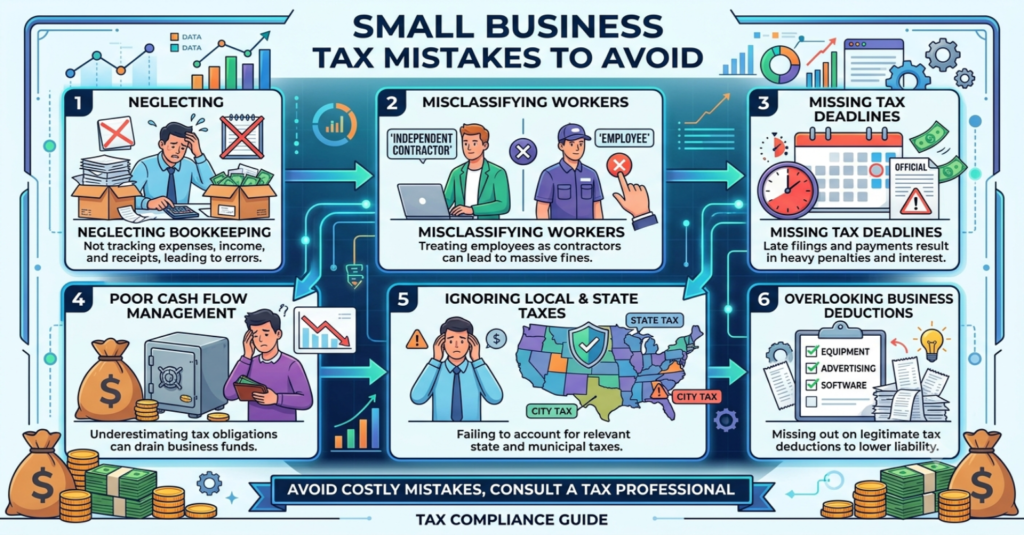
4. Missing Tax Deadlines
Late tax filings may result in penalties and interest charges.
Create a calendar that includes important dates for:
- Estimated tax payments
- Payroll taxes
- Annual tax returns
- State tax filings
- Business license renewals
Setting reminders helps you stay on schedule throughout the year.
5. Forgetting Eligible Business Expenses
Many small business owners miss legitimate business expenses simply because they fail to track them properly.
Common examples include:
- Office supplies
- Business software
- Marketing costs
- Professional services
- Business insurance
- Travel expenses
Accurate bookkeeping helps you identify expenses that may qualify under applicable tax rules.
6. Failing to Monitor Cash Flow
Taxes should never come as a surprise.
Set aside money regularly so tax payments do not affect your daily operations.
Review your cash flow every month.
Planning ahead makes it easier to meet financial obligations without creating unnecessary pressure.
Stay Organized All Year
Good tax preparation begins long before filing deadlines.
By maintaining organized records, reviewing your finances regularly, and planning ahead, you reduce the likelihood of costly mistakes.
Consistent financial habits often produce better results than last-minute preparation.
7. Not Keeping Digital Backups
Paper receipts can fade, become damaged, or get lost.
For that reason, keeping digital copies of important financial documents is a smart habit.
Consider storing electronic versions of:
- Receipts
- Invoices
- Bank statements
- Tax forms
- Payroll records
- Business contracts
Cloud storage or secure accounting software can make documents easier to organize and retrieve when needed.
8. Misclassifying Workers
Some businesses hire employees.
Others work with independent contractors.
Using the wrong classification can create tax and reporting problems.
Before hiring, understand the rules that apply to your business.
When you are unsure, seek guidance from a qualified tax professional.
Correct worker classification helps reduce compliance issues and keeps your records accurate.
9. Ignoring State and Local Tax Requirements
Federal taxes are only one part of business tax planning.
Many businesses also have state or local tax obligations.
Depending on where your business operates, you may need to manage:
- State income taxes
- Sales taxes
- Local business taxes
- Business license renewals
- Employer-related tax filings
Review the requirements in every state where you do business.
Staying informed helps you avoid missed deadlines and unnecessary penalties.
10. Trying to Handle Everything Alone
Many entrepreneurs manage every part of their business themselves.
Although this may reduce costs at first, taxes can become more complicated as your business grows.
Working with a qualified accountant or tax advisor may help you:
- Maintain accurate records
- Understand tax responsibilities
- Improve financial reporting
- Plan for future tax payments
- Reduce avoidable filing errors
Professional guidance often saves both time and money over the long term.
Tips for Staying Tax-Ready All Year
Preparing for tax season should be an ongoing process.
These habits can help:
- Record business transactions every week.
- Save every business receipt.
- Reconcile bank accounts monthly.
- Review financial reports regularly.
- Set aside money for future tax payments.
- Keep business and personal finances separate.
- Use accounting software to organize records.
Consistent organization makes tax season far less stressful.
The IRS Small Businesses and Self-Employed resource provides official information about recordkeeping, tax responsibilities, filing requirements, estimated taxes, and employer obligations. Reviewing these resources can help business owners stay informed and reduce the risk of common tax mistakes.
Frequently Asked Questions
What is the most common small business tax mistake?
Mixing business and personal finances is one of the most common mistakes because it makes bookkeeping, expense tracking, and tax reporting much more difficult.
How long should I keep business tax records?
Record retention requirements vary depending on the document type and applicable laws.
Many businesses keep important financial records for several years.
Review current IRS guidance or speak with a qualified tax professional for recommendations that apply to your situation.
Should every small business use accounting software?
While it is not legally required for every business, accounting software can improve accuracy, simplify bookkeeping, and save valuable time.
When should I start preparing for tax season?
Preparation should continue throughout the year.
Regular bookkeeping and organized financial records make tax filing much easier than waiting until the deadline.
Final Thoughts
Avoiding tax mistakes begins with strong financial habits.
Keep accurate records.
Separate business and personal finances.
Track expenses consistently.
Review your cash flow every month.
Most importantly, prepare throughout the year instead of waiting until tax season arrives.
A proactive approach can reduce stress, improve financial decision-making, and help your business stay organized as it grows.