
 MOHAMMAD ABUBAKR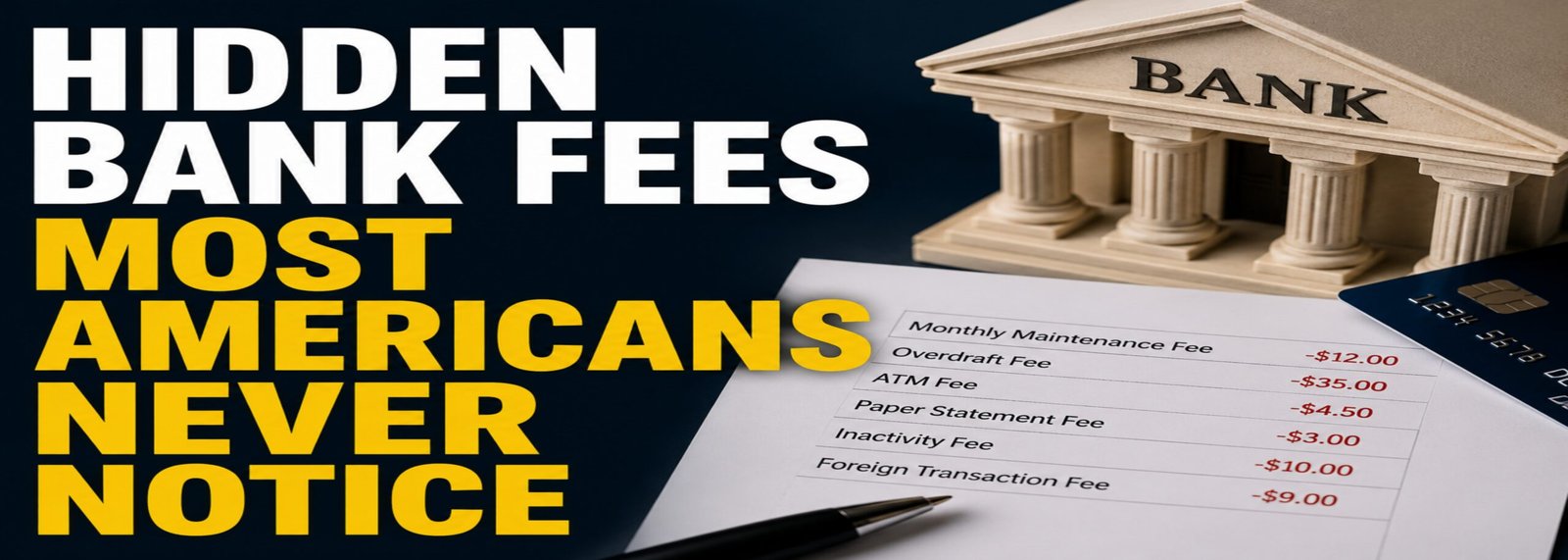
Most Americans check their bank balance often. However, many people never look closely at the small fees listed on their monthly statements. These hidden bank fees may seem tiny at first. Yet over time, they can cost hundreds of dollars every year.
Banks earn billions from service charges. While many fees are disclosed in the account agreement, they are often buried in long documents that few people read. As a result, customers pay charges without realizing they could have avoided them.
The good news is that most hidden bank fees are preventable. Once you know what to watch for, you can keep more of your hard-earned money.
In this guide, you’ll learn about the hidden bank fees most Americans never notice and the practical steps you can take to avoid them.
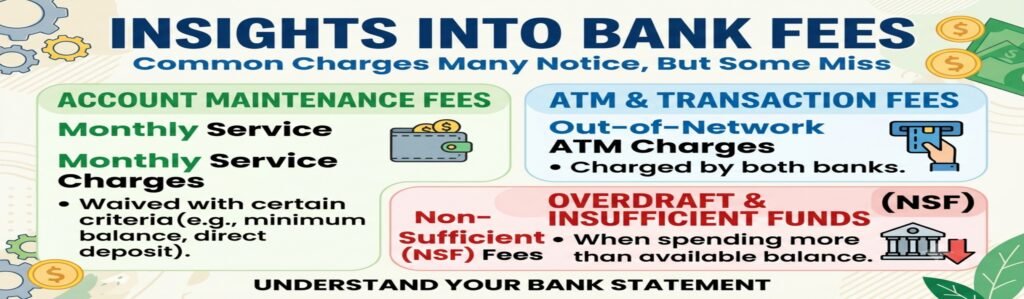
A single fee may not seem like a big deal. However, several small charges throughout the year can quickly add up.
For example, paying a $10 monthly maintenance fee costs $120 each year. Add overdraft charges, ATM fees, and paper statement fees, and you could lose several hundred dollars without noticing.
Therefore, understanding your bank’s fee structure is an important part of managing your personal finances.
1. Monthly Maintenance Fees
Many checking accounts charge a monthly maintenance fee.
This fee usually ranges from $5 to $20 per month.
Some banks waive the fee if you:
- Maintain a minimum balance.
- Receive direct deposits.
- Meet monthly transaction requirements.
Unfortunately, many customers forget these conditions. As a result, they continue paying unnecessary monthly charges.
How to Avoid It
- Choose a no-fee checking account.
- Set up direct deposit.
- Maintain the required balance.
- Review your account every month.
2. Overdraft Fees
Overdraft fees remain one of the most expensive bank charges.
An overdraft happens when you spend more money than you have available.
Instead of declining the transaction, some banks approve it and charge a fee. That fee can be around $30 to $35 for a single purchase.
Even worse, multiple purchases can trigger multiple overdraft fees on the same day.
How to Avoid It
- Turn off overdraft coverage if possible.
- Enable low-balance alerts.
- Monitor your balance regularly.
- Keep a small emergency cushion in your account.
3. Out-of-Network ATM Fees
Using the wrong ATM can become surprisingly expensive.
First, your bank may charge an ATM fee.
Then, the ATM owner may charge another fee.
Together, these charges can exceed $5 per withdrawal.
Although this doesn’t seem like much, frequent ATM users may lose over $100 annually.
How to Avoid It
- Use your bank’s ATM network.
- Get cash back during purchases.
- Find fee-free ATM locations using your bank’s mobile app.
4. Excess Transaction Fees
Some savings accounts limit certain withdrawals each month.
Although federal rules have changed, many banks still enforce their own transaction limits.
If you exceed those limits, you could pay additional fees.
How to Avoid It
- Read your account rules.
- Use your checking account for frequent transactions.
- Track transfers during the month.
5. Foreign Transaction Fees
Planning an international vacation?
Your debit card may charge a foreign transaction fee every time you make a purchase overseas.
These fees are often around 3% of the purchase amount.
For frequent travelers, those charges add up quickly.
How to Avoid It
- Use travel-friendly debit or credit cards.
- Check your bank’s international fee policy before traveling.
6. Paper Statement Fees
Many banks now encourage digital banking.
As a result, customers who receive paper statements may pay a monthly fee.
Although it may only be a few dollars, it is an unnecessary expense for most people.
How to Avoid It
Switch to electronic statements.
You’ll save money and receive your statements faster.
7. Inactivity Fees
Some banks charge an inactivity fee if your account remains unused for an extended period.
This often happens with old checking or savings accounts that customers forget about.
How to Avoid It
- Close accounts you no longer use.
- Make occasional deposits or withdrawals.
- Keep track of all your financial accounts.
8. Returned Deposit Fees
Sometimes a deposited check bounces.
When that happens, your bank may charge a returned deposit fee.
Unfortunately, this fee applies even if the mistake wasn’t yours.
How to Avoid It
Accept checks only from trusted individuals whenever possible.
9. Account Closing Fees
Some banks charge customers for closing an account too soon after opening it.
This fee typically applies within the first 90 to 180 days.
How to Avoid It
Read the account agreement before opening a new account.
If you plan to switch banks soon, choose one without an early closure fee.
10. Wire Transfer Fees
Sending money through a bank wire transfer can be expensive.
Domestic wire transfers often cost between $20 and $35.
International transfers usually cost even more.
How to Avoid It
Compare other money transfer options before sending funds.
Many digital payment services charge lower fees.
How to Spot Hidden Bank Fees
Fortunately, spotting hidden fees is easier than most people think.
Follow these simple habits:
- Review your monthly statements.
- Read fee schedules before opening an account.
- Set account alerts.
- Ask questions before accepting new banking services.
- Compare banks every year.
- Watch for emails announcing fee changes.
Small steps today can prevent costly surprises later.
Should You Switch Banks?
If your bank charges several unnecessary fees, it may be time to consider switching.
Many online banks now offer:
- No monthly maintenance fees
- No minimum balance requirements
- Large fee-free ATM networks
- High-interest savings accounts
- Easy mobile banking
Because competition has increased, consumers have more choices than ever.
Comparing banks once a year can help you save hundreds of dollars.
Smart Banking Habits That Save Money
Building better banking habits can reduce fees and improve your financial healthThe Hidden Dangers of Buy Now, Pay Later
Try these simple tips:
- Keep a small emergency balance.
- Enable banking notifications.
- Use automatic bill payments carefully.
- Check your account weekly.
- Avoid unnecessary cash withdrawals.
- Read every bank email.
- Review annual fee changes.
Consistency makes a big difference over time.
Final Thoughts
Hidden bank fees often go unnoticed because they appear small. However, these charges slowly reduce your savings month after month.
Fortunately, most fees are avoidable. Consumer Financial Protection Bureau (CFPB). By understanding your account, reviewing statements, and choosing the right bank, you can keep more of your money.
Financial success isn’t only about earning more. It’s also about preventing unnecessary losses. Paying attention to hidden bank fees is one of the easiest ways to improve your finances without changing your income.
Start reviewing your bank account today. You may discover that eliminating just a few hidden fees could save you hundreds of dollars each year.
FAQ
What are hidden bank fees?
Hidden bank fees are charges that customers often overlook, such as maintenance fees, overdraft fees, ATM fees, and paper statement fees.
How can I avoid bank fees?
Choose a low-fee or no-fee bank account, monitor your balance, use in-network ATMs, enable account alerts, and review your monthly statements regularly.
Which bank fee costs Americans the most?
Overdraft fees are among the most expensive and can cost around $30 to $35 per transaction.
Are online banks cheaper?
Many online banks offer fewer fees, no monthly maintenance charges, and higher savings rates than traditional banks.