 MOHAMMAD ABUBAKR
Today, financial needs have changed. Bills are automatic. Online shopping is common. Emergency savings are more important than ever. As a result, relying on one account can make it difficult to track your money.
For example, if your paycheck, savings, bills, and entertainment expenses all come from the same account, it’s easy to lose control of your budget.
Therefore, separating your money into different accounts often makes financial management much easier.
The Ideal Number of Bank Accounts
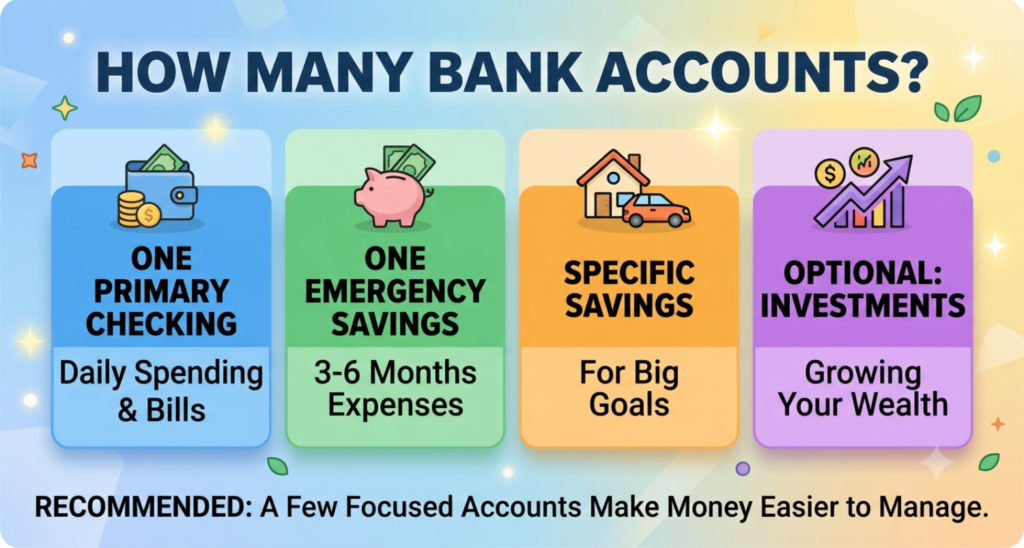
For most Americans, three to four bank accounts provide the best balance between simplicity and organization.
Here’s a smart setup:
- One checking account for daily spending
- One savings account for emergencies
- One savings account for future goals
- Optional joint or business account if needed
This structure keeps your finances organized while reducing the risk of overspending.
1. Everyday Checking Account
Your checking account is the center of your financial life.
Use it for:
- Paychecks
- Debit card purchases
- Utility bills
- Rent or mortgage
- Groceries
- Gas
Keeping only spending money here prevents accidental overspending.
Hidden Bank Fees Most Americans Never Notice
Why It Helps
Because this account handles daily expenses, you’ll always know how much you can safely spend.
2. Emergency Savings Account
Every household needs an emergency fund.
Unexpected expenses happen when you least expect them.
For example:
- Medical bills
- Car repairs
- Home repairs
- Job loss
Instead of using credit cards, your emergency savings protect your finances.
Experts often recommend saving three to six months of living expenses.
Why Keep It Separate?
If emergency savings stay in your checking account, you may spend them by mistake.
A separate account adds protection.
3. Savings Account for Goals
Saving becomes easier when each goal has its own purpose.
You may save for:
- Vacation
- New car
- Holiday shopping
- Wedding
- Home down payment
Many online banks let customers create multiple savings accounts without monthly fees.
Consequently, you can watch each goal grow separately.
4. Joint Account (Optional)
Couples often benefit from a shared checking account.
This account can cover:
- Mortgage
- Rent
- Utilities
- Insurance
- Household expenses
Meanwhile, each partner can still maintain personal accounts.
This approach creates both transparency and financial independence.
Should You Have Multiple Savings Accounts?
Yes, in many situations.
Multiple savings accounts create mental separation between financial goals.
For example:
Emergency Fund
$8,000
Vacation
$2,500
Christmas Gifts
$1,200
Home Repairs
$3,000
Because every dollar has a purpose, you’re less likely to spend it unnecessarily.
Is It Bad to Have Too Many Bank Accounts?
Not necessarily.
However, too many accounts create new problems.
You may forget:
- Minimum balance requirements
- Monthly maintenance fees
- Automatic transfers
- Dormant account rules
Additionally, managing many accounts takes more time.
Therefore, open only the accounts you actually need.
Can Multiple Bank Accounts Improve Your Credit Score?
This surprises many people.
Bank accounts themselves do not affect your credit score.
However, they can improve your financial habits.
For example:
- Bills get paid on time.
- Emergency savings reduce debt.
- You avoid overdraft fees.
- You rely less on credit cards.
Better money management often leads to healthier credit over time.
Benefits of Having Multiple Bank Accounts
There are several advantages.
Easier Budgeting
Separate accounts organize your spending.
You instantly know what money is available.
Better Savings Habits
Money that’s out of sight is harder to spend.
Automatic transfers help your savings grow every month.
Less Financial Stress
Unexpected expenses become easier to handle.
Instead of worrying about emergencies, you’ll already have money set aside.
Better Financial Goals
Whether you’re buying a house or planning a vacation, separate savings accounts help you stay motivated.
Watching your balance grow encourages consistent saving.
When One Bank Account May Be Enough
Some people genuinely need only one account.
For example:
- College students
- Teenagers
- People with very simple finances
However, once income and expenses increase, additional accounts usually become helpful.
How to Choose the Right Bank
Not every bank offers the same features.
Before opening an account, compare:
- Monthly fees
- ATM network
- Mobile banking app
- Interest rates
- Customer support
- Minimum balance requirements
- FDIC insurance
Many online banks now offer no-fee checking and high-yield savings accounts.
Therefore, shopping around can save money.
Tips for Managing Multiple Bank Accounts
Keeping several accounts organized doesn’t have to be difficult.
Follow these simple habits:
- Label each account by purpose.
- Set automatic transfers.
- Review balances weekly.
- Enable banking alerts.
- Avoid unnecessary accounts.
- Close inactive accounts.
- Monitor fees every month.
These habits make money management much easier.
Common Mistakes to Avoid
Many Americans accidentally make these banking mistakes:
- Keeping emergency savings in checking
- Paying monthly maintenance fees
- Forgetting old accounts
- Missing minimum balance requirements
- Using savings for everyday spending
Fortunately, all of these mistakes are easy to avoid with a simple system.
Final Thoughts
So, how many bank accounts should you really have?
For most Americans, the answer is three to four accounts.
One checking account covers everyday expenses.
One emergency savings account protects you from unexpected costs.
One savings account helps you reach future goals.
If needed, a joint account can simplify shared expenses.
The right number isn’t about having more accounts. It’s about giving every dollar a purpose.
Consumer Financial Protection Bureau – Bank Accounts
When your money is organized, budgeting becomes easier. Saving becomes automatic. Financial stress becomes smaller.
Choose accounts that match your goals, review them regularly, and avoid unnecessary fees. Small changes today can lead to stronger financial health tomorrow.
Frequently Asked Questions
Is it good to have multiple bank accounts?
Yes. Multiple bank accounts help organize spending, improve budgeting, and separate savings goals.
How many checking accounts should I have?
Most people only need one primary checking account. Some may benefit from a second account for bills.
How many savings accounts should I have?
Many financial experts recommend at least two—one for emergencies and one for personal goals.
Can I have accounts at different banks?
Yes. Many Americans use different banks to access better interest rates, lower fees, or specialized services.