
 MOHAMMAD ABUBAKR
Many small business owners believe branding is only important for large corporations. However, branding plays a critical role in the success of businesses of every size. Whether you own a local coffee shop, an online store, or a service-based company, a strong brand helps customers recognize, trust, and remember your business.
In today’s competitive marketplace, customers have more choices than ever. As a result, they often choose businesses they know and trust instead of simply selecting the lowest price. A memorable brand creates that trust and encourages long-term customer loyalty.
If you want to grow your business in the United States, understanding how branding helps small businesses grow is essential. This guide explains the benefits of branding and shares practical strategies for building a strong brand that attracts and retains customers.
What Is Branding?
Branding is more than a logo or a business name.
It is the complete experience customers have with your business.
Your brand includes:
- Business name.
- Logo.
- Colors.
- Fonts.
- Website.
- Customer service.
- Messaging.
- Company values.
- Reputation.
- Overall customer experience.
Every interaction shapes how customers perceive your business.
The Power of Word-of-Mouth Marketing
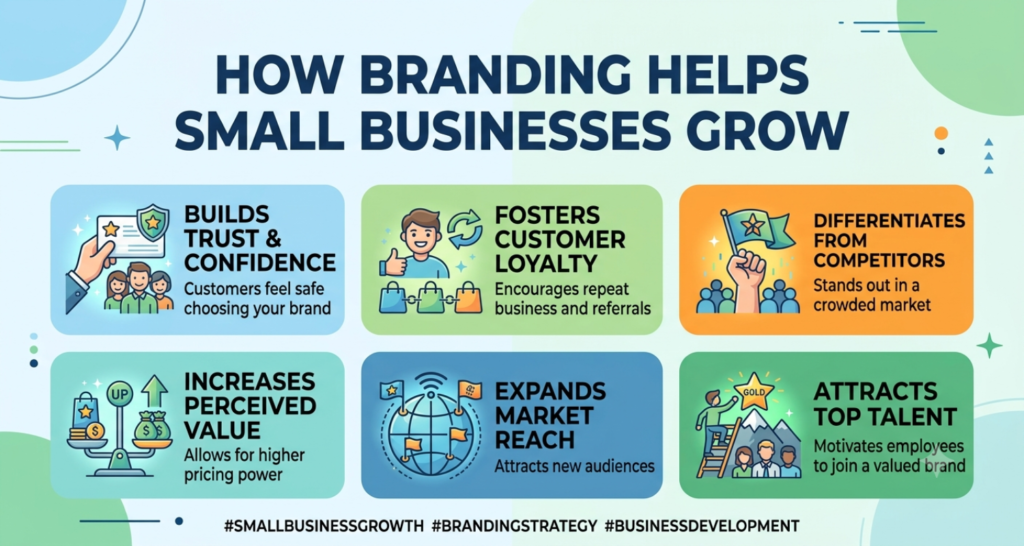
Why Branding Matters
A strong brand helps businesses:
- Build customer trust.
- Increase brand recognition.
- Stand out from competitors.
- Attract loyal customers.
- Support premium pricing.
- Encourage referrals.
- Improve long-term growth.
Branding creates emotional connections that advertising alone cannot achieve.
1. Branding Builds Trust
Customers are more likely to buy from businesses that appear professional and reliable.
Consistent branding creates confidence by showing that your business is organized and dependable.
Build trust by maintaining:
- Consistent messaging.
- Professional design.
- Honest communication.
- High-quality customer service.
- Reliable products.
Trust is often the first step toward earning a sale.
2. It Makes Your Business Memorable
People remember businesses with strong, consistent branding.
A memorable brand helps customers recognize your company across different channels, including:
- Your website.
- Social media.
- Email newsletters.
- Business cards.
- Product packaging.
The easier customers remember your business, the more likely they are to return.
3. Branding Helps You Stand Out
Nearly every industry is competitive.
Strong branding highlights what makes your business different.
Ask yourself:
- What problem do I solve?
- Why should customers choose me?
- What values does my business represent?
A unique brand identity helps customers understand your value.
4. Strong Branding Supports Customer Loyalty
Loyal customers are one of the greatest assets a business can have.
They often:
- Buy repeatedly.
- Spend more.
- Recommend your business.
- Leave positive reviews.
Brand consistency encourages customers to return because they know what to expect.
5. Branding Improves Marketing Results
Marketing becomes more effective when people recognize your brand.
Whether customers see your:
- Website.
- Social media posts.
- Online ads.
- Emails.
- Videos.
they should immediately recognize your business.
Consistent branding improves the effectiveness of every marketing campaign.
6. Branding Allows Premium Pricing
Many customers are willing to pay more for brands they trust.
A strong reputation often reduces price sensitivity.
Rather than competing only on cost, branding allows businesses to compete on value, quality, and customer experience.
7. Branding Creates Emotional Connections
Customers often make buying decisions based on emotions before justifying them with logic.
Brands that communicate clear values and solve meaningful problems create stronger emotional connections.
Share stories about:
- Your mission.
- Your customers.
- Your team.
- Your business journey.
Authentic storytelling makes your brand more relatable.
8. Online Branding Builds Credibility
Today’s customers research businesses online before making purchases.
Maintain a professional online presence through:
- A modern website.
- Active social media profiles.
- Positive customer reviews.
- Helpful blog content.
- Consistent visuals.
Your online reputation is a key part of your brand.
9. Excellent Customer Service Strengthens Your Brand
Branding extends beyond visual design.
Every customer interaction shapes your reputation.
Provide:
- Fast responses.
- Friendly communication.
- Honest advice.
- Reliable support.
- Efficient problem resolution.
Positive experiences encourage repeat business and referrals.
10. Consistency Is the Key to Successful Branding
Consistency builds recognition.
Use the same:
- Logo.
- Colors.
- Fonts.
- Tone of voice.
- Messaging.
- Customer experience.
across all marketing channels.
Customers should receive the same experience whether they visit your website, social media pages, or physical location.
Common Branding Mistakes Small Businesses Make
Avoid these common errors:
- Frequently changing your logo.
- Using inconsistent messaging.
- Ignoring customer feedback.
- Having a poor website.
- Delivering inconsistent customer service.
- Copying competitors instead of creating a unique identity.
- Neglecting online reviews.
Strong branding requires consistency and authenticity.
Practical Tips to Build a Strong Brand
Develop these habits:
- Define your mission and values.
- Understand your target audience.
- Create a memorable visual identity.
- Publish valuable content regularly.
- Encourage customer reviews.
- Stay active on social media.
- Deliver excellent customer service.
- Keep your messaging consistent.
- Build relationships with customers.
- Monitor your online reputation.
These strategies strengthen your brand over time.
Why Branding Is a Long-Term Investment
Branding is not a one-time project.
It develops with every customer interaction.
Businesses that invest in branding often experience:
- Higher customer loyalty.
- Better marketing performance.
- Stronger reputations.
- Increased referrals.
- Sustainable growth.
Although results may not appear overnight, consistent branding creates lasting business value.
Final Thoughts
Branding is one of the most valuable investments a small business can make. It helps customers recognize your business, trust your products or services, and remember your company when they are ready to buy. A strong brand also supports better marketing, customer loyalty, and long-term profitability.
Instead of viewing branding as just a logo or slogan, think of it as the complete experience your business provides. Every interaction—from your website and social media to customer service and product quality—contributes to your brand. By staying consistent and customer-focused, you can build a brand that helps your small business grow for years to come.
SCORE – Branding and Marketing Resources:
Frequently Asked Questions
Why is branding important for small businesses?
Branding helps small businesses build trust, attract customers, stand out from competitors, and encourage long-term customer loyalty.
Is a logo the same as branding?
No. A logo is one part of your brand. Branding also includes your messaging, customer service, values, reputation, and overall customer experience.
Can strong branding increase sales?
Yes. A trusted brand can improve customer confidence, encourage repeat purchases, and support premium pricing.
How long does it take to build a strong brand?
Branding is an ongoing process. Consistency over months and years helps create recognition, trust, and lasting customer relationships.