
 MOHAMMAD ABUBAKR
A bad credit score can make everyday financial decisions more expensive. You may face higher interest rates, loan denials, expensive insurance premiums, or difficulty renting an apartment. While rebuilding your credit takes time, it is absolutely possible.
The good news is that your credit score is not permanent. Every positive financial decision you make today can improve your credit over time. Therefore, whether your score dropped because of missed payments, high debt, or financial hardship, you can recover with a smart plan.
This guide explains how to recover from a bad credit score, the mistakes to avoid, and the best habits for long-term financial success.
What Is Considered a Bad Credit Score?
Most lenders use credit scores to evaluate your financial reliability.
Although scoring models vary slightly, credit scores generally fall into these ranges:
Credit Card Fees You Should Never Ignore
| Credit Score | Rating |
|---|---|
| 300–579 | Poor |
| 580–669 | Fair |
| 670–739 | Good |
| 740–799 | Very Good |
| 800–850 | Excellent |
If your score is below 670, improving it should become a financial priority.
Why Your Credit Score Matters
Your credit score affects much more than borrowing money.
A better score can help you:
- Qualify for lower interest rates.
- Get approved for credit cards.
- Secure auto and home loans.
- Rent apartments more easily.
- Reduce borrowing costs.
- Improve financial flexibility.
Even a small increase in your score can save thousands of dollars over time.
Common Reasons Credit Scores Drop
Understanding the cause helps you choose the right recovery strategy.
Common reasons include:
- Late or missed payments
- High credit card balances
- Collections accounts
- Loan defaults
- Bankruptcy
- Too many credit applications
- Errors on your credit report
Fortunately, many of these problems can be corrected.
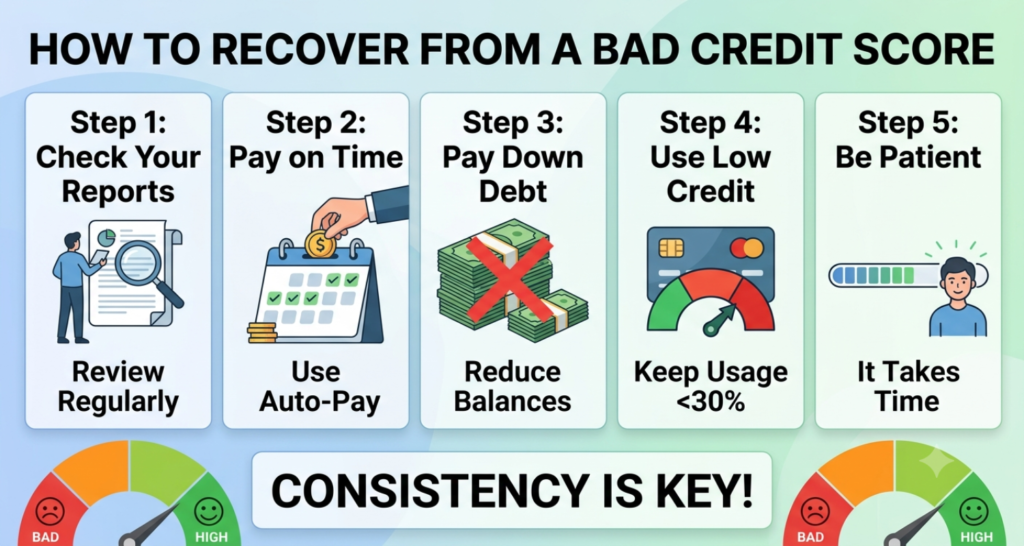
1. Check Your Credit Reports First
Before making changes, review your credit reports carefully.
Look for:
- Incorrect personal information
- Accounts you do not recognize
- Duplicate debts
- Incorrect payment history
- Accounts that should be closed
- Fraudulent activity
Mistakes happen more often than people realize.
If you find errors, dispute them immediately with the credit bureau reporting the information.
2. Always Pay Bills on Time
Payment history is one of the most important factors in your credit score.
Even one late payment can hurt your score.
To avoid future problems:
- Set automatic payments.
- Use calendar reminders.
- Pay at least the minimum amount due.
- Schedule payments several days before the due date.
Consistent on-time payments gradually rebuild your credit.
3. Reduce Credit Card Balances
High credit utilization signals financial risk.
Experts generally recommend keeping your utilization below 30%.
For even better results, many aim for 10% or less.
Example:
If your total credit limit is $10,000, try to keep balances below $3,000.
Lower balances often lead to noticeable score improvements.
4. Avoid Applying for Too Many Credit Cards
Every credit application may result in a hard inquiry.
Several inquiries within a short period can temporarily lower your score.
Instead of opening multiple accounts, focus on improving the accounts you already have.
Only apply for new credit when necessary.
5. Keep Older Credit Accounts Open
The length of your credit history also matters.
Older accounts demonstrate long-term credit management.
Unless an account has expensive fees, consider keeping it open.
Closing old accounts may reduce your available credit and shorten your average account age.
6. Catch Up on Past-Due Accounts
If you’ve fallen behind, bring delinquent accounts current as quickly as possible.
Contact your lenders if needed.
Many creditors offer:
- Payment plans
- Hardship programs
- Temporary payment reductions
- Settlement options
Taking action is better than ignoring overdue accounts.
7. Consider a Secured Credit Card
If traditional credit cards are unavailable, a secured credit card can help rebuild credit.
With a secured card:
- You provide a refundable security deposit.
- The issuer reports payments to credit bureaus.
- Responsible use builds positive payment history.
Use the card for small purchases and pay the balance in full each month.
8. Become an Authorized User
A trusted family member with excellent credit may add you as an authorized user.
If the card issuer reports authorized users to credit bureaus, you may benefit from:
- Positive payment history
- Longer account age
- Lower utilization
However, this strategy only works if the primary cardholder manages the account responsibly.
9. Avoid Closing Paid-Off Accounts
Paying off a credit card is excellent.
However, immediately closing the account isn’t always the best move.
Keeping the account open can:
- Increase available credit
- Lower utilization
- Maintain credit history
Use the account occasionally to keep it active.
10. Build Good Financial Habits
Improving your credit is not about one quick fix.
Instead, it requires consistent habits.
Focus on:
- Paying every bill on time
- Staying within your budget
- Building an emergency fund
- Avoiding unnecessary debt
- Reviewing credit reports regularly
These habits improve both your credit score and your overall financial health.
Mistakes to Avoid While Rebuilding Credit
Many people unintentionally slow their progress.
Avoid these common mistakes:
- Missing payment due dates
- Maxing out credit cards
- Applying for multiple loans at once
- Ignoring collection notices
- Closing old credit accounts without reason
- Co-signing loans you cannot afford
Patience often produces better results than trying quick fixes.
How Long Does Credit Recovery Take?
Recovery depends on your financial situation.
General timelines include:
- Late payments: Several months to over a year
- High balances: A few months after paying down debt
- Collections: May affect your score for several years, although their impact decreases over time
- Bankruptcy: Can remain on your credit report for years
The sooner you begin making positive changes, the sooner your score can improve.
Can Credit Repair Companies Help?
Some companies advertise fast credit repair.
Be cautious.
No legitimate company can legally remove accurate negative information from your credit report.
You can often dispute errors and rebuild your credit yourself for little or no cost.
If you hire a company, research it carefully and avoid businesses that promise guaranteed results.
Signs Your Credit Is Improving
As your financial habits improve, you may notice:
- Higher credit scores
- Better loan offers
- Lower interest rates
- Higher credit limits
- Easier credit approvals
These improvements usually happen gradually, making consistency the key to success.
Final Thoughts
Recovering from a bad credit score is a journey, not an overnight process. Although rebuilding takes patience, every on-time payment and every dollar of debt you reduce moves you closer to better financial health.
Focus on paying bills on time, lowering credit card balances, checking your credit reports for errors, and avoiding unnecessary debt.
Most importantly, stay committed to good financial habits.
Over time, your credit score can recover, opening the door to lower borrowing costs, better financial opportunities, and greater peace of mind.
Consumer Financial Protection Bureau (CFPB) – Credit Reports and Scores:
Frequently Asked Questions
How fast can I recover from a bad credit score?
It depends on the cause. Paying down balances and making on-time payments can improve your score within a few months, while more serious issues take longer.
Should I pay off collections?
Yes. Paying collections may improve your financial standing and can help with some lending decisions, although the impact on your score varies.
Can checking my own credit score hurt it?
No. Checking your own credit report or score is considered a soft inquiry and does not affect your credit score.
Is a secured credit card good for rebuilding credit?
Yes. Responsible use of a secured credit card is one of the most effective ways to rebuild a damaged credit history.
What is the biggest factor affecting my credit score?
Payment history is typically the most important factor, making on-time payments essential for long-term credit improvement.