 MOHAMMAD ABUBAKR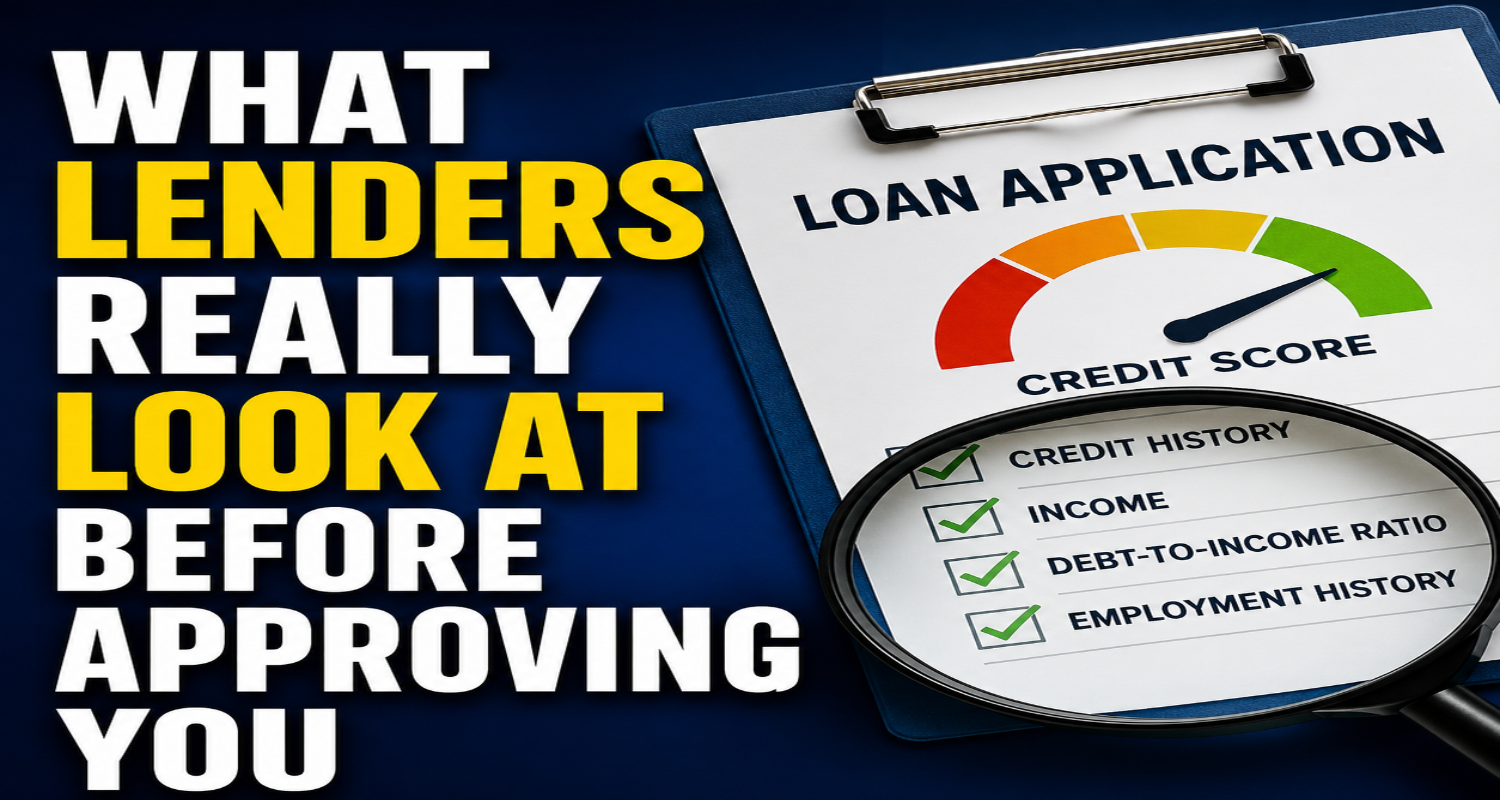
Applying for a loan or credit card can feel stressful. Many people believe approval depends only on their credit score. While your credit score is important, it is only one part of the decision.
In 2026, lenders use a more complete picture of your financial health. They want to know whether you can repay the money on time and manage debt responsibly. Therefore, they review several factors before approving your application.
Understanding what lenders really look at can improve your chances of getting approved. It can also help you qualify for lower interest rates and better loan terms.
This guide explains the key factors lenders evaluate and how you can strengthen your financial profile before applying.
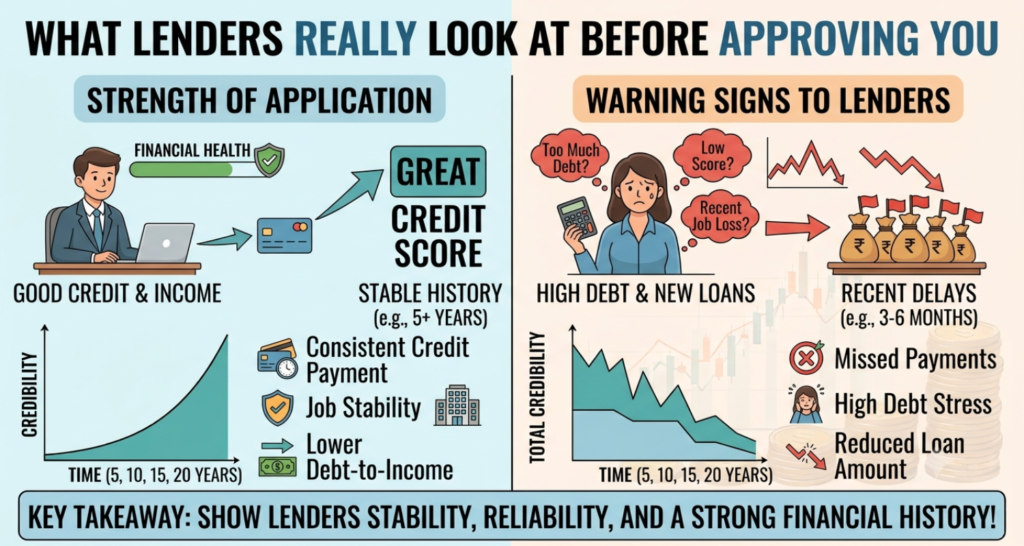
Why Lenders Review Your Financial Profile
Lenders take a risk every time they lend money.
Their goal is to determine whether you are likely to repay the loan according to the agreement.
To make that decision, they evaluate your:
Financial Warning Signs You Should Never Ignore
- Credit history
- Income
- Existing debt
- Employment
- Savings
- Overall financial stability
Instead of relying on one number, lenders examine how these factors work together.
1. Your Credit Score
Your credit score is one of the first things lenders review.
It summarizes your credit behavior using information from your credit report.
Generally, higher scores indicate lower lending risk.
Although every lender has different standards, many use these general ranges:
| Credit Score | Rating |
|---|---|
| 300–579 | Poor |
| 580–669 | Fair |
| 670–739 | Good |
| 740–799 | Very Good |
| 800–850 | Excellent |
A higher credit score often leads to:
- Better approval chances
- Lower interest rates
- Higher credit limits
- Better loan terms
However, a good score alone does not guarantee approval.
2. Payment History
Lenders want proof that you pay your bills on time.
Payment history is one of the most influential parts of your credit profile.
Late payments, collections, defaults, and bankruptcies can raise concerns.
On the other hand, a long history of on-time payments shows financial responsibility.
Before applying for a loan, make every payment by its due date.
3. Debt-to-Income (DTI) Ratio
Your debt-to-income ratio compares your monthly debt payments to your gross monthly income.
Lenders use this ratio to determine whether you can comfortably afford another loan.
For example:
- Monthly income: $6,000
- Monthly debt payments: $1,800
Your DTI is 30%.
In general, lower DTI ratios improve your approval chances.
Reducing debt before applying can make a meaningful difference.
4. Income Stability
Lenders also evaluate your ability to earn consistent income.
Stable income gives them confidence that you can make future payments.
Income may come from:
- Full-time employment
- Self-employment
- Retirement benefits
- Rental properties
- Investment income
Higher income alone does not guarantee approval.
Consistency is often just as important.
5. Employment History
Frequent job changes are not always a problem.
However, lenders often prefer borrowers with stable employment.
Long-term employment demonstrates income reliability.
If you recently changed jobs for a better opportunity, be prepared to provide documentation showing continued earnings.
6. Credit Utilization
Credit utilization measures how much of your available credit you are currently using.
Example:
- Credit limit: $10,000
- Balance: $2,500
Utilization = 25%
Many financial experts recommend keeping utilization below 30%.
Lower utilization generally signals responsible credit management.
Paying down balances before applying may improve your chances.
7. Length of Credit History
Older credit accounts help establish a reliable financial record.
Lenders appreciate applicants with a longer history of responsible borrowing.
For this reason, avoid closing older accounts unless necessary.
Keeping them open can strengthen your overall credit profile.
8. Recent Credit Applications
Each time you apply for new credit, a lender may perform a hard inquiry.
Several hard inquiries within a short period may suggest financial stress.
Therefore, avoid applying for multiple loans or credit cards at the same time.
Only apply when you truly need credit.
9. Savings and Financial Reserves
Some lenders review your savings and available assets.
Emergency savings demonstrate financial stability.
They also reassure lenders that you can continue making payments if unexpected expenses arise.
Building an emergency fund improves both your finances and your loan application.
10. Type of Loan You’re Applying For
Approval requirements vary depending on the loan.
For example:
Mortgage Loans
Lenders carefully review:
- Credit score
- Down payment
- Income
- DTI ratio
- Employment history
Auto Loans
Vehicle lenders often focus on:
- Credit score
- Income
- Existing debt
- Vehicle value
Personal Loans
Personal loan approvals usually depend on:
- Credit history
- Income
- Debt obligations
- Payment history
Each loan has different risk levels.
Therefore, approval standards also differ.
What Can Hurt Your Loan Approval?
Several issues may reduce your chances of approval.
These include:
- Missed payments
- High credit card balances
- Collections accounts
- Loan defaults
- Bankruptcy
- Low income
- High debt
- Multiple recent credit applications
- Limited credit history
Addressing these issues before applying can improve your results.
How to Improve Your Chances of Approval
Preparation makes a significant difference.
Here are practical steps you can take:
Pay Bills on Time
Consistent payments strengthen your credit profile.
Lower Credit Card Balances
Reducing utilization may increase your credit score.
Avoid New Debt
Do not finance large purchases shortly before applying.
Review Your Credit Report
Check for errors and dispute any inaccurate information.
Increase Your Savings
A healthy emergency fund demonstrates financial responsibility.
Reduce Existing Debt
Paying down loans improves your debt-to-income ratio.
Maintain Stable Employment
Consistent income gives lenders greater confidence.
Does a Higher Income Guarantee Approval?
No.
Income is important, but lenders also consider your expenses and debt.
Someone earning $150,000 with significant debt may present more risk than someone earning $75,000 with very little debt.
Financial balance matters more than income alone.
Why Prequalification Can Help
Many lenders offer prequalification.
This process provides an estimate of your eligibility without significantly affecting your credit score.
Prequalification allows you to:
- Compare offers
- Estimate interest rates
- Understand borrowing limits
- Shop confidently
Although prequalification does not guarantee approval, it helps you prepare.
Final Thoughts
Lenders look at much more than your credit score before approving a loan.
They evaluate your payment history, income, debt-to-income ratio, employment, savings, credit utilization, and overall financial stability.
The stronger your financial profile, the better your chances of approval and favorable loan terms.
Before applying, spend time improving the factors you can control. Pay your bills on time, reduce debt, review your credit report, and build your savings.
These simple habits can help you secure better financing while strengthening your long-term financial health.
Consumer Financial Protection Bureau (CFPB) – Loans and Credit
Frequently Asked Questions
What is the first thing lenders check?
Most lenders begin by reviewing your credit report and credit score before evaluating your income, debt, and financial history.
Does income matter more than a credit score?
Both are important. A strong income helps, but lenders also consider your credit history, debt, and payment behavior.
What is a good debt-to-income ratio?
Many lenders prefer a debt-to-income ratio below 36%, although requirements vary by loan type.
Can I get approved with a fair credit score?
Yes. Many lenders approve borrowers with fair credit, although interest rates may be higher.
How can I improve my chances before applying?
Pay bills on time, lower your credit card balances, reduce debt, check your credit report for errors, and avoid applying for multiple credit accounts.