
 MOHAMMAD ABUBAKR
Digital businesses have transformed the way people shop, learn, communicate, and work. From e-commerce stores and software companies to online consulting and digital content creators, internet-based businesses continue to expand at a remarkable pace. As technology evolves and consumer habits shift, more entrepreneurs are choosing digital business models because they offer flexibility, scalability, and access to customers around the world.
In the United States, consumers are spending more time online than ever before. They research products, compare prices, read reviews, and make purchases using smartphones, tablets, and computers. As a result, businesses with a strong digital presence have more opportunities to reach customers and increase revenue.
This guide explains why digital businesses continue to grow, the trends fueling their success, and how entrepreneurs can take advantage of the digital economy.
What Is a Digital Business?
A digital business uses technology and the internet to deliver products, services, or experiences.
Examples include:
- E-commerce stores.
- Software as a Service (SaaS) companies.
- Online education platforms.
- Digital marketing agencies.
- Freelance businesses.
- Mobile app developers.
- Subscription-based services.
- Content creators and influencers.
Some businesses operate entirely online, while others combine digital services with physical locations.
Business Trends That Could Shape the Next Decade
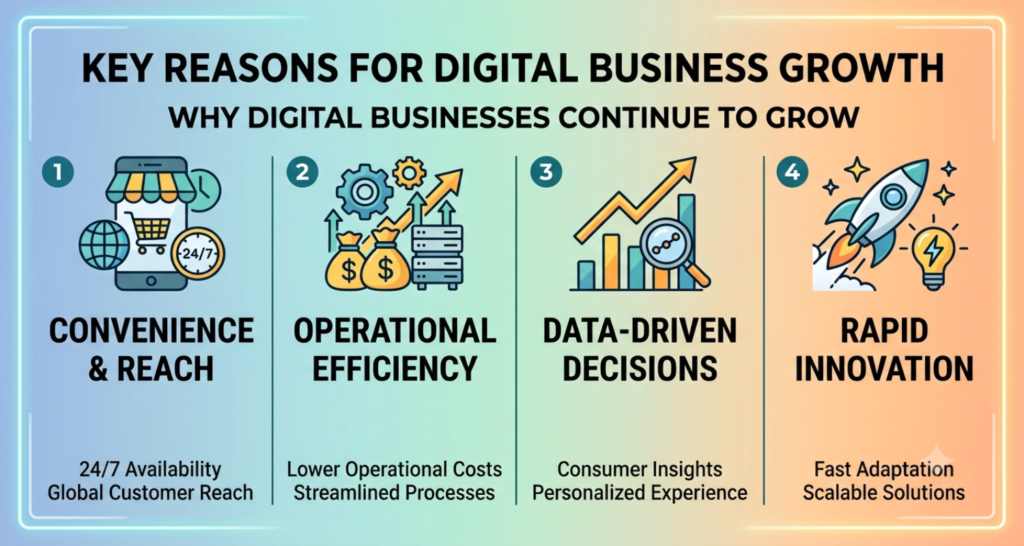
Why Digital Businesses Are Growing
Several factors have contributed to the rapid growth of digital businesses.
These include:
- Increased internet access.
- Higher smartphone usage.
- Growing online shopping.
- Faster payment systems.
- Cloud technology.
- Artificial intelligence.
- Remote work opportunities.
Together, these changes have created new opportunities for entrepreneurs.
1. Consumers Prefer Online Convenience
Today’s customers value convenience.
Many people prefer to:
- Shop online.
- Schedule appointments digitally.
- Attend virtual meetings.
- Stream educational content.
- Access customer support through chat.
Businesses that offer simple online experiences often attract more customers.
2. Lower Startup Costs
Many digital businesses require less upfront investment than traditional businesses.
Entrepreneurs can often start with:
- A website.
- A laptop.
- Internet access.
- Digital marketing tools.
Without the expense of physical storefronts, digital businesses may have lower operating costs.
3. Global Customer Reach
Traditional businesses are often limited by geography.
Digital businesses can reach customers across the country and, in many cases, around the world.
This larger audience creates more opportunities for growth.
4. E-Commerce Continues to Expand
Online shopping has become a normal part of everyday life.
Consumers purchase:
- Clothing.
- Electronics.
- Groceries.
- Home goods.
- Digital products.
- Subscription services.
Businesses that offer secure and user-friendly online shopping experiences can benefit from this growing demand.
5. Digital Marketing Is Cost-Effective
Online marketing allows businesses to reach targeted audiences more efficiently.
Popular digital marketing strategies include:
- Search engine optimization (SEO).
- Content marketing.
- Email marketing.
- Social media marketing.
- Video marketing.
- Pay-per-click advertising.
Unlike traditional advertising, digital campaigns can be measured and adjusted based on performance.
6. Remote Work Supports Business Growth
Many digital businesses operate with remote or hybrid teams.
Benefits include:
- Lower office expenses.
- Access to global talent.
- Flexible work schedules.
- Improved business continuity.
Remote collaboration tools have made managing distributed teams easier than ever.
7. Cloud Technology Improves Efficiency
Cloud-based software allows businesses to:
- Store files securely.
- Collaborate in real time.
- Manage customer relationships.
- Process payments.
- Track inventory.
Cloud solutions reduce the need for expensive hardware while improving productivity.
8. Subscription-Based Revenue Creates Stability
Many digital businesses use recurring subscription models.
Examples include:
- Streaming services.
- Software subscriptions.
- Membership websites.
- Online learning platforms.
Recurring revenue provides more predictable cash flow and supports long-term planning.
9. Artificial Intelligence Enhances Productivity
Artificial intelligence is helping businesses automate repetitive tasks.
Common AI applications include:
- Customer support chatbots.
- Content creation assistance.
- Marketing automation.
- Data analysis.
- Sales forecasting.
When used responsibly, AI can improve efficiency while allowing employees to focus on higher-value work.
10. Customer Data Improves Decision-Making
Digital businesses can measure customer behavior more accurately than many traditional businesses.
Businesses can analyze:
- Website traffic.
- Sales performance.
- Customer preferences.
- Marketing results.
- Purchase history.
These insights help improve products, services, and customer experiences.
Challenges Digital Businesses Should Prepare For
Although digital businesses offer many advantages, they also face challenges.
Common challenges include:
- Strong online competition.
- Cybersecurity threats.
- Changing search engine algorithms.
- Customer privacy regulations.
- Rising digital advertising costs.
Planning ahead helps businesses remain competitive.
How to Build a Successful Digital Business
Focus on these best practices:
- Create a professional website.
- Publish valuable content regularly.
- Invest in SEO.
- Build an email list.
- Protect customer data.
- Provide excellent customer service.
- Monitor analytics.
- Stay updated with technology trends.
- Diversify revenue streams.
- Continuously improve the customer experience.
Consistency is essential for long-term success.
Common Mistakes to Avoid
Many entrepreneurs slow their growth by making avoidable mistakes.
Avoid:
- Ignoring mobile users.
- Neglecting website security.
- Relying on one marketing channel.
- Overlooking customer feedback.
- Failing to measure performance.
- Posting inconsistent content.
- Ignoring SEO best practices.
Correcting these issues can strengthen your business over time.
Why the Future Looks Bright for Digital Businesses
As technology continues to evolve, digital businesses are likely to play an even larger role in the global economy.
Emerging technologies such as AI, automation, cloud computing, and advanced analytics will continue to create new opportunities for innovation and growth.
Businesses that remain adaptable and customer-focused will be better positioned to succeed.
Final Thoughts
Digital businesses continue to grow because they offer convenience, flexibility, scalability, and access to a broader customer base. Lower startup costs, expanding e-commerce, cloud technology, and digital marketing have made it easier than ever for entrepreneurs to launch and grow successful online businesses.
While challenges such as competition and cybersecurity remain, businesses that focus on customer needs, invest in technology, and build strong online brands can achieve lasting success. The digital economy is still evolving, and businesses that embrace innovation today will be better prepared for tomorrow.
U.S. Chamber of Commerce – Business Resources:
Frequently Asked Questions
Why are digital businesses growing so quickly?
Digital businesses benefit from lower startup costs, increasing online shopping, widespread internet access, and the ability to reach customers worldwide.
What are examples of digital businesses?
Examples include e-commerce stores, SaaS companies, digital marketing agencies, online education platforms, freelance services, and subscription-based businesses.
Is SEO important for digital businesses?
Yes. SEO helps businesses improve search engine rankings, attract organic traffic, and generate long-term leads without relying solely on paid advertising.
What is the biggest advantage of a digital business?
One of the biggest advantages is scalability. Digital businesses can often serve more customers without increasing operating costs at the same rate as traditional businesses.