
 MOHAMMAD ABUBAKR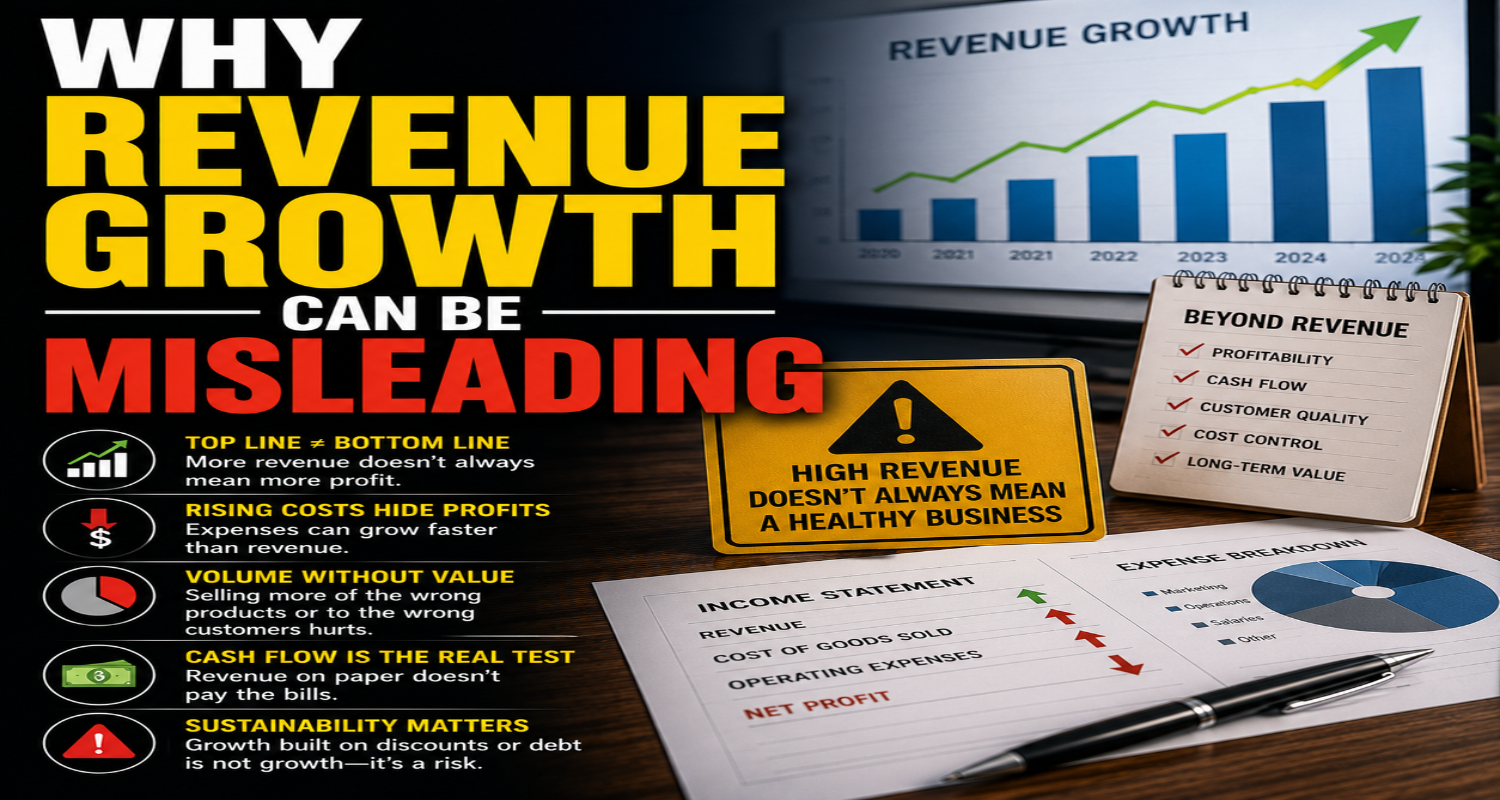
Growing revenue is exciting for every business owner. Higher sales often signal increased demand, stronger brand awareness, and business expansion. However, revenue alone does not tell the full story. Many companies celebrate record-breaking sales while quietly struggling with shrinking profits, poor cash flow, or rising debt.
This is why experienced entrepreneurs and financial experts look beyond revenue when evaluating business performance. A company can double its sales and still lose money if expenses grow faster than income. True business success comes from profitability, healthy cash flow, and sustainable growth—not just impressive revenue numbers.
In this guide, you’ll learn why revenue growth can be misleading, discover the financial metrics that matter most, and understand how to build a healthier business.
What Is Revenue?
Revenue is the total amount of money a business earns from selling products or services before deducting any expenses.
For example:
- A business sells products worth $500,000 in one year.
- Its annual revenue is $500,000.
However, revenue does not show how much money the business actually keeps.
The Financial Habits of Successful Companies
Revenue vs. Profit
Many new business owners confuse these terms.
Revenue
The total income generated from sales.
Profit
The amount left after paying all operating expenses, taxes, salaries, inventory costs, and other business expenses.
A company with high revenue but low profit may face serious financial challenges.
Why Revenue Growth Can Be Misleading
Revenue growth looks impressive, but it does not automatically mean a business is becoming stronger.
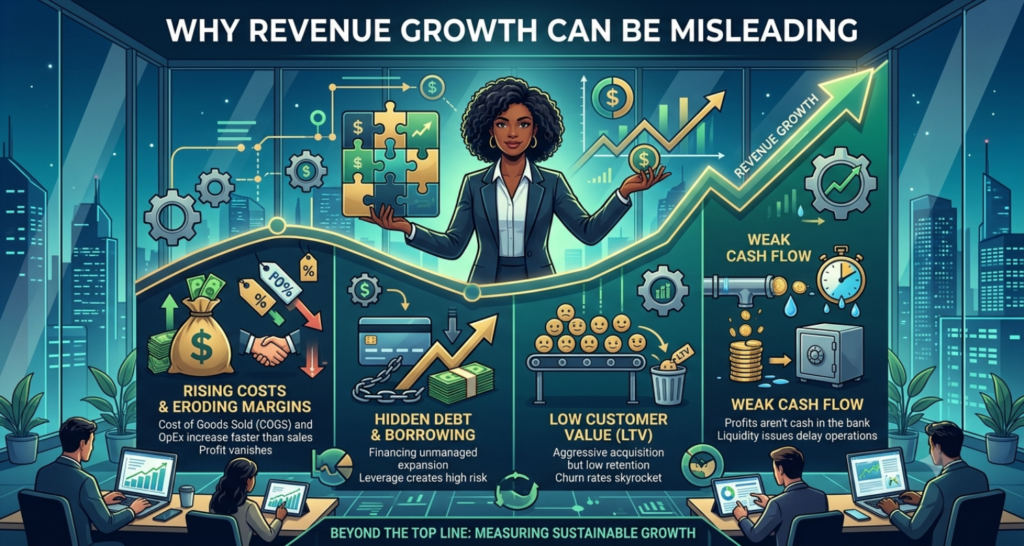
Several hidden issues can reduce financial health even when sales increase.
1. Rising Expenses Can Eliminate Profit
As revenue grows, business expenses often increase as well.
These may include:
- Employee salaries.
- Marketing costs.
- Inventory purchases.
- Shipping expenses.
- Software subscriptions.
- Office rent.
If expenses increase faster than revenue, profit margins decline.
Example
- Revenue grows by 20%.
- Expenses grow by 30%.
Although sales increased, overall profitability falls.
2. Cash Flow Problems Can Continue
Revenue does not equal cash.
Many businesses sell products today but receive payment weeks or months later.
Meanwhile, they still need to pay:
- Employees.
- Suppliers.
- Rent.
- Taxes.
- Utilities.
Strong revenue cannot solve poor cash flow.
3. Heavy Discounting Can Reduce Profit
Some businesses increase sales by offering large discounts.
Although revenue rises, lower pricing often reduces:
- Gross profit.
- Net profit.
- Cash reserves.
Growing sales through constant discounts may not be sustainable.
4. High Customer Acquisition Costs
Acquiring new customers requires investment.
Businesses often spend money on:
- Advertising.
- SEO.
- Social media marketing.
- Sales teams.
- Promotions.
If customer acquisition costs become too high, revenue growth may not improve profitability.
5. Low Profit Margins Limit Growth
Some industries naturally operate with thin profit margins.
Even if revenue increases significantly, businesses may struggle to:
- Hire employees.
- Invest in technology.
- Expand operations.
- Build cash reserves.
Healthy profit margins support long-term success.
6. Debt Can Mask Financial Problems
Businesses sometimes borrow money to support rapid growth.
Loans may fund:
- Inventory.
- Equipment.
- Marketing.
- Expansion.
While revenue rises, increasing debt creates higher financial risk if sales slow.
7. Inventory Costs Can Increase
Growing sales often require larger inventory purchases.
Excess inventory creates challenges such as:
- Higher storage costs.
- Product damage.
- Obsolete inventory.
- Reduced cash availability.
Inventory should grow carefully alongside customer demand.
8. Customer Retention Matters More Than Sales Alone
Revenue growth often focuses on attracting new customers.
However, profitable businesses also invest in retaining existing customers.
Loyal customers typically:
- Spend more.
- Buy more often.
- Recommend your business.
- Cost less to retain.
Customer retention improves profitability over time.
9. Revenue Does Not Measure Efficiency
Two companies may generate identical revenue.
However:
- One operates efficiently with strong profits.
- The other wastes money through unnecessary expenses.
Efficiency often matters more than total sales.
10. Sustainable Growth Is Better Than Rapid Growth
Rapid expansion can create problems.
Businesses may:
- Hire too quickly.
- Overspend on marketing.
- Lease larger offices.
- Purchase unnecessary equipment.
Steady, profitable growth is often healthier than rapid revenue growth.
Financial Metrics That Matter More Than Revenue
Successful companies monitor multiple performance indicators.
These include:
- Gross profit margin.
- Net profit margin.
- Cash flow.
- Operating margin.
- Customer lifetime value.
- Customer acquisition cost.
- Return on investment (ROI).
- Revenue per employee.
Together, these metrics provide a clearer picture of business health.
Warning Signs Behind Growing Revenue
Watch for these indicators:
- Revenue increases while profits decline.
- Cash shortages become common.
- Debt continues growing.
- Expenses rise faster than sales.
- Inventory remains unsold.
- Customer retention decreases.
These warning signs require immediate attention.
How to Build Healthy Business Growth
Instead of focusing only on sales, successful businesses:
- Improve profit margins.
- Monitor cash flow weekly.
- Reduce unnecessary expenses.
- Increase customer retention.
- Diversify revenue streams.
- Review financial reports monthly.
- Price products strategically.
- Invest carefully.
- Build emergency cash reserves.
- Track key performance indicators (KPIs).
Balanced growth creates stronger businesses.
Common Mistakes Business Owners Make
Avoid these common errors:
- Celebrating revenue without measuring profit.
- Ignoring cash flow.
- Overspending during growth periods.
- Depending on debt.
- Offering excessive discounts.
- Neglecting financial reporting.
- Expanding too quickly.
Financial discipline supports long-term success.
Why Profitability Is the Real Goal
Revenue creates opportunities.
Profit creates sustainability.
A profitable business can:
- Hire talented employees.
- Invest in innovation.
- Build cash reserves.
- Survive economic downturns.
- Reward investors.
- Expand with confidence.
Long-term success depends on generating healthy profits—not simply increasing sales.
Final Thoughts
Revenue growth is an important sign of business progress, but it should never be the only measure of success. Rising sales can hide shrinking profit margins, poor cash flow, increasing debt, and operational inefficiencies. Businesses that focus only on revenue may overlook financial problems until they become serious.
The strongest companies monitor profit, cash flow, expenses, customer retention, and overall financial performance alongside revenue. By balancing growth with smart financial management, business owners can build companies that remain profitable, resilient, and successful for years to come.
SCORE – Financial Management Resources: https://www.score.org
Frequently Asked Questions
Why isn’t revenue the same as profit?
Revenue is the total money earned from sales, while profit is the amount remaining after all business expenses are paid.
Can a business have high revenue and still fail?
Yes. If expenses, debt, or cash flow problems grow faster than revenue, a business can struggle financially despite strong sales.
What financial metric is more important than revenue?
Profitability and cash flow are often more important because they reflect the company’s ability to operate, invest, and grow sustainably.
How can businesses improve profitability?
Businesses can improve profitability by controlling expenses, increasing efficiency, pricing products correctly, retaining customers, and monitoring financial performance regularly.