 MOHAMMAD ABUBAKR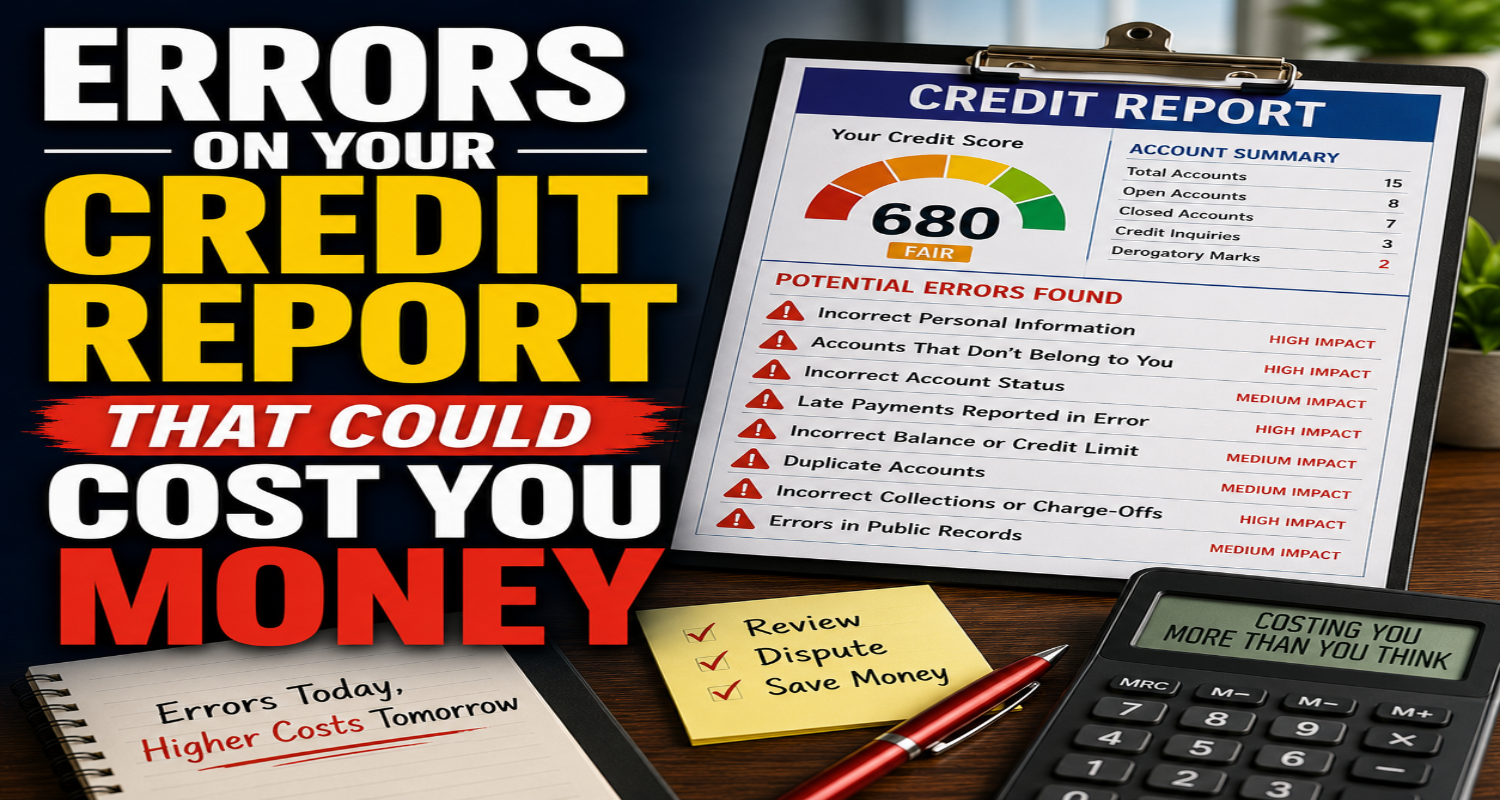
Your credit report affects many parts of your financial life. It can influence whether you qualify for a loan, receive a low interest rate, rent an apartment, or even land certain jobs. However, many Americans never review their credit reports until a problem appears.
Unfortunately, credit report errors happen more often than people realize. Even a small mistake can lower your credit score, increase borrowing costs, or delay loan approval. Therefore, checking your credit report regularly is one of the smartest financial habits you can build.
In this guide, you’ll learn the most common errors on your credit report that could cost you money, how they happen, and the steps you should take to correct them.
Why Your Credit Report Matters
Your credit report is a record of how you’ve managed credit over time. It includes information such as:
- Credit cards
- Auto loans
- Mortgages
- Personal loans
- Payment history
- Credit inquiries
- Public records
Lenders use this information to decide whether you are a responsible borrower. As a result, inaccurate information can lead to financial consequences that last for years.
The only federally authorized website where Americans can obtain free credit reports.
1. Personal Information Errors
Although your personal details may seem unimportant, mistakes here can create larger problems.
Common examples include:
- Incorrect name
- Wrong address
- Misspelled Social Security number
- Incorrect date of birth
These mistakes may cause another person’s credit activity to appear on your report.
Therefore, always verify your personal information before reviewing the rest of your report.
2. Accounts That Don’t Belong to You
One of the most serious credit report mistakes is finding an account you never opened.
This could happen because of:
- Identity theft
- Mixed credit files
- Reporting errors
If someone opens a credit card in your name and misses payments, your credit score may drop quickly.
As soon as you notice unfamiliar accounts, contact the credit bureau immediately.
3. Incorrect Late Payments
Payment history makes up a large portion of your credit score.
Unfortunately, lenders sometimes report late payments by mistake.
Examples include:
- Payments marked late even though they were on time
- Duplicate late payments
- Incorrect payment dates
Even one false late payment can stay on your report for years if you don’t dispute it.
Therefore, compare your report with your bank statements or payment confirmations.
4. Incorrect Account Balances
Credit card balances change every month.
Sometimes lenders report outdated balances, making it appear that you owe more than you actually do.
Higher reported balances increase your credit utilization ratio.
Consequently, your credit score may decrease even if you pay your cards responsibly.
Always compare reported balances with your latest account statements.
5. Closed Accounts Reported as Open
Many people close old credit cards after paying them off.
However, reporting mistakes sometimes leave these accounts listed as open.
This can affect:
- Credit utilization
- Debt calculations
- Loan approval decisions
Similarly, an open account with inaccurate information may confuse future lenders.
6. Duplicate Accounts
Occasionally, the same loan appears twice.
For example:
- One auto loan listed two times
- Duplicate credit cards
- Repeated personal loans
Duplicate accounts make your debt appear much higher.
As a result, lenders may believe you have more financial obligations than you actually do.
7. Incorrect Credit Limits
Your available credit plays a major role in your credit score.
Suppose your credit card has a $10,000 limit.
If your report incorrectly shows only a $5,000 limit, your utilization ratio doubles.
Consequently, your credit score may drop even though your spending habits never changed.
8. Collections That Were Already Paid
Many consumers pay off collection accounts expecting them to be updated.
Unfortunately, some collectors fail to report the payment correctly.
Your report may still show:
- Unpaid collections
- Outstanding balances
- Active collection status
These errors can reduce your chances of getting approved for new credit.
9. Old Negative Information That Should Have Been Removed
Negative items don’t stay forever.
Most negative information should disappear after a specific reporting period.
Examples include:
- Late payments
- Collection accounts
- Charge-offs
If outdated information remains, it can continue hurting your credit score unfairly.
Therefore, review the dates carefully.
10. Hard Inquiries You Didn’t Authorize
Whenever you apply for credit, lenders usually perform a hard inquiry.
Too many hard inquiries within a short period may slightly reduce your score.
If you notice inquiries from companies you never contacted, someone may have attempted to use your identity.
Report unauthorized inquiries immediately.
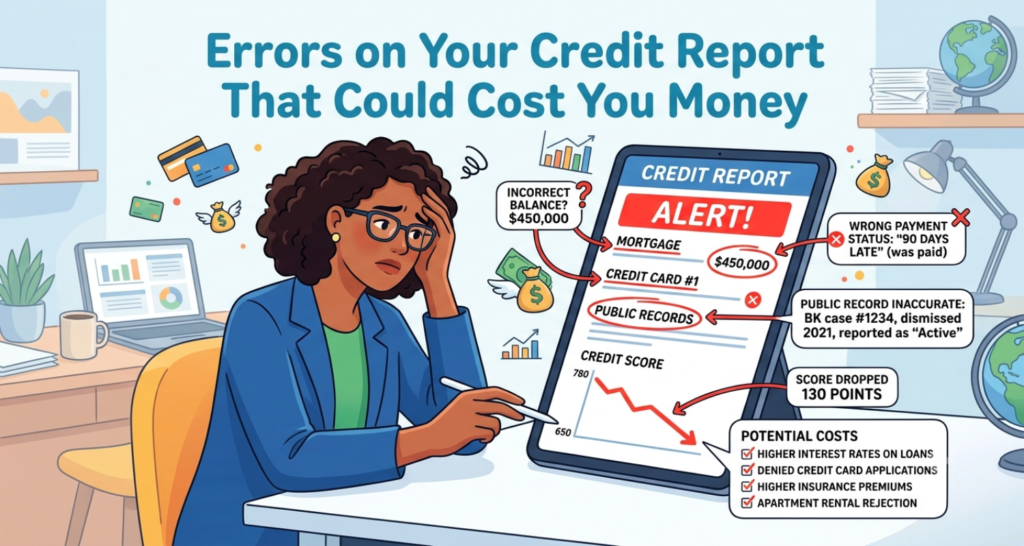
How Credit Report Errors Cost You Money
Many people think credit report mistakes only affect their credit score.
Actually, they can become much more expensive.
For example, you may face:
- Higher mortgage interest rates
- Increased auto loan costs
- Credit card denials
- Higher insurance premiums in some states
- Security deposit requirements
- Lost rental opportunities
Even a small score difference can cost thousands of dollars over the life of a mortgage.
That’s why correcting errors quickly matters.
How to Check Your Credit Report
The good news is checking your credit report has become much easier.
Review all three major credit reports because each bureau may contain different information.
Carefully verify:
- Personal information
- Account status
- Payment history
- Credit limits
- Balances
- Inquiries
- Collections
Take your time.
Many mistakes are easy to overlook during a quick review.
How to Dispute Credit Report Errors
If you find an error, don’t ignore it.
Instead, follow these steps:
Step 1: Gather Evidence
Collect documents like:
- Bank statements
- Payment receipts
- Loan agreements
- Account statements
Supporting documents strengthen your dispute.
Step 2: Contact the Credit Bureau
Submit your dispute online or by mail.
Explain:
- What information is incorrect
- Why it is inaccurate
- What should be corrected
Attach copies of your evidence.
Step 3: Contact the Creditor
The lender reporting the information should also receive your dispute.
Many reporting errors are corrected directly by the creditor.
Step 4: Monitor the Results
Most disputes are investigated within several weeks.
Afterward, review your updated report to ensure the correction appears.
If necessary, continue following up until the issue is resolved.
Tips to Prevent Future Credit Report Problems
Although you cannot stop every reporting mistake, you can reduce your risk.
Good habits include:
- Review your credit reports several times each year.
- Pay every bill before the due date.
- Keep account records.
- Monitor your financial accounts regularly.
- Watch for identity theft alerts.
- Update your address after moving.
- Avoid ignoring unfamiliar letters from lenders.
These habits help you catch problems before they become expensive.
Common Myths About Credit Report Errors
Myth: Credit reports are always accurate.
No. Reporting mistakes happen more often than many people expect.
Myth: Small errors don’t matter.
Even a small mistake can reduce your credit score.
Myth: You must pay to review your credit report.
You can legally review your credit reports through authorized sources without paying for expensive monitoring services.
Myth: Errors fix themselves.
Most mistakes remain until someone disputes them.
How to Read Your Credit Report Like a Pro in 2026
Final Thoughts
Your credit report is one of your most valuable financial documents. Yet many Americans rarely check it. That can be a costly mistake.
Errors on your credit report may lower your credit score, increase interest rates, delay loan approvals, and even affect housing opportunities. Fortunately, most mistakes can be corrected once they are identified.
Make it a habit to review your credit reports regularly. Look closely at every account, payment, balance, and inquiry. If something doesn’t look right, act quickly and dispute the error with the credit bureau and the creditor.
A few minutes spent reviewing your credit report today could save you thousands of dollars in the future while helping you maintain strong financial health and better borrowing opportunities.