 MOHAMMAD ABUBAKR
Your credit report is one of the most important financial documents you own. Yet many Americans never check it until they apply for a loan, mortgage, or credit card. By then, mistakes or negative information may already affect their financial future.
The good news is that learning how to read your credit report is easier than you think. Once you understand each section, you can spot errors, detect fraud, and improve your credit score over time.
In this guide, you’ll learn how to read your credit report like a professional. You’ll also discover common mistakes, warning signs, and smart strategies that lenders appreciate.
Why Your Credit Report Matters
Your credit report tells the story of how you manage borrowed money. It contains details about your loans, credit cards, payment history, and public records.
Lenders review this information before deciding whether to approve:
- Credit cards
- Auto loans
- Mortgages
- Personal loans
- Apartment rentals
- Some employment applications
- Insurance pricing in many states
Because of this, understanding your report gives you more control over your financial future.
How Credit Utilization Can Make or Break Your Credit Score
Where to Get Your Credit Report
Federal law allows Americans to receive free credit reports from the three major credit bureaus.
These include:
- Experian
- Equifax
- TransUnion
You can request your reports through the government-authorized website:
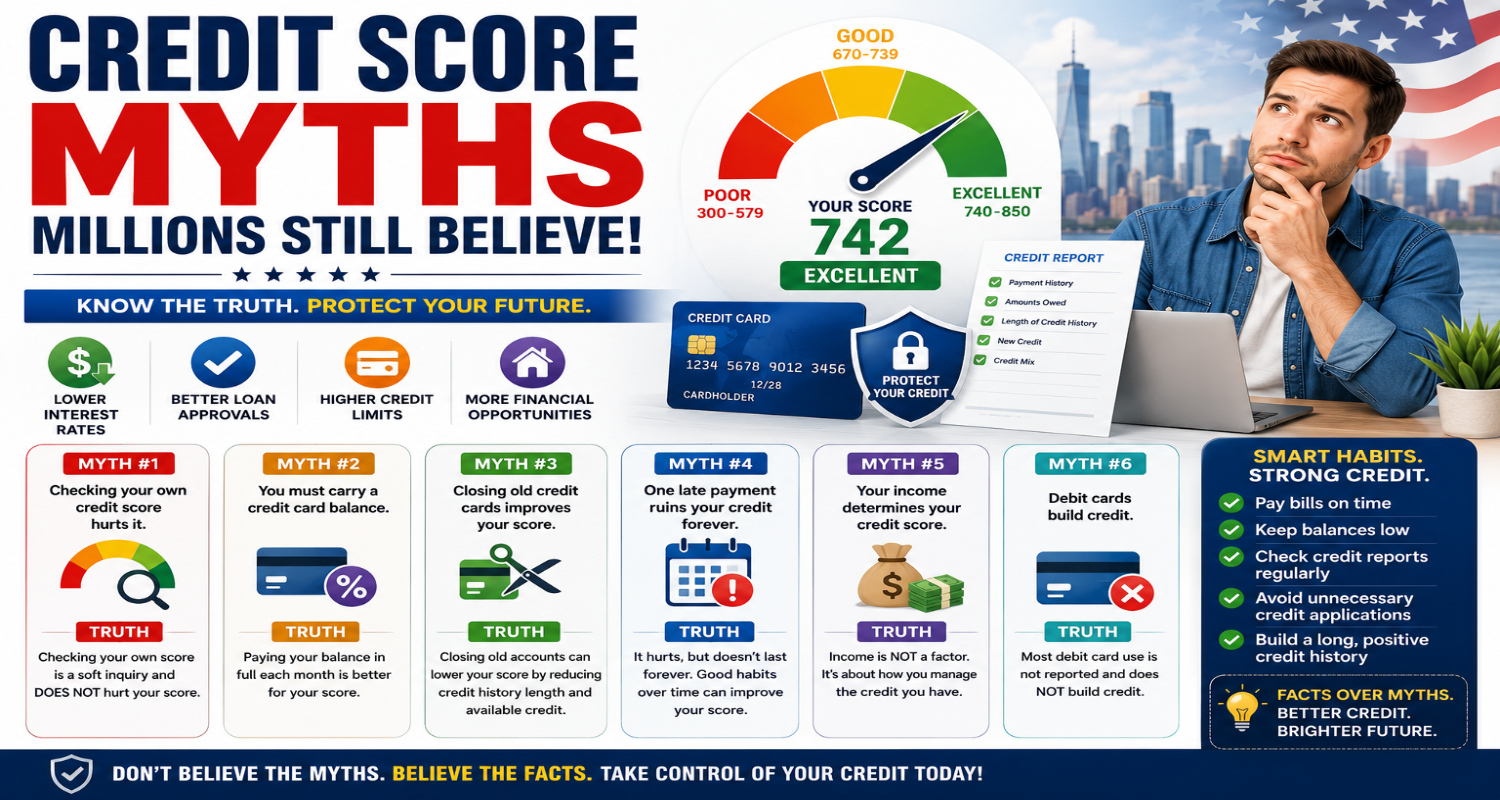
Checking your own credit report does not hurt your credit score because it creates only a soft inquiry.
Understanding the Main Sections of a Credit Report
Although each credit bureau uses a slightly different format, every report includes similar information.
Let’s examine each section.
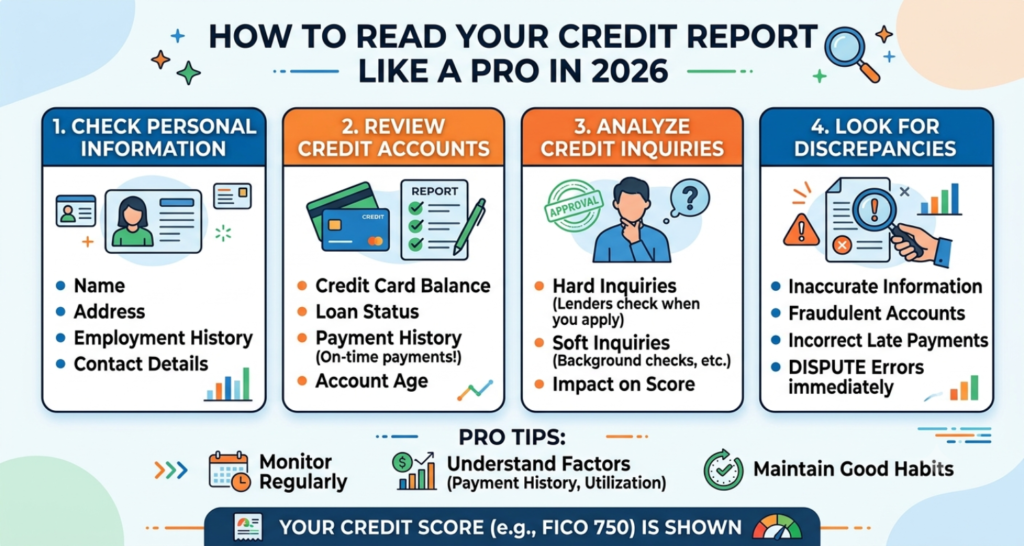
1. Personal Information
This section includes:
- Name
- Previous names
- Current address
- Former addresses
- Social Security Number (partially hidden)
- Date of birth
- Employers
What to Check
Look for:
- Incorrect addresses
- Wrong employer
- Misspelled names
- Accounts belonging to someone else
Even small errors may indicate identity theft or mixed credit files.
2. Credit Accounts
This is the largest section.
It lists every credit account you’ve opened.
Examples include:
- Credit cards
- Auto loans
- Student loans
- Mortgages
- Personal loans
- Home equity loans
Each account includes:
- Date opened
- Credit limit
- Loan balance
- Monthly payment
- Account status
- Payment history
Why This Matters
Lenders carefully review:
- On-time payments
- Available credit
- Total balances
- Length of credit history
A long history of responsible payments builds trust.
Learn the Account Status Codes
Each account has a status.
Common examples include:
- Open
- Closed
- Paid as agreed
- Current
- 30 Days Late
- 60 Days Late
- 90 Days Late
- Charged Off
- Collection
The fewer negative statuses you have, the healthier your credit profile becomes.
Review Your Payment History Carefully
Payment history has the biggest influence on your credit score.
Therefore, check every month listed.
Look for:
- Incorrect late payments
- Duplicate late payments
- Missing payment updates
- Accounts marked delinquent by mistake
If an account shows a late payment you actually made on time, dispute it immediately.
Check Your Credit Utilization
Credit utilization compares your balance to your credit limit.
For example:
Credit Limit: $10,000
Current Balance: $2,000
Utilization:
20%
Experts generally recommend keeping utilization below 30%.
Many consumers aim for below 10% for stronger credit scores.
Review Hard Inquiries
Every time you apply for new credit, a hard inquiry may appear.
Examples include:
- Mortgage application
- Credit card application
- Auto loan
- Personal loan
Too many recent inquiries may concern lenders.
However, checking your own report creates only a soft inquiry.
Watch for Collection Accounts
Collection accounts can significantly reduce your credit score.
These appear when unpaid debts are sent to collection agencies.
Common collections include:
- Medical bills
- Utility bills
- Credit cards
- Personal loans
If you find a collection that doesn’t belong to you, dispute it immediately.
Review Public Records
Some reports may include public records such as:
- Bankruptcies
- Certain court judgments (where applicable)
These records remain for several years depending on federal reporting rules.
Fortunately, they become less influential as they age.
Common Credit Report Errors
Millions of Americans have errors on their credit reports.
Some of the most common include:
- Wrong account balances
- Duplicate accounts
- Incorrect late payments
- Closed accounts reported as open
- Identity theft accounts
- Incorrect personal information
- Wrong payment dates
- Accounts that belong to another person
Even one mistake could lower your credit score.
How to Dispute Credit Report Errors
If you discover inaccurate information:
Step 1
Gather evidence.
Examples include:
- Bank statements
- Payment confirmations
- Account records
Step 2
Contact the credit bureau reporting the error.
Step 3
Notify the lender if necessary.
Step 4
Track your dispute until it is resolved.
Most investigations are completed within about 30 days.
Warning Signs of Identity Theft
Reading your report regularly helps detect fraud early.
Watch for:
- Unknown accounts
- New loans you never opened
- Incorrect addresses
- Hard inquiries you don’t recognize
- Collection accounts you never owed
Early detection often limits financial damage.
How Often Should You Check Your Credit Report?
Financial experts recommend checking your reports several times each year.
Many people review one bureau every four months.
Others check all three together before applying for major financing.
Regular monitoring helps you catch problems before lenders do.
Professional Tips for Reading Your Credit Report
Use these habits to stay ahead.
Review every account.
Don’t skip old accounts.
Compare all three reports.
Not every lender reports to every bureau.
Verify balances.
Incorrect balances may increase utilization.
Confirm payment history.
One reporting mistake can lower your score.
Keep personal information updated.
Wrong addresses may delay dispute investigations.
Save previous reports.
Comparing reports over time helps identify unexpected changes.
What Lenders Notice First
When reviewing your report, lenders usually focus on:
- Payment history
- Credit utilization
- Total debt
- Account age
- Recent inquiries
- Credit mix
- Serious negative marks
Improving these areas often increases approval chances.
Habits That Build a Strong Credit Report
Develop these long-term habits:
- Always pay bills on time.
- Keep balances low.
- Avoid unnecessary credit applications.
- Leave older accounts open when possible.
- Review reports regularly.
- Dispute mistakes quickly.
- Monitor for identity theft.
Small improvements made consistently often lead to stronger credit scores.
Final Thoughts
Your credit report is more than just a financial record. It is a snapshot of your financial habits. Learning how to read it empowers you to make better decisions, catch mistakes early, and protect yourself from fraud.
Fortunately, you don’t need to be a financial expert. By reviewing each section carefully, checking your payment history, monitoring credit utilization, and disputing errors promptly, you can take control of your credit profile.
Whether you’re planning to buy a home, finance a vehicle, or qualify for better credit cards, understanding your credit report gives you a valuable advantage. Review it regularly, stay informed, and make smart financial choices that strengthen your credit over time.
Consumer Financial Protection Bureau (CFPB):
Frequently Asked Questions
Does checking my own credit report lower my credit score?
No. Checking your own credit report creates a soft inquiry and does not affect your credit score.
How many credit reports should I review?
Review reports from Experian, Equifax, and TransUnion because each may contain different information.
How long do late payments stay on a credit report?
Most late payments remain on your credit report for up to seven years, although their impact decreases over time.
Can I remove accurate negative information?
Generally, accurate information cannot be removed before the reporting period ends. However, incorrect information can be disputed and corrected.