 MOHAMMAD ABUBAKR
Investing is not a “set it and forget it” process. While long-term investing often rewards patience, your portfolio still needs regular attention to ensure it aligns with your financial goals. Many investors either check their investments too often and make emotional decisions or ignore them for years, missing important opportunities to rebalance and adjust.
Understanding how often you should review your investment portfolio for better returns can help you stay focused, manage risk, and improve your long-term financial success. Regular reviews allow you to evaluate your progress, update your asset allocation, and respond to major life changes without reacting to every market headline.
In this guide, you’ll learn the ideal portfolio review schedule, what to check during each review, and common mistakes to avoid.
Why Portfolio Reviews Matter
Your investment portfolio changes over time.
Stock prices rise and fall. Bond values fluctuate. Your financial goals may also change due to career growth, marriage, retirement planning, or other life events.
Regular portfolio reviews help you:
- Stay aligned with your financial goals
- Maintain your desired risk level
- Identify underperforming investments
- Rebalance your portfolio
- Monitor investment fees
- Track your overall progress
Rather than trying to predict the market, portfolio reviews help you make thoughtful, long-term decisions.
What Is Compound Interest and Why Does It Matter?
How Often Should You Review Your Portfolio?
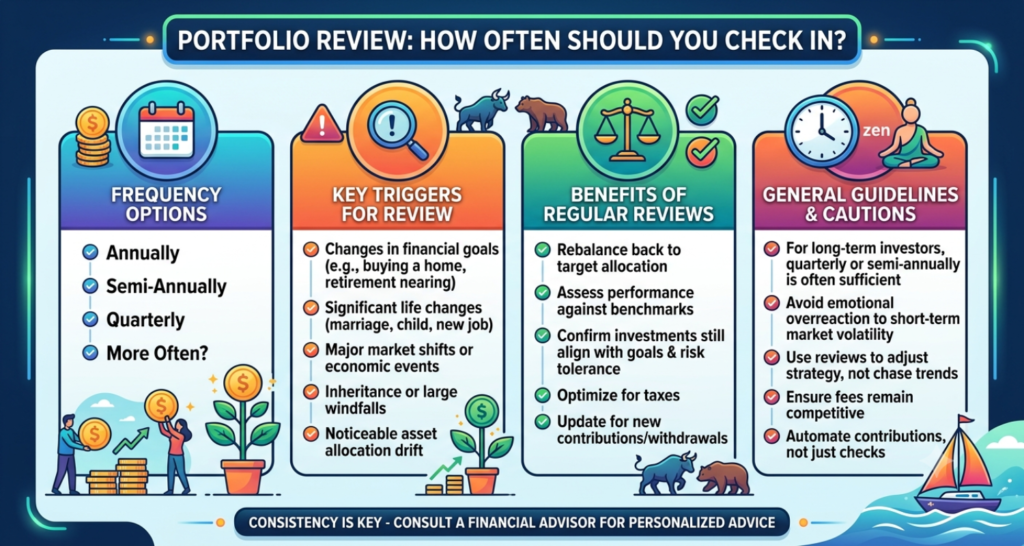
For most long-term investors, reviewing a portfolio once or twice a year is enough.
This schedule provides enough time to evaluate performance without encouraging emotional reactions to short-term market movements.
A general guideline is:
| Review Frequency | Best For |
|---|---|
| Monthly | Checking contributions and account activity only |
| Quarterly | Investors who actively manage portfolios |
| Every 6 Months | Most long-term investors |
| Annually | Retirement and long-term investment planning |
Daily or weekly reviews usually aren’t necessary unless you’re an active trader.
When You Should Review Your Portfolio Immediately
Although scheduled reviews are important, certain situations may require an earlier review.
Consider reviewing your portfolio if you experience:
- A major career change
- Marriage or divorce
- Birth of a child
- Retirement
- Receiving an inheritance
- Buying a home
- Significant changes in income
- Major market events that affect your financial plan
Life changes often affect your investment goals and risk tolerance.
What to Check During a Portfolio Review
A portfolio review involves more than simply looking at returns.
Here are the most important areas to evaluate.
1. Asset Allocation
Your portfolio should reflect your desired balance among:
- Stocks
- Bonds
- Cash
- Real estate
- Other investments
Over time, strong-performing investments may grow into a larger percentage of your portfolio.
This may increase your overall risk.
2. Investment Performance
Review how each investment has performed over the long term.
Avoid focusing only on short-term gains or losses.
Instead, compare performance with appropriate benchmarks and your personal financial goals.
3. Portfolio Diversification
Ask yourself:
- Am I overly invested in one company?
- Do I own investments across multiple industries?
- Am I diversified internationally?
- Is my portfolio balanced across different asset classes?
Diversification helps reduce investment risk.
4. Risk Tolerance
Your comfort with investment risk may change over time.
For example:
- Younger investors may accept higher stock exposure.
- Investors nearing retirement often reduce portfolio risk.
Review whether your current investments still match your risk tolerance.
5. Investment Fees
High fees can reduce long-term returns.
Review:
- Expense ratios
- Advisory fees
- Fund management costs
- Trading commissions (if applicable)
Lower investment costs often improve long-term performance.
6. Financial Goals
Your investment strategy should continue supporting your objectives.
Examples include:
- Retirement
- Buying a home
- College savings
- Building long-term wealth
- Creating passive income
If your goals change, your portfolio may need adjustments.
What Is Portfolio Rebalancing?
Rebalancing means restoring your portfolio to its original target allocation.
For example:
You planned:
- 60% Stocks
- 30% Bonds
- 10% Cash
After several years of strong stock performance, your allocation becomes:
- 72% Stocks
- 20% Bonds
- 8% Cash
Your portfolio now carries more risk than intended.
Rebalancing brings the allocation back to your original investment plan.
Benefits of Regular Portfolio Reviews
Consistent reviews provide several advantages.
Maintain Your Investment Strategy
Regular reviews help keep your investments aligned with your financial plan.
Control Risk
Rebalancing prevents your portfolio from becoming too aggressive or too conservative.
Improve Financial Discipline
Scheduled reviews reduce emotional investing.
Instead of reacting to daily market news, you make thoughtful adjustments.
Track Progress
Reviews show whether you’re moving toward your long-term financial goals.
Common Portfolio Review Mistakes
Many investors make avoidable errors.
Avoid these habits.
Checking Investments Every Day
Daily market movements are normal.
Constant monitoring often leads to emotional decisions.
Chasing Recent Winners
Investments that performed well last year may not continue outperforming.
Avoid buying solely based on recent returns.
Ignoring Poor Diversification
Holding too much of one stock or sector increases risk.
Never Rebalancing
Allowing your allocation to drift may expose you to unnecessary market volatility.
Forgetting Tax Implications
Selling investments may create taxable gains.
Consider tax consequences before making major portfolio changes.
Tips for Successful Portfolio Reviews
Use these best practices.
Review on a Schedule
Choose a consistent review date, such as every January and July.
Focus on Long-Term Performance
Evaluate progress over years rather than weeks.
Keep Contributing
Continue investing regularly, regardless of short-term market conditions.
Update Beneficiaries
Review retirement accounts and investment account beneficiaries after major life events.
Document Changes
Record why you make investment decisions.
This helps maintain consistency and avoid emotional choices.
Should You Make Changes After Every Review?
Not necessarily.
Sometimes the best decision is to make no changes at all.
If your portfolio remains aligned with your goals and risk tolerance, continuing your current strategy may be the smartest move.
Avoid making adjustments simply because markets have been volatile.
Final Thoughts
Knowing how often you should review your investment portfolio for better returns helps you stay disciplined while avoiding emotional investing. For most long-term investors, reviewing a portfolio once or twice a year is enough to monitor performance, rebalance investments, and ensure your strategy still matches your financial goals.
Rather than reacting to every market fluctuation, focus on consistent investing, proper diversification, and periodic portfolio reviews. Over time, this disciplined approach can improve your financial confidence and help you build long-term wealth while keeping risk at an appropriate level.
U.S. Securities and Exchange Commission (SEC):
Frequently Asked Questions (FAQs)
How often should I review my investment portfolio?
Most financial professionals recommend reviewing your portfolio every six to twelve months.
Should I check my investments every day?
No. Daily monitoring often leads to emotional decisions that can hurt long-term investment performance.
When should I rebalance my portfolio?
Consider rebalancing during your scheduled review or whenever your asset allocation changes significantly.
Can I change my investment strategy often?
Frequent changes are usually unnecessary. Adjust your strategy only when your financial goals, risk tolerance, or life circumstances change.
Why is portfolio diversification important?
Diversification spreads investments across different asset classes and sectors, helping reduce overall investment risk.