
 MOHAMMAD ABUBAKR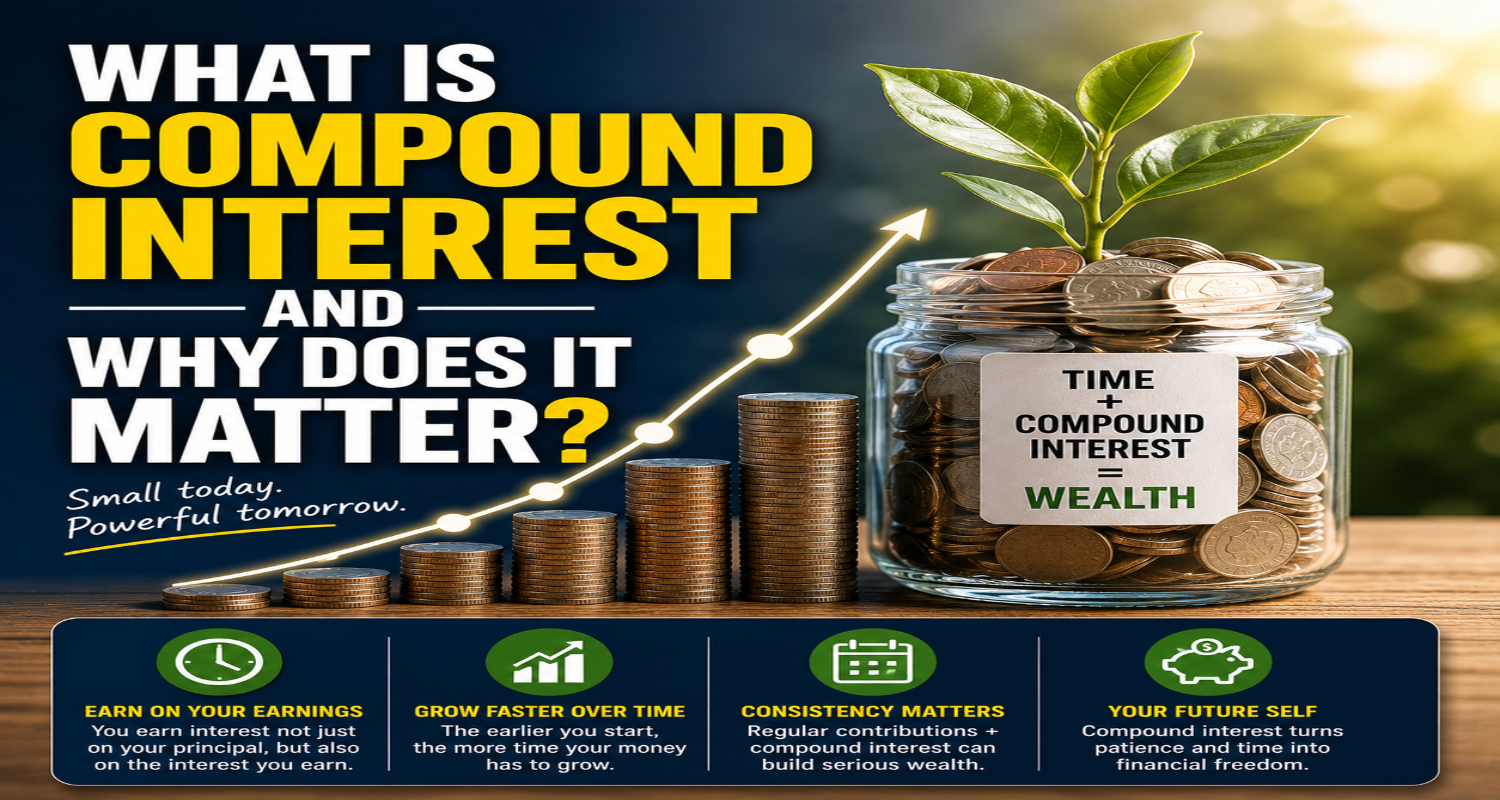
Compound interest is often called one of the most powerful tools in personal finance. Whether you’re saving for retirement, investing for the future, or paying off debt, understanding what compound interest is and why it matters for wealth building can make a significant difference in your financial success.
Unlike simple interest, compound interest allows your money to earn interest on both the original amount and the interest you’ve already earned. Over time, this creates a snowball effect that can dramatically increase your savings—or your debt if you’re borrowing.
In this guide, you’ll learn how compound interest works, why it’s important, and how you can use it to build long-term wealth.
What Is Compound Interest?
Compound interest is the interest earned on both your original investment (called the principal) and the interest that has already accumulated.
In simple terms, your money earns interest, and then that interest starts earning interest too.
The basic formula for compound interest is:
FV=PV(1+r)n
FV=PV(1+r)n=1000(1+0.05)20=£2,653.30
PV
£
PV
r
%
r
n
n
As time passes, the growth becomes faster because interest is calculated on an ever-increasing balance.
How Loan Terms Affect Your Total Cost
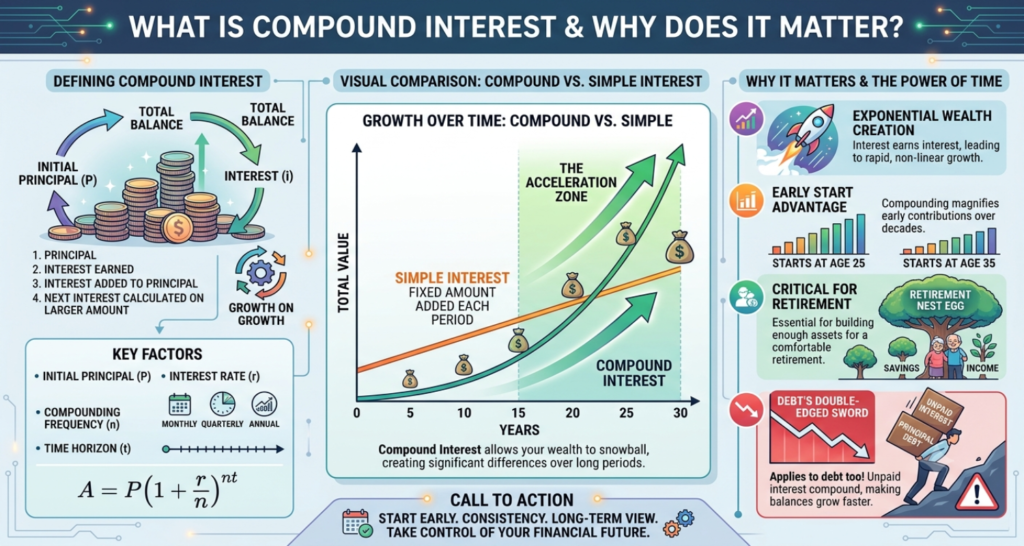
Compound Interest vs. Simple Interest
Understanding the difference is important.
| Compound Interest | Simple Interest |
|---|---|
| Earns interest on principal and accumulated interest | Earns interest only on the original principal |
| Growth accelerates over time | Growth remains steady |
| Best for long-term savings and investing | Common for some short-term loans |
Because compound interest builds upon itself, it generally produces much larger returns over long periods.
How Compound Interest Works
Imagine you invest $10,000 in an account earning 7% annual interest.
During the first year:
- Starting balance: $10,000
- Interest earned: $700
- New balance: $10,700
In the second year, interest is calculated on $10,700, not just the original $10,000.
This means you earn interest on your previous interest as well.
Each year, the account grows faster than the year before.
Why Compound Interest Matters
1. It Helps Build Wealth Faster
The longer your money stays invested, the greater the effect of compounding.
Even small contributions can grow into substantial savings over several decades.
2. Time Becomes Your Greatest Advantage
Starting early gives your investments more time to compound.
For example, someone who begins investing at age 25 may accumulate significantly more wealth than someone who starts at 35, even if they invest less overall.
3. It Encourages Long-Term Investing
Compound interest rewards patience.
Investors who leave their money invested generally benefit more than those who frequently withdraw funds.
4. It Can Increase Retirement Savings
Retirement accounts often benefit from years or decades of compound growth.
The earlier you begin contributing, the greater the potential value of your portfolio.
What Affects Compound Interest?
Several factors influence how quickly your money grows.
Initial Investment
A larger starting balance earns more interest from the beginning.
Interest Rate
Higher interest rates generally lead to faster growth.
Even a small increase in the rate can make a significant difference over many years.
Time
Time is the most powerful factor.
The longer your money remains invested, the greater the compounding effect.
Additional Contributions
Making regular deposits increases your balance and accelerates growth.
Even modest monthly contributions can have a meaningful impact.
Compounding Frequency
Interest may be compounded:
- Daily
- Monthly
- Quarterly
- Semi-annually
- Annually
More frequent compounding generally results in slightly higher returns because interest is added to the balance more often.
The Power of Starting Early
Consider two investors.
Investor A
- Starts investing at age 25
- Invests $300 per month
Investor B
- Starts investing at age 35
- Invests the same amount each month
Although Investor B contributes for many years, Investor A typically accumulates much more wealth because of the extra years of compound growth.
This demonstrates why starting early often matters more than investing large amounts later.
Compound Interest and Debt
Compound interest is beneficial when you’re saving or investing.
However, it can work against you when you borrow money.
Credit cards, for example, may charge interest on unpaid balances. If you only make minimum payments, interest can accumulate rapidly.
That’s why paying off high-interest debt as quickly as possible is important.
Ways to Maximize Compound Interest
You can strengthen the benefits of compounding by following these strategies.
Start Investing Early
The sooner you begin, the longer your money has to grow.
Invest Regularly
Consistent monthly contributions increase your investment balance over time.
Reinvest Earnings
Allow dividends and interest payments to remain invested whenever possible.
Avoid Early Withdrawals
Removing money interrupts the compounding process and reduces future growth.
Choose Accounts That Compound
Many savings accounts, certificates of deposit (CDs), and investment accounts offer compound growth.
Compare available options before investing.
Common Mistakes to Avoid
Avoid these mistakes that can reduce the benefits of compound interest.
- Waiting too long to begin investing
- Frequently withdrawing investment earnings
- Ignoring investment fees
- Carrying high-interest credit card balances
- Failing to contribute consistently
- Expecting overnight results
Compound interest rewards consistency and patience.
Where Compound Interest Is Common
You can benefit from compound interest through:
- High-yield savings accounts
- Certificates of Deposit (CDs)
- Retirement accounts
- Mutual funds
- Exchange-Traded Funds (ETFs)
- Dividend-paying investments
- Some bonds
Always compare fees, interest rates, and investment risks before choosing an account.
Final Thoughts
Understanding what compound interest is and why it matters for wealth building is one of the most valuable financial lessons you can learn. Compound interest allows your savings and investments to grow not only on your original contributions but also on the interest those contributions generate over time. The earlier you begin saving, the more powerful this effect becomes.
While compound interest can help build long-term wealth, it can also increase the cost of debt if balances remain unpaid. That’s why it’s important to invest consistently, reinvest your earnings, and pay off high-interest debt whenever possible. With patience, discipline, and time, compound interest can become one of the strongest tools for achieving financial security.
U.S. Securities and Exchange Commission (SEC):
Frequently Asked Questions (FAQs)
What is compound interest?
Compound interest is interest earned on both your original investment and the interest that has already accumulated.
Why is compound interest important?
It helps savings and investments grow faster over time by earning interest on previous interest.
Is compound interest good for borrowers?
Usually not. Compound interest can increase the total cost of debt, especially with high-interest credit cards.
How often is compound interest calculated?
It may be calculated daily, monthly, quarterly, semi-annually, or annually, depending on the account.
When should I start investing to benefit from compound interest?
As early as possible. More time allows compound interest to work more effectively.