 MOHAMMAD ABUBAKR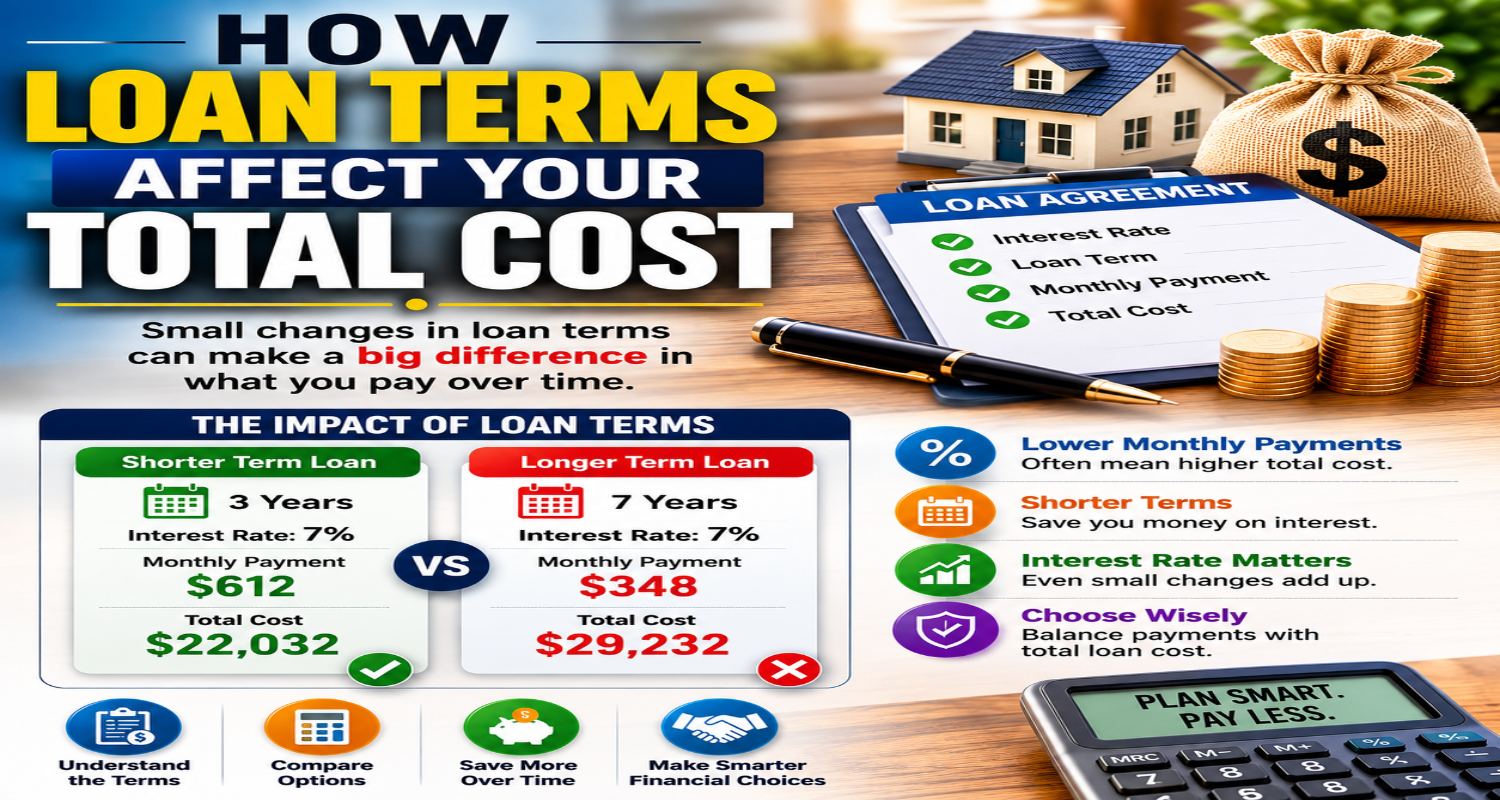
When comparing loans, many borrowers focus only on the monthly payment. While a lower monthly payment may seem attractive, it doesn’t always mean you’re getting the best deal. One of the biggest factors that determines how much you’ll ultimately pay is the loan term.
The loan term is the length of time you agree to repay borrowed money. Whether you’re taking out a personal loan, auto loan, or mortgage, the repayment period directly affects your monthly payment, total interest, and overall borrowing cost.
Understanding how loan terms affect your total cost and monthly payments can help you make smarter financial decisions and potentially save thousands of dollars over the life of a loan.
In this guide, you’ll learn how loan terms work, their advantages and disadvantages, and how to choose the repayment period that best fits your financial goals.
What Is a Loan Term?
A loan term is the amount of time you have to repay your loan.
Depending on the lender and loan type, terms may range from:
- 12 months
- 24 months
- 36 months
- 48 months
- 60 months
- 72 months
- 84 months
- Longer for mortgages
The lender sets a repayment schedule that includes both principal and interest.
When a Personal Loan Makes Financial Sense
How Loan Terms Affect Your Monthly Payment
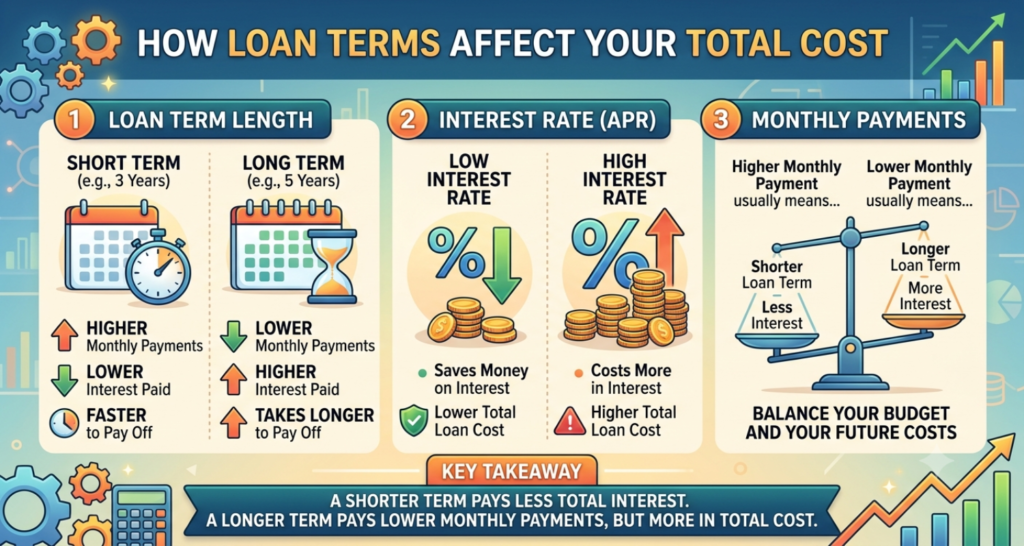
One of the most noticeable effects of the loan term is your monthly payment.
Shorter Loan Terms
A shorter repayment period means:
- Higher monthly payments
- Faster payoff
- Less interest paid overall
Longer Loan Terms
A longer repayment period usually means:
- Lower monthly payments
- More affordable monthly budget
- Higher total interest costs
Choosing between the two depends on your financial situation and long-term goals.
Example: Comparing Loan Terms
Suppose you borrow $20,000 with the same interest rate.
| Loan Term | Estimated Monthly Payment | Total Interest Paid |
|---|---|---|
| 3 Years | Higher | Lower |
| 5 Years | Moderate | More |
| 7 Years | Lower | Highest |
Although the 7-year loan has the smallest monthly payment, it costs the most over time because interest continues to accumulate for a longer period.
Why Longer Loan Terms Cost More
Interest is charged over the life of the loan.
The longer you borrow money, the more opportunities the lender has to collect interest.
Even when the interest rate stays the same, extending the repayment period often increases your total borrowing cost.
That’s why lower monthly payments can sometimes be misleading.
Benefits of Shorter Loan Terms
A shorter loan term offers several advantages.
Pay Less Interest
Less time means less interest accumulates.
This often saves hundreds or even thousands of dollars.
Become Debt-Free Sooner
Paying off your loan earlier gives you greater financial flexibility.
You can redirect future payments toward savings or investments.
Build Equity Faster
For secured loans, paying down the principal more quickly increases your ownership stake.
Improve Cash Flow Later
Although payments are higher initially, you’ll eliminate the debt sooner.
Benefits of Longer Loan Terms
Longer repayment periods also have advantages.
Lower Monthly Payments
Smaller payments may fit better into your monthly budget.
This can reduce financial stress.
Easier Qualification
Some borrowers qualify more easily because lower payments improve affordability calculations.
Greater Budget Flexibility
Extra monthly cash may help cover:
- Emergency expenses
- Household bills
- Childcare
- Savings contributions
Drawbacks of Short Loan Terms
Shorter terms aren’t ideal for everyone.
Potential disadvantages include:
- Higher monthly payments
- Less room in your monthly budget
- Greater financial pressure if income changes
Borrow only what you can comfortably repay.
Drawbacks of Long Loan Terms
Long repayment periods have their own disadvantages.
These include:
- More interest paid overall
- Debt lasts longer
- Higher total borrowing cost
- Greater chance of remaining in debt during financial setbacks
How Interest Rates Work with Loan Terms
Loan term and interest rate often work together.
Some lenders offer:
- Lower rates for shorter terms
- Higher rates for longer terms
However, this varies by lender.
Always compare:
- APR
- Interest rate
- Fees
- Total repayment amount
Never choose based solely on the monthly payment.
Factors to Consider Before Choosing a Loan Term
Every borrower’s situation is different.
Think about these questions.
Can You Afford Higher Monthly Payments?
If yes, a shorter term may save money.
Do You Need Lower Monthly Payments?
If your budget is tight, a longer term may provide flexibility.
Are You Planning Major Financial Changes?
Upcoming expenses such as moving, starting a family, or changing careers may influence your decision.
Do You Have Emergency Savings?
A healthy emergency fund can make higher monthly payments easier to manage.
Should You Choose the Shortest Loan Term?
Not always.
The shortest term isn’t automatically the best option.
Instead, choose the shortest repayment period that comfortably fits your budget.
Financial stability is more important than paying off a loan as quickly as possible.
Can You Pay Off a Loan Early?
Many lenders allow early repayment.
Paying extra toward the principal can:
- Reduce interest costs
- Shorten the loan term
- Eliminate debt faster
Before making extra payments, check whether your lender charges a prepayment penalty.
Many personal loans have no such penalty, but it’s always worth confirming.
Tips for Choosing the Right Loan Term
Use these strategies before signing a loan agreement.
Compare Total Loan Costs
Look beyond the monthly payment.
Review the total amount you’ll repay.
Compare Multiple Lenders
Different lenders offer different repayment terms and interest rates.
Borrow Only What You Need
Smaller loan balances reduce interest costs regardless of the loan term.
Consider Future Income
Choose payments that remain affordable even if your financial situation changes.
Read the Loan Agreement Carefully
Understand:
- Interest rate
- APR
- Repayment schedule
- Fees
- Early payoff rules
Common Mistakes to Avoid
Avoid these common borrowing mistakes.
- Choosing the lowest monthly payment without calculating total cost
- Ignoring the APR
- Borrowing more than necessary
- Stretching repayment longer than needed
- Not comparing loan offers
- Failing to budget for monthly payments
Final Thoughts
Understanding how loan terms affect your total cost and monthly payments is essential before borrowing money. While longer loan terms often reduce your monthly payment, they usually increase the total amount of interest you pay over time. Shorter loan terms, on the other hand, may require larger monthly payments but can save you significant money in the long run.
Before accepting any loan, compare multiple offers, review the APR, calculate the total repayment amount, and choose a repayment term that fits both your budget and your financial goals. The best loan isn’t simply the one with the lowest monthly payment—it’s the one that provides the best overall value while keeping your finances healthy.
Consumer Financial Protection Bureau (CFPB):
Frequently Asked Questions (FAQs)
What is a loan term?
A loan term is the length of time you have to repay a loan, typically ranging from one to seven years for personal loans.
Does a longer loan term lower monthly payments?
Yes. A longer repayment period generally lowers monthly payments but increases the total interest paid.
Which loan term saves the most money?
A shorter loan term usually results in lower total interest costs if you can comfortably afford the higher monthly payments.
Can I change my loan term later?
Some lenders allow refinancing or early repayment, but the options vary by lender and loan type.
Should I focus on monthly payment or total loan cost?
You should consider both. A low monthly payment may seem appealing, but the total repayment amount often provides a better picture of the loan’s true cost.