 MOHAMMAD ABUBAKR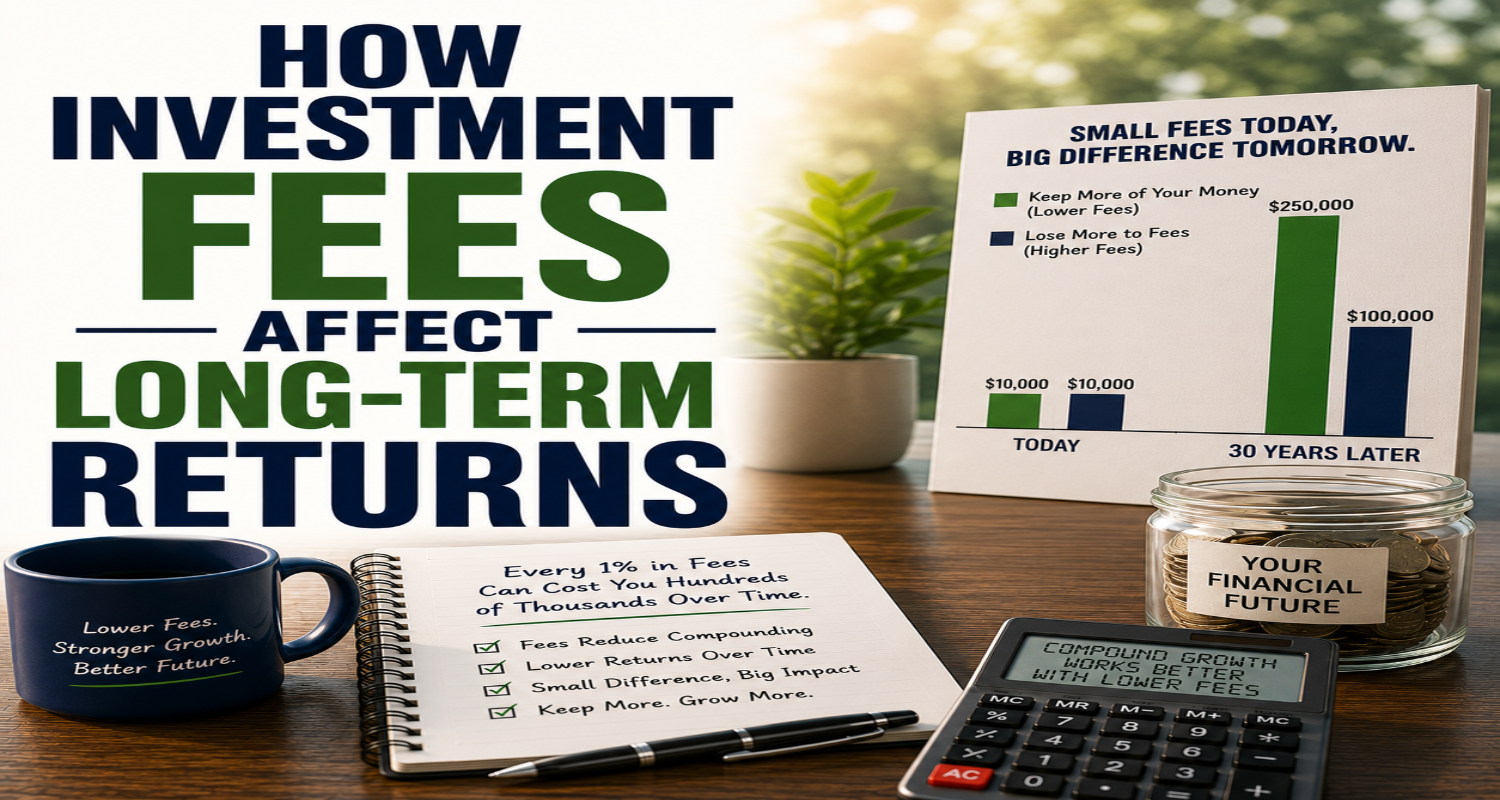
When investing, most people focus on choosing the right stocks, exchange-traded funds (ETFs), or mutual funds. However, one factor that often goes unnoticed is investment fees. While a 1% annual fee may seem insignificant, even small costs can reduce your portfolio’s growth over time because they lower the amount of money that remains invested.
Understanding how investment fees work is essential for building long-term wealth. By keeping costs low, you allow more of your investment returns to stay in your account, where they can continue to benefit from compound growth.
In this guide, you’ll learn how investment fees affect long-term returns, the most common types of investment costs, and practical strategies for minimizing unnecessary fees.
Why Investment Fees Matter
Investment fees are deducted from your portfolio, reducing the amount of money available to grow over time.
Even a seemingly small annual fee can:
- Reduce compound growth
- Lower total investment returns
- Increase the cost of investing
- Slow wealth accumulation
- Reduce retirement savings
Because fees are charged every year, their long-term impact can be much greater than many investors expect.
What Every New Investor Should Know Before Buying Stocks
What Are Investment Fees?
Investment fees are charges associated with managing or buying investments.
Depending on your investment account, you may encounter:
- Fund expense ratios
- Advisory fees
- Trading commissions
- Account maintenance fees
- Management fees
- Sales loads (for certain mutual funds)
Understanding each fee helps you compare investment options more effectively.
Common Types of Investment Fees
1. Expense Ratios
An expense ratio is the annual cost of operating an investment fund.
It covers expenses such as:
- Portfolio management
- Administration
- Marketing
- Recordkeeping
Expense ratios are expressed as a percentage of your investment.
Generally, lower-cost index funds and ETFs have lower expense ratios than actively managed mutual funds.
2. Advisory Fees
If you work with a financial adviser, you may pay an annual advisory fee.
This fee often covers:
- Portfolio management
- Financial planning
- Investment recommendations
- Ongoing support
Always understand exactly what services are included before agreeing to pay advisory fees.
3. Trading Commissions
Some brokerage firms charge commissions when buying or selling investments.
Although many brokers now offer commission-free trading for certain investments, fees may still apply in specific situations.
Always review your brokerage’s pricing schedule before placing trades.
4. Account Maintenance Fees
Certain investment accounts charge annual maintenance or administration fees.
These may depend on:
- Account balance
- Account type
- Investment provider
Some firms waive these fees if you maintain a minimum balance or choose electronic statements.
5. Sales Loads
Some mutual funds charge sales commissions known as loads.
These may include:
- Front-end loads (paid when purchasing)
- Back-end loads (paid when selling)
Many investors prefer no-load funds because they avoid these additional costs.
How Small Fees Become Big Over Time
Many investors underestimate how much small annual fees can affect long-term returns.
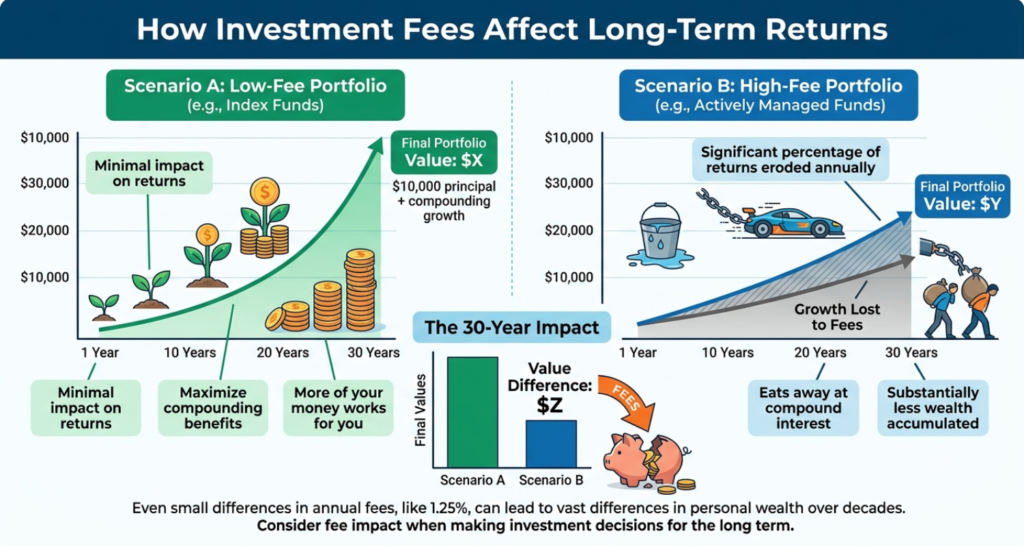
Consider two investors who each invest £10,000 and earn the same market return over several decades.
- Investor A pays lower annual investment fees.
- Investor B pays higher annual investment fees.
Although both investments earn similar gross returns, Investor A keeps more of those returns invested year after year.
Over decades, this difference can grow substantially because of compound growth.
The key takeaway is simple: every pound paid in fees is a pound that no longer has the opportunity to grow.
The Power of Compound Growth
Compound growth allows your investment earnings to generate additional earnings over time.
When fees reduce your investment balance:
- Less money remains invested.
- Future returns are earned on a smaller amount.
- Long-term wealth accumulation slows.
This is why minimizing unnecessary investment costs can make a meaningful difference over many years.
High Fees Don’t Always Mean Better Performance
Many investors assume higher fees automatically lead to higher returns.
That’s not necessarily true.
A higher-cost investment may or may not outperform a lower-cost alternative. Performance depends on many factors, including investment strategy, market conditions, and management decisions.
Rather than focusing only on fees, evaluate:
- Long-term performance
- Investment objectives
- Risk level
- Diversification
- Total costs
Low-Cost Investing
Many long-term investors choose low-cost investment options such as:
- Broad-market index funds
- Exchange-traded funds (ETFs)
- Low-cost mutual funds
These investments often have lower expense ratios, allowing more of your money to remain invested.
Low costs alone do not guarantee better performance, but they reduce one factor that investors can control.
Other Hidden Costs Investors Should Watch For
Investment expenses may include more than obvious management fees.
Watch for:
- Transaction fees
- Foreign investment fees
- Withdrawal charges
- Currency conversion fees
- Fund trading costs
- Tax consequences of frequent trading
Reading the fund prospectus or fee schedule can help you identify these costs.
How to Reduce Investment Fees
Compare Expense Ratios
Before investing, compare the annual costs of similar funds.
Small differences may have a meaningful impact over time.
Avoid Frequent Trading
Frequent buying and selling can generate additional costs and may increase taxes in taxable accounts.
Long-term investing often reduces unnecessary expenses.
Choose Low-Cost Investment Funds
Many index funds and ETFs offer diversified exposure with relatively low annual costs.
Always compare fees alongside investment objectives.
Understand Advisory Fees
If you’re paying for professional advice, ensure the services provided match the cost.
A financial adviser may provide value through comprehensive planning, retirement strategies, and tax guidance.
Review Your Portfolio Regularly
Review your investments periodically to ensure you’re not paying unnecessary fees for outdated or underperforming holdings.
Common Mistakes Investors Make
Avoid these common errors:
- Ignoring investment fees completely
- Choosing investments based only on past performance
- Assuming higher fees mean higher returns
- Trading too frequently
- Not reviewing account fee schedules
- Overlooking advisory costs
Being aware of fees can help improve your long-term investment results.
Tips for Keeping More of Your Investment Returns
To maximise the value of your investments:
- Focus on long-term investing.
- Compare investment costs before buying.
- Invest consistently.
- Diversify your portfolio.
- Avoid unnecessary trading.
- Review fees annually.
- Ask questions if you don’t understand a charge.
Every percentage point saved in fees leaves more money working for your future.
Final Thoughts
Investment fees may seem small, but their long-term impact can be significant. Because these costs reduce the amount of money that stays invested, they also reduce the power of compound growth over time. While paying fees for valuable services can make sense, it’s important to understand exactly what you’re paying and whether you’re receiving appropriate value in return.
By comparing investment options, choosing cost-effective funds when appropriate, and reviewing your portfolio regularly, you can reduce unnecessary expenses and keep more of your investment returns working toward your financial goals. Successful investing isn’t just about earning higher returns—it’s also about managing the costs that can quietly reduce them.
U.S. Securities and Exchange Commission (SEC):
Frequently Asked Questions (FAQs)
Why do investment fees matter?
Investment fees reduce the amount of money that remains invested. Over many years, this can significantly reduce the benefits of compound growth and lower your total returns.
What is an expense ratio?
An expense ratio is the annual fee charged by an investment fund to cover management and operating costs. It is expressed as a percentage of your investment.
Are low-fee investments always better?
Not necessarily. While lower fees can improve long-term returns by reducing costs, you should also consider the investment’s objectives, diversification, risk, and overall performance.
How can I reduce investment fees?
You can reduce fees by comparing expense ratios, choosing low-cost funds where appropriate, avoiding unnecessary trading, reviewing account charges regularly, and understanding any advisory fees you pay.