 MOHAMMAD ABUBAKR
Investing in stocks is one of the most effective ways to build wealth over the long term. However, buying your first stock without understanding how the market works can lead to costly mistakes. Many new investors jump into the stock market after hearing success stories on social media or from friends, only to discover that investing isn’t about getting rich overnight.
Successful investing requires patience, knowledge, and a clear financial plan. Understanding the basics before you invest can help you avoid emotional decisions, manage risk, and improve your chances of achieving your long-term financial goals.
In this guide, you’ll learn what every new investor should know before buying stocks, from setting financial goals to building a diversified portfolio.
Why Learning Before Investing Is Important
Buying stocks without understanding the basics is similar to driving without learning the rules of the road.
Learning first helps you:
- Make informed investment decisions
- Reduce unnecessary risk
- Avoid common beginner mistakes
- Stay focused during market volatility
- Build confidence as an investor
Knowledge is one of the most valuable investments you can make.
Why Time in the Market Beats Timing the Market
1. Understand What a Stock Is
A stock represents partial ownership in a company.
When you buy shares, you become a shareholder and may benefit if:
- The company’s value increases
- The stock price rises
- The company pays dividends (if offered)
However, stock prices can also decline, meaning investments can lose value.
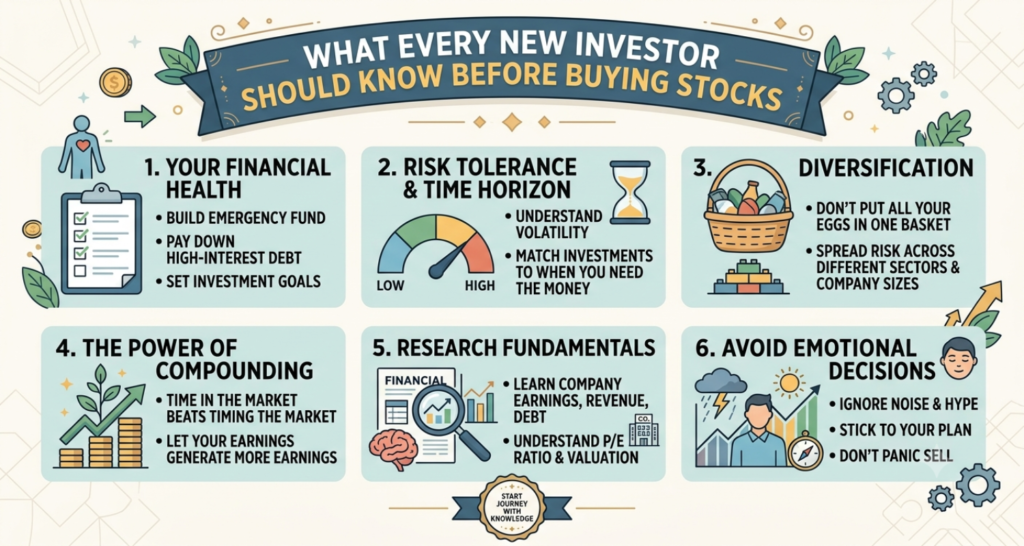
2. Set Clear Financial Goals
Before buying any stock, ask yourself why you’re investing.
Your goals may include:
- Retirement
- Building long-term wealth
- Saving for a home
- Funding education
- Financial independence
Clear goals help determine your investment strategy and time horizon.
3. Invest Only Money You Won’t Need Soon
The stock market experiences ups and downs.
If you expect to need your money within the next few years, investing heavily in stocks may not be appropriate.
Only invest money you can leave invested for the long term.
You should also maintain an emergency fund before investing.
4. Know Your Risk Tolerance
Every investor has a different comfort level with risk.
Consider:
- How you react to market declines
- Your investment timeline
- Your financial responsibilities
- Your income stability
Understanding your risk tolerance helps you choose investments that match your comfort level.
5. Diversification Matters
One of the biggest mistakes new investors make is putting all their money into one company.
Diversification means spreading investments across:
- Different industries
- Multiple companies
- Various asset classes
- Domestic and international markets
Diversification helps reduce the impact of poor performance from any single investment.
6. Don’t Try to Time the Market
Many beginners wait for the “perfect” time to buy.
Unfortunately, consistently predicting market highs and lows is extremely difficult.
Instead, many long-term investors:
- Invest consistently
- Stay invested
- Focus on long-term growth
Time in the market has historically been more important than trying to time the market.
7. Learn About Dollar-Cost Averaging
Dollar-cost averaging (DCA) is a strategy where you invest a fixed amount at regular intervals.
For example:
- $100 every week
- $300 every month
- $500 every quarter
Benefits include:
- Reducing emotional investing
- Building investing discipline
- Buying shares in different market conditions
- Avoiding the pressure of finding the perfect entry point
8. Research Before Buying
Never buy a stock simply because it’s popular online.
Instead, research:
- Company earnings
- Revenue growth
- Competitive advantages
- Debt levels
- Industry outlook
- Management quality
Understanding the business behind the stock helps you make informed decisions.
9. Understand Market Volatility
Stock prices move every day.
Short-term declines are normal.
Successful investors understand that:
- Markets rise and fall
- Corrections happen regularly
- Long-term investing requires patience
Avoid making decisions based solely on daily price movements.
10. Avoid Emotional Investing
Fear and greed are two of the biggest challenges for investors.
Common emotional mistakes include:
- Panic selling during market declines
- Buying after prices have already surged
- Constantly checking stock prices
- Following investment trends without research
Creating a long-term investment plan can help reduce emotional decisions.
11. Think Long Term
The stock market has historically rewarded patient investors over long periods, although past performance does not guarantee future results.
Long-term investing allows:
- Compound growth
- Recovery from market downturns
- Reduced trading costs
- Less emotional decision-making
Patience is often one of an investor’s greatest strengths.
12. Keep Investment Costs Low
Investment fees may seem small, but they can reduce long-term returns.
Watch for:
- Trading commissions (where applicable)
- Account maintenance fees
- Fund expense ratios
- Advisory fees
Lower costs allow more of your money to remain invested.
13. Continue Learning
Investing is a lifelong skill.
Stay informed by learning about:
- Personal finance
- Asset allocation
- Market trends
- Retirement planning
- Tax-efficient investing
The more you learn, the more confident you’ll become.
Common Mistakes New Investors Make
Avoid these common errors:
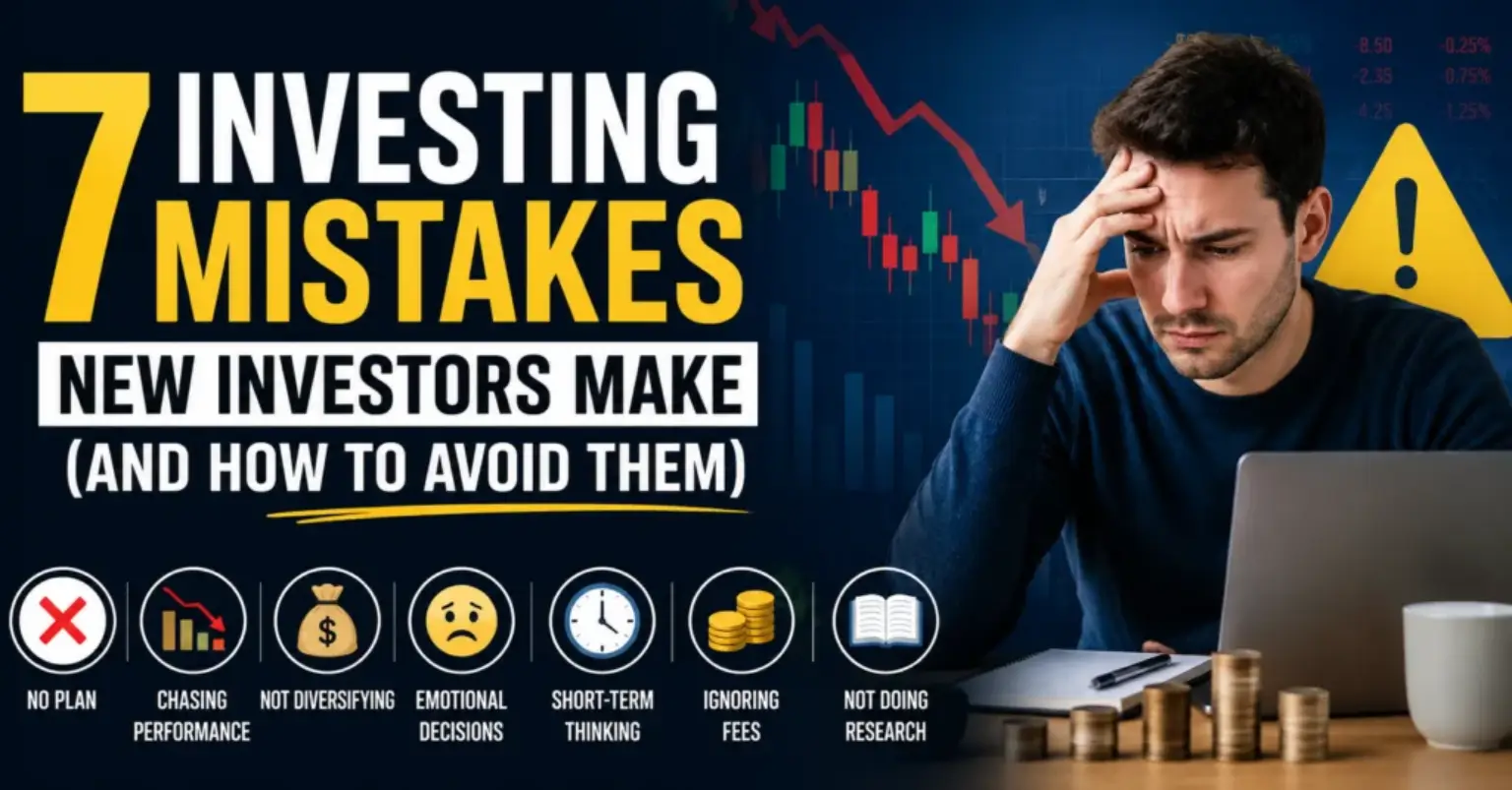
- Investing without a plan
- Trying to get rich quickly
- Putting all your money into one stock
- Ignoring diversification
- Selling during every market decline
- Investing money needed for short-term expenses
- Following social media hype without research
Recognizing these mistakes early can improve your investing experience.
Tips for First-Time Stock Investors
If you’re just getting started, consider these best practices:
- Set clear financial goals.
- Build an emergency fund first.
- Invest consistently.
- Diversify your portfolio.
- Focus on long-term growth.
- Review your portfolio periodically—not daily.
- Continue improving your financial knowledge.
Small, consistent actions often produce better long-term results than trying to make perfect investment decisions.
Final Thoughts
Buying your first stock is an exciting milestone, but successful investing begins long before you place your first trade. Understanding how stocks work, knowing your financial goals, managing risk, and maintaining a long-term perspective are all essential for building lasting wealth.
Instead of chasing quick profits or trying to predict market movements, focus on creating a diversified portfolio, investing consistently, and allowing time and compound growth to work in your favor. Investing is a marathon, not a sprint, and the habits you develop early can have a lasting impact on your financial future.
U.S. Securities and Exchange Commission (SEC):
Frequently Asked Questions (FAQs)
How much money do I need to start investing in stocks?
Many brokerage platforms allow investors to start with relatively small amounts, and some also offer fractional shares, making it possible to invest without buying a full share of a company’s stock.
Should beginners buy individual stocks?
Some beginners choose individual stocks, while others prefer diversified investments such as index funds or exchange-traded funds (ETFs). The right choice depends on your goals, knowledge, and risk tolerance.
Is investing in stocks risky?
Yes. Stock prices can rise or fall, and there is always a risk of losing money. Diversification and long-term investing may help manage, but not eliminate, investment risk.
How often should I check my investments?
Reviewing your portfolio periodically—such as quarterly or annually—is often more productive than monitoring daily market movements, unless your financial goals or circumstances change.